

Comprehensive HMO Coverage Philippines: Why It Matters
Selecting the right healthcare plan for your team can quickly become a source of stress when unexpected medical costs threaten your company’s budget. For HR managers at Philippine SMEs, finding a dependable solution is more than just a task—it is a necessity. Comprehensive HMO coverage offers affordable access to accredited hospitals, immediate care without surprise bills, and predictable costs that make employee health management simpler and more transparent.
Table of Contents
- What Is Comprehensive HMO Coverage?
- Types Of HMO Plans For Philippine SMEs
- Key Features And Covered Benefits
- How Purple Cow Plans Support SME Needs
- Costs, Limitations, And Common Mistakes
Key Takeaways
| Point | Details |
|---|---|
| Comprehensive HMO Coverage | Offers a wide range of services including preventive care, inpatient and outpatient services without surprise bills. |
| Tailored Plans for SMEs | HMO plans are customized for SME needs, allowing for flexibility and affordability based on employee size and demographics. |
| Coverage of Pre-Existing Conditions | Quality HMO plans, like Purple Cow, provide 100% coverage for pre-existing conditions from day one, ensuring no penalties for employees. |
| Understanding Costs and Limitations | It’s essential to clarify co-payment structures, benefit limits, and network restrictions to avoid unexpected expenses and maintain trust. |
What Is Comprehensive HMO Coverage?
Comprehensive HMO coverage gives your employees access to a wide range of medical services through a single prepaid plan. Rather than paying out of pocket or dealing with claims paperwork, your team members walk into accredited hospitals and clinics and receive care immediately. No waiting for reimbursements. No surprise bills.
At its core, HMO coverage manages both the cost and delivery of healthcare through a network of partner providers. Your employees pay a fixed monthly or annual premium, and in return, they gain access to consultations, hospitalization, emergency care, laboratory tests, and preventive services. The Insurance Commission regulates these networks to ensure quality and accessibility.
For SME HR managers like you, this means predictable healthcare costs. You know exactly what you’re paying each month. There are no surprise expenses when an employee needs surgery or an unexpected hospital visit. That stability matters when you’re managing tight budgets.
Comprehensive coverage typically includes both inpatient and outpatient services. Inpatient means hospital stays and surgeries. Outpatient covers clinic visits, consultations, and diagnostic services without hospitalization. Your employees can visit accredited clinics for a routine checkup or head to a hospital emergency room at 2 a.m., and both are covered under the same plan.
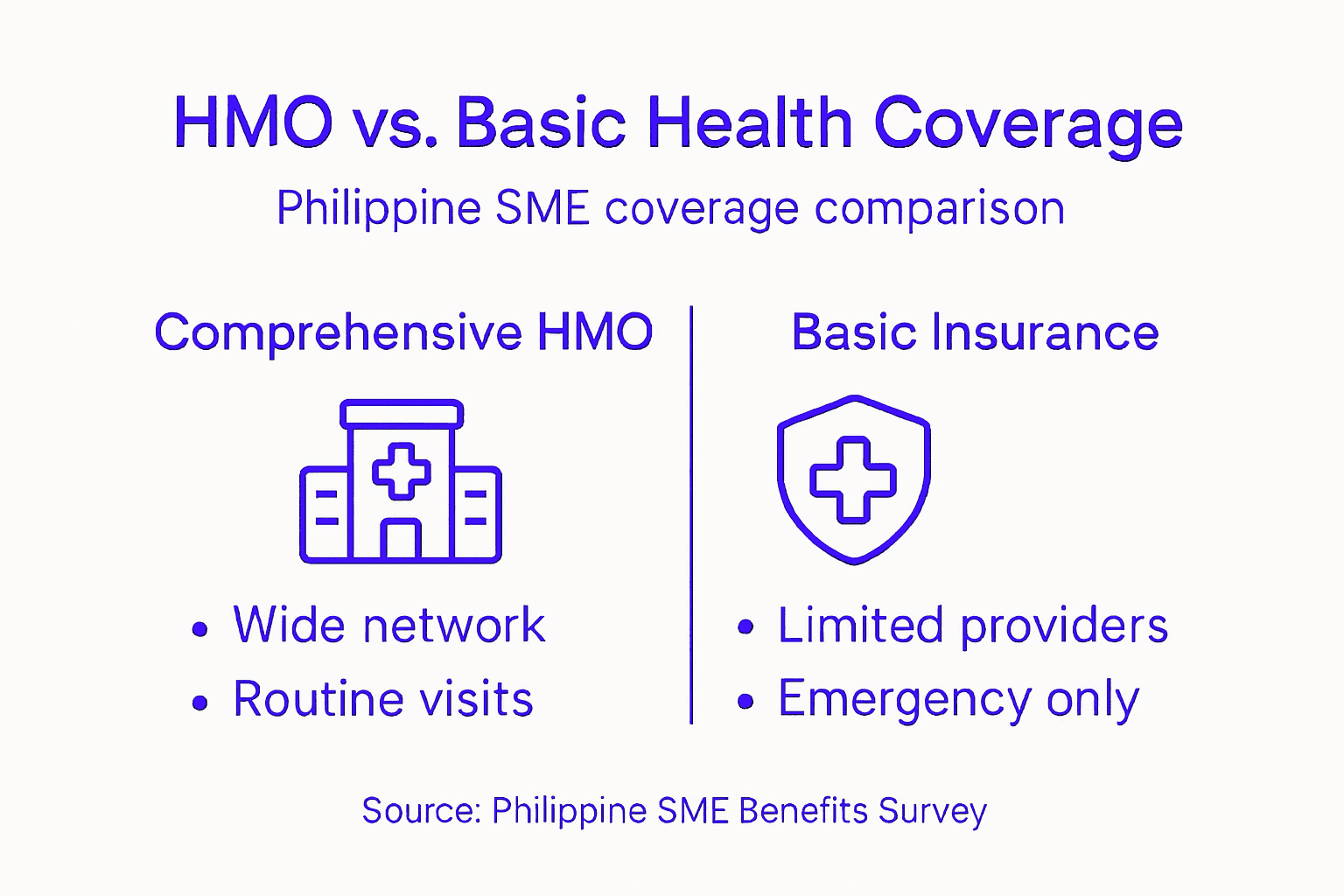
What makes comprehensive HMO coverage different from basic health insurance is the scope and accessibility. You’re not just covering major health events—you’re covering preventive care, routine visits, and urgent needs. A comprehensive plan removes barriers that might otherwise keep your employees from seeking timely medical attention.
Understanding how HMO basics work helps you evaluate what coverage actually benefits your workforce. Different plans offer different networks and benefit limits, so knowing what “comprehensive” means in each package prevents costly misunderstandings later.
Pro tip: When reviewing HMO proposals, compare the breadth of the provider network alongside the maximum benefit limits—a plan with 50 partner hospitals is worthless if the annual limit won’t cover your employees’ actual needs.
Types Of HMO Plans For Philippine SMEs
SMEs in the Philippines don’t fit into one-size-fits-all health insurance boxes. Your company with 15 employees has completely different needs than one with 200. That’s why HMO providers have developed specialized plans designed specifically for small and medium enterprises operating in the Philippine market.
The most common approach is tiered HMO plans based on company size and employee count. These tiers recognize that smaller companies need lower premiums while larger SMEs can afford more comprehensive benefits. A startup with five employees might choose a basic plan covering essential medical services, while a growing company with 100 employees opts for expanded coverage including specialty consultations and advanced diagnostics.
Many providers offer customizable benefit packages that let you pick and choose what matters most to your workforce. You might select basic hospitalization coverage as your foundation, then add optional riders for dental care, annual physical exams, or life and accident insurance. This flexibility means you’re not paying for coverage your employees don’t need.
Dedicated SME programs represent another important category. Comprehensive HMO programs for SMEs in the Philippines focus specifically on managing costs while maintaining competitive coverage. These plans recognize the budget constraints SME managers face and are structured to deliver maximum value within realistic financial parameters.
Network scope varies significantly between plans. Some cover only regional hospitals and clinics, while others provide access across the entire Philippines. When you’re evaluating options, consider where your employees live and work. A plan with 15 accredited hospitals in Metro Manila won’t help if half your team works in Cebu or Davao.
The key difference between plan types often comes down to maximum benefit limits and out-of-pocket costs. Higher-tier plans offer larger annual limits and lower deductibles. Lower-tier plans work well for companies wanting catastrophic coverage at minimal monthly expense. Your employee demographics and health history should guide which tier makes sense.
Pro tip: Request sample benefit summaries from multiple providers and compare what each tier actually covers for common procedures like appendectomy, childbirth, and emergency room visits, not just the fancy summary language.
Key Features And Covered Benefits
A comprehensive HMO plan delivers far more than just emergency room access. When you invest in quality coverage for your team, you’re getting a complete healthcare solution that addresses both routine and serious medical needs. Understanding what’s actually included helps you communicate value to your employees and justify the investment to your leadership.

Cashless hospitalization stands as the cornerstone feature. Your employees enter an accredited hospital, present their HMO card, and receive treatment without paying upfront. The HMO provider handles billing directly with the hospital. This eliminates the stress of medical debt and keeps employees focused on recovery rather than finances.
Outpatient services cover clinic visits, specialist consultations, laboratory tests, and diagnostic imaging. These services happen outside hospital settings and often represent the services your team uses most frequently. A headache requiring a neurologist visit or routine blood work for your diabetic employees falls here.
Emergency care operates 24/7, nationwide. Whether an employee has a car accident at midnight or a heart issue on a weekend, emergency services are covered immediately. Many plans include ambulance services as well, which prevents catastrophic expenses in critical moments.
Inpatient benefits cover hospitalization, surgery, and room and board charges. The scope varies by plan, but comprehensive coverage typically includes standard ward accommodation plus surgeon and anesthesiologist fees. Some employees might need orthopedic surgery, others childbirth hospitalization.
Optional add-on benefits expand coverage significantly. Special procedures and complex coverage protect employees facing serious health challenges requiring advanced treatment. Dental HMO riders cover cleanings and basic dental work. Annual physical exams support preventive health by identifying issues early. Life and accident insurance provides income protection for your team members and their families.
What separates excellent HMO plans from mediocre ones is the philosophy toward coverage boundaries. The strongest plans cover pre-existing conditions, congenital conditions, and special procedures at full rates up to the maximum benefit limit. This means an employee with diabetes or a child born with a heart condition isn’t penalized through exclusions.
Pro tip: Ask your HMO provider specifically whether congenital conditions, pre-existing conditions, and special procedures are covered at 100 percent or subject to waiting periods and exclusions, since this dramatically affects real-world protection for your diverse workforce.
Here’s a summary of how key HMO plan features benefit both SMEs and their employees:
| Feature | Employee Benefit | SME Business Impact |
|---|---|---|
| Cashless Hospitalization | No upfront medical expenses | Simplifies budgeting |
| Outpatient Services | Easy access to frequent care | Supports workforce health |
| Emergency Coverage | Immediate care in emergencies | Reduces absenteeism and disruptions |
| Inpatient Benefits | Full coverage for major events | Limits unexpected financial risk |
| Add-on Options | Enhanced protection, more choice | Customizes coverage per company |
How Purple Cow Plans Support SME Needs
Purple Cow HMO plans exist because someone recognized that SMEs operate differently than large corporations. Your company faces unique challenges: tighter budgets, smaller teams with diverse health needs, and administrative staff wearing multiple hats. Purple Cow designs their plans specifically around these realities rather than forcing you into corporate-sized solutions.
The foundation starts with affordability without sacrificing quality. Purple Cow recognizes that as an HR manager at an SME, you need coverage that protects your team without breaking your healthcare budget. Their pricing structure reflects the reality of smaller payroll bases while maintaining comprehensive benefits that actually matter to your employees.
Comprehensive coverage tailored for SMEs includes extensive inpatient and outpatient benefits. Routine checkups, hospitalizations, and specialist consultations are all covered. But what sets Purple Cow apart is their commitment to 100% pre-existing condition coverage. An employee with hypertension or asthma isn’t penalized when they join your company. Their existing health conditions receive full coverage from day one.
Administrative burden often gets overlooked when comparing HMO plans, but it matters enormously to busy HR managers. Purple Cow simplifies claims processing through a user-friendly app that reduces paperwork headaches. Your team members can submit claims quickly, track approval status, and receive reimbursements without confusing procedures. This efficiency translates to less time you spend managing healthcare complaints and more time on strategic HR work.
Preventive healthcare integration shows that Purple Cow thinks long-term about employee wellness. Dental services, routine checkups, and preventive care encourage your team to catch health issues early rather than waiting for emergencies. Healthier employees mean fewer sick days, better productivity, and improved team morale. It’s an investment that pays returns beyond just medical protection.
Their approach to financial assistance benefits recognizes that medical expenses sometimes exceed insurance coverage limits. Rather than leaving your employees stranded, Purple Cow builds in support mechanisms that provide meaningful help during catastrophic health events.
Pro tip: Request a cost comparison showing Purple Cow’s premium rates against competitors for your company size and employee age distribution, then calculate the total cost including claims processing time your team will save with their streamlined app system.
Costs, Limitations, And Common Mistakes
Every HMO plan comes with a price tag and boundaries. Understanding both protects you from budget surprises and prevents your employees from discovering coverage gaps when they need care most. The real cost of HMO isn’t just the monthly premium you pay.
Premium costs vary significantly based on employee age, company size, and coverage scope. A plan for 20 young employees costs far less per person than one covering 50 employees with an average age of 45. Most SMEs pay between PHP 3,000 to PHP 8,000 annually per employee, depending on the plan tier selected. But premiums represent only part of your actual expense.
Co-payments and deductibles create out-of-pocket costs that employees often forget about. Some plans require employees to pay PHP 500 to PHP 1,000 per clinic visit or PHP 2,000 to PHP 5,000 per hospitalization before insurance kicks in. These costs add up quickly for chronically ill employees or those with frequent medical needs. Always clarify co-payment structures when comparing plans.
Maximum benefit limits cap what the HMO will pay annually or per procedure. A plan might cover up to PHP 500,000 per year total. Once your team’s collective medical expenses reach that ceiling, additional costs fall on the company or employees. This matters enormously if you have employees facing serious illnesses.
Network restrictions represent the most common source of frustration. Using out-of-network providers can result in denied benefits or reduced reimbursements. An employee visiting a non-accredited hospital expecting coverage receives a surprise denial later. Understanding network restrictions prevents costly mistakes that damage employee trust and strain your budget.
Other typical limitations include exclusions for cosmetic procedures, alternative medicine, and certain dental work. Waiting periods for pre-existing conditions apply in some plans, though comprehensive plans like Purple Cow eliminate this barrier. Knowing these boundaries helps you communicate honestly with employees about what’s covered and what isn’t.
Common mistakes happen when HR managers fail to read the fine print carefully. Misunderstanding what “covered” actually means, overlooking co-payment requirements, or confusing HMO with traditional health insurance costs companies thousands in unexpected expenses. Taking time to understand your specific plan details upfront prevents costly confusion later.
Compare some common limitations of SME HMO plans and their results for HR teams:
| Limitation | Example Scenario | Result for HR/Company |
|---|---|---|
| Benefit Limit Cap | Employee exceeds PHP 500,000/year | Extra costs for employer/employee |
| Network Restrictions | Visits non-accredited hospital | Coverage denied, lost trust |
| Co-payment Requirements | PHP 1,000 per specialist visit | Employees face hidden expenses |
| Waiting Periods for Conditions | 6-month wait for diabetes claims | Delayed protection, frustration |
Pro tip: Create a one-page reference guide showing your employees exactly what services require co-payments, which hospitals are accredited, and what annual limits apply, then post it where everyone can access it easily.
Secure Comprehensive HMO Coverage Tailored for Your SME Today
Managing healthcare costs while ensuring your employees receive timely and quality care is a challenge many SME HR managers face. The article emphasizes how comprehensive HMO coverage eliminates surprise expenses, controls budgets with fixed premiums, and offers access to preventive and emergency care through extensive networks. If your goal is to provide a plan with cashless hospitalization, broad outpatient benefits, and 100 percent coverage of pre-existing conditions, you need a partner who truly understands SME realities.
At HMO Plans, we specialize in delivering comprehensive HMO solutions backed by Purple Cow and Etiqa, designed specifically for small and medium enterprises in the Philippines. Our plans include access to premier hospitals like the Big 9 and Healthway Clinics along with nationwide 24/7 emergency coverage. We eliminate common pain points by offering full protection for pre-existing and congenital conditions and easy claims via digital platforms. Navigate the complexities confidently by exploring how our flexible options and affordable premiums can empower your company to keep employees healthy and productive.
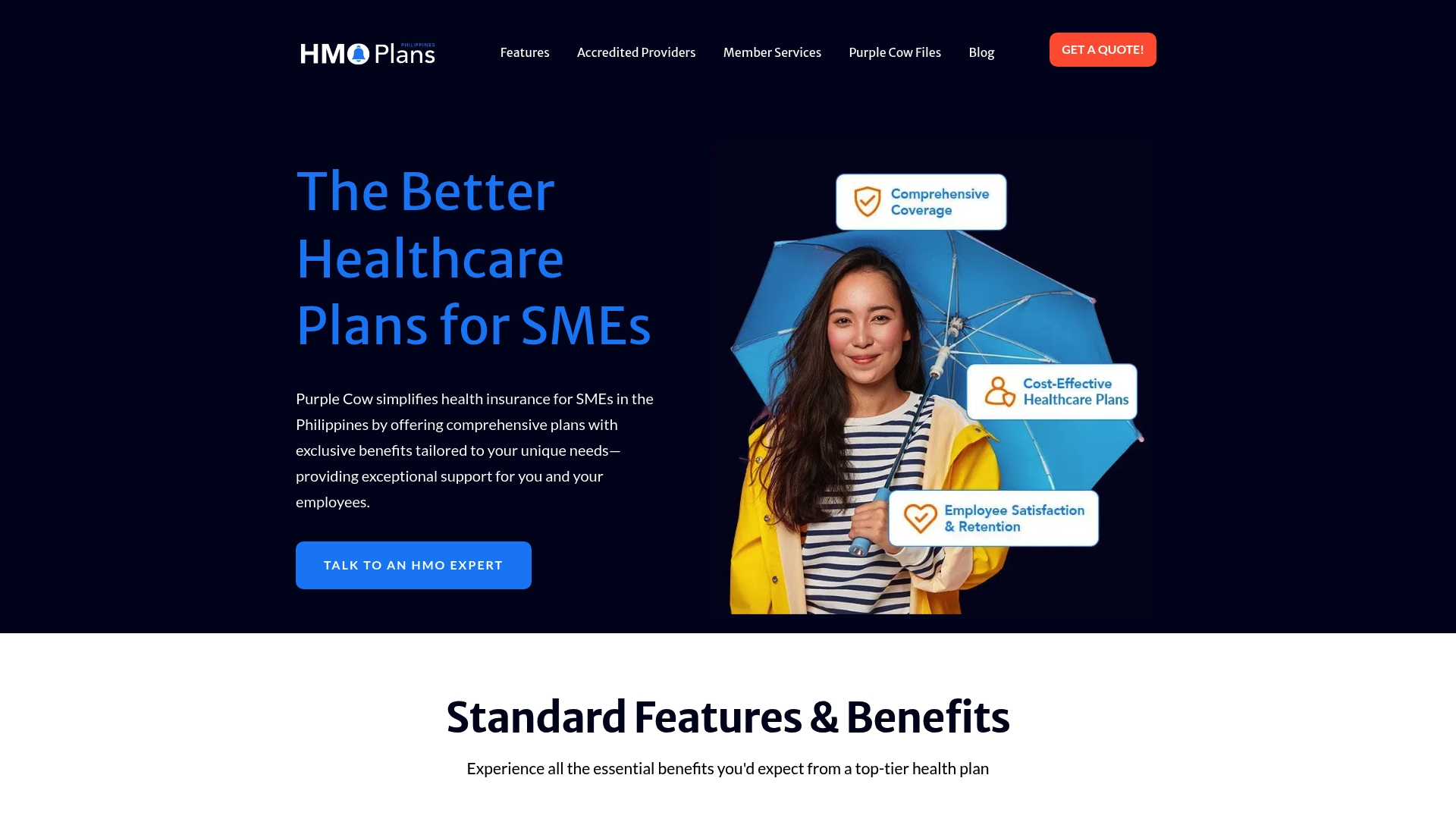
Ready to invest in peace of mind for your workforce without compromising your budget? Visit HMO Plans now to discover tailored packages and start providing your employees the care they deserve. Learn more about our comprehensive HMO coverage and how it directly addresses the challenges outlined in the article.
Frequently Asked Questions
What is comprehensive HMO coverage?
Comprehensive HMO coverage provides employees access to a variety of medical services through a prepaid plan, allowing them to receive care without dealing with claims paperwork or upfront costs.
How does comprehensive HMO coverage differ from basic health insurance?
Unlike basic health insurance, comprehensive HMO coverage includes preventive care, routine visits, and urgent needs, ensuring broader access to healthcare services for employees.
What types of services are typically included in a comprehensive HMO plan?
Comprehensive HMO plans usually cover inpatient and outpatient services, emergency care, laboratory tests, consultations, and additional optional benefits like dental care and life insurance.
How can I evaluate different HMO plans for my SME?
When evaluating HMO plans, compare the provider network, maximum benefit limits, and specific coverage for common procedures, while also considering your employees’ healthcare needs.
Recommended
- Why HMO for Small Businesses Matters
- Understanding HMO Basics: A Guide for New HR Managers in SMEs
- HMO Health Insurance for Small and Medium Enterprises in the Philippines
- PhilHealth Updates & Compliance in 2025: A Guide for SMEs in the Philippines
- 7 Essential Tips to Compare International Health Insurance - Unparalleled Global Benefits
