

PhilHealth independence for SMEs: 5% premium clarity
Most SME owners assume PhilHealth operates like any government agency, dependent on annual budget allocations and vulnerable to political shifts. This misunderstanding creates confusion about premium obligations, coverage stability, and how to optimize employee health benefits. PhilHealth actually functions as an independent government corporation with its own funding sources, managing premiums and sin taxes separately from the national treasury. Understanding this independence helps SMEs navigate compliance requirements, predict costs accurately, and make smarter decisions about combining PhilHealth with private HMO plans for comprehensive employee coverage.
Table of Contents
Understanding PhilHealth premium mechanics and fund management
Key legal nuances and the 2024-2025 Supreme Court ruling impact
Practical application for SMEs: compliance, benefits optimization, and risk management
Key Takeaways
Point | Details |
|---|---|
Independent funding | PhilHealth runs with its own funds from premiums and sin taxes, not relying on annual government appropriations. |
5 percent premium | SMEs must remit a mandatory 5 percent premium split equally between employer and employee for monthly salary credits from ₱10,000 to ₱100,000. |
Reserves for two years | PhilHealth keeps reserves covering up to two years of projected benefit expenses to pay claims during disruptions. |
HMO integration | Combining PhilHealth with private health maintenance organizations can enhance coverage and lower overall costs for employees. |
Compliance penalties | Penalties apply for nonremittance, so understanding the premium mechanics helps SMEs stay compliant. |
What PhilHealth independence means for SMEs
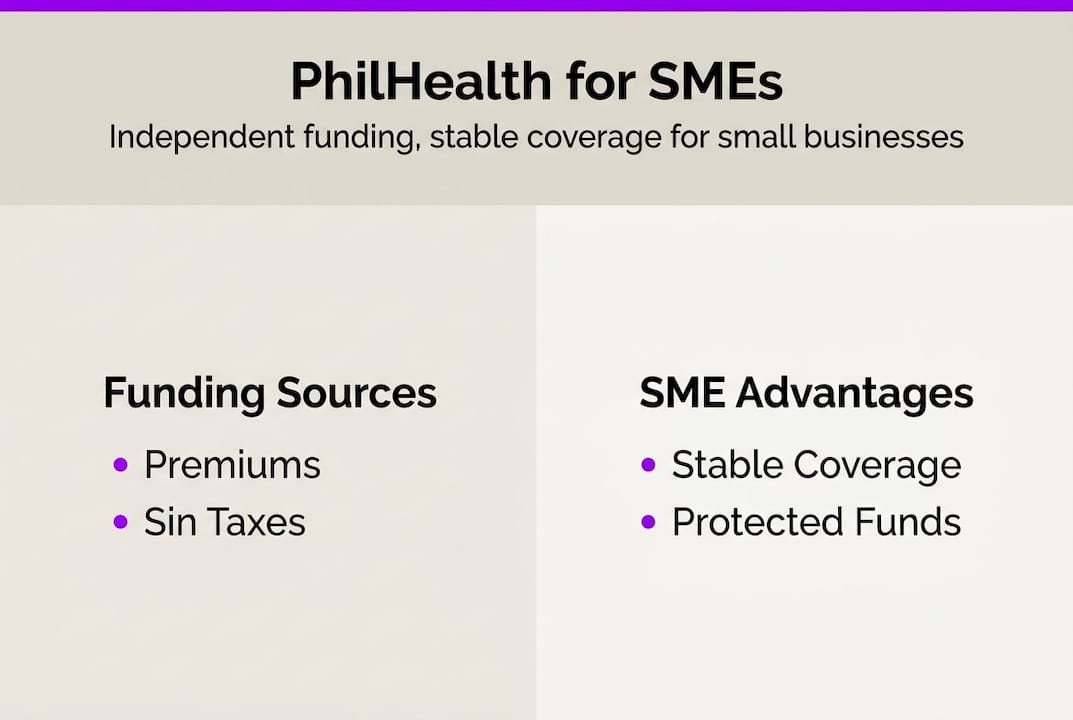
PhilHealth operates as a government-owned and controlled corporation with fiscal autonomy under the Universal Health Care Act. Unlike typical government agencies that rely on annual congressional budget appropriations, PhilHealth generates its own corporate funds through mandatory premium contributions and earmarked sin taxes on tobacco and alcohol products. This independence means the organization controls its budget, sets benefit packages, and manages reserves without waiting for government allocations.
The legal foundation comes from RA 11223, which strengthened PhilHealth’s operational autonomy while expanding coverage mandates. Section 11 of this law explicitly protects PhilHealth’s corporate funds from being reallocated to other government purposes. The independence framework ensures stable funding streams that don’t fluctuate with annual political budget negotiations, creating predictable premium rates and benefit structures for employers.
For SMEs, this independence translates into several practical advantages. Coverage remains stable regardless of national budget constraints. Premium rates follow transparent formulas based on salary ranges rather than shifting with political priorities. Benefit packages expand through PhilHealth’s own revenue growth, not government subsidies. Compliance requirements stay consistent, allowing HR teams to build reliable processes.
Pro Tip: Subscribe to PhilHealth circulars and updates to catch program changes that might ease enrollment processes or introduce new SME-friendly benefits before they become widely known.
The distinction matters because independent funding means PhilHealth can maintain service levels during economic downturns when government agencies face budget cuts. SMEs benefit from this stability through uninterrupted employee coverage and predictable cost planning. Understanding this structure helps business owners appreciate why premium obligations exist and how they contribute to a self-sustaining health insurance system designed to serve all Filipinos, including their workforce.
Understanding PhilHealth premium mechanics and fund management
SMEs must remit a mandatory 5% premium split equally between employer and employee contributions. The calculation applies to monthly salary credits ranging from ₱10,000 minimum to ₱100,000 maximum, meaning the lowest premium is ₱500 monthly and the highest reaches ₱5,000 monthly. Employers handle the full remittance process, deducting the employee share from wages and adding their own contribution before submitting to PhilHealth.

PhilHealth’s corporate funds come from two primary sources. Premium contributions from employed members, self-employed individuals, and voluntary members form the largest revenue stream. Sin taxes collected from tobacco and alcohol sales provide the second major funding source, earmarked specifically for health insurance expansion. These combined revenues create a self-sustaining financial model that operates independently from the national government’s General Appropriations Act.
The organization maintains reserves up to 2 years of projected benefit expenses as a financial cushion. This requirement ensures PhilHealth can continue paying claims during economic disruptions or health crises without emergency government bailouts. When reserves exceed the two-year threshold, the law mandates using surplus funds to either reduce premium rates or expand benefit packages rather than sitting idle.
Fund Component | 2026 Details | SME Impact |
|---|---|---|
Premium Rate | 5% of monthly salary (2.5% each party) | Fixed cost for budget planning |
Salary Credit Range | ₱10,000 to ₱100,000 | Caps maximum contribution |
Reserve Limit | 2 years projected expenses | Protects coverage stability |
Excess Fund Use | Lower premiums or expand benefits | Potential cost relief |
Government Subsidy | Indigent and senior members only | SME premiums fund corporate operations |
The legal framework prevents PhilHealth from transferring excess reserves to the national treasury. This protection ensures funds collected from premiums and sin taxes stay dedicated to health coverage rather than being repurposed for other government spending. SMEs benefit because their premium payments remain within the health insurance system, building reserves that support broader coverage and potentially lower future rates.
Pro Tip: Set up automated remittance schedules through your payroll system to avoid late penalties. Many SMEs lose money on avoidable fines simply because manual processes create payment delays.
Fund management transparency matters for SME planning. When you understand that premium contributions directly fund the benefit pool rather than disappearing into general government coffers, compliance makes more sense. The independent structure means your payments help sustain a system that covers your employees’ hospital visits, medications, and preventive care without requiring additional government appropriations. Combining this baseline coverage with specialized HMO plans creates comprehensive protection that addresses both basic and premium healthcare needs.
Key legal nuances and the 2024-2025 Supreme Court ruling impact
In 2024, Congress included provisions in the General Appropriations Act ordering PhilHealth to transfer what legislators termed “excess funds” to the national treasury. The Department of Finance partially executed this order, moving ₱60 billion from PhilHealth’s reserves before legal challenges halted further transfers. This action triggered immediate concerns from healthcare advocates and legal experts who argued the transfer violated the Universal Health Care Act’s protections.
The Supreme Court issued a landmark ruling in December 2025 declaring the fund transfer unconstitutional. The decision emphasized that PhilHealth’s reserves represent active healthcare funds earmarked for member benefits, not idle surplus available for general government use. The Court found that removing these reserves undermined the sustainability of universal health coverage and violated the explicit statutory protections in Section 11 of RA 11223.
“The transfer of PhilHealth funds to the national treasury contravenes the Universal Health Care Act’s mandate to preserve corporate funds for health expenses. These reserves ensure the program’s financial viability and cannot be repurposed for non-health expenditures regardless of perceived surplus.”
SMEs should understand several critical legal points from this ruling:
PhilHealth’s financial independence receives constitutional protection, not just statutory safeguards, making future fund raids legally difficult.
Premium contributions and sin tax allocations must remain dedicated to health insurance operations and benefit expansion.
The two-year reserve requirement serves as a minimum safety net, not a maximum threshold triggering fund transfers.
Government subsidies for indigent and senior members come from general appropriations, while corporate operations remain self-funded through premiums.
Any future attempts to access PhilHealth reserves require amending the Universal Health Care Act through proper legislative process, not budget provisions.
The ruling provides SMEs with important assurances about coverage stability. Your premium payments won’t disappear into budget gaps or fund unrelated government programs. The reserves built from your contributions remain available to pay claims, expand benefits, and potentially reduce future premium rates. This legal clarity eliminates uncertainty about whether PhilHealth can maintain service levels during fiscal pressures affecting other government agencies.
For business planning purposes, the Supreme Court decision reinforces that PhilHealth compliance investments are protected. The independent funding model survives political budget battles, ensuring your employees retain baseline coverage regardless of broader economic conditions. Understanding this legal foundation helps SME owners make confident decisions about health benefit strategies, knowing the PhilHealth component won’t vanish due to treasury raids or appropriation cuts.
Practical application for SMEs: compliance, benefits optimization, and risk management
Meeting PhilHealth obligations requires systematic processes that many SMEs can automate through modern payroll systems. Start by calculating the 5% premium on each employee’s monthly salary, respecting the ₱10,000 to ₱100,000 credit range. Deduct the employee’s 2.5% share from their gross pay, add your matching 2.5% employer contribution, and remit the combined amount by the 10th of the following month. Maintain detailed records showing salary bases, contribution calculations, and payment confirmations for audit purposes.
Essential compliance steps:
Register all eligible employees within 30 days of hiring through the PhilHealth online portal or accredited collection partners
Calculate premiums accurately using current salary credits and rate tables
Remit combined employer and employee shares by monthly deadlines
Issue contribution receipts to employees showing their deducted amounts
Update member records when employees receive salary increases affecting premium calculations
File required reports documenting your workforce composition and contribution history
Combining PhilHealth with HMO coverage creates comprehensive employee benefits that address gaps in the basic insurance program. PhilHealth covers standard hospital room rates, essential medications, and basic procedures. HMO plans add private room accommodations, broader medication formularies, outpatient consultations, preventive care, and cashless access to premium facilities. This combination reduces employee out-of-pocket expenses while giving your business a competitive advantage in attracting talent.
Coverage Aspect | PhilHealth Only | PhilHealth + HMO |
|---|---|---|
Hospital Room | Standard ward rates | Private rooms up to plan limits |
Outpatient Care | Limited coverage | Comprehensive consultations |
Medication Access | Essential drugs list | Broader formularies |
Facility Network | Accredited hospitals | Premium facilities including Big 9 |
Out-of-Pocket Costs | Higher employee expenses | Minimal to zero copays |
Preventive Services | Basic only | Annual physicals, screenings |
Non-compliance carries serious risks beyond immediate penalties. PhilHealth imposes fines for late remittance, typically 3% monthly interest on unpaid amounts. Persistent non-payment can trigger legal action and damage your business reputation. Employees lose coverage during non-payment periods, creating liability if they need emergency care. The reputational cost among your workforce matters too, as workers quickly learn when employers skip mandatory contributions.
Pro Tip: Schedule quarterly reviews of your health benefit investments comparing premium costs against actual employee utilization. Many SMEs discover that strategic HMO additions reduce overall healthcare spending by preventing expensive emergency situations through better preventive care access.
Risk management extends beyond avoiding penalties. Consider how health benefit quality affects employee retention, productivity, and your ability to compete for skilled workers. Companies offering PhilHealth plus comprehensive HMO coverage report lower turnover and higher job satisfaction scores. The investment in supplemental coverage often pays for itself through reduced sick leave, better health outcomes, and improved morale. Understanding PhilHealth’s independent funding model helps you appreciate that mandatory premiums provide a stable foundation while optional HMO enhancements deliver competitive differentiation.
Discover better health coverage solutions for your SME
Your PhilHealth compliance creates a solid foundation, but many SMEs find that adding specialized HMO coverage transforms their employee benefits from basic to exceptional. HMO Plans partners with Purple Cow and Etiqa to deliver comprehensive health insurance designed specifically for Philippine SMEs. Our plans complement PhilHealth by covering pre-existing conditions, congenital issues, and special procedures up to your Maximum Benefit Limit, eliminating the coverage gaps that create financial stress for employees.
Explore our complete feature set including cashless access to premier hospitals, 24/7 nationwide coverage, and digital health platforms that simplify care coordination. Our member services team provides expert support for enrollment, claims, and benefit optimization tailored to SME needs. Discover how combining PhilHealth independence with flexible HMO solutions creates unbeatable value for your workforce.
Frequently asked questions
Can SMEs opt out of PhilHealth premium payments?
No, PhilHealth contributions are mandatory for all employers regardless of business size or industry. The law requires SMEs to remit the full 5% premium split between employer and employee shares. Opting out triggers penalties including fines, interest charges, and potential legal action. Your only compliance path is timely remittance following current guidelines.
How does PhilHealth independence affect my premium rates?
Independence means your rates follow transparent formulas based on salary credits rather than political budget decisions. Premium percentages change only through formal PhilHealth board resolutions, not annual appropriation battles. This stability helps SMEs predict costs accurately and plan budgets without worrying about sudden rate spikes driven by government fiscal pressures.
What happens if PhilHealth reserves exceed the two-year limit?
The law requires using excess reserves to either reduce premium rates or expand benefit packages. Funds cannot be transferred to the treasury or used for non-health purposes. The Supreme Court ruling reinforces this protection, ensuring surplus amounts benefit members through better coverage or lower costs rather than disappearing into general government spending.
Should SMEs combine PhilHealth with private HMO plans?
Combining both creates comprehensive coverage addressing PhilHealth’s limitations while controlling costs. PhilHealth provides baseline hospital and medication coverage, while HMOs add private rooms, broader networks, outpatient care, and preventive services. Most SMEs find this combination reduces employee out-of-pocket expenses and improves benefit satisfaction, making it a strategic investment for talent retention and workforce health.
