

Why Cover Pre-Existing Conditions in SME HMO Plans
Finding an affordable health insurance plan that covers pre-existing conditions can feel overwhelming for Human Resources managers at SMEs in the Philippines. Employees with diabetes, heart disease, or cancer need access to care without barriers or extra costs. Protecting staff with inclusive coverage is not just a legal compliance issue but a foundation for workplace wellness and stronger productivity. This guide helps clarify essential features of comprehensive insurance plans, highlighting what matters most when ensuring reliable healthcare for your team.
Table of Contents
- Defining Pre-Existing Conditions In Health Insurance
- How Coverage Affects Employee Health Outcomes
- Common Coverage Types And Plan Limitations
- Financial Risks Of Exclusion For Smes
- Legal Requirements And Employer Responsibilities
- Key Benefits Of Inclusive Hmo Coverage
Key Takeaways
| Point | Details |
|---|---|
| Pre-Existing Condition Coverage | Modern regulations protect employees by preventing discrimination based on pre-existing conditions in health insurance. |
| Impact on Employee Health Outcomes | Comprehensive coverage leads to improved health outcomes, reduced financial strain, and enhanced productivity for employees. |
| Plan Types and Limitations | Employers must understand the nuances of different health insurance plans to ensure adequate coverage for employees with existing medical conditions. |
| Legal Obligations for Employers | Compliance with the Affordable Care Act is essential for SMEs to avoid financial penalties and foster a supportive workplace environment. |
Defining Pre-Existing Conditions in Health Insurance
In health insurance, pre-existing conditions are medical issues or health problems that an individual has before obtaining new health coverage. These conditions represent critical considerations for both insurers and employees when designing comprehensive health plans for small and medium enterprises (SMEs).
Under current healthcare regulations, pre-existing conditions include chronic and acute medical challenges such as:
- Diabetes
- Asthma
- Cancer
- Heart disease
- Pregnancy
- Hypertension
- Autoimmune disorders
Before recent healthcare reforms, insurance providers could legally refuse coverage or charge significantly higher premiums for individuals with these conditions. Today, regulations protect employees by ensuring that insurers cannot discriminate based on pre-existing health status.
Pre-existing conditions represent medical realities that should not prevent individuals from accessing necessary healthcare coverage.
Employers seeking comprehensive health plans must understand that pre-existing conditions are now protected under most modern health insurance frameworks. This means SMEs can provide inclusive healthcare options that support all employees, regardless of their current health challenges.
Pro tip: When selecting an HMO plan, carefully review the specific terms related to pre-existing condition coverage to ensure comprehensive protection for your entire workforce.
How Coverage Affects Employee Health Outcomes
Comprehensive health insurance coverage for pre-existing conditions dramatically transforms employee health trajectories. Employee health outcomes improve significantly when barriers to essential medical care are systematically removed, creating a holistic approach to workplace wellness.
Key benefits of inclusive health coverage include:
- Increased preventative care utilization
- More consistent treatment adherence
- Reduced financial strain from medical expenses
- Enhanced chronic disease management
- Lower hospitalization rates
- Improved overall workforce productivity
Research demonstrates that continuous health insurance coverage reduces unmet medical needs and enables timely interventions for chronic conditions. By providing comprehensive plans that protect employees with pre-existing health challenges, SMEs can create a supportive environment that prioritizes worker well-being and long-term health sustainability.
Comprehensive health coverage transforms medical access from a financial burden to a strategic employee benefit.
The economic implications are equally compelling. Employees with robust health coverage experience lower stress levels, decreased absenteeism, and higher engagement. This creates a positive feedback loop where improved health directly correlates with enhanced workplace performance and organizational resilience.
Pro tip: Conduct regular health needs assessments to ensure your HMO plan evolves with your workforce’s changing medical requirements.
Common Coverage Types and Plan Limitations
Health insurance for small and medium enterprises (SMEs) encompasses various coverage types with distinct characteristics and potential limitations. Health insurance plans vary significantly in their network restrictions, referral requirements, and overall service scope, making it crucial for employers to understand their options.
The primary health insurance coverage types include:
- HMO (Health Maintenance Organization) Plans
- Lowest cost option
- Restricted provider network
- Require primary care physician referrals
- PPO (Preferred Provider Organization) Plans
- More flexible provider choices
- Higher premium costs
- No mandatory referral requirements
- EPO (Exclusive Provider Organization) Plans
- Balance between HMO and PPO structures
- In-network care only
- No out-of-network coverage
- POS (Point of Service) Plans
- Hybrid model with network and out-of-network options
- More complex referral processes
- Moderate cost structure
Each plan type presents unique considerations for pre-existing condition coverage. Some grandfathered plans or short-term policies might impose waiting periods or specific exclusions, potentially limiting comprehensive care for employees with ongoing health challenges.
Not all health insurance plans are created equal - understanding the nuanced differences can make a significant impact on employee wellness.
For SMEs, the key is selecting a plan that balances comprehensive coverage, cost-effectiveness, and flexibility. Comprehensive plans that offer robust protection for pre-existing conditions demonstrate a commitment to employee health and can be a powerful recruitment and retention tool.
Here’s a concise comparison of the main health insurance plan types for SMEs:
| Plan Type | Provider Flexibility | Cost Structure | Pre-Existing Condition Approach |
|---|---|---|---|
| HMO | Limited to network | Lowest | Full coverage, strict rules |
| PPO | Broad, nationwide | High premiums | Full coverage, flexible access |
| EPO | In-network only | Moderate | Full coverage, no out-of-network |
| POS | Both, but complex | Moderate | Full coverage, referral needed |
Pro tip: Conduct a detailed comparison of plan types, focusing on pre-existing condition coverage and network breadth before making a final selection.
Financial Risks of Exclusion for SMEs
Excluding pre-existing conditions from health insurance can expose small and medium enterprises to substantial financial vulnerabilities. Significant financial burdens emerge when companies opt for limited health coverage, creating unpredictable cost structures and potential legal complications.
Key financial risks of excluding pre-existing conditions include:
- Unexpected out-of-pocket medical expenses
- Higher employee turnover rates
- Potential legal liability
- Reduced workforce productivity
- Increased emergency medical intervention costs
- Diminished employee morale and engagement
The financial implications extend beyond immediate medical expenses. Companies that fail to provide comprehensive health coverage may face indirect costs such as reduced employee performance, increased absenteeism, and challenges in recruiting top talent. These hidden expenses can far outweigh the perceived savings from restrictive insurance plans.
Financial prudence in health insurance means looking beyond short-term cost savings and considering long-term organizational health and stability.
Comprehensive health coverage serves as a strategic investment, mitigating financial risks while demonstrating a genuine commitment to employee well-being. By protecting employees with pre-existing conditions, SMEs can create a more resilient, productive workforce and potentially reduce overall healthcare expenditures.

Pro tip: Conduct a thorough cost-benefit analysis that includes both direct medical expenses and indirect workforce productivity metrics when evaluating health insurance plans.
Legal Requirements and Employer Responsibilities
Small and medium enterprises must navigate a complex landscape of legal obligations when providing health insurance coverage. Employers have specific responsibilities under the Affordable Care Act (ACA) to ensure comprehensive and nondiscriminatory health benefits for their workforce.
Key legal requirements for employers include:
- Providing coverage for pre-existing conditions
- Ensuring no premium increases based on health status
- Maintaining nondiscrimination provisions
- Offering transparent benefit information
- Complying with ACA reporting requirements
- Protecting employee health information privacy
The legal framework demands that employers not only offer health insurance but do so with explicit protections for employees with existing medical conditions. This means eliminating exclusionary practices that historically prevented individuals from accessing necessary healthcare services.
Legal compliance in health insurance is not just about following rules, but about creating a fair and supportive workplace environment.
Nonprofit and for-profit organizations alike must implement rigorous processes to verify their health plans meet federal standards. Failure to comply can result in significant financial penalties and potential legal challenges that could undermine an organization’s reputation and financial stability.
The table below summarizes the legal duties for SMEs regarding health insurance:
| Employer Duty | Description | Risk if Ignored |
|---|---|---|
| Cover pre-existing conditions | Required for all group health plans | Fines, lawsuits |
| Transparent benefits | Clear communication to staff | Regulatory penalties |
| Premium equality | No price hikes based on health status | Discrimination claims |
| Data privacy | Protect employee health info | Privacy breaches, fines |
Pro tip: Consult with a healthcare compliance specialist annually to ensure your SME’s health insurance plan meets all current legal requirements.
Key Benefits of Inclusive HMO Coverage
Inclusive Health Maintenance Organization (HMO) coverage represents a transformative approach to employee healthcare, offering comprehensive protection for individuals with pre-existing conditions. HMO coverage ensures coordinated care and addresses critical healthcare challenges for small and medium enterprises.
Key benefits of inclusive HMO coverage include:
- Improved access to preventative services
- Lower overall healthcare costs
- Enhanced chronic disease management
- Reduced healthcare fragmentation
- Predictable medical expense structures
- Comprehensive treatment continuity
- Higher employee satisfaction and retention
The strategic advantages extend beyond immediate medical support. By facilitating collaborative provider networks, these plans create integrated healthcare ecosystems that prioritize sustained employee wellness and organizational productivity.
Inclusive HMO coverage transforms health insurance from a transactional benefit to a strategic employee support mechanism.
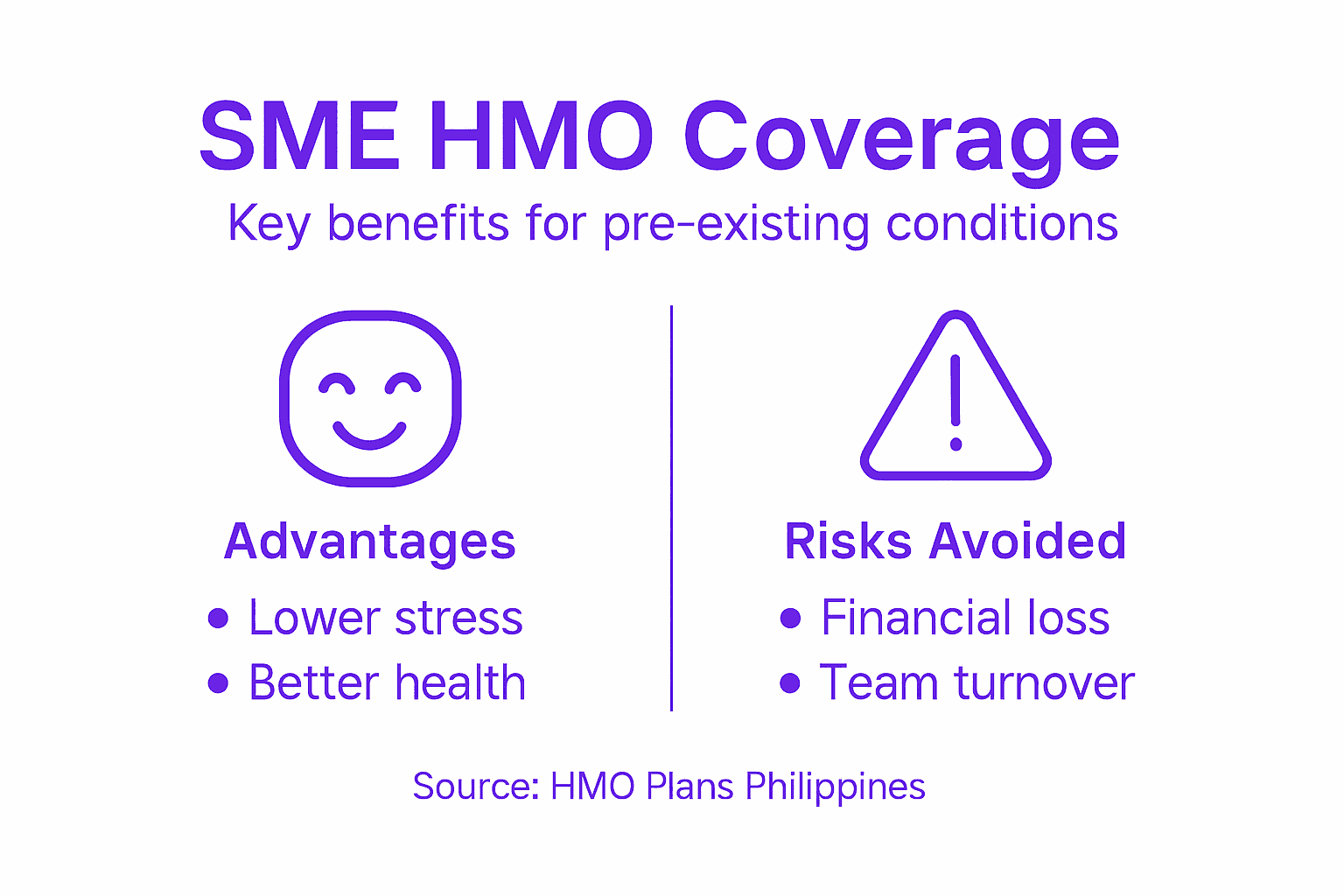
Employees with comprehensive coverage experience reduced stress, improved health outcomes, and greater workplace engagement. This holistic approach demonstrates an organization’s commitment to supporting workforce health through proactive, compassionate healthcare solutions.
Pro tip: Regularly audit your HMO plan’s coverage to ensure it adapts to emerging employee health needs and maintains comprehensive pre-existing condition protections.
Secure Comprehensive Health Coverage for Your SME Workforce Today
Addressing pre-existing conditions in your SME’s health plan is no longer optional it is essential for safeguarding your employees and your business. The article highlights the challenges of limited coverage and financial risks stemming from excluding pre-existing conditions. Your team deserves dependable and inclusive protection that ensures access to quality medical care without worrying about unexpected expenses or coverage gaps.
HMO Plans Philippines offers exactly that with a 100 percent coverage commitment for pre-existing and congenital conditions up to the Maximum Benefit Limit. With cashless access to accredited hospitals nationwide including premier Big 9 Hospitals and Healthway Clinics you provide your employees peace of mind and boost your organization’s productivity. Additional benefits like outpatient, emergency care, and digital health platforms make managing wellness easier than ever.
Take the next step in transforming your SME’s employee health strategy now.
Explore how to protect your workforce and eliminate coverage uncertainties by visiting HMO Plans. Experience tailored solutions designed for Small and Medium Enterprises backed by trusted partners Purple Cow and Etiqa. Don’t wait for costly surprises secure inclusive HMO coverage for pre-existing conditions today at https://hmoplans.ph.
Frequently Asked Questions
Why are pre-existing conditions important in SME HMO plans?
Pre-existing conditions are health issues that employees have before obtaining insurance. Covering these conditions is crucial because it ensures all employees have equitable access to necessary healthcare, fostering a healthier and more productive workforce.
What are the benefits of including pre-existing condition coverage in HMO plans for SMEs?
Including pre-existing condition coverage improves employee health outcomes, reduces financial strain from medical expenses, enhances job satisfaction, and lowers turnover rates, ultimately benefiting the organization’s overall productivity.
How do modern regulations affect the coverage of pre-existing conditions in health plans?
Modern healthcare regulations prohibit discrimination based on pre-existing conditions, meaning insurers cannot deny coverage or charge higher premiums for individuals with such health issues. This promotes fair access to necessary medical care for all employees.
What types of health insurance plans should SMEs consider for comprehensive coverage?
SMEs should consider various health insurance plan types, such as HMO, PPO, EPO, and POS plans. Each type has different coverage characteristics, so it’s essential to assess which plan offers the best protection for pre-existing conditions while balancing cost and provider flexibility.
Recommended
- Navigating Congenital and Special Condition Coverage in Your SME Health Plan
- Navigating Congenital and Special Condition Coverage: Inclusive Healthcare for Every Employee
- Special Procedures & Complex Coverage Explained: Protecting Every Employee’s Health Needs
- Understanding HMO Basics: A Guide for New HR Managers in SMEs
- Travel Insurance with Medical Conditions – Securing Global Cover - Unparalleled Global Benefits
