

Customizing Health Insurance Guide for SMEs Step-by-Step
Choosing the right health insurance for your Philippine SME often feels like a balancing act between budget limits and employee expectations. Every HR manager faces growing pressure to provide coverage that keeps teams protected and supports talent retention in fast-changing industries. By focusing on a clear understanding of your workforce, budget flexibility, and the power of customized health insurance solutions, you can build a benefits package that meets real needs and sets your company apart.
Table of Contents
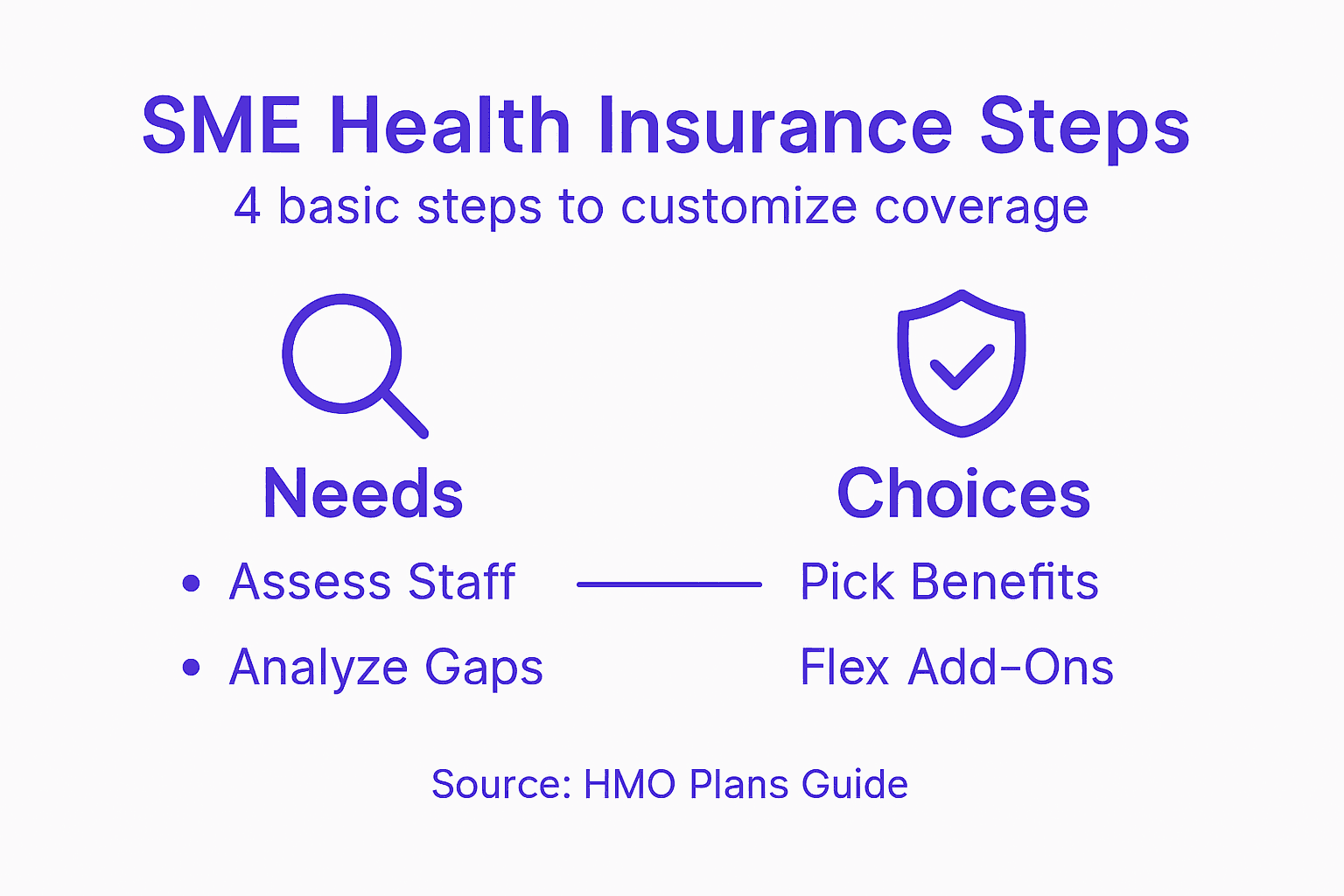
- Step 1: Assess Employee Health Coverage Needs
- Step 2: Select Core and Optional HMO Benefits
- Step 3: Tailor Add-Ons and Flexible Terms
- Step 4: Verify Customized Plan Meets SME Goals
Quick Summary
| Key Message | Explanation |
|---|---|
| 1. Assess Employee Needs Thoroughly | Understand the demographics and health concerns of your workforce to better customize insurance offerings. |
| 2. Document Health Priorities | Create a clear summary of top health priorities and gaps to guide benefit selections and planning. |
| 3. Choose Core and Optional Benefits | Build a solid foundation of core benefits while offering attractive optional add-ons based on employee preferences. |
| 4. Ensure Flexibility in Terms | Customize coverage to fit the unique needs of your workforce, including flexible contribution arrangements. |
| 5. Verify Compliance and Goals Met | Regularly check that the benefits package aligns with company objectives and complies with local laws. |
Step 1: Assess Employee Health Coverage Needs
You’re about to discover what your employees actually need from health insurance. This step shapes everything that comes next, so taking time here pays dividends later.
Start by understanding your workforce composition. Are your employees mostly young professionals, or do you have an aging workforce with chronic conditions? Are they mostly single, or do many have families? Understanding employer health insurance trends across different firm sizes helps you benchmark your situation against similar companies.
Conduct honest conversations with your team about their current health concerns:
- What medical services do they use most frequently?
- Do they have ongoing prescriptions or chronic conditions?
- Are they satisfied with their current coverage gaps?
- What out-of-pocket costs hurt the most?
You can gather this information through anonymous surveys or one-on-one discussions. The goal is understanding patterns, not invasion of privacy.
Look at your claims data if you have previous insurance records. Where is the money actually being spent? Are employees visiting specialists frequently? Do they need emergency care regularly? This real data beats guessing every time.
Consider your budget constraints honestly. What can your company realistically afford? Understanding small business health insurance options helps you match employee needs with financial reality, including flexible approaches like Health Reimbursement Arrangements that let you customize coverage while controlling costs.
Think about your industry and location too. Tech workers in Metro Manila may have different health priorities than manufacturing workers in a provincial area. Hospitality staff might need mental health support more than other sectors.
The more you know about your specific employees and their actual health patterns, the better your customized plan will protect them and control your costs.
Document your findings in a simple summary. List the top health priorities, estimated prevalence, and any critical gaps you’ve identified. This becomes your roadmap for the next steps.
Here’s a quick reference of employee health coverage assessment criteria and their impact on your plan:
| Assessment Area | Key Consideration | Effect on Plan Selection |
|---|---|---|
| Workforce Demographics | Age, family status, chronic illness | Determines need for chronic care, dependents |
| Health Service Usage | Frequent services, high cost areas | Guides benefit focus (e.g., specialist visits) |
| Budget Constraints | Total affordable cost | Limits coverage depth and flexibility |
| Industry/Location Needs | Unique sector or regional risks | Necessitates tailored coverage options |
Pro tip: Ask your employees what specific health services they’d add if budget weren’t a concern—this reveals true priorities that shape your optional add-ons like dental HMO or annual physical exams.
Step 2: Select Core and Optional HMO Benefits
Now that you understand your employees’ needs, it’s time to build your benefits package. This step determines what your plan actually covers and what you’ll offer as optional add-ons.

Start with your core benefits foundation. Most HMO plans include essential coverage that your employees expect. HMO plans typically cover hospitalizations, emergency care, maternity services, and mental health support through a network of coordinated providers.
Your core package should align with what you discovered in Step 1. If your workforce is young and healthy, preventive care and routine visits matter most. If you have older employees or those with chronic conditions, ensure your plan covers specialist visits and ongoing treatments without excessive referral barriers.
Consider these core benefit priorities:
- Inpatient hospital stays and room accommodations
- Emergency and urgent care access
- Outpatient consultations and diagnostics
- Prescription medication coverage
- Preventive services and wellness programs
- Maternity and childbirth benefits
Now think about optional add-ons that will excite your team. These are where you customize the plan to stand out. The most popular optional benefits for Philippine SMEs include dental HMO services, annual physical exams, and life and accident insurance.
Review different plan types and their features to understand how core coverage varies. Some plans emphasize prevention through primary care coordination, while others offer broader network access. Choose what matches your company culture and budget.
Calculate the cost impact of each optional add-on. A dental HMO might cost 8-12% more but significantly boost employee satisfaction. Annual physicals add value at relatively low cost. Life insurance appeals to employees with families.
Prioritize based on employee feedback from Step 1 and your budget reality. You can’t add everything, but you can be strategic about what matters most to retention and morale.
Your core benefits must be solid and reliable, while optional add-ons should reflect what your specific employees actually value.
Document your core and optional selections now. Create a simple benefits summary listing exactly what’s covered at each level.
See how different types of HMOs balance coverage, flexibility, and cost for SMEs:
| Plan Type | Coverage Style | Flexibility | Typical Cost Impact |
|---|---|---|---|
| Standard HMO | Defined provider network | Limited customization | Lower per employee |
| Flexible HMO | Mix of in- and out-of-network | Custom add-ons available | Moderate/high |
| HRA-Based Arrangement | Reimbursement for services | Highly individualized | Variable, capped |
Pro tip: Start with essential core coverage and just one or two high-impact optional benefits rather than offering mediocre coverage across many categories—employees value depth over breadth.
Step 3: Tailor Add-Ons and Flexible Terms
This is where your customized plan truly comes to life. You’re going to add features that fit your company’s unique situation and give employees meaningful options.
Start by understanding what flexibility means for your business. Do you have seasonal workers? Remote employees? Staff in different regions? Your plan terms should accommodate real workforce variations, not force one-size-fits-all coverage onto diverse situations.
Customized add-ons matter more than you might think. Research shows that tailored insurance products and flexible terms significantly increase how much employees value their benefits and actually use them. When add-ons match what your team genuinely needs, you see better uptake and higher satisfaction.
Think about these popular customization options:
- Dental HMO for routine cleanings and major work
- Annual comprehensive physical exams
- Life and accident insurance protection
- Mental health counseling sessions
- Wellness program incentives
- PhilHealth independence options
Now explore flexible contribution arrangements. Health Reimbursement Arrangements allow you to reimburse employees for medical costs and premiums up to limits you set. This gives your team choice while keeping your costs predictable and manageable.
Consider whether you want employees to contribute toward their coverage or if you’ll cover costs fully. Some SMEs offer tiered contributions based on salary levels. Others provide full employer coverage as a retention tool. Both approaches work, depending on your financial position.
Think about exclusions too. Can employees opt out of specific benefits they don’t need? Can they add coverage for specific conditions? These micro-choices build loyalty because employees feel heard.
Document your add-ons and flexible terms clearly. Create a simple one-page summary showing what’s included, what’s optional, and how employees access each benefit.
Flexibility doesn’t mean complexity. Simplicity in your terms and clear communication about options make the biggest difference in employee satisfaction.
Review your selections against your budget one more time. Make sure the total package remains sustainable for your company while delivering real value.
Pro tip: Include one surprise add-on that employees don’t expect, like annual wellness allowances or mental health support—it builds goodwill and shows you genuinely care about their wellbeing beyond basic coverage.
Step 4: Verify Customized Plan Meets SME Goals
Before you finalize anything, take a step back and verify your plan actually delivers what you set out to accomplish. This verification step prevents costly mistakes and ensures you’re making a smart investment.
Start by revisiting your original goals from Step 1. Did you want to improve employee retention? Control costs? Offer competitive benefits in your industry? Write down exactly what success looks like for your company.
Now evaluate your customized plan against those specific goals:
- Does the coverage match your employees’ actual health needs?
- Is the total cost sustainable for your budget?
- Will the benefits package help attract and retain talent?
- Are optional add-ons worth their cost to your team?
- Does the plan comply with Philippine employment regulations?
Check affordability carefully. Calculate the per-employee monthly cost and compare it against your payroll budget. Some SMEs can afford comprehensive plans, while others need lean approaches. Both work if they’re honest about constraints.
Assess employee satisfaction potential. Would your team feel valued by this package, or would they feel shortchanged? Sometimes a smaller plan with one standout feature beats a mediocre plan covering everything.
Review coverage quality by examining network access and claim processes. Your employees need actual access to hospitals and clinics when they need care. Evaluating coverage options and plan quality ensures your chosen plan won’t disappoint employees during medical emergencies.
Consider compliance requirements too. Philippine law requires certain benefits for employees. Make sure your plan meets legal minimums while aligning with company culture.
Test the plan against real scenarios. If an employee needs emergency surgery, what’s covered? If someone develops diabetes, what ongoing care is available? Run through several hypothetical situations to spot gaps.
A plan that solves 80 percent of your actual needs and stays within budget beats a perfect plan that strains finances.
Document your verification findings in a simple checklist. Mark whether each goal is met, partially met, or needs adjustment.
Pro tip: Get feedback from 3-5 trusted employees before finalizing—they’ll spot real-world issues you might miss and their input builds buy-in for launch day.
Customize Your SME Health Insurance with Confidence
Understanding how to tailor health insurance to your employees’ specific needs is critical. This article breaks down exactly how to assess workforce health coverage, select core and optional HMO benefits, and add flexible terms that match your company culture and budget. You recognize the challenge of balancing comprehensive coverage with affordability and want a straightforward solution that delivers value without confusion or surprises.
At HMO Plans, we specialize in providing customized health insurance designed exclusively for Small and Medium Enterprises in the Philippines. Our plans offer 100 percent coverage for pre-existing and special conditions up to the Maximum Benefit Limit, cashless access to premier hospitals and clinics nationwide, and flexible add-ons like dental, annual physical exams, life and accident insurance, and more. With no complicated terms and strong support from partners like Purple Cow and Etiqa, we empower you to build a benefits package your employees truly appreciate.
Start shaping the health coverage your workforce deserves today. Explore how you can combine essential core benefits with personalized options that control costs and boost retention on our main landing page. Let us help you turn your employee health insurance challenges into a competitive advantage.
Ready to take the next step Customize your SME’s health benefits easily and confidently with HMO Plans. Visit us now to learn more and get a free consultation tailored to your unique needs.
Frequently Asked Questions
How can I assess my employees’ health coverage needs effectively?
To assess your employees’ health coverage needs, start by understanding their demographics and health concerns through anonymous surveys or discussions. Aim to gather information about the medical services they frequently use and any chronic conditions. This will help identify their priorities and shape your health insurance offerings.
What should be included in the core benefits of a health insurance plan for SMEs?
Core benefits for a health insurance plan typically include essential coverage like hospitalizations, emergency care, outpatient consultations, and prescription medications. Ensure that these align with your employees’ needs identified in the assessment phase. Document the core offerings clearly for your team.
How can I tailor optional add-ons for my health insurance plan?
Tailoring optional add-ons involves considering your employees’ preferences for additional benefits such as dental HMO, annual physical exams, or mental health support. Gather feedback from your team on what services they value most and prioritize those in your offerings. Limit optional add-ons to a few impactful options to keep the plan manageable and cost-effective.
What steps do I take to ensure my customized health insurance plan meets SME goals?
To verify that your customized health insurance plan meets your goals, review its alignment with employee needs, cost-effectiveness, and compliance with legal requirements. Create a checklist to assess goal satisfaction and make adjustments where necessary. This process should happen before finalizing the plan to ensure it delivers maximum value.
How can I communicate the details of the health insurance plan to my employees?
Communicate the details of the health insurance plan by creating a simple summary document that outlines core and optional benefits and how to access them. Schedule a meeting or send an email to discuss the plan and encourage open questions. Clear communication enhances employee understanding and satisfaction with their benefits.
Recommended
- HMO Health Insurance for Small and Medium Enterprises in the Philippines
- Balancing Costs and Care: SME Budget Tips for 2026
- Beyond PhilHealth: How SMEs Can Maximize Health Investments for Better ROI
- Understanding HMO Basics: A Guide for New HR Managers in SMEs
- 7 Key Wellness Trends 2025 Every Health Shopper Should Know – EQUA - Sustainable Water Bottles
