

Employee Health Benefits Guide 2026: 25% Lower Turnover for SMEs
Filipino HR managers at small and medium enterprises face a daunting challenge: designing health benefits that satisfy employees without breaking the budget. Poor benefits design drives talented staff away, creating costly turnover cycles. This guide walks you through proven, practical steps to build health benefits programs that reduce turnover by 25%, boost utilization by 40%, and earn employee trust without overwhelming your resources.
Table of Contents
- Prerequisites And What You Need Before Starting
- Core Steps To Implement A Health Benefits Plan
- Customization And Optional Add-Ons
- Common Mistakes And How To Avoid Them
- Expected Results And Outcomes
- Explore SME-Focused Health Insurance Solutions
- Frequently Asked Questions
Key Takeaways
| Point | Details |
|---|---|
| Comprehensive coverage builds trust | Including pre-existing and special conditions up to your Maximum Benefit Limit reduces claim denials and increases retention |
| Customization drives satisfaction | Adding dental, telemedicine, and annual exams raises employee satisfaction scores 15 to 30% |
| Phased rollout prevents confusion | Clear communication and gradual enrollment cut claim disputes by 30% |
| Measurable business impact | Expect 25% turnover reduction and 40% utilization improvement within 12 months |
| Strategic partnerships matter | Working with insurers like Purple Cow and integrating PhilHealth ensures seamless coverage |
Prerequisites and What You Need Before Starting
Before selecting any health benefits provider or plan structure, you need a clear picture of your organization’s starting point. Jumping into negotiations without foundational data leads to mismatched coverage and wasted budget.
Start by understanding your workforce demographics. Age distribution, common health concerns, family sizes, and existing chronic conditions shape what coverage your team actually needs. A tech startup with young employees has different priorities than a manufacturing SME with older workers facing more health risks.
Next, establish your budget constraints honestly. SME financial realities differ dramatically from large corporations. Understanding SME budget constraints and employee demographics is critical before designing health benefits. Calculate what percentage of payroll you can dedicate to health benefits without threatening business stability.
You also need clarity on government requirements. PhilHealth membership is mandatory for all employees, but understanding how private HMO plans integrate with PhilHealth coverage prevents gaps and duplicate spending. Review current PhilHealth benefits to identify what supplemental coverage truly adds value.
Finally, define your organizational objectives clearly:
- Cost control targets and acceptable premium ranges
- Coverage extent including pre-existing conditions and special procedures
- Employee satisfaction goals and retention targets
- Administrative burden tolerance for claims processing
These preparations create the foundation for smart provider selection and plan design. Without them, you risk choosing flashy benefits packages that miss your workforce’s real needs or strain your budget unsustainably. Taking time to gather this intelligence pays dividends when negotiations begin.
Core Steps to Implement a Health Benefits Plan
With your groundwork complete, follow this systematic approach to select and launch your health benefits program. Each step builds on the previous one, creating a coherent implementation path.
-
Assess employee health needs through surveys and claims data. Ask about current health concerns, preferred hospital networks, and desired coverage areas. Anonymous surveys reveal honest feedback about gaps in existing benefits.
-
Evaluate providers on four critical dimensions: coverage scope, hospital network quality, claims processing speed, and administrative support. Evaluating insurance providers including Purple Cow and Etiqa ensures appropriate coverage and claims handling for SMEs. Compare at least three insurers to understand market options.
-
Negotiate coverage terms that protect your employees comprehensively. Prioritize 100% coverage for pre-existing conditions, congenital issues, and no-fault scenarios up to your Maximum Benefit Limit. Many SMEs skip this step and face employee frustration when legitimate claims get denied.
-
Verify cashless access to quality facilities. Your employees need frictionless healthcare, not reimbursement headaches. Check that provider networks include major hospitals like the Big 9 and convenient clinics near your office locations.
-
Design a phased enrollment process. Rolling out benefits to pilot groups first allows you to identify communication gaps and process issues before company-wide launch. Start with one department, refine your approach, then expand.
-
Create education campaigns that explain benefits clearly. Schedule orientation sessions, produce simple FAQ documents, and assign HR staff to answer questions. Employees who understand their benefits use them more effectively.
Pro Tip: Schedule enrollment orientations during work hours, not after. Attendance drops dramatically when sessions compete with personal time, leaving employees confused about their coverage.
The implementation timeline typically spans 8 to 12 weeks from provider selection to full enrollment. Rushing this process creates administrative chaos and employee confusion. Patient, methodical execution prevents the common pitfalls that plague hurried rollouts. Your goal is sustainable benefits that serve your team for years, not a quick checkbox exercise. Exploring HMO health insurance for SMEs options helps you compare coverage models during evaluation.
Customization and Optional Add-Ons
Core health coverage forms your foundation, but strategic add-ons transform good benefits into great ones. Customization allows you to address specific employee needs without inflating costs across the board.
Dental HMO services consistently rank as top employee requests. Oral health affects overall wellbeing and productivity, yet basic health plans often exclude dental care. Adding dental coverage demonstrates you care about comprehensive health, not just emergency medical situations. Annual limits typically range from PHP 5,000 to PHP 15,000 per employee.

Annual physical exam coverage encourages preventive care. Early detection of health issues saves money long term and keeps your workforce healthier. These exams cost PHP 1,500 to PHP 4,000 per employee annually but can identify conditions before they become expensive emergencies.
Life and accident insurance supplements provide financial security beyond health coverage. These relatively inexpensive add-ons give employees peace of mind and position your benefits package competitively against larger employers.
Telemedicine and digital healthcare platforms revolutionize accessibility. Digital healthcare platforms linked to HMO plans improve service accessibility, resulting in 25% faster claim processing and higher employee engagement. Employees get medical consultations from their phones, reducing time away from work and improving treatment adherence.
“The difference between adequate health benefits and exceptional ones often lies in thoughtful add-ons that address real employee concerns beyond basic medical coverage.”
Balance costs against enhanced coverage carefully. Survey your team about which add-ons matter most, then prioritize based on budget constraints. You cannot afford everything immediately, but you can build a roadmap for benefit expansions as your company grows. Starting with dental and telemedicine typically delivers the highest satisfaction boost per peso spent.
Flexible plan terms allow customization without administrative nightmares. Look for insurers offering modular designs where you can adjust coverage levels and add-ons annually based on budget changes and employee feedback. This flexibility prevents you from getting locked into unsuitable plans for multi-year contracts. Understanding how HMO health insurance for SMEs integrates these add-ons helps you design competitive packages.
Common Mistakes and How to Avoid Them
Even well-intentioned HR teams make predictable errors that undermine health benefits programs. Learning from others’ mistakes saves you time, money, and employee goodwill.
Neglecting coverage for no-fault scenarios and special conditions creates claim denial nightmares. Ignoring no-fault and special condition coverage often harms employee trust and leads to disputes. Employees assume their health plan covers legitimate medical needs, then face shocking rejections. Verify your plan covers accidents, congenital conditions, and pre-existing issues explicitly.
Underestimating claim processing times frustrates employees who expect instant reimbursements. Set realistic expectations upfront. Most claims process within 7 to 14 business days, not overnight. Communicating timelines prevents anxiety and repeated follow-up calls to HR.
Complex insurance jargon confuses employees and reduces benefits uptake. Terms like Maximum Benefit Limit, co-insurance, and exclusions mean nothing to most staff. Translate every concept into plain language. If your explanation requires a dictionary, simplify it further.
Weak communication campaigns cause misinformation and low participation. Sending one email about new benefits rarely suffices. Use multiple channels: orientation sessions, printed guides, intranet posts, and one-on-one meetings for complex cases. Repetition ensures comprehension.
Additional pitfalls to avoid:
- Choosing providers solely on price without checking hospital networks
- Failing to integrate PhilHealth properly, creating coverage gaps
- Ignoring employee feedback during annual plan reviews
- Assuming younger employees do not value health benefits
- Neglecting dependent coverage options that matter to parents
Pro Tip: Create a benefits ambassador program where enthusiastic employees help peers understand coverage. Peer explanations often resonate better than formal HR presentations.
Phased rollout with clear communication reduces claim disputes by approximately 30%. Take time to educate your team thoroughly. The investment in communication infrastructure pays back through smoother administration and higher employee satisfaction. When staff understand their benefits, they use them appropriately and appreciate them fully. Implementing health benefits communication tips strategies ensures your team maximizes their coverage.
Expected Results and Outcomes
Proper health benefits implementation delivers measurable business results, not just feel-good employee satisfaction. Understanding expected outcomes helps you set realistic goals and measure success.
Reduction in employee turnover by approximately 25% and 40% increase in benefits utilization were recorded after tailored health benefits adoption. These numbers represent real SME experiences across tech, hospitality, and healthcare sectors in the Philippines. Your specific results depend on implementation quality and starting baselines.
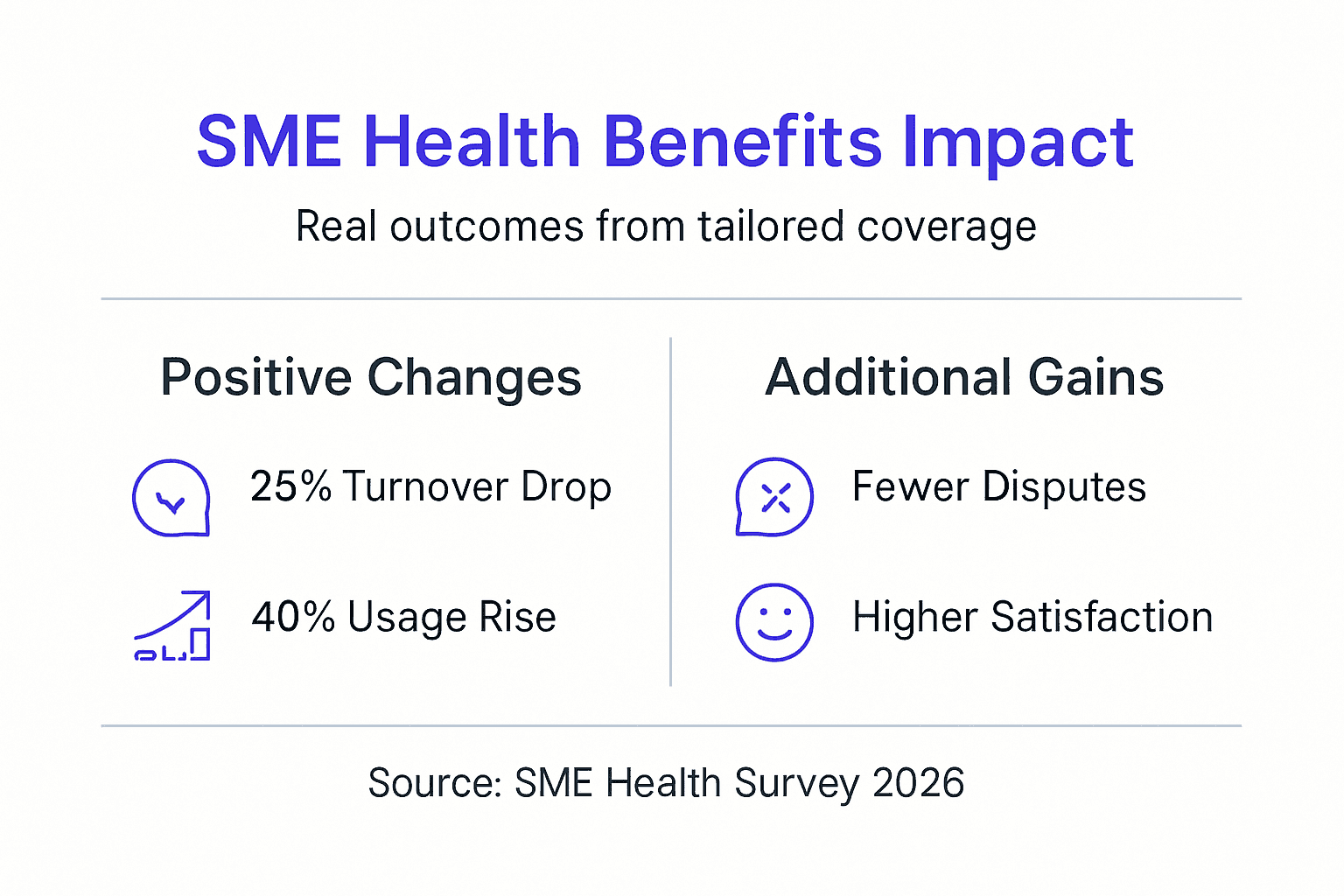
Employee turnover drops because comprehensive health benefits address a fundamental security need. When staff know their health and their families’ health is protected, they feel valued. This emotional connection to your organization translates into longer tenure. Turnover reduction saves recruitment and training costs that typically equal 50% to 200% of an employee’s annual salary.
Benefit utilization improves dramatically when employees trust their coverage and access quality networks. Utilization rates around 40% indicate healthy engagement. Low utilization suggests either poor communication or inadequate coverage that discourages use.
Employee satisfaction scores typically rise 15 to 30% after adding optional benefits like dental and telemedicine. These conveniences demonstrate that leadership understands modern employee needs beyond basic medical coverage.
Claim dispute reduction occurs naturally with clear communication and comprehensive coverage. Fewer disputes mean less HR time spent mediating between employees and insurers. Your administrative burden decreases while employee trust increases.
| Metric | Baseline | After Implementation | Timeframe |
|---|---|---|---|
| Employee Turnover | Industry Average | 25% Reduction | 12 months |
| Benefits Utilization | 20 to 30% | 40 to 50% | 6 months |
| Satisfaction Scores | Baseline Survey | 15 to 30% Increase | 6 months |
| Claim Disputes | Initial Rate | 30% Reduction | 12 months |
These outcomes compound over time. Year two typically shows even stronger results as employees fully understand and appreciate their benefits. The key is maintaining consistent communication and addressing feedback promptly during annual reviews. Tracking these metrics proves ROI to leadership and justifies continued investment in competitive health benefits. Reviewing health trends results for SMEs helps benchmark your progress.
Explore SME-Focused Health Insurance Solutions
Ready to implement health benefits that reduce turnover and boost satisfaction? The planning framework outlined above works best with insurance partners who understand SME realities. Tailored HMO health insurance for SMEs integrates PhilHealth seamlessly while offering flexible add-ons matching your budget constraints.
Explore coverage options designed specifically for Philippine small and medium enterprises. From comprehensive pre-existing condition coverage to digital health platforms, modern solutions eliminate complicated terms while delivering exceptional support. Understanding why HMO for small businesses matters helps you make informed decisions. Discover how Purple Cow HMO plans serve growing companies across industries with transparent pricing and fast claims processing.
Frequently Asked Questions
Does coverage include pre-existing conditions and special cases?
Quality SME health plans cover pre-existing conditions, congenital issues, and special procedures up to your Maximum Benefit Limit. Verify this explicitly during provider evaluation because some plans exclude or limit these scenarios, creating claim denials that damage employee trust.
How does PhilHealth integration work with private HMO plans?
PhilHealth provides baseline government coverage while private HMO plans supplement with broader networks, cashless access, and coverage beyond PhilHealth limits. Proper integration means employees benefit from both without coverage gaps or administrative confusion between the two systems.
What are typical claim processing times and how do we manage expectations?
Most claims process within 7 to 14 business days for standard cases. Complex claims requiring additional documentation may take 3 to 4 weeks. Communicate these timelines clearly during enrollment to prevent frustration and set realistic expectations about reimbursement speed.
How can we communicate plan benefits clearly to employees?
Use multiple communication channels including orientation sessions, simple FAQ documents, visual guides, and dedicated HR support for questions. Avoid insurance jargon and translate every concept into plain language. Peer ambassadors often explain benefits more effectively than formal presentations.
Do add-ons like dental and telemedicine really improve outcomes?
Yes, significantly. Dental coverage and telemedicine access typically boost employee satisfaction scores 15 to 30% because they address real daily health concerns beyond emergency medical situations. These conveniences demonstrate comprehensive care for employee wellbeing, driving both satisfaction and utilization rates higher.
Recommended
- Onboarding New Employees with Better Health Benefits: A Winning Hiring Strategy for SMEs
- 2025 Health Trends for SMEs in the Philippines: Key Strategies for Smarter Benefits
- Planning Employee Benefits for 2025: Budgeting for a Healthier Workforce
- Workforce Well-Being: Measuring Health ROI for SMEs in 2025
- What Is Metabolic Health? Data-Driven Insights | Biostarks
