

Flexible HMO Plan Options Explained for SMEs
Finding health coverage that fits both employee needs and budget is a real challenge for many small and medium enterprises in the Philippines. As the competition for talent rises, businesses are looking for more ways to offer personalized, meaningful healthcare benefits. A flexible HMO plan gives you control to choose services, coverage limits, and provider networks based on your exact workforce and financial goals, creating solutions that work for your team instead of forcing a one-size-fits-all approach.
Table of Contents
- What Is A Flexible HMO Plan?
- Types Of HMO Plans For SMEs
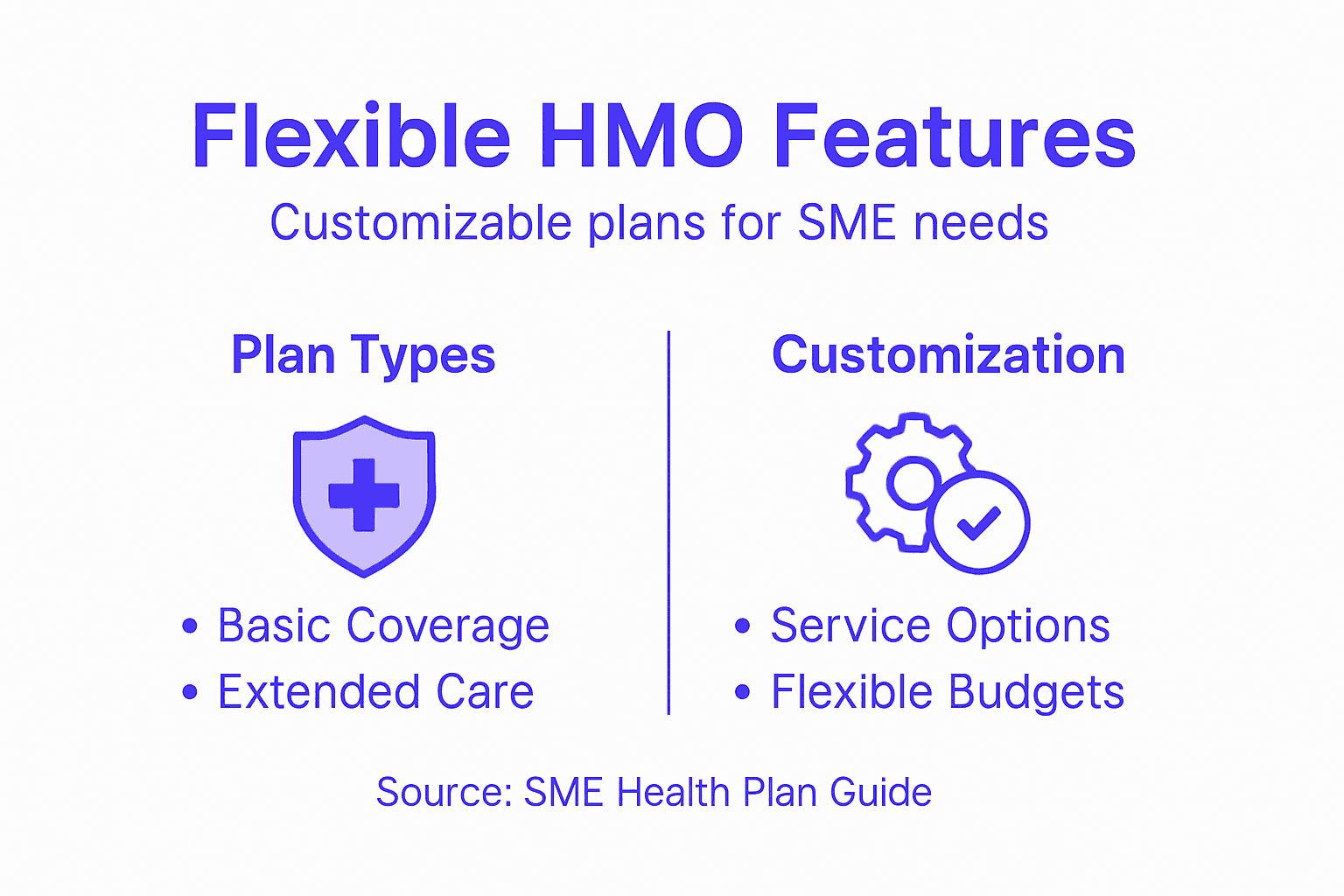
- Key Features And Customization Options
- Full Coverage For Pre-Existing Conditions
- Cost Implications And Comparison With Alternatives
- Common Mistakes When Choosing SME HMO Plans
Key Takeaways
| Point | Details |
|---|---|
| Flexible HMO Plans | These plans offer customizable health coverage tailored to the specific needs of small and medium enterprises. |
| Pre-Existing Conditions Coverage | Modern HMO plans provide comprehensive coverage for pre-existing conditions, enhancing employee well-being. |
| Cost Advantages | HMO plans usually feature lower monthly premiums and predictable expenses compared to other health insurance options. |
| Common Selection Mistakes | SMEs often underestimate coverage needs and focus primarily on cost, which can lead to inadequate protection and unexpected expenses. |
What Is a Flexible HMO Plan?
A flexible HMO plan represents a modern approach to health insurance tailored specifically for small and medium enterprises (SMEs) in the Philippines, offering customizable health coverage that adapts to unique organizational needs. Unlike traditional health maintenance organizations, these plans provide businesses with nuanced options for designing employee healthcare benefits.
At its core, a flexible HMO plan is designed to provide comprehensive medical coverage through a network of healthcare providers, with key distinguishing features that set it apart from rigid insurance models. Health Maintenance Organizations (HMOs) fundamentally operate by contracting with specific medical professionals and facilities to deliver managed healthcare services.
Flexible HMO plans typically offer several distinctive characteristics:
- Customizable coverage levels based on company size and budget
- Options to include or exclude specific medical services
- Ability to adjust maximum benefit limits
- Scalable plans that can grow with the organization
- Specialized coverage for different employee categories
The primary advantage of these plans lies in their adaptability. Small businesses can select coverage options that align precisely with their workforce demographics, financial constraints, and organizational healthcare philosophy. This means a tech startup with younger employees might choose different coverage compared to a manufacturing company with an older workforce.
Flexible HMO plans transform health insurance from a one-size-fits-all model to a strategic employee benefit that can be precisely tailored to organizational needs.
Businesses can typically customize their plans across several dimensions, including:
- Inpatient and outpatient coverage levels
- Emergency medical services
- Dental and vision add-ons
- Annual physical examination inclusions
- Dependent coverage options
Pro tip: Before selecting a flexible HMO plan, conduct a comprehensive workforce health assessment to identify the most relevant coverage options for your specific employee population.
Types of HMO Plans for SMEs
Small and medium enterprises (SMEs) have multiple HMO plan types to choose from, each offering distinct advantages for managing employee healthcare coverage. Four primary HMO models exist that cater to diverse organizational needs and structures, providing flexibility in healthcare benefit design.
The primary HMO plan types for SMEs include:
- Staff Model HMOs: The insurance provider directly employs healthcare professionals
- Group Model HMOs: Contracts with a single medical group practice
- Network Model HMOs: Contracts with multiple medical groups
- Independent Practice Association HMOs: Contracts with individual healthcare providers
Each model offers unique network structures and provider interaction levels, enabling businesses to select a plan that best matches their workforce composition and budgetary constraints. HMO programs for SMEs provide comprehensive medical benefits designed to be affordable and adaptable across different business sizes.
Choosing the right HMO plan model can significantly impact an organization’s ability to attract and retain top talent through competitive healthcare benefits.
When selecting an HMO plan, SMEs should consider several key factors:
- Total number of employees
- Demographic characteristics of workforce
- Budget allocated for healthcare benefits
- Specific healthcare needs of employees
- Desired level of provider network flexibility
Businesses can typically customize their plans with various options, including:
- Coverage for 1-200 employees
- Different policy limit levels
- Maternity coverage
- Spouse and dependent enrollment
- Specialized healthcare service inclusions
Pro tip: Conduct a comprehensive workforce health assessment before selecting an HMO plan to ensure the chosen model precisely matches your organization’s unique healthcare requirements.
Key Features and Customization Options
Flexible HMO plans for SMEs offer an unprecedented level of personalization, allowing businesses to design healthcare benefits that precisely match their organizational needs. Modular product structures enable comprehensive customization across multiple dimensions of healthcare coverage.
The core customization options for SMEs typically include:
- Coverage Scope: Selecting specific medical services
- Provider Network: Choosing preferred healthcare facilities
- Benefit Limits: Adjusting maximum coverage amounts
- Enrollment Flexibility: Scaling plans for workforce changes
- Special Condition Coverage: Including pre-existing and chronic conditions
Businesses can strategically design their healthcare packages by considering several key customization parameters. These parameters allow organizations to balance comprehensive employee protection with budget constraints, creating tailored solutions that address specific workforce healthcare requirements.
Effective HMO plan customization transforms healthcare benefits from a standard offering to a strategic employee retention tool.
Specific customization dimensions include:
- Outpatient service coverage levels
- Hospital confinement options
- Maternity care provisions
- Health checkup frequencies
- Dependent coverage extensions
Additional specialized features SMEs can incorporate into their plans involve:
- Dental care packages
- Vision treatment coverage
- Mental health support services
- Emergency medical evacuation
- Preventive healthcare programs
Pro tip: Conduct an annual review of your HMO plan to ensure continued alignment with your evolving workforce demographics and healthcare needs.

Below is a summary of the business impact of key HMO plan customization features:
| Customization Feature | What It Does | Business Impact |
|---|---|---|
| Adjustable Benefit Limits | Sets annual maximum coverage | Control over healthcare expenses |
| Provider Network Selection | Chooses specific healthcare partners | Improves employee convenience |
| Optional Add-ons (Dental, Vision) | Adds extra services | Increases employee satisfaction |
| Dependent Coverage Options | Includes spouse and children | Enhances talent retention |
Full Coverage for Pre-Existing Conditions
Pre-existing conditions have traditionally been a significant barrier for employees seeking comprehensive health coverage, often resulting in limited or expensive medical insurance options. SME-focused HMO plans now offer 100% coverage for these conditions, representing a transformative approach to employee healthcare benefits.
The comprehensive coverage for pre-existing conditions typically encompasses:
- Chronic diseases management
- Ongoing medical treatments
- Long-term health monitoring
- Specialized medication needs
- Continuous care for inherited health conditions
Unlike traditional insurance models that often exclude or limit coverage for pre-existing conditions, modern HMO plans for SMEs recognize the critical importance of providing inclusive healthcare protection. These plans acknowledge that employees with existing health challenges require consistent, uninterrupted medical support.
Comprehensive pre-existing condition coverage is not just a benefit—it’s a fundamental commitment to employee well-being and organizational health sustainability.
Key advantages of full pre-existing condition coverage include:
- Reduced financial burden on employees
- Enhanced healthcare accessibility
- Improved employee retention
- Comprehensive medical support
- Elimination of coverage gaps
Additional notable aspects of these inclusive healthcare plans involve:
- No additional premium charges
- Coverage for spouse and common-law partners
- Generous policy limit structures
- Transparent medical documentation processes
- Streamlined claims management
Pro tip: Request a detailed documentation of pre-existing condition coverage during your HMO plan selection to understand the full extent of medical support available.
Cost Implications and Comparison With Alternatives
Navigating the complex landscape of health insurance requires SMEs to carefully evaluate the financial implications of different plan types. HMO plans offer distinct cost advantages compared to alternative health insurance models, presenting a strategic solution for budget-conscious businesses.
Key cost considerations for different health plan types include:
- HMO Plans: Lower monthly premiums
- PPO Plans: Higher flexibility, increased costs
- HDHP Plans: High deductibles, lower premiums
- EPO Plans: Restricted network with moderate pricing
- POS Plans: Hybrid model with mixed cost structures
Unlike more expensive alternatives, HMO plans prioritize cost control through managed care approaches. These plans typically require employees to work within a specific provider network and obtain referrals for specialist consultations, strategies that directly contribute to reduced overall healthcare expenditures.
Here’s a side-by-side look at how popular health insurance plans compare for SMEs:
| Plan Type | Network Flexibility | Upfront Cost Predictability | Specialist Access Process |
|---|---|---|---|
| HMO Plan | Limited to specific network | Highly predictable monthly fees | Referral required for specialists |
| PPO Plan | Broad, out-of-network access | Less predictable, often higher | Direct specialist access, no referral |
| HDHP | Narrow, cost-focused network | Lowest premiums, high deductibles | Varies, generally limited |
| EPO Plan | Network only, no out-of-network | Moderate, with strict limits | Direct within network |
| POS Plan | Hybrid, some out-of-network | Mixed, depends on use | Referral often required |
The true value of an HMO plan lies not just in its lower costs, but in its systematic approach to managing healthcare expenses for small businesses.
Cost comparison across different plan types reveals several critical insights:
- Monthly premium differences
- Out-of-pocket expense potential
- Network restriction implications
- Specialist consultation costs
- Long-term financial predictability
Specific cost-related advantages of HMO plans for SMEs include:
- Predictable monthly healthcare expenses
- Lower initial investment requirements
- Reduced administrative management costs
- Streamlined claims processing
- Centralized care coordination
Pro tip: Calculate your organization’s total expected healthcare spending by comparing potential out-of-pocket expenses across different plan types, not just monthly premiums.
Common Mistakes When Choosing SME HMO Plans
Choosing the right HMO plan requires careful consideration and strategic evaluation to avoid potential pitfalls that could compromise employee healthcare coverage. SMEs frequently make critical errors when selecting health insurance plans, often resulting in inadequate protection and unexpected financial challenges.
The most prevalent mistakes small and medium enterprises encounter include:
- Underestimating Coverage Requirements: Selecting plans with insufficient medical protection
- Ignoring Fine Print: Overlooking critical policy exclusions and limitations
- Focusing Solely on Premiums: Prioritizing cost over comprehensive coverage
- Neglecting Provider Networks: Failing to evaluate healthcare provider accessibility
- Skipping Detailed Comparisons: Making decisions without thorough plan analysis
Each mistake represents a potential risk that could significantly impact an organization’s ability to provide quality healthcare benefits. Businesses must approach HMO plan selection with a comprehensive and strategic mindset, understanding that the cheapest option is not always the most cost-effective in the long term.
Selecting an HMO plan is more than a financial decision—it’s a commitment to your employees’ health and well-being.
Specific risks associated with common selection mistakes include:
- Unexpected out-of-pocket expenses
- Limited specialist access
- Reduced employee satisfaction
- Potential legal compliance issues
- Higher long-term healthcare costs
Additional critical considerations for SMEs involve:
- Workforce demographic analysis
- Annual healthcare spending projections
- Comprehensive benefit requirement mapping
- Potential future medical needs
- Cost-benefit analysis of different plan structures
Pro tip: Conduct a comprehensive workforce health assessment and consult multiple insurance providers before making a final HMO plan selection.
Discover Flexible HMO Plans Tailored for Your SME’s Unique Needs
Navigating the complex choices around flexible HMO plans can be challenging, especially when trying to balance comprehensive coverage with cost control and workforce diversity. This article highlights key pain points such as customizing benefit limits, ensuring full pre-existing condition coverage, and selecting the right provider networks. At HMO Plans, we understand these challenges and deliver adaptable health insurance solutions designed exclusively for Small and Medium Enterprises in the Philippines.
Why choose our solutions:
- 100 percent coverage of pre-existing conditions up to your Maximum Benefit Limit
- Flexible add-ons including dental services, annual physical exams, and more
- Access to premier hospitals like Big 9 and nationwide 24/7 care
Empower your SME today with a health plan that delivers real value and peace of mind. Don’t settle for one-size-fits-all coverage when your employees deserve flexible and full protection. Visit HMO Plans to explore our flexible HMO options and start customizing a plan that fits your company’s needs right now.
Frequently Asked Questions
What is a flexible HMO plan?
A flexible HMO plan is a customizable health insurance option for small and medium enterprises that adapts to unique organizational needs, offering tailored medical coverage through a network of healthcare providers.
How do flexible HMO plans benefit small and medium enterprises?
These plans provide adaptability, allowing SMEs to select coverage options that align with their workforce demographics and budget, making healthcare benefits more strategic and relevant to employee needs.
What are the key features of flexible HMO plans for SMEs?
Key features include customizable coverage levels, options to include or exclude specific medical services, adjustable maximum benefit limits, and specialized coverage for different employee categories.
How do I choose the right HMO plan model for my business?
Consider factors such as the total number of employees, workforce demographics, allocated healthcare budget, specific healthcare needs of employees, and desired provider network flexibility.
Recommended
- Evaluating Vendors: How SMEs Can Choose the Right HMO Partner
- Understanding HMO Basics: A Guide for New HR Managers in SMEs
- HMO Health Insurance for Small and Medium Enterprises in the Philippines
- Beyond PhilHealth: How SMEs Can Maximize Health Investments for Better ROI
- Affordability in Hearing Healthcare – Why It Matters – Audora
