

How health insurance shapes outsourcing success for SMEs
Many Philippine SME owners believe mandatory PhilHealth coverage alone secures their outsourcing workforce stability. This misconception costs businesses thousands in preventable turnover. Health insurance profoundly influences outsourcing success and employee retention, yet basic PhilHealth provides only foundational coverage. SMEs seeking competitive advantage need supplemental solutions that address real employee welfare gaps. This guide explains compliance requirements, benefit structures, cost impacts, and practical outsourcing strategies that transform health insurance from a checkbox obligation into a strategic retention tool for growing Philippine enterprises.
Table of Contents
- Key takeaways
- Understanding PhilHealth’s mandatory role in outsourcing compliance
- Beyond PhilHealth: the strategic role of HMO insurance in outsourcing success
- How health insurance reduces attrition and delivers ROI for Philippine SMEs
- Outsourcing health insurance management: easing SME administrative burdens and scaling benefits
- Explore the best HMO plans tailored for Philippine SMEs
- Frequently asked questions
Key Takeaways
| Point | Details |
|---|---|
| PhilHealth limits | Basic PhilHealth provides limited inpatient and outpatient coverage, not enough to address everyday health needs. |
| Supplemental HMO benefits | Private HMO plans fill gaps in outpatient care, dental and preventive services to improve satisfaction and reduce turnover. |
| Outsourcing payroll compliance | Outsourcing HR and payroll reduces administrative burden and ensures correct contributions and timely remittances. |
| Turnover cost savings | Investing in broader health benefits lowers attrition and yields long term cost savings. |
| Health benefits enable scale | Strategic benefits support scalable outsourcing by aligning health coverage with growth and compliance requirements. |
Understanding PhilHealth’s mandatory role in outsourcing compliance
Every employer in the Philippines must enroll workers in PhilHealth and contribute 5% of monthly salary, split equally between company and employee. This universal health insurance program provides basic inpatient and outpatient benefits, but coverage remains limited compared to private alternatives. SMEs entering outsourcing arrangements face strict compliance deadlines: register employees within 30 days of hiring, deduct contributions accurately, and remit payments on schedule. Missing these obligations triggers penalties and legal complications that disrupt operations.
The contribution mechanics work simply: employers withhold 2.5% from employee salaries and match it with another 2.5% from company funds. For a worker earning PHP 25,000 monthly, the total PhilHealth contribution reaches PHP 1,250, with PHP 625 coming from each party. These funds flow into the national health insurance pool, providing members access to accredited hospitals and clinics for covered procedures. However, PhilHealth primarily addresses serious inpatient needs, leaving everyday outpatient care, diagnostics, and preventive services largely out of pocket.
SMEs struggling with cash flow can access installment payment arrangements and subsidy programs through PhilHealth regional offices. The agency recognizes that smaller enterprises need flexibility while building compliant operations. Many SMEs choose to outsource payroll processing to business process outsourcing providers who handle contribution calculations, deductions, and remittances automatically. This delegation reduces administrative burden significantly while maintaining PhilHealth compliance throughout scaling phases.
Pro Tip: Set up automated payroll systems that flag contribution changes whenever PhilHealth adjusts premium rates or salary brackets, preventing costly compliance gaps during rapid hiring phases.
For outsourcing operations, PhilHealth forms the legal foundation but rarely satisfies employee expectations alone. Workers in call centers, IT support, and administrative roles face health challenges from night shifts, screen time, and sedentary work. Basic PhilHealth coverage does not address these occupational health needs comprehensively. SMEs serious about retention layer supplemental benefits on top of mandatory contributions, creating a competitive advantage in tight labor markets where skilled workers evaluate total compensation packages carefully.
Beyond PhilHealth: the strategic role of HMO insurance in outsourcing success
HMO plans complement PhilHealth by covering outpatient services, dental care, vision benefits, and faster access that government insurance does not provide. While PhilHealth focuses on catastrophic and inpatient care, private HMOs address the daily health needs that actually drive employee satisfaction and productivity. For SMEs managing outsourced teams, this distinction matters enormously. Workers dealing with minor illnesses, routine checkups, or preventive care find PhilHealth insufficient, leading to delayed treatment, worsening conditions, and eventual absenteeism.
HMO coverage packages typically include inpatient benefits ranging from PHP 300,000 to over PHP 1,000,000 per year, far exceeding PhilHealth limits. More importantly, they provide outpatient consultation allowances, diagnostic test coverage, emergency room access without referral requirements, and prescription medicine reimbursements. Employees can visit accredited clinics for immediate care without navigating bureaucratic approval processes. This convenience reduces sick days and keeps productivity stable, a critical factor for outsourcing operations where client deliverables depend on consistent team availability.
SMEs and BPOs invest in HMO plans specifically to address occupational health risks common in outsourced roles. Night shift workers face disrupted sleep patterns, increased stress, and metabolic issues that require ongoing medical attention. Screen-intensive positions cause eye strain, headaches, and musculoskeletal problems. Standard PhilHealth coverage does not prioritize these conditions, but comprehensive HMO plans include vision care, physical therapy, and mental health support that directly target these challenges. The result: healthier employees who stay longer and perform better.

| Feature | PhilHealth | Private HMO |
|---|---|---|
| Coverage focus | Inpatient, catastrophic care | Outpatient, preventive, wellness |
| Waiting periods | Minimal for basic services | Varies by plan, often 30-90 days |
| Provider network | All accredited government facilities | Premium private hospitals and clinics |
| Out-of-pocket costs | Significant for outpatient care | Minimal or zero for covered services |
| Typical SME use case | Legal compliance baseline | Competitive retention tool |
Pro Tip: Choose HMO plans that include telemedicine platforms, allowing remote workers to access doctors instantly without clinic visits, reducing downtime and improving early intervention for health issues.
The combination of PhilHealth and HMO benefits creates a comprehensive safety net that employees recognize and value. When SMEs communicate this dual coverage clearly during onboarding, new hires perceive the organization as genuinely invested in their welfare. This perception translates directly into loyalty, engagement, and reduced turnover intentions. For outsourcing operations competing for talent in saturated markets, robust health benefits become a differentiator that attracts higher quality candidates and keeps them committed through challenging project phases.
How health insurance reduces attrition and delivers ROI for Philippine SMEs
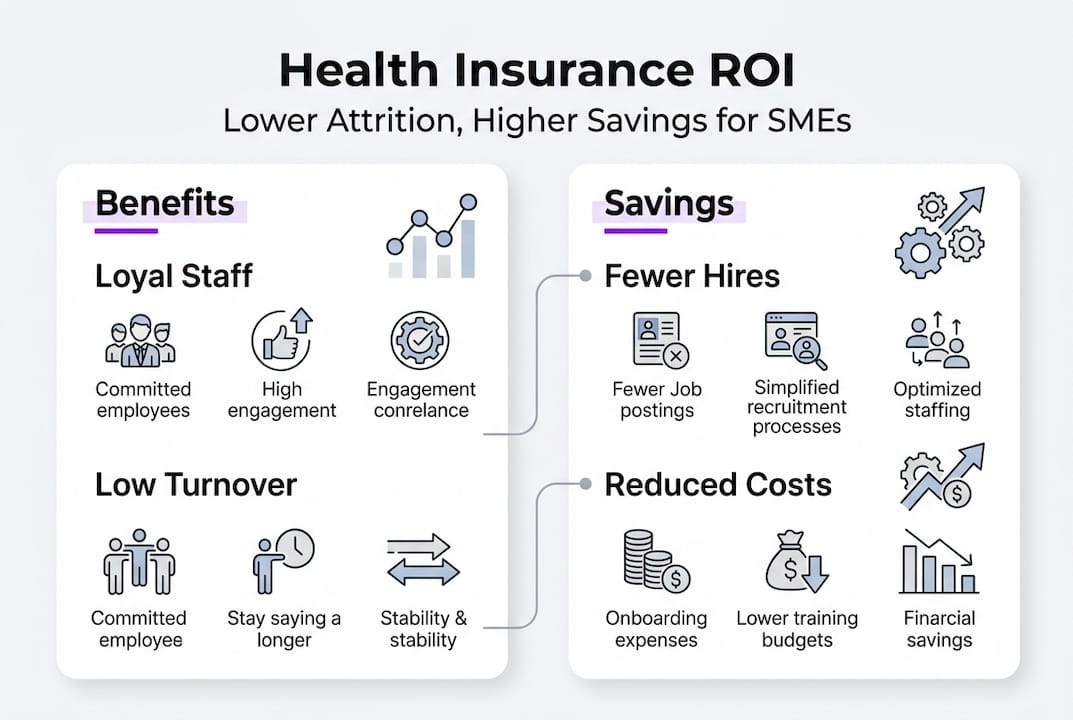
Business process outsourcing operations in the Philippines face attrition rates averaging 38-42% annually, with 46% of turnovers linked directly to health-related concerns. Employees leave when they perceive inadequate health support, especially after experiencing medical emergencies that drain personal finances. This pattern creates a vicious cycle: high turnover increases hiring costs, training expenses, and operational disruption, forcing SMEs to allocate resources to recruitment rather than growth. Breaking this cycle requires strategic health insurance investments that demonstrate organizational commitment to employee welfare.
The financial case for comprehensive health coverage proves compelling when analyzed properly. Investing PHP 2,000 monthly in robust health insurance saves PHP 15,000 through reduced turnover, cutting costly hiring cycles and absenteeism. This 7.5x return on investment stems from multiple factors: lower recruitment advertising costs, reduced training program expenses, decreased productivity losses during onboarding periods, and improved team cohesion when experienced workers stay longer. For SMEs operating on tight margins, these savings compound quickly, freeing capital for expansion and innovation.
“Health insurance investments create a virtuous cycle where employees feel valued, stay longer, perform better, and require less management intervention. The ROI extends beyond direct cost savings into improved client satisfaction, reduced error rates, and enhanced company reputation in competitive outsourcing markets.”
Here is how health benefits systematically improve retention and deliver measurable returns:
- Enhanced perceived organizational support increases employee commitment and reduces turnover intentions by addressing basic welfare needs that workers prioritize above salary increases.
- Reduced absenteeism from preventive care and early intervention keeps teams productive and project timelines on track, avoiding costly delays and client dissatisfaction.
- Improved employee satisfaction scores translate into better performance reviews, higher quality output, and stronger client relationships that generate repeat business.
- Lower hiring frequency reduces recruitment costs, training expenses, and the productivity drag from constant team composition changes.
- Stronger employer brand attracts higher quality candidates who seek stable, employee-focused organizations, reducing time-to-fill for critical positions.
| Health investment level | Annual attrition rate | Cost per employee turnover | Total annual turnover cost (50 employees) |
|---|---|---|---|
| PhilHealth only | 42% | PHP 45,000 | PHP 945,000 |
| PhilHealth + basic HMO | 28% | PHP 45,000 | PHP 630,000 |
| PhilHealth + comprehensive HMO | 18% | PHP 45,000 | PHP 405,000 |
The data reveals a clear pattern: every tier of health insurance investment reduces attrition proportionally, generating savings that far exceed premium costs. SMEs paying PHP 3,000 monthly per employee for comprehensive HMO coverage spend PHP 1,800,000 annually for a 50-person team. However, reducing attrition from 42% to 18% saves PHP 540,000 in turnover costs alone, not counting productivity gains, improved client retention, and reduced management time spent on recruitment. The ROI from maximizing health investments becomes undeniable when viewed through this comprehensive lens.
SMEs that communicate health benefits effectively during onboarding and throughout employment see even stronger retention effects. Employees who understand their coverage, know how to access services, and receive support navigating claims feel genuinely cared for. This emotional connection to the organization reduces job search behavior and increases willingness to weather difficult project phases. For outsourcing operations where client demands fluctuate and stress levels vary, having a stable, committed workforce provides strategic flexibility that competitors without robust health benefits cannot match.
Outsourcing health insurance management: easing SME administrative burdens and scaling benefits
Managing health insurance compliance, claims processing, and employee inquiries consumes significant HR resources that SMEs could deploy strategically elsewhere. Outsourcing health insurance claims processing achieves 50-70% cost savings and 99% accuracy, allowing SME HR teams to focus on employee development, culture building, and strategic workforce planning. Philippine BPO providers specialize in handling eligibility verification, prior authorization requests, and claims adjudication with precision that reduces errors and speeds reimbursements.
Payroll outsourcing solutions automate PhilHealth contribution calculations, deductions, and remittances, eliminating manual errors that trigger compliance penalties. These systems integrate with timekeeping platforms, salary databases, and government reporting portals, ensuring accurate and timely submissions without constant HR oversight. For SMEs scaling rapidly through outsourcing arrangements, this automation becomes essential. Adding 20 employees monthly creates administrative complexity that overwhelms small HR teams, but outsourced payroll systems handle growth seamlessly.
Key benefits of outsourcing health insurance administration include:
- Improved accuracy in claims processing and eligibility verification, reducing employee frustration and payment delays
- Enhanced compliance with PhilHealth regulations and private HMO contract terms, avoiding penalties and coverage gaps
- Scalable infrastructure that grows with your business without proportional increases in administrative staff
- Better employee welfare support through dedicated specialists who understand health insurance complexities and can guide workers effectively
- Reduced HR workload, freeing internal teams to focus on strategic initiatives like talent development and organizational culture
SMEs should evaluate outsourcing partners carefully, prioritizing providers with proven expertise in Philippine health insurance regulations and strong track records in accuracy and timeliness. Request case studies from similar-sized organizations, verify compliance certifications, and test responsiveness during the evaluation phase. The right partner becomes an extension of your HR team, handling routine administrative tasks while escalating complex issues appropriately. This relationship allows SMEs to offer enterprise-level benefits administration without building internal expertise or infrastructure.
Pro Tip: Schedule quarterly reviews of your outsourced health insurance processes to identify improvement opportunities, verify accuracy rates remain high, and ensure employee satisfaction with claims support stays strong.
Regular health plan reviews ensure your coverage keeps pace with workforce needs and market conditions. As your outsourced team grows and matures, health insurance requirements evolve. New hires may have different demographic profiles, existing employees face changing health challenges, and competitive pressures require benefit enhancements. Annual audits of plan utilization, employee feedback, and cost effectiveness guide smart adjustments that maximize value. SME health coverage strategies vary by industry, but the principle remains constant: align benefits with actual employee needs and business objectives.
For SMEs considering outsourcing health claims processing, the decision often hinges on growth trajectory and internal capability. Organizations adding more than 10 employees quarterly typically reach a tipping point where outsourcing delivers clear ROI. Smaller, stable teams may handle administration internally if HR has bandwidth and expertise. However, even modest-sized SMEs benefit from outsourcing when facing complex multi-plan environments, high claims volumes, or compliance uncertainty. The key is calculating total cost of ownership, including hidden expenses like HR time, error correction, and employee dissatisfaction from slow claims processing.
Explore the best HMO plans tailored for Philippine SMEs
Navigating health insurance options feels overwhelming, but specialized HMO plans designed specifically for Philippine SMEs simplify the process while delivering comprehensive coverage. These plans complement mandatory PhilHealth contributions, addressing the outpatient care, preventive services, and specialized treatment gaps that drive employee turnover. When you choose coverage that genuinely meets workforce needs, you transform health insurance from a compliance checkbox into a strategic retention tool that supports sustainable outsourcing growth.
Explore the best HMO plans for SMEs that offer flexible customization, transparent pricing, and dedicated support for growing Philippine businesses. Review comprehensive features including cashless hospital access, 24/7 nationwide coverage, and optional add-ons for dental care and annual physical exams. The right health insurance partner understands SME budget constraints while refusing to compromise on coverage quality, helping you build a benefits package that attracts talent and keeps your team healthy, productive, and committed to your organization’s success.
Frequently asked questions
What is the role of PhilHealth in outsourcing for SMEs?
PhilHealth provides mandatory basic health coverage that employers must offer all employees, requiring timely registration, contribution deduction, and remittance. It ensures universal healthcare access and forms the legal compliance foundation for outsourcing HR management. However, PhilHealth alone rarely satisfies employee expectations, making supplemental coverage essential for competitive retention.
How does HMO insurance complement PhilHealth benefits?
HMOs cover outpatient care, dental services, vision benefits, and diagnostic tests that PhilHealth excludes or limits significantly. They provide faster service access without bureaucratic approval processes, reducing sick days and improving employee satisfaction. This comprehensive coverage directly addresses occupational health challenges common in outsourced roles, creating stability that benefits SME operations substantially.
What are the benefits of outsourcing health insurance administration?
Outsourcing yields 50-70% cost savings through improved accuracy, reduced errors, and freed HR capacity for strategic work. It supports scalable benefits management critical for growing outsourced operations without proportional administrative staff increases. Specialized providers handle complex claims processing, eligibility verification, and compliance tracking more efficiently than internal teams, especially during rapid growth phases requiring frequent plan reviews.
How much should SMEs budget for employee health insurance?
Budget PHP 2,000 to PHP 4,000 monthly per employee for comprehensive coverage that includes PhilHealth contributions and robust HMO benefits. This investment delivers 7.5x ROI through reduced turnover, lower absenteeism, and improved productivity. Actual costs vary by plan design, employee demographics, and coverage levels, but prioritizing health insurance as a strategic expense rather than a cost center transforms retention outcomes and supports sustainable outsourcing growth.
Can SMEs customize HMO plans for specific workforce needs?
Yes, modern HMO providers offer flexible customization including optional dental coverage, annual physical exams, mental health support, and telemedicine platforms. SMEs can tailor benefits to address specific occupational health risks like night shift challenges, screen time issues, or physical demands. This customization ensures you pay only for coverage your workforce actually needs while avoiding gaps that drive turnover, creating optimal value from your health insurance investment.
Recommended
- Onboarding New Employees with Better Health Benefits: A Winning Hiring Strategy for SMEs
- Eumir
- The Better HMO Plans for SMEs | Purple Cow | Blog | Rai dela Cruz | Best HMO Plans Philippines - Purple Cow
- The Better HMO Plans for SMEs | Purple Cow | Features | Rai dela Cruz | Best HMO Plans Philippines - Purple Cow
- Maîtriser la santé au travail en PME : guide 2026
- The Top 7 Insurance Policies Every Small Business Owner Needs - Jenkins Insurance Agency Inc.
