

HMO Plans for SMEs – Maximizing Employee Wellness
Choosing health insurance for your workforce can feel like navigating a maze, especially when pre-existing conditions and emergency care are top concerns. For HR managers at Small and Medium Enterprises in the Philippines, finding the right coverage is more than a checkbox—it impacts employee well-being, retention, and your company’s financial stability. Discover how Health Maintenance Organization plans give your team access to coordinated care, predictable expenses, and tailored benefits that fit both your budget and the needs of your employees.
Table of Contents
- What Are HMO Plans for SMEs?
- Types of Coverage and Customizable Benefits
- How HMO Plans Deliver Employee Security
- Financial Advantages and Healthcare Cost Savings
- Comparing HMO Plans With Other Benefits
Key Takeaways
| Point | Details |
|---|---|
| HMO Plans Enhance Employee Wellness | HMO plans provide comprehensive medical coverage, focusing on coordinated care and preventive services for better health outcomes. |
| Customization Meets Diverse Needs | Modern HMO plans allow SMEs to tailor health benefits to specific workforce demographics, improving employee satisfaction and retention. |
| Financial Predictability is Key | HMO plans offer lower premiums and predictable costs, helping SMEs manage healthcare expenses more effectively. |
| Strategic Plan Selection Matters | Comparing HMO with other plans is crucial; organizations should assess employee preferences and budget constraints to choose the best option. |
What Are HMO Plans for SMEs?
Health Maintenance Organization (HMO) plans are specialized health insurance packages designed specifically for Small and Medium Enterprises (SMEs) to provide comprehensive medical coverage for their employees. Unlike traditional insurance models, managed healthcare networks create structured systems that optimize both employee wellness and organizational cost-effectiveness.
HMO plans operate through a strategic framework that emphasizes coordinated, preventative healthcare. Key characteristics include:
- Designated network of healthcare providers
- Requirement for primary care physician coordination
- Negotiated rates with medical facilities
- Focus on preventative and wellness services
- Cost-controlled medical interventions
These plans fundamentally differ from traditional insurance by creating an integrated healthcare ecosystem. Instead of fragmented medical services, HMOs establish a collaborative framework where healthcare providers work under regulated agreements to deliver efficient, streamlined medical support.
For SMEs, HMO plans represent a strategic approach to employee benefits. By offering comprehensive medical coverage, companies can attract top talent, demonstrate commitment to workforce well-being, and manage healthcare expenses more predictably. The structured nature of HMO plans allows businesses to budget medical costs while ensuring employees receive high-quality, coordinated healthcare services.
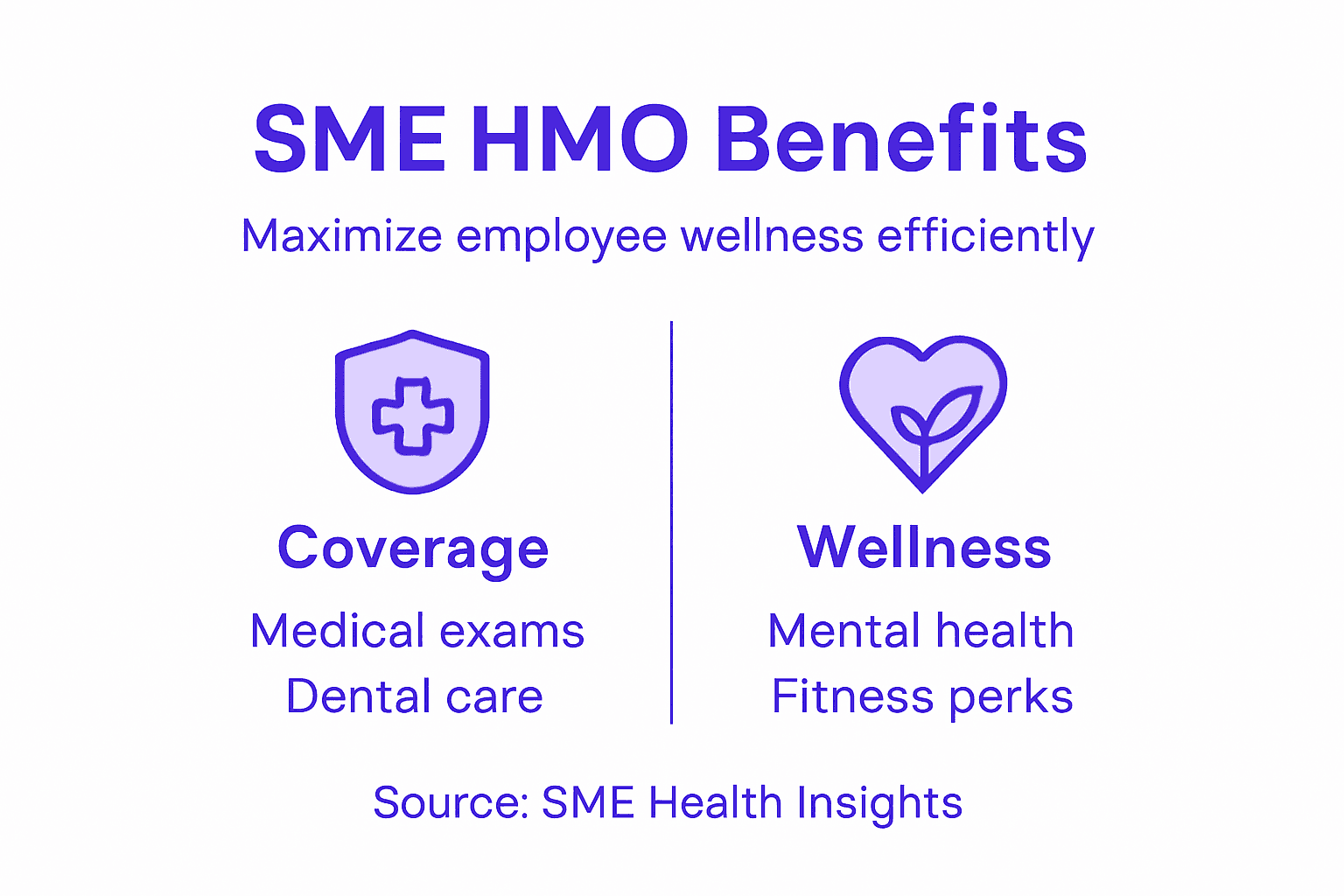
Pro tip: When evaluating HMO plans, focus on the breadth of the provider network and the specific wellness services included, not just the monthly premium.
Types of Coverage and Customizable Benefits
Health insurance for Small and Medium Enterprises (SMEs) has evolved beyond one-size-fits-all models, offering increasingly sophisticated coverage options for diverse workforce needs. Modern HMO plans provide flexible frameworks that allow businesses to design health benefits tailored to their specific organizational requirements and employee demographics.
Typical HMO coverage categories include:
- Basic medical consultations
- Preventive care services
- Emergency medical treatment
- Outpatient procedures
- Specialist referral networks
- Telemedicine consultations
- Wellness program interventions
Customization options enable SMEs to create nuanced benefit packages that address unique workforce characteristics. Organizations can select specialized coverage modules that might include specific medical conditions, age-related healthcare needs, or industry-specific health risks. This strategic approach allows companies to balance comprehensive employee protection with budgetary constraints.
The modular design of contemporary HMO plans represents a significant advancement in employee healthcare. By offering granular selection of coverage components, businesses can construct health benefits that are not just comprehensive, but precisely aligned with their workforce’s specific requirements. This approach transforms health insurance from a generic expense into a strategic employee retention and wellness tool.
Here’s a summary of how customizable HMO coverage modules can address different SME workforce needs:
| Customization Option | Example Workforce Need | Potential Benefit |
|---|---|---|
| Age-specific healthcare | Younger or aging employee groups | Tailored preventive services |
| Industry-focused coverage | High-risk industry employees | Address occupation risks |
| Chronic condition support | Employees with ongoing illnesses | Better management resources |
| Telemedicine inclusion | Remote or hybrid workforce | Easier access to care |
Pro tip: When designing your HMO plan, conduct an anonymous employee health survey to understand your workforce’s specific medical needs and preferences.
How HMO Plans Deliver Employee Security
Health Maintenance Organization (HMO) plans provide robust security mechanisms that transform traditional health insurance into a comprehensive protective framework for employees. Coordinated care strategies ensure that workers receive systematic, holistic medical support that goes beyond simple treatment, focusing on prevention, continuous monitoring, and financial predictability.
Key security features of HMO plans include:
- Fixed network of trusted healthcare providers
- Primary care physician coordination
- Predictable out-of-pocket expenses
- Comprehensive preventive care services
- Cost containment mechanisms
- Regulatory consumer protections
- Reduced financial uncertainty
The structured approach of HMO plans creates multiple layers of employee protection. By establishing clear pathways for medical treatment and enforcing strict regulatory standards, these plans minimize potential gaps in healthcare coverage. Financial predictability becomes a cornerstone of employee wellness, with transparent pricing and controlled expenses eliminating unexpected medical financial burdens.

Regulatory frameworks further enhance employee security by mandating minimum healthcare service standards. These guidelines ensure that a substantial portion of insurance premiums directly fund medical services, not administrative overhead. This approach transforms health insurance from a transactional expense into a strategic investment in workforce well-being, providing employees with comprehensive protection and peace of mind.
Pro tip: Review your HMO plan’s network coverage annually to ensure it continues meeting your employees’ evolving healthcare needs.
Financial Advantages and Healthcare Cost Savings
Small and Medium Enterprises (SMEs) can unlock significant financial benefits through strategically designed HMO plans that reduce healthcare expenditure while maintaining comprehensive employee wellness. By leveraging negotiated provider rates and structured care management, businesses can transform healthcare from an unpredictable expense into a strategic financial investment.
Key financial advantages of HMO plans include:
- Lower monthly premium costs
- Predictable healthcare spending
- Reduced out-of-pocket expenses
- Negotiated provider rates
- Minimized administrative overhead
- Decreased workplace absenteeism
- Enhanced workforce productivity
The cost containment mechanisms inherent in HMO plans create multiple layers of financial protection. Regulatory frameworks mandate that a substantial percentage of insurance premiums directly fund medical services, ensuring transparency and efficiency. This approach eliminates unnecessary administrative expenses and redirects resources toward actual healthcare delivery, providing SMEs with a more economical and sustainable health benefits model.
By implementing strategic provider agreements, HMO plans enable SMEs to manage healthcare budgets with unprecedented precision. The fixed reimbursement rates and comprehensive coverage eliminate financial uncertainties, allowing businesses to forecast health-related expenses accurately. This predictability becomes a critical advantage, transforming healthcare from a potential financial burden into a calculated, manageable operational cost.
Pro tip: Conduct an annual review of your HMO plan’s cost structure to identify potential savings and ensure continued alignment with your company’s financial goals.
Comparing HMO Plans With Other Benefits
Health insurance offerings for Small and Medium Enterprises (SMEs) encompass multiple plan types, each with distinct advantages and trade-offs. Health plan comparisons reveal significant differences in provider flexibility, cost structures, and coverage mechanisms that directly impact employee wellness and organizational financial strategies.
Key differences between health plan types include:
-
HMO Plans:
- Lowest monthly premiums
- Strict provider network
- Requires primary care physician referrals
- Emphasizes preventive care
-
PPO Plans:
- Higher monthly premiums
- Greater provider flexibility
- Out-of-network coverage available
- Less care coordination
-
High Deductible Health Plans (HDHP):
- Lower monthly premiums
- Higher out-of-pocket expenses
- Paired with Health Savings Accounts
- More consumer-driven healthcare approach
Network restrictions fundamentally distinguish these plans. HMOs maintain the most structured approach, requiring employees to work within a predefined provider network and obtain specialist referrals. This model ensures cost predictability and care coordination but potentially limits individual healthcare choices.
Comparing insurance options demonstrates that SMEs must carefully balance cost considerations with employee preferences. While HMOs offer the most economical solution, alternative plans like PPOs provide greater flexibility at increased expense. The optimal choice depends on specific workforce demographics, budget constraints, and organizational healthcare philosophy.
The following table compares business impacts of HMO, PPO, and HDHP health plans for SMEs:
| Plan Type | Cost Predictability | Care Coordination | Employee Choice Level |
|---|---|---|---|
| HMO | High, fixed expenses | Strong, via PCP | Limited, network-restricted |
| PPO | Moderate, varies with usage | Moderate | High, wide provider choice |
| HDHP | Variable, higher exposure | Minimal | Flexible, self-managed |
Pro tip: Conduct an anonymous employee survey to understand healthcare preferences before selecting a benefits plan to ensure maximum satisfaction and utilization.
Secure Your SME’s Future with Tailored HMO Plans for Maximum Employee Wellness
Understanding the challenges SMEs face in managing healthcare costs while ensuring employee satisfaction is crucial. The article highlights the importance of coordinated care, cost predictability, and comprehensive coverage as key elements to maximizing employee wellness. If your business aims to deliver reliable health protection that supports your workforce’s specific needs—whether it is managing pre-existing conditions or offering preventive services—our solutions provide the answer.
At HMO Plans, we specialize in health insurance plans designed specifically for Small and Medium Enterprises in the Philippines. Partnered with Purple Cow and Etiqa, we offer 100% coverage commitment including for pre-existing and congenital conditions. Enjoy benefits like cashless access to premier accredited hospitals, nationwide 24/7 coverage, and flexible customization through add-ons such as dental services or life insurance. With our transparent and cost-effective approach, your SME can gain financial security and deliver exceptional healthcare to employees.
Ready to transform your employee benefits and provide unmatched security and wellness? Explore how our comprehensive HMO solutions can fit your business needs today. Visit HMO Plans now to learn more and take the next step toward maximizing your SME’s healthcare strategy.
Frequently Asked Questions
What are the key features of HMO plans for SMEs?
HMO plans for SMEs typically include a designated network of healthcare providers, primary care physician coordination, negotiated rates with medical facilities, an emphasis on preventive care, and cost-controlled medical interventions.
How do HMO plans differ from other health insurance options?
HMO plans generally have lower monthly premiums and require employees to use a specific network of providers, unlike PPO plans that offer greater flexibility but at higher costs. HDHPs have lower premiums but higher out-of-pocket expenses.
What customization options are available within HMO plans?
HMO plans offer various customization options such as age-specific healthcare, industry-focused coverage, chronic condition support, and telemedicine inclusion, allowing SMEs to tailor benefits to their workforce’s unique needs.
How do HMO plans help SMEs manage healthcare costs?
HMO plans can reduce healthcare expenditures through negotiated provider rates, predictable spending, and minimized administrative overhead, enabling SMEs to manage their healthcare budgets more effectively.
Recommended
- HMO Health Insurance for Small and Medium Enterprises in the Philippines
- Understanding HMO Basics: A Guide for New HR Managers in SMEs
- Workforce Well-Being: Measuring Health ROI for SMEs in 2025
- Beyond PhilHealth: How SMEs Can Maximize Health Investments for Better ROI
- Seguro médico empresa: Cobertura global para expatriados - Unparalleled Global Benefits
