

HMO Supplemental Coverage Explained for SMEs
Finding affordable ways to keep employees healthy is a daily priority for HR managers in the Philippines. When government insurance like PhilHealth leaves coverage gaps, small and medium-sized enterprises need solutions that balance quality care with predictable costs. This article breaks down the essentials of HMO supplemental coverage, showing how expanded benefits and coordinated care can help businesses manage expenses while supporting workforce well-being.
Table of Contents
- Defining HMO Supplemental Coverage for SMEs
- Types of Supplemental Benefits Available
- Key Features and Coverage Details
- How Supplemental Plans Work with PhilHealth
- Cost Implications and Financial Impact
- Choosing the Right Plan for Your Workforce
Key Takeaways
| Point | Details |
|---|---|
| HMO Supplemental Coverage Offers Comprehensive Care | HMO plans provide cost-effective healthcare by extending coverage beyond basic public health insurance and promoting proactive employee health management. |
| Strategic Financial Benefits for SMEs | HMO coverage enables predictable healthcare costs, reducing unexpected financial burdens and improving budget management for small and medium enterprises. |
| Customized Supplemental Benefits Enhance Wellness | Tailoring supplemental health services to workforce needs not only boosts employee satisfaction but also improves overall organizational productivity. |
| Integrated Approach to Workforce Health | The synergy between HMO plans and PhilHealth maximizes healthcare coverage, ensuring employees receive comprehensive support that addresses their diverse medical needs. |
Defining HMO Supplemental Coverage for SMEs
Health Maintenance Organizations (HMOs) represent a strategic approach to comprehensive healthcare management for small and medium enterprises (SMEs) in the Philippines. Unlike traditional insurance models, HMOs provide a coordinated network of healthcare services designed to deliver cost-effective medical care. HMO health insurance strategies go beyond basic coverage by bridging critical gaps in standard public health insurance.
Supplemental HMO coverage for SMEs serves several key strategic functions:
- Extends healthcare protection beyond PhilHealth limitations
- Provides access to a broader network of healthcare providers
- Offers comprehensive medical services with predictable costs
- Enables proactive health management for employees
The fundamental difference between standard insurance and HMO supplemental coverage lies in its integrated approach. Health networks are carefully curated to ensure efficient, coordinated care that reduces overall healthcare expenditures for businesses. These plans are not just financial instruments but comprehensive health management systems that prioritize employee wellness and organizational productivity.
The following table compares traditional insurance with HMO supplemental coverage, highlighting their differences and business implications:
| Aspect | Traditional Insurance | HMO Supplemental Coverage | Business Impact |
|---|---|---|---|
| Service Coordination | Uncoordinated, fragmented care | Curated network, integrated care | Lower administrative workload |
| Cost Predictability | Variable claim amounts | Fixed copayment, structured fees | Budgeting made easier |
| Preventive Programs | Rarely included | Strong focus on regular screenings | Improved employee health |
| Network Access | Limited provider options | Broad, pre-selected provider network | Better access to specialists |
For HR managers in SMEs, understanding supplemental HMO coverage means recognizing its role in creating a robust employee benefits package. By strategically investing in health benefits, organizations can attract top talent, reduce long-term healthcare costs, and demonstrate genuine commitment to workforce well-being.
Pro tip: Conduct a thorough needs assessment of your workforce before selecting an HMO supplemental coverage plan to ensure maximum relevance and employee satisfaction.
Types of Supplemental Benefits Available
Health Maintenance Organizations (HMOs) offer a diverse range of supplemental health services that extend far beyond standard medical coverage. These additional benefits are designed to provide comprehensive healthcare support for employees in small and medium enterprises, addressing multiple dimensions of wellness and medical care.
The most common types of supplemental benefits include:
- Surgical Coverage: Advanced procedures and specialized interventions
- Mental Health Services: Psychological consultations and therapy sessions
- Vision Care: Eye examinations and corrective lens provisions
- Pharmaceutical Support: Extended medication coverage and prescription benefits
- Diagnostic Services: Advanced screening and medical testing
- Emergency Medical Services: Comprehensive urgent care support
For SMEs seeking tailored healthcare solutions, modular benefit packages offer unprecedented flexibility. These customizable plans allow organizations to select specific health benefits that align precisely with their workforce’s unique demographic and medical requirements.
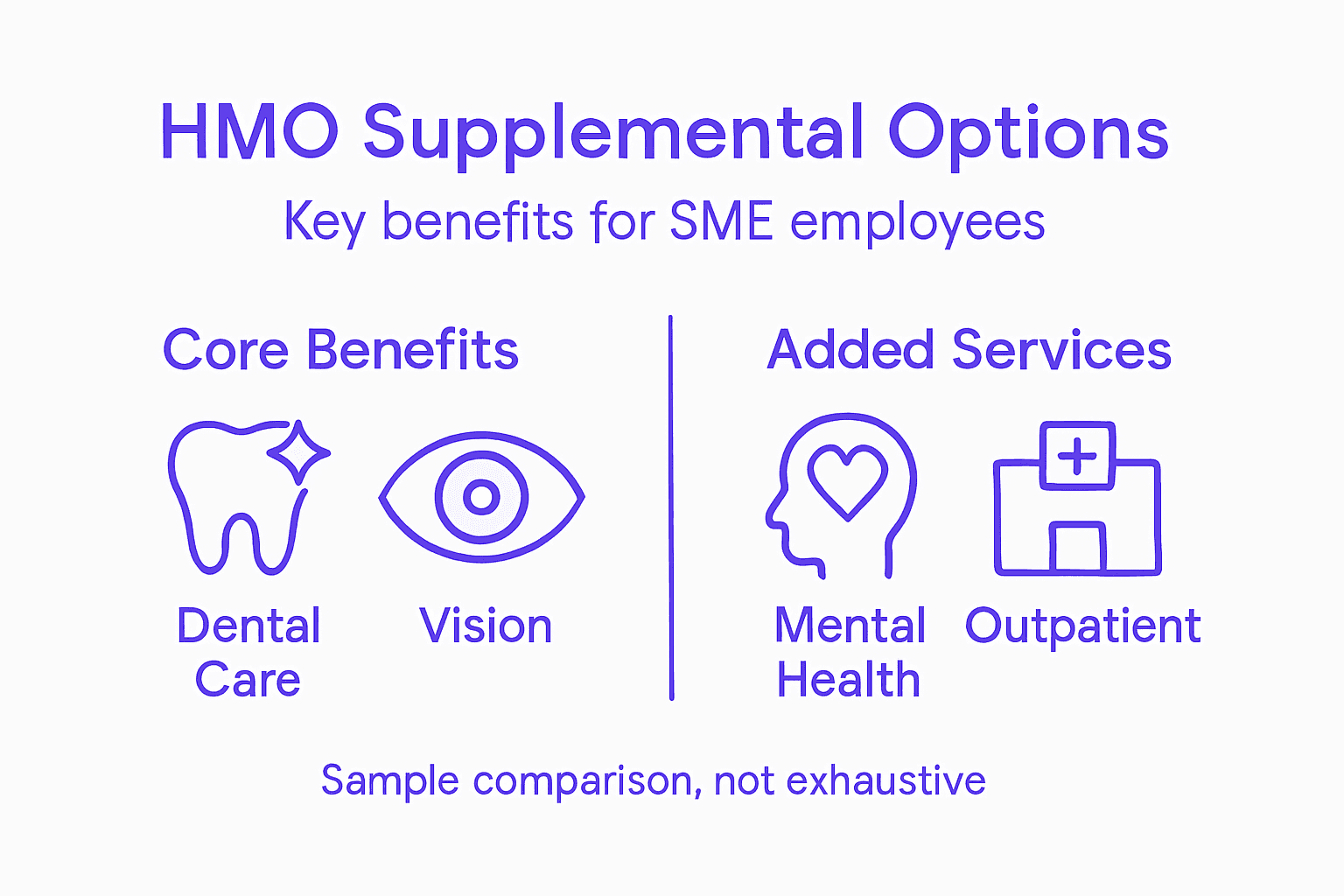
The strategic selection of supplemental benefits goes beyond mere cost management. Comprehensive healthcare packages demonstrate an organization’s commitment to employee well-being, potentially improving workforce morale, reducing absenteeism, and enhancing overall productivity. By investing in robust health coverage, SMEs can create a supportive work environment that attracts and retains top talent.
Pro tip: Conduct regular employee health surveys to continuously refine and optimize your supplemental benefits package for maximum relevance and impact.
Key Features and Coverage Details
HMOs for small and medium enterprises offer a comprehensive approach to healthcare management that goes beyond traditional insurance models. Integrated care delivery represents the core philosophy of these health plans, focusing on preventive care and coordinated medical services that maximize employee wellness and organizational efficiency.
Key features of HMO supplemental coverage typically include:
- Primary Care Coordination: Designated physicians managing overall healthcare
- Preventive Care Focus: Regular screenings and health maintenance programs
- Fixed Copayment Structures: Predictable out-of-pocket medical expenses
- Comprehensive Network Access: Extensive provider network for diverse medical needs
- Emergency Care Coverage: Robust support for unexpected medical situations
- Specialized Treatment Referrals: Streamlined access to specialist consultations
Network-Based Healthcare ensures that employees receive coordinated medical services with minimal administrative complexity. Cost-effective healthcare services are achieved through strategic provider relationships and emphasis on preventative interventions, which ultimately reduce long-term medical expenses for both employers and employees.

The strategic design of HMO supplemental coverage goes beyond simple medical protection. These plans represent a holistic approach to workforce health, creating a supportive ecosystem that addresses physical, preventative, and emergency medical needs while maintaining financial predictability for SMEs.
Pro tip: Request detailed provider network maps and coverage documentation to ensure your selected HMO plan offers comprehensive geographical and medical service coverage.
How Supplemental Plans Work with PhilHealth
Supplemental HMO plans function as a strategic partner to PhilHealth, extending healthcare coverage beyond the basic government health insurance framework. These plans are designed to fill critical service gaps, ensuring comprehensive medical protection for employees in small and medium enterprises that goes well beyond mandatory government requirements.
Key ways supplemental HMO plans complement PhilHealth include:
- Expanded Service Coverage: Filling gaps in government health insurance
- Specialist Consultation Support: Covering outpatient specialist visits
- Additional Hospital Amenities: Providing enhanced room and treatment options
- Non-Covered Medication Support: Extending pharmaceutical benefits
- Advanced Diagnostic Services: Offering broader screening capabilities
- Emergency Care Enhancements: Providing more comprehensive urgent treatment options
Modular healthcare integration allows SMEs to customize their health coverage strategy. By combining PhilHealth’s mandatory baseline protection with targeted supplemental HMO benefits, organizations can create a robust health ecosystem that addresses diverse employee medical needs while maintaining financial predictability.
The synergy between PhilHealth and supplemental HMO plans represents a sophisticated approach to workforce healthcare. This integrated model ensures that employees receive comprehensive medical support, with government insurance providing fundamental coverage and supplemental plans delivering enhanced, personalized healthcare solutions.
Here’s a summary of how supplemental HMO plans work together with PhilHealth to maximize employee healthcare coverage:
| Coverage Area | PhilHealth Only | PhilHealth + Supplemental HMO | Added Value for SMEs |
|---|---|---|---|
| Specialist Services | Restricted or excluded | Extensive outpatient coverage | Employees gain timely expert care |
| Hospital Amenities | Basic room, limited extras | Private rooms, more amenities | Enhanced comfort and faster recovery |
| Medication Coverage | Selected, generic drugs | Branded, wider medication options | Employees receive broader treatments |
| Diagnostic Services | Essential tests only | Advanced screenings and procedures | Early detection, better health outcomes |
Pro tip: Conduct an annual review of both PhilHealth requirements and your supplemental HMO plan to ensure continuous alignment with changing employee health needs.
Cost Implications and Financial Impact
HMO supplemental coverage represents a strategic financial approach for small and medium enterprises seeking cost-effective healthcare solutions. Predictable healthcare expenses enable SMEs to manage budgets more effectively, with fixed copayments and structured healthcare delivery minimizing unexpected financial burdens.
Key financial advantages of HMO supplemental plans include:
- Lower Premium Structures: Reduced overall healthcare expenditure
- Predictable Out-of-Pocket Costs: Simplified financial planning
- Reduced Administrative Overhead: Streamlined health management processes
- Tax Deductible Investments: Potential fiscal benefits for organizations
- Long-Term Cost Stabilization: Minimizing unexpected medical expenses
- Employee Retention Savings: Reducing turnover through comprehensive health support
Financial Optimization goes beyond simple cost reduction. By investing in comprehensive HMO supplemental coverage, SMEs can create a proactive healthcare ecosystem that balances employee wellness with organizational financial sustainability. The strategic approach transforms healthcare from a pure expense into a valuable investment in workforce productivity and organizational resilience.
Through careful plan selection and modular benefit design, SMEs can achieve a nuanced balance between comprehensive coverage and fiscal responsibility. This approach allows organizations to provide robust health support while maintaining precise control over healthcare expenditure.
Pro tip: Conduct a comprehensive cost-benefit analysis comparing your current healthcare spending with potential HMO supplemental plan investments to identify true financial optimization opportunities.
Choosing the Right Plan for Your Workforce
Selecting an appropriate HMO supplemental plan requires a strategic approach that balances organizational needs with employee wellness. Health plan selection strategies demand careful consideration of multiple factors beyond simple cost analysis, ensuring comprehensive coverage that supports both organizational goals and workforce health.
Key considerations for plan selection include:
- Workforce Demographics: Age distribution and health risk profiles
- Budget Constraints: Alignment with financial capabilities
- Industry-Specific Health Risks: Tailored coverage for unique workplace environments
- Employee Preference Surveys: Understanding individual healthcare needs
- Scalability: Flexibility for future organizational growth
- Comprehensive Coverage Range: Breadth of medical services included
Workforce Health Assessment represents the critical first step in plan selection. Organizations must conduct thorough evaluations of their employee population, analyzing factors such as average age, predominant health conditions, family structures, and potential future healthcare requirements. This granular approach enables precise benefit customization that maximizes both employee satisfaction and organizational investment.
Beyond numerical analysis, successful HMO supplemental plan selection involves understanding the nuanced interplay between cost-effectiveness and comprehensive healthcare delivery. SMEs must view these plans not as expenses, but as strategic investments in workforce productivity, employee retention, and organizational resilience.
Pro tip: Engage employees directly through anonymous health needs surveys to gather precise insights for tailoring your supplemental HMO plan selection.
Maximize Your SME’s Health Benefits with Tailored HMO Supplemental Coverage
Navigating the complexities of supplemental HMO coverage can be a challenge for many SMEs aiming to extend healthcare protection beyond PhilHealth’s basics. This article highlights the need for coordinated care, cost predictability, and comprehensive benefits that truly support employee wellness and reduce administrative burdens. If you are looking for a straightforward, cost-effective solution that guarantees 100 percent coverage even for pre-existing and special conditions, HMO Plans - Purple Cow offers exactly that with customizable options suited for your workforce.
Take control of your employee health investments today by choosing from flexible supplemental benefits such as dental coverage, annual physical exams, and life and accident insurance. With 24/7 nationwide access to premier hospitals and clinics including the Big 9 Hospitals and Healthway Clinics, you can provide your team with peace of mind and exceptional care without the usual complicated terms. Explore how our solutions complement PhilHealth to deliver a comprehensive health ecosystem at Learn more about our plans. Don’t wait to enhance productivity and employee satisfaction. Visit HMO Plans official site to get started and protect your greatest asset now.
Frequently Asked Questions
What is HMO supplemental coverage?
HMO supplemental coverage is an extended healthcare plan that complements standard health insurance by providing comprehensive medical services, coordinated healthcare, and predictable costs for small and medium enterprises (SMEs).
How does HMO supplemental coverage differ from traditional health insurance?
Unlike traditional health insurance, HMO supplemental coverage offers integrated care through a curated network of healthcare providers, resulting in lower administrative burdens and focused preventive care for employees.
What types of supplemental benefits are generally included in HMO plans?
Common types of supplemental benefits include surgical coverage, mental health services, vision care, pharmaceutical support, diagnostic services, and emergency medical services, all designed to enhance overall employee health.
How do supplemental HMO plans work with government health insurance?
Supplemental HMO plans work alongside government health insurance by filling in service gaps, providing extended coverage for specialist consultations, advanced diagnostic services, and additional hospital amenities, ensuring comprehensive healthcare support for employees.
Recommended
- Understanding HMO Basics: A Guide for New HR Managers in SMEs
- HMO Health Insurance for Small and Medium Enterprises in the Philippines
- Beyond PhilHealth: How SMEs Can Maximize Health Investments for Better ROI
- Evaluating Vendors: How SMEs Can Choose the Right HMO Partner
- Superannuation for Dental Care - Paynless Dental Clinic
