

HMO trends for Philippine retailers 2026: practical guide
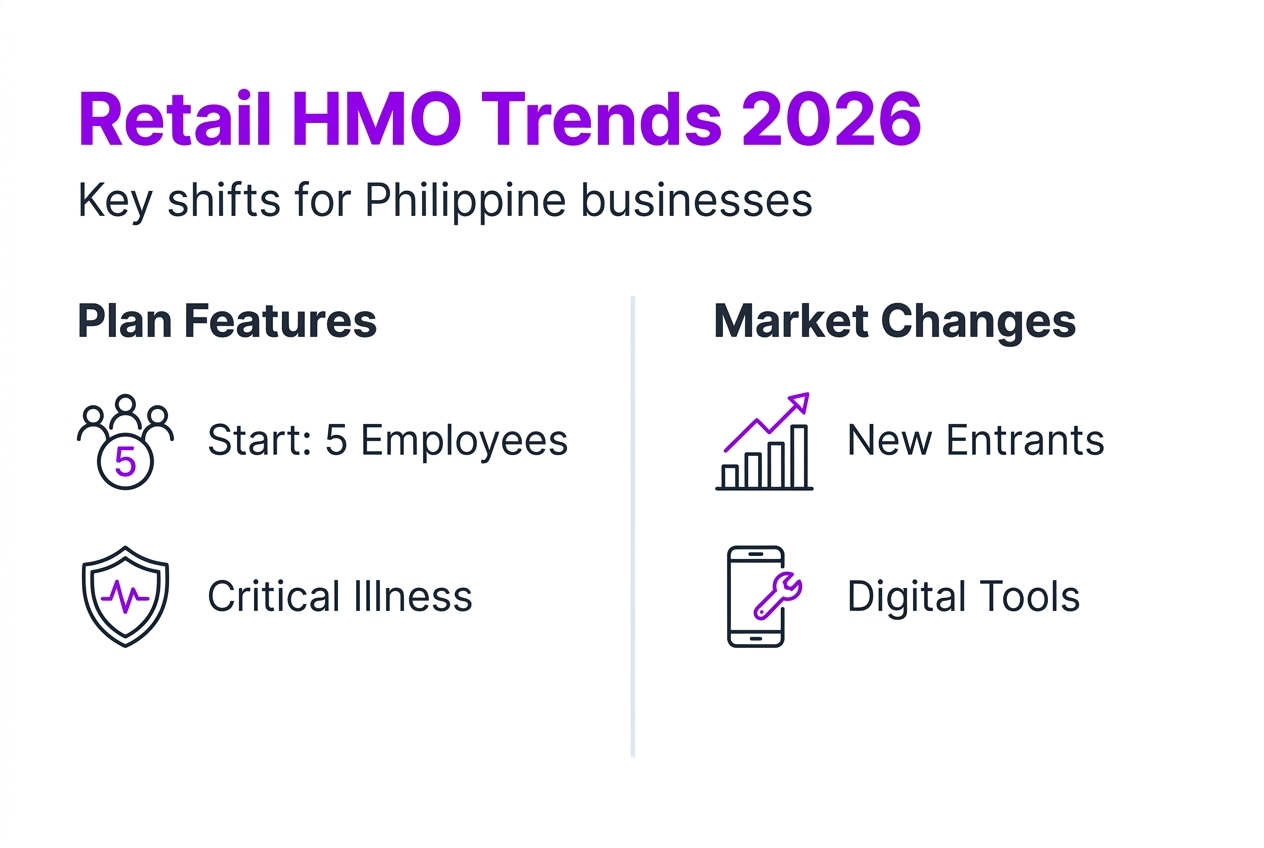
Many Philippine retail business owners mistakenly believe HMO plans remain too expensive or complex for small teams. The reality in 2026 is dramatically different. New market entrants, scalable solutions starting at just five employees, and expanded critical illness coverage now make comprehensive health benefits accessible and strategically valuable for SMEs navigating workforce challenges and rising healthcare costs.
Table of Contents
- Understanding The Evolving HMO Landscape For Philippine Retailers
- New Market Entrants And Coverage Expansions In 2026
- Choosing And Implementing The Right HMO Plan For Your Retail Business
- Managing Healthcare Costs And Enhancing Workforce Stability With HMOs
- Explore Tailored HMO Plans For Your Retail Business
- Frequently Asked Questions
Key takeaways
| Point | Details |
|---|---|
| Scalable solutions | HMO plans now start at five employees, making coverage accessible for small retail teams. |
| New market competition | Palawan Group’s 2026 HMO launch targets coverage gaps with affordable critical illness protection. |
| Strategic workforce tool | Health benefits directly improve employee retention, engagement, and productivity in retail operations. |
| Geographic matching matters | Evaluating provider networks ensures coverage aligns with your employees’ locations and healthcare needs. |
| Combined protection | Bundling health, life, and accident insurance helps manage rising business risks cost-effectively. |
Understanding the evolving HMO landscape for Philippine retailers
The Philippine HMO market has transformed dramatically to address SME needs in 2026. BPI AIA’s refreshed Corporate Solutions provide tailored plans specifically addressing healthcare expenses and workforce stability concerns that plague retail business owners.
What makes 2026 different? You can now start coverage with as few as five employees, eliminating the traditional barrier that kept small retailers from offering competitive benefits. This accessibility shift recognizes that healthcare and workforce stability rank among top concerns for SME owners across the Philippines.
The practical impact shows immediately in daily operations. When your cashiers, stock handlers, and sales staff know they have reliable healthcare coverage, engagement rises and turnover drops. You are not just checking a compliance box but building a more stable, productive workforce.
Key advantages of modern HMO solutions for retailers include:
- Flexible plan structures that scale as your business grows
- Cashless access to accredited facilities reducing employee financial stress
- Preventive care options that keep teams healthier and reduce sick days
- Digital platforms simplifying enrollment and claims management
BPI AIA positions itself as a long-term growth partner, not just an insurance provider. Their BOSS (Business Owners Success Solutions) framework addresses the full spectrum of SME challenges, from HMO health insurance for SMEs to life and accident protection that safeguards your business continuity.
“We understand that providing healthcare benefits is both a moral responsibility and a strategic business decision for Philippine retailers navigating competitive labor markets.”
The shift from viewing health benefits as luxury to recognizing them as competitive necessity marks the biggest mindset change among successful retail SMEs in 2026.
New market entrants and coverage expansions in 2026
Competition in the Philippine HMO space intensifies with Palawan Group launching its own HMO in Q2 2026, specifically targeting the underserved population that includes many retail SME employees. This launch addresses critical coverage gaps that traditional providers overlooked.

Palawan’s strategic focus targets the illnesses that devastate Filipino families financially. Their policies emphasize affordable critical illness coverage for cancer, heart attacks, and strokes, the conditions responsible for the highest healthcare expenses and longest recovery periods affecting retail workforces.
The numbers tell a compelling growth story. Palawan’s insurance segment already covers over seven million Filipinos with double-digit annual growth, demonstrating both market demand and their operational capability to deliver at scale.
| Coverage Focus | Traditional HMOs | Palawan Group HMO |
|---|---|---|
| Critical illness emphasis | Supplemental add-on | Core coverage focus |
| Target market | Corporate employees | Underserved population |
| Accessibility | Higher price points | Affordable options |
| Growth rate | Single digit | High double-digit |
What does this mean for your retail business? More options translate to better pricing and coverage terms as providers compete for your business. You gain negotiating leverage and access to specialized coverage addressing your specific workforce demographics.
Practical implications for retail SME decision makers:
- Compare critical illness benefits across providers to find optimal protection
- Evaluate new entrants’ network coverage in your operating areas
- Consider pilot programs with emerging providers offering competitive rates
- Monitor market developments for mid-year plan adjustments
This competitive environment benefits choosing the right HMO partner by expanding your options beyond legacy providers. The key is matching coverage innovations to your actual employee needs rather than defaulting to traditional corporate plans designed for larger enterprises.
New competition also drives service improvements across the industry. Established providers enhance digital capabilities, expand networks, and introduce flexible terms to retain market share. Your timing to evaluate or switch HMO health insurance could not be better.
Choosing and implementing the right HMO plan for your retail business
Selecting the optimal HMO requires systematic evaluation matching your workforce realities to provider capabilities. Follow this proven framework to make informed decisions that balance cost, coverage, and employee satisfaction.
Step 1: Map your employees’ geographic distribution and typical healthcare needs. If your retail locations span Metro Manila and provincial areas, you need provider networks ensuring consistent access across all sites. Survey your team about their most frequent health concerns and preferred facilities.
Step 2: Compare coverage specifics beyond basic plans. Scrutinize critical illness benefits, maternity coverage, outpatient limits, and emergency care terms. Plans appearing similar on price often differ significantly in benefit details that matter during actual claims.
Step 3: Align budget constraints with value delivery. The cheapest plan rarely delivers best value when high deductibles and limited networks frustrate employees. Calculate total cost including potential out-of-pocket expenses your team might face, not just premium payments.
Step 4: Verify provider financial strength and reputation. Check claim settlement ratios, customer service ratings, and how long they have operated in the Philippine market. A financially unstable provider creates more problems than it solves.
Step 5: Plan your implementation carefully with clear employee communication. Schedule orientation sessions explaining benefits, enrollment processes, and how to access care. Confusion during rollout undermines the goodwill you are building through offering coverage.
Detailed implementation checklist:
- Gather employee demographic and health data (anonymized)
- Request quotes from at least three providers
- Compare coverage terms side by side using standardized criteria
- Negotiate rates and terms based on your workforce profile
- Develop enrollment communications in simple language
- Schedule onboarding sessions at convenient times for shift workers
- Establish point person for ongoing questions and issues
- Set calendar reminders for annual plan reviews
Pro Tip: Build annual plan reviews into your business rhythm, ideally 90 days before renewal. This gives you time to survey employee satisfaction, analyze utilization data, and explore alternatives if current coverage underperforms. Markets change fast, and yesterday’s best deal may not remain competitive.
Evaluating HMO vendors systematically prevents costly mistakes and ensures you deliver genuine value to your team. The moral and strategic imperative of providing healthcare benefits demands getting the details right.
Consider how maximizing your SME health investment through coordinated PhilHealth and HMO strategies can stretch your benefits budget further while improving coverage breadth.
Managing healthcare costs and enhancing workforce stability with HMOs
Rising healthcare expenses represent a growing threat to retail SME profitability and sustainability. Strategic HMO implementation transforms this challenge into a competitive advantage by controlling costs while building workforce loyalty and productivity.
The financial reality is stark. Healthcare costs in the Philippines continue climbing faster than general inflation, squeezing already tight SME margins. Smart business owners recognize that reactive spending on employee health crises costs far more than proactive coverage investments.
BPI AIA combines life insurance, accident coverage, and healthcare solutions to manage the rising risks SMEs face. This integrated approach addresses multiple vulnerabilities through coordinated protection rather than fragmented policies with gaps and overlaps.
| Approach | Scalable HMO Plans | Standard Coverage Only |
|---|---|---|
| Initial cost | Moderate premium | Lower premium |
| Employee retention | 15-25% improvement | Baseline |
| Productivity impact | Higher engagement | Standard |
| Long-term cost | Predictable | Volatile |
| Risk management | Comprehensive | Limited |
The human dimension matters as much as the financial. Providing healthcare benefits enhances employee engagement, loyalty, and productivity in measurable ways. Your team members perform better when not distracted by health worries or financial stress from medical expenses.
Quantifiable benefits you can track include:
- Reduced sick leave usage as preventive care keeps issues manageable
- Lower turnover rates saving recruitment and training costs
- Improved customer service from less stressed, healthier employees
- Better word-of-mouth recruiting as employees share their satisfaction
Communication amplifies these benefits significantly. Many SMEs offer decent coverage but fail to help employees understand and appreciate the value. Regular reminders about available services, success stories of claims processed smoothly, and simple guides to accessing care boost perceived value without additional cost.
Pro Tip: Request quarterly utilization reports from your HMO provider showing claim patterns, most used services, and coverage gaps. This data reveals whether your plan matches actual employee needs or if adjustments could improve satisfaction and cost efficiency. Use insights to negotiate better terms at renewal or shift resources to higher-value benefits.
Explore HMO plan features designed specifically for Philippine SME realities, including flexible terms accommodating seasonal workforce fluctuations common in retail operations.
The ROI calculation extends beyond direct healthcare savings. Factor in retention value, productivity gains, and reduced crisis management costs when health issues strike uninsured employees. Maximizing health investments requires this holistic perspective.
Explore tailored HMO plans for your retail business
Navigating HMO options becomes simpler when you work with providers who understand Philippine retail SME challenges. Purple Cow offers flexible HMO plans designed specifically for small and medium retailers balancing cost control with comprehensive employee care.
Plans scale seamlessly with your workforce starting from five employees, supporting your growth without forcing coverage gaps during expansion phases. This flexibility matters enormously for seasonal retailers or those testing new locations.
Member services ensure smooth onboarding and ongoing support for your team, eliminating the administrative headaches that plague many SME benefits programs. Dedicated support helps your employees maximize their coverage while minimizing your HR burden.
Explore detailed HMO plan features to find the right fit for your specific business needs, employee demographics, and budget constraints. The comparison tools and transparent pricing eliminate guesswork from your decision process. Learn how to get started securing your workforce’s health while building the competitive advantage that comprehensive benefits deliver in tight Philippine labor markets.
Frequently asked questions
What are the top HMO trends for Philippine retailers in 2026?
New market entrants like Palawan Group expand affordable access to critical illness coverage previously unavailable to many SME employees. Scalable solutions starting at five employees eliminate traditional barriers keeping small retailers from competitive benefits. Providers increasingly bundle health, life, and accident insurance for comprehensive risk management tailored to SME budgets and needs.
How can small retail businesses pick the right HMO provider?
Assess whether provider networks offer strong geographic coverage matching where your employees live and work. Verify that covered services align with your team’s common health needs and preferred facilities. Check provider financial stability, claim settlement reputation, and scalability to grow with your business.
Why should retail SMEs invest in health benefits for employees?
Health benefits directly improve employee loyalty and productivity while reducing costly turnover that disrupts retail operations. Coverage prevents financial crises that distract workers and protects your business from sudden absences due to untreated conditions. Investment in employee health strengthens business sustainability and competitive positioning in tight labor markets.
What is the impact of new HMO entrants like the Palawan Group?
Palawan Group’s HMO launch fills critical coverage gaps by emphasizing affordable protection against cancer, heart attacks, and strokes affecting Filipino families. New competition drives better pricing and service improvements across the industry, benefiting SME buyers. Expanded options let retailers find plans matching their specific workforce demographics and budget constraints more precisely.
Recommended
- Eumir
- The Better HMO Plans for SMEs | Purple Cow | Blog | Rai dela Cruz | Best HMO Plans Philippines - Purple Cow
- HMO Health Insurance for Small and Medium Enterprises in the Philippines
- 2025 Health Trends for SMEs in the Philippines: Key Strategies for Smarter Benefits
- Hybrid Retail: Transforming Sales Channels for SMBs – Reddog Consulting Group
