

How to Choose SME HMO Plans for Your Employees Easily
Finding a healthcare plan that fits every employee and keeps costs predictable can challenge even the most resourceful HR manager in the Philippines. As health concerns and workforce demographics shift across industries and regions, choosing the right HMO partner becomes vital for supporting your team’s well-being and your company’s budget. This guide offers clear steps for selecting comprehensive, affordable SME HMO plans, drawing on local options and practical assessment strategies so your benefits truly match your organization’s needs.
Table of Contents
- Step 1: Identify Your Team’s Healthcare Priorities
- Step 2: Compare Leading SME HMO Providers And Partners
- Step 3: Evaluate Core And Optional HMO Benefits
- Step 4: Check Network Access And Coverage Flexibility
- Step 5: Verify Provider Support And Client Satisfaction
- Step 6: Finalize And Secure The Most Suitable HMO Plan
Quick Summary
| Key Message | Explanation |
|---|---|
| 1. Identify Healthcare Priorities | Conduct a survey to understand your employees’ healthcare needs, balancing coverage types with demographics and industry risks. |
| 2. Evaluate HMO Providers | Compare various HMO providers based on network quality, cost structures, and customer service to find the best fit for your team. |
| 3. Assess Core and Optional Benefits | Analyze essential benefits and consider optional add-ons that address specific employee needs to enhance your healthcare package. |
| 4. Check Network Access | Ensure the HMO provider has extensive network access and flexibility, making healthcare services readily available to employees. |
| 5. Verify Support and Satisfaction | Assess the quality of customer service and satisfaction metrics of HMO providers to improve employee healthcare experiences. |
Step 1: Identify your team’s healthcare priorities
Choosing the right Small and Medium Enterprise (SME) HMO plan starts with understanding your team’s unique healthcare needs. This critical first step helps you design a benefits package that genuinely supports your employees’ health and well-being.
Begin by conducting a comprehensive internal survey to map out your workforce’s health requirements. Different industries and teams have varied healthcare priorities. For instance, a tech startup with younger employees might prioritize different coverage than a manufacturing company with an older workforce. When comparing insurance types, consider these key factors:
- Current average employee age
- Predominant health risks in your industry
- Family medical history trends
- Geographic distribution of your workforce
- Budget constraints
The goal is to balance cost-effectiveness with comprehensive coverage. HMO plans are particularly attractive for SMEs because they typically offer lower premiums and structured care coordination through primary care physicians.
Understand that healthcare priorities are not one-size-fits-all. Your plan should reflect your specific workforce composition and needs.
Consult with your HR team and consider anonymous employee feedback to refine your understanding. Some companies even organize health awareness sessions to better gauge employee healthcare preferences and concerns.
Pro tip: Create a simple anonymous survey with 5-7 targeted questions to uncover your team’s most pressing healthcare concerns without making employees feel uncomfortable.
Step 2: Compare leading SME HMO providers and partners
Navigating the complex landscape of HMO providers requires a strategic approach to find the perfect healthcare partner for your small or medium enterprise. Your goal is to select a provider that offers comprehensive coverage, cost-effectiveness, and exceptional support for your unique workforce needs.
Start by evaluating potential HMO providers using a comprehensive assessment framework. Comparing health insurance providers involves analyzing several critical dimensions:
- Network breadth and quality
- Consumer complaint history
- Premium cost structures
- Coverage flexibility
- Claims processing efficiency
- Customer service reputation
For Philippine SMEs, prioritize providers with strong local networks and experience serving businesses similar to yours. Look for partners that offer flexible plan customization and demonstrate an understanding of your industry’s specific healthcare requirements.
Not all HMO providers are created equal. Your selection should align precisely with your workforce’s demographic and health needs.
Pay special attention to providers offering comprehensive packages that include preventive care, potential add-ons like dental coverage, and seamless integration with PhilHealth benefits. Some top providers in the Philippine market include Purple Cow, Maxicare, PhilCare, and Medicard, each with unique strengths and coverage options.
Pro tip: Request detailed proposal comparisons from at least three different HMO providers, ensuring you negotiate terms that provide maximum value for your specific employee demographics.
Below is a quick comparison of top Philippine SME HMO providers and what sets them apart:
| Provider | Market Strength | Customization Level |
|---|---|---|
| Purple Cow | SME-focused, local expertise | Highly flexible plan options |
| Maxicare | Broad network, strong brand | Multiple add-on benefits available |
| PhilCare | Wide coverage, efficient claims | Streamlined digital claim services |
| Medicard | Preventive care emphasis | Integrated PhilHealth solutions |
Step 3: Evaluate core and optional HMO benefits
Navigating the world of HMO benefits requires a strategic approach to ensure your employees receive comprehensive healthcare coverage that meets their diverse needs. Understanding the nuanced landscape of core and optional benefits will help you design a robust health plan that truly supports your workforce.
Modular benefit options provide flexibility for SMEs to customize healthcare packages. Typical core benefits to examine include:
- Inpatient hospital care
- Outpatient medical services
- Emergency medical treatment
- Consultation with network physicians
- Basic diagnostic procedures
- Prescription medication coverage
Optional benefits offer opportunities to enhance your healthcare package with targeted additions that address specific employee health requirements. These might include:
- Dental care coverage
- Optical services
- Wellness program access
- Chronic disease management
- Mental health support
- Additional preventive care screenings
Not all optional benefits are created equal. Carefully assess which additional services will genuinely benefit your specific workforce.
Consider your employees’ demographics, industry risks, and historical health trends when selecting optional benefits. A technology company with younger staff might prioritize mental health services, while a manufacturing firm might emphasize comprehensive accident and injury coverage.

Pro tip: Request a detailed breakdown of benefit inclusions and exclusions from potential HMO providers, ensuring you understand exactly what each plan covers before making a final decision.
Here’s a quick summary of how core and optional HMO benefits support different workforce needs:
| Benefit Type | Best For | Business Impact |
|---|---|---|
| Core Benefits | All employee groups | Ensures essential healthcare access |
| Optional Benefits | High-risk or diverse teams | Addresses unique health requirements |
| Modular Packages | Growing or changing workforces | Allows for scaling and customization |
| Wellness Add-ons | Health-focused cultures | Promotes long-term employee well-being |
Step 4: Check network access and coverage flexibility
Selecting an HMO with robust network access and comprehensive coverage is crucial for ensuring your employees receive timely and efficient healthcare services. Understanding the intricacies of network reach can make a significant difference in the overall value of your health plan.
Healthcare service network considerations demand a strategic evaluation of several key factors. Critical aspects to examine include:
- Geographic coverage across different regions
- Number of accredited hospitals and clinics
- Ease of accessing medical services
- Referral process complexity
- Out-of-network reimbursement options
- Coverage for dependents and family members
Network breadth is more than just a numbers game. Look for providers that offer:
- Wide metropolitan coverage
- Strategic hospital partnerships
- Multiple healthcare facility options
- Convenient urban and suburban access points
- Comprehensive specialist network
- Transparent service accessibility
Not all network coverages are equal. Prioritize flexibility and comprehensive access over mere quantity of listed facilities.
Consider your workforce’s geographic distribution and typical healthcare needs. A company with employees spread across multiple cities will require a more extensive network compared to a localized team.
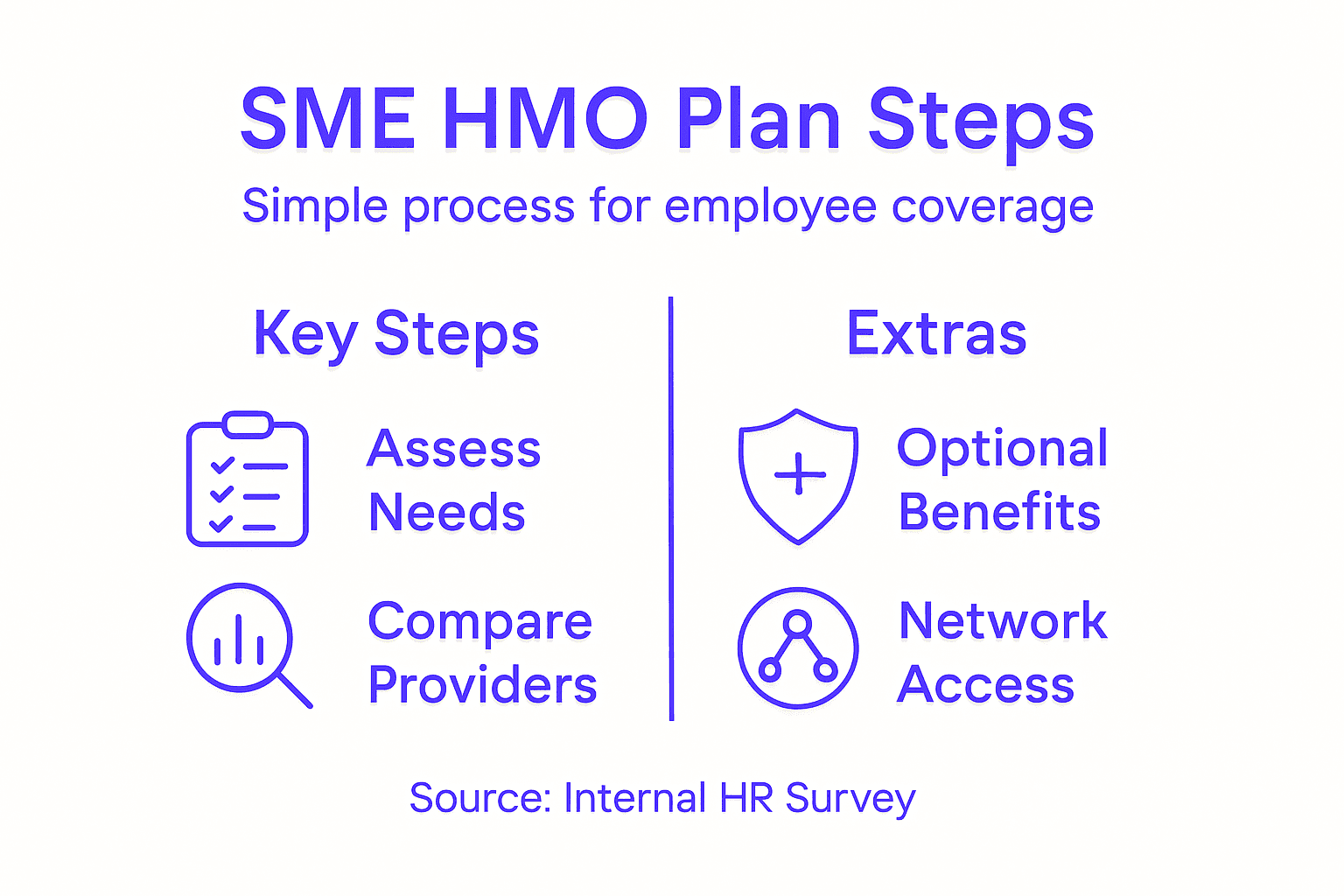
Pro tip: Request a detailed network map and verify the actual accessibility of medical facilities before finalizing your HMO plan, ensuring your employees can receive care conveniently when and where they need it.
Step 5: Verify provider support and client satisfaction
Choosing an HMO provider goes beyond evaluating coverage details. The quality of customer support and overall client satisfaction can significantly impact your employees’ healthcare experience and your company’s administrative efficiency.
Customer service quality metrics play a critical role in selecting the right HMO partner. Key indicators to assess include:
- Speed of claims processing
- Responsiveness to employee inquiries
- Clarity of communication
- Problem resolution efficiency
- Availability of support channels
- Digital service accessibility
Client satisfaction indicators provide deeper insights into a provider’s real-world performance:
- Consumer complaint rates
- Third-party quality ratings
- Testimonials from similar-sized businesses
- Average response time for service requests
- Transparency in policy explanations
- Flexibility in handling unique scenarios
Not all support services are created equal. Look beyond marketing materials to understand the true client experience.
Consider requesting reference checks with other SMEs in your industry. A provider with a proven track record of responsive, compassionate support can make a substantial difference in managing your team’s healthcare needs.
Pro tip: Request a detailed service level agreement that explicitly outlines response times, communication protocols, and resolution mechanisms for potential healthcare service issues.
Step 6: Finalize and secure the most suitable HMO plan
Reaching the final stage of HMO selection requires careful consideration and strategic negotiation to ensure you secure the most advantageous plan for your organization. This critical step transforms your comprehensive research into a concrete healthcare solution for your employees.
Selecting the right group health plan involves a methodical approach to comparing and confirming your preferred HMO option. Key actions to take include:
- Compile detailed quote comparisons
- Review final contract terms thoroughly
- Negotiate pricing and coverage details
- Confirm network adequacy
- Verify alignment with initial requirements
- Understand implementation timeline
Negotiation strategies can help optimize your selected plan:
- Request volume-based discounts
- Discuss flexible payment terms
- Explore customization options
- Seek clarity on renewal conditions
- Understand cancellation policies
- Confirm performance guarantee clauses
The most suitable plan is not just about cost, but about comprehensive value and alignment with your company’s unique healthcare needs.
Prepare for a smooth transition by developing an internal communication strategy to explain the new HMO benefits to your employees. This helps maximize plan utilization and demonstrates your commitment to their well-being.
Pro tip: Schedule a detailed onboarding session with your chosen HMO provider to ensure your HR team fully understands all plan nuances and can effectively communicate benefits to employees.
Simplify Your SME HMO Plan Selection with Tailored Solutions
Choosing the right HMO plan for your employees can feel overwhelming when balancing comprehensive coverage, budget constraints, and specific workforce needs. This article highlights how critical it is to evaluate healthcare priorities, network access, provider support, and benefit customization to secure true value. If you want to eliminate the guesswork and get straightforward solutions that match your SME’s unique profile, explore how HMO Plans partners with trusted insurers like Purple Cow and Etiqa to provide flexible, cost-effective health insurance packages.
Benefit from 100% coverage for pre-existing and special conditions, access to premier Philippine hospitals, and customizable optional add-ons such as dental and life insurance. See how easy it is to balance your employees’ healthcare needs with your budget by visiting HMO Plans today. Take control now to deliver peace of mind and well-being for your team while optimizing your business resources.
Frequently Asked Questions
How can I determine my team’s healthcare priorities when choosing an SME HMO plan?
Understanding your team’s healthcare priorities starts with conducting a thorough internal survey to map out their unique health requirements. Create an anonymous survey with targeted questions to uncover pressing healthcare concerns, enabling you to design a benefits package that truly supports your employees.
What factors should I compare when evaluating SME HMO providers?
When comparing SME HMO providers, focus on critical factors such as network breadth, premium costs, claims processing efficiency, and customer service reputation. Compile detailed proposal comparisons from several providers to identify the one that aligns best with your workforce’s needs while offering maximum value.
What core and optional benefits should I consider for my employees’ HMO plan?
Core benefits typically include inpatient care, outpatient services, and emergency treatment. Evaluate optional benefits like dental care and mental health support based on your workforce’s demographics and health trends, ensuring that the chosen plan addresses specific employee needs effectively.
How do I check the network access and coverage flexibility of an HMO plan?
To assess network access and coverage flexibility, look for the number of accredited hospitals, geographic coverage for employees, and clarity around out-of-network options. Request a network map from potential providers to confirm that medical facilities are conveniently accessible for your team.
What should I verify before finalizing an SME HMO plan?
Before finalizing an SME HMO plan, thoroughly review quote comparisons and contract terms, and confirm network adequacy. Negotiate pricing and coverage details to ensure that the selected plan delivers comprehensive value and meets your company’s healthcare requirements effectively.
How can I ensure smooth onboarding for the chosen HMO provider?
To facilitate a smooth onboarding process, schedule a detailed session with the HMO provider to educate your HR team on all aspects of the plan. Providing clear communication to your employees about the new benefits will also optimize utilization and reinforce your commitment to their well-being.
