

How to Customize Health Insurance for SMEs Easily
Selecting health insurance for a diverse workforce can feel overwhelming when every employee in your Philippine Small and Medium Enterprise has unique healthcare needs. For HR managers in the tech and hospitality sectors, aligning coverage with both budget and staff priorities is an ongoing challenge. This step-by-step guide breaks down practical strategies to assess what your team really needs, compare available HMO options, and build a truly customized, effective plan that keeps your employees protected and valued.
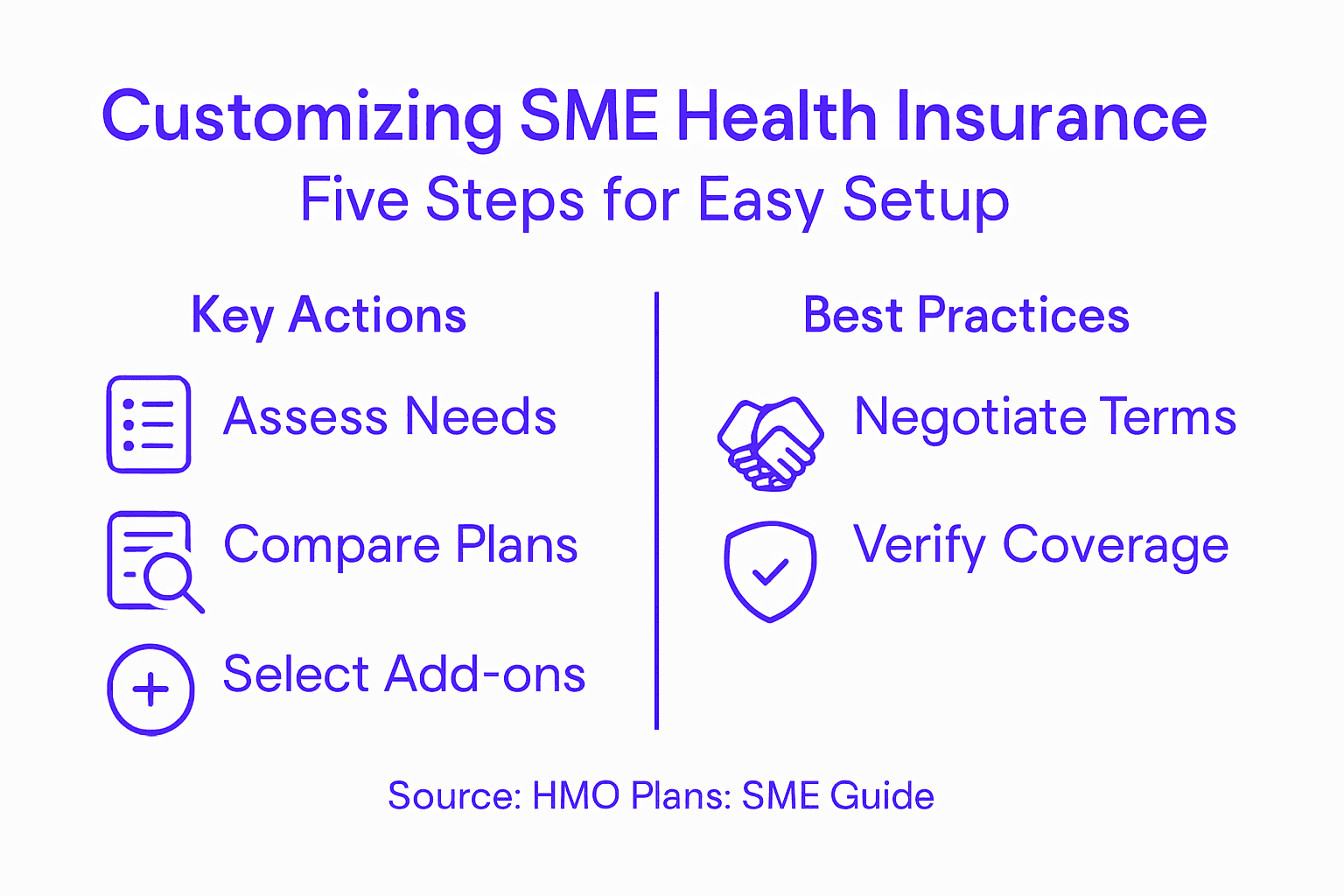
Table of Contents
- Step 1: Assess Employee Healthcare Needs
- Step 2: Compare Available HMO Plan Options
- Step 3: Select Optimal Add-Ons And Enhancements
- Step 4: Negotiate Flexible Coverage Terms
- Step 5: Verify Coverage And Confirm Implementation
Quick Summary
| Key Insight | Explanation |
|---|---|
| 1. Assess Employee Healthcare Needs | Conduct assessments to understand employee demographics and health conditions for tailored insurance solutions. |
| 2. Compare HMO Plan Options | Analyze different HMO plans based on costs, coverage, and network access to select the best fit for your workforce. |
| 3. Select Optimal Add-ons | Enhance your base plan by considering supplemental benefits like dental, vision, and mental health services to improve employee satisfaction. |
| 4. Negotiate Flexible Coverage Terms | Engage in negotiations to create customizable health plans that meet employee needs while controlling costs for your SME. |
| 5. Verify Coverage and Implementation | Ensure all aspects of the health plan are validated and continuously monitored to provide effective benefits to employees. |
Step 1: Assess employee healthcare needs
Understanding your employees’ healthcare requirements is the critical first step in creating a tailored health insurance package for your Small and Medium Enterprise (SME). By conducting a comprehensive assessment, you can design coverage that meets diverse workforce needs while managing costs effectively.
To systematically evaluate employee healthcare needs, start by analyzing workforce health trends through targeted surveys and data collection. Consider these key assessment strategies:
- Distribute anonymous health preference questionnaires
- Review aggregate (anonymized) health data from previous insurance claims
- Conduct confidential wellness screenings
- Host information sessions about potential health benefit options
Your assessment should capture critical information like:
- Age demographics of your workforce
- Existing health conditions
- Family medical history patterns
- Anticipated healthcare utilization
Comprehensive employee health assessments help SMEs create precisely targeted insurance packages that balance employee needs with organizational budget constraints.
Segment your workforce data into clear categories - young professionals, mid-career employees, and those approaching retirement - as each group will have distinctly different healthcare priorities. Tech and hospitality sector employees often have unique health requirements that standard plans might not address.
The following table summarizes common employee segments and their distinctive healthcare priorities, helping SMEs target insurance solutions effectively:
| Workforce Segment | Typical Health Needs | Insurance Strategy Suggestion |
|---|---|---|
| Young professionals | Preventive care, wellness | Focus on low-cost, wellness options |
| Mid-career employees | Family coverage, chronic care | Include family plans, chronic support |
| Nearing retirement | Major medical, specialist access | Ensure robust coverage, specialists |
| Tech sector employees | Mental health, flexible care | Offer mental health, telemedicine |
| Hospitality sector staff | Injury protection, rapid access | Prioritize accident, urgent care plans |
Pro-Tip: Schedule brief, confidential health consultations that allow employees to share their coverage preferences without feeling pressured or exposed.
Step 2: Compare available HMO plan options
Comparing HMO plan options is a strategic process that requires careful analysis of your SME’s unique healthcare requirements. Understanding the nuanced differences between various health maintenance organization (HMO) plans will help you select the most appropriate coverage for your workforce.
Begin by comparing core HMO plan characteristics with a systematic approach. Your comparison should focus on several critical dimensions:
- Network size and hospital/clinic coverage
- Monthly premium costs
- Out-of-pocket expenses
- Referral requirements
- Specialist access limitations
- Prescription drug coverage
The key comparison points for HMO plans include:
- Comprehensive coverage scope
- Geographic service area
- Specific healthcare provider networks
- Cost-sharing structures
Effective HMO plan comparisons balance comprehensive coverage with manageable organizational expenses.
Prioritize plans that offer flexibility for tech and hospitality sector employees, who often have diverse and dynamic healthcare needs. Carefully examine the fine print of each plan, paying special attention to exclusions, waiting periods, and additional benefit riders that might provide extra value.

Evaluate plans not just on cost, but on their ability to provide comprehensive, accessible healthcare that supports your employees’ wellbeing and productivity.
This comparison table highlights key HMO evaluation factors that impact both cost and employee value:
| HMO Factor | Business Impact | Employee Experience |
|---|---|---|
| Network size | Wider options, fewer limits | Greater provider access |
| Cost-sharing structure | Controls company expenses | Clear upfront costs |
| Specialist referrals | May limit service flexibility | Potential delays for specialist care |
| Prescription coverage | Reduces out-of-pocket spending | Ensures affordable medications |
Pro-Tip: Request detailed plan comparison worksheets from multiple HMO providers to conduct a side-by-side analysis of benefits and limitations.
Step 3: Select optimal add-ons and enhancements
Enhancing your base HMO plan with strategic add-ons can transform a standard health insurance package into a comprehensive benefits solution for your SME. The right supplemental benefits can significantly boost employee satisfaction and provide crucial additional protection.
Start by exploring supplemental insurance options that address your workforce’s specific needs. Your add-on selection should consider these critical categories:
- Dental coverage
- Vision care benefits
- Disability income protection
- Group term life insurance
- Mental health services
- Wellness program enhancements
Consider these strategic approaches to selecting optimal add-ons:
- Analyze workforce demographic data
- Survey employee healthcare preferences
- Evaluate cost-effectiveness of each enhancement
- Compare potential return on employee benefits investment
Strategic benefits add-ons can reduce long-term healthcare costs while improving overall employee wellbeing and productivity.
Carefully prioritize add-ons that provide maximum value for your specific industry. Tech and hospitality sectors often require unique supplemental benefits that address their employees’ distinctive health challenges.
Remember that the most effective add-ons are not just additional services, but targeted solutions that demonstrate your commitment to employee health and support.
Pro-Tip: Negotiate bundled add-on packages with insurance providers to maximize coverage while minimizing overall cost increases.
Step 4: Negotiate flexible coverage terms
Negotiating flexible health insurance coverage represents a strategic opportunity for SMEs to design tailored benefits packages that balance employee needs with organizational budget constraints. Understanding how to effectively navigate insurance negotiations can unlock significant value for your organization.
Begin by exploring health insurance negotiation strategies that provide maximum flexibility. Your negotiation approach should focus on these critical elements:
- Customizable coverage limits
- Tiered benefit structures
- Performance-based premium adjustments
- Specific industry risk assessments
- Adaptable enrollment options
- Transparent cost-sharing mechanisms
Implement a systematic negotiation strategy through these strategic steps:
- Analyze current workforce healthcare utilization
- Develop clear benefit requirement specifications
- Request multiple proposal variations
- Benchmark against industry standards
Successful coverage term negotiations transform health insurance from a standard expense into a strategic employee retention tool.
Carefully document your organization’s unique requirements, emphasizing the specialized needs of tech and hospitality sector employees. These industries often demand more nuanced and dynamic health coverage approaches.
Remember that negotiation is a collaborative process. Your goal is to create a mutually beneficial agreement that provides comprehensive protection while maintaining financial sustainability.
Pro-Tip: Engage insurance providers with detailed workforce data to demonstrate your commitment to strategic, evidence-based benefit design.
Step 5: Verify coverage and confirm implementation
Verifying health insurance coverage and confirming implementation is the final critical step in customizing your SME’s health benefits package. This process ensures that your carefully negotiated plan transforms from paperwork into actual protection for your employees.
Begin by executing comprehensive insurance verification protocols that validate every aspect of your new health plan. Your verification process should encompass these essential checkpoints:
- Confirm individual employee enrollment status
- Validate coverage effective dates
- Review detailed policy documentation
- Cross-check benefit limits and exclusions
- Verify provider network accessibility
- Ensure compliance with regulatory requirements
Implement a systematic verification approach through these key steps:
- Request official enrollment confirmation documents
- Conduct a thorough policy document review
- Schedule a detailed briefing with insurance provider
- Perform a comprehensive coverage audit
Meticulous coverage verification transforms potential administrative complexity into a seamless employee benefit experience.
Carefully validate all coverage details, paying special attention to nuances specific to tech and hospitality sector employees. These industries often require more complex and dynamic health coverage configurations.
Remember that verification is not a one-time event but an ongoing process. Establish clear communication channels with your insurance provider to address potential coverage questions or changes.
Pro-Tip: Designate a dedicated HR team member to serve as the primary point of contact for ongoing insurance verification and implementation tracking.
Customize Your SME Health Insurance with Confidence and Ease
Navigating the complexities of tailoring health insurance for your SME workforce can feel overwhelming. From assessing diverse employee health needs to negotiating flexible coverage terms, you want a partner that understands your challenges firsthand. Pain points like balancing comprehensive care for different employee segments and managing costs without sacrificing quality are real concerns for SMEs in sectors like tech and hospitality.
HMO Plans offers a straightforward solution designed precisely for your SME’s unique needs. With comprehensive HMO benefits including 100% coverage for pre-existing conditions and flexible add-ons like dental and life insurance, you can build a plan that truly fits your workforce. They provide cashless access to premier hospitals and clinics nationwide, ensuring your employees get fast and reliable care when it matters most. Discover how HMO Plans can simplify your health insurance customization process with transparent, cost-effective options that protect your employees and support your business goals.
Ready to move beyond complicated insurance terms and limited options? Visit HMO Plans today and start crafting a tailored health insurance package that empowers your employees and strengthens your SME. Explore more details on how to compare HMO plan options, select the best add-ons, and negotiate flexible terms that work for you.
Frequently Asked Questions
How can I assess my employees’ healthcare needs effectively?
Understanding employees’ healthcare needs starts with conducting surveys and examining health data. Distribute anonymous questionnaires to gather preferences, and consider wellness screenings to identify common health conditions. This will help you create a tailored health insurance package that meets diverse needs.
What should I compare when looking at HMO plan options for my SME?
When comparing HMO plan options, focus on network size, monthly premiums, and out-of-pocket expenses. Review the coverage scope, referral requirements, and specific healthcare provider networks to ensure the plan aligns with your employees’ needs. Document and evaluate these factors to select the best plan for your organization.
What add-ons should I include to enhance my SME’s health insurance package?
Consider adding supplemental benefits like dental and vision care, mental health services, and disability income protection. Analyze your workforce’s demographic data and survey employee preferences to choose enhancements that provide maximum value. Prioritizing tailored add-ons can significantly boost employee satisfaction.
How can I negotiate flexible coverage terms with insurance providers?
To negotiate flexible coverage terms, develop clear specifications for your benefit requirements, and request multiple proposal variations. Focus on customizable coverage limits and tiered benefit structures to meet your organization’s needs while keeping costs manageable. Document your requirements to facilitate effective discussions with providers.
What steps are involved in verifying health insurance coverage for my employees?
Verifying health insurance coverage involves confirming employee enrollment status, validating coverage effective dates, and reviewing policy documentation. Schedule a briefing with your insurance provider to ensure compliance and address any questions. Conduct a thorough audit of coverage details to ensure everything aligns with employee needs.
How do I keep the customized health insurance plan updated over time?
Maintain the customized health insurance plan by regularly assessing employee needs and comparing available options. Set a schedule for annual reviews, gather feedback from surveys, and remain informed about changes in healthcare regulations. Staying proactive ensures the coverage continues to meet the evolving needs of your workforce.
Recommended
- HMO Health Insurance for Small and Medium Enterprises in the Philippines
- Beyond PhilHealth: How SMEs Can Maximize Health Investments for Better ROI
- Balancing Costs and Care: SME Budget Tips for 2026
- Onboarding New Employees with Better Health Benefits: A Winning Hiring Strategy for SMEs
- Affordability in Dental Care – How It Shapes Access
