

How to Customize HMO Benefits for SME Employees Easily
Every Human Resources manager at a small or medium enterprise in the Philippines knows that customizing HMO benefits goes beyond checking boxes on a policy form. Balancing comprehensive coverage with compliance and employee expectations demands a smart approach rooted in understanding real workforce health needs. This guide walks you through practical steps—beginning with a targeted, responsive healthcare benefits strategy—so you can confidently tailor HMO packages that support both your people and your organization.
Table of Contents
- Step 1: Assess Employee Healthcare Needs
- Step 2: Review Core HMO Benefits And Coverage
- Step 3: Select Optional Add-Ons And Upgrades
- Step 4: Set Customization Terms And Limits
- Step 5: Verify Custom Plan Compliance And Coverage
Quick Summary
| Key Insight | Explanation |
|---|---|
| 1. Assess employee healthcare needs | Conduct health needs assessments to tailor HMO benefits to employee requirements. This improves well-being and engagement. |
| 2. Review core HMO benefits | Understand essential coverage areas in HMO plans to ensure employees receive comprehensive healthcare support. |
| 3. Select optional add-ons | Consider supplemental benefits that enhance the healthcare package and match employee needs, demonstrating commitment to their well-being. |
| 4. Set customization limits | Define boundaries on benefit limits and costs to maintain a balance between coverage and financial responsibility. |
| 5. Verify compliance | Ensure all customized HMO benefits meet legal and regulatory standards to protect employee rights and ensure access to necessary care. |
Step 1: Assess employee healthcare needs
Understanding your workforce’s healthcare requirements is the crucial first step in customizing HMO benefits for your small and medium enterprise (SME). By conducting a comprehensive health needs assessment, you’ll design benefits that truly support your employees’ well-being and create a more engaged, healthy workforce.
To effectively assess employee healthcare needs, start by leveraging strategic medical screening strategies that provide deep insights into your team’s health landscape. This process involves multiple approaches:
- Distribute anonymous health surveys that capture demographic and health information
- Analyze existing healthcare claims and utilization patterns
- Conduct optional, confidential health risk assessments
- Review historical workplace health data
The key is creating a comprehensive picture without making employees feel invaded or uncomfortable. Focus on gathering aggregate data that helps you understand overall workforce health trends, not individual medical histories.
Successful health benefit customization starts with understanding your employees’ genuine healthcare needs, not assumptions.
When analyzing survey results, pay special attention to common health concerns like chronic conditions, age-related health risks, and family medical histories. The CDC Worksite Health ScoreCard recommends looking for patterns that might indicate broader health challenges within your organization.
Your goal is developing a targeted, responsive healthcare benefits strategy that addresses your specific workforce’s requirements. This might mean offering additional mental health support, specialized screenings, or wellness programs tailored to your employees’ demographics.
Here’s a quick summary of employee healthcare assessment methods and their advantages:
| Method | Insights Gained | Business Impact |
|---|---|---|
| Anonymous health surveys | Population health trends | Guides benefit design decisions |
| Claims data analysis | Utilization patterns | Identifies gaps in coverage |
| Health risk assessments | Risk factor detection | Enables targeted interventions |
| Workplace health review | Historical health events | Prioritizes relevant benefits |
Pro tip: Ensure your health needs assessment remains completely voluntary and emphasize confidentiality to encourage honest, comprehensive participation.
Step 2: Review core HMO benefits and coverage
Reviewing core HMO benefits is a critical step in designing an effective healthcare package for your small and medium enterprise. By understanding comprehensive health insurance coverage, you’ll ensure your employees receive the most appropriate and valuable healthcare protection.
Core HMO benefits typically encompass several essential areas that provide comprehensive healthcare support:
- Preventive services (annual check-ups, screenings)
- Hospital and outpatient medical care
- Physician consultation services
- Prescription medication coverage
- Emergency medical treatment
- Diagnostic testing and laboratory services
To thoroughly evaluate these benefits, carefully examine the Summary of Benefits and Coverage document. This standardized resource provides transparent details about what services are included, any limitations, and specific cost-sharing requirements.
Understanding your HMO’s core benefits is not just about coverage, but about creating a healthcare safety net for your workforce.
Pay special attention to details like network restrictions, referral requirements, and out-of-pocket maximums. Some HMO plans might offer additional perks such as telemedicine services, wellness programs, or mental health support that could significantly enhance the overall value of your healthcare package.

Remember that the goal is finding a balance between comprehensive coverage and cost-effectiveness for your specific workforce demographics and health needs.
Pro tip: Request detailed benefit comparison sheets from multiple HMO providers to conduct a side-by-side analysis of coverage options.
Step 3: Select optional add-ons and upgrades
Customizing your HMO benefits goes beyond basic coverage by strategically selecting optional health insurance add-ons that provide enhanced protection for your employees. These supplemental benefits can significantly improve your overall healthcare package and demonstrate your commitment to workforce well-being.
Consider incorporating these popular optional add-ons:
- Dental insurance coverage
- Vision care services
- Additional life insurance options
- Disability insurance protection
- Mental health support programs
- Telehealth consultation services
- Flexible spending account options
When evaluating these supplemental health benefits, carefully assess how each add-on aligns with your workforce’s specific demographic and healthcare needs. Some add-ons might be more valuable for certain age groups or professional sectors.
Optional benefits are not just extras - they’re strategic investments in your employees’ comprehensive health and financial security.
Each optional benefit typically requires participants to pay additional premiums, so analyze cost-effectiveness thoroughly. Consider conducting an employee survey to understand which add-ons would be most appreciated and utilized by your team.
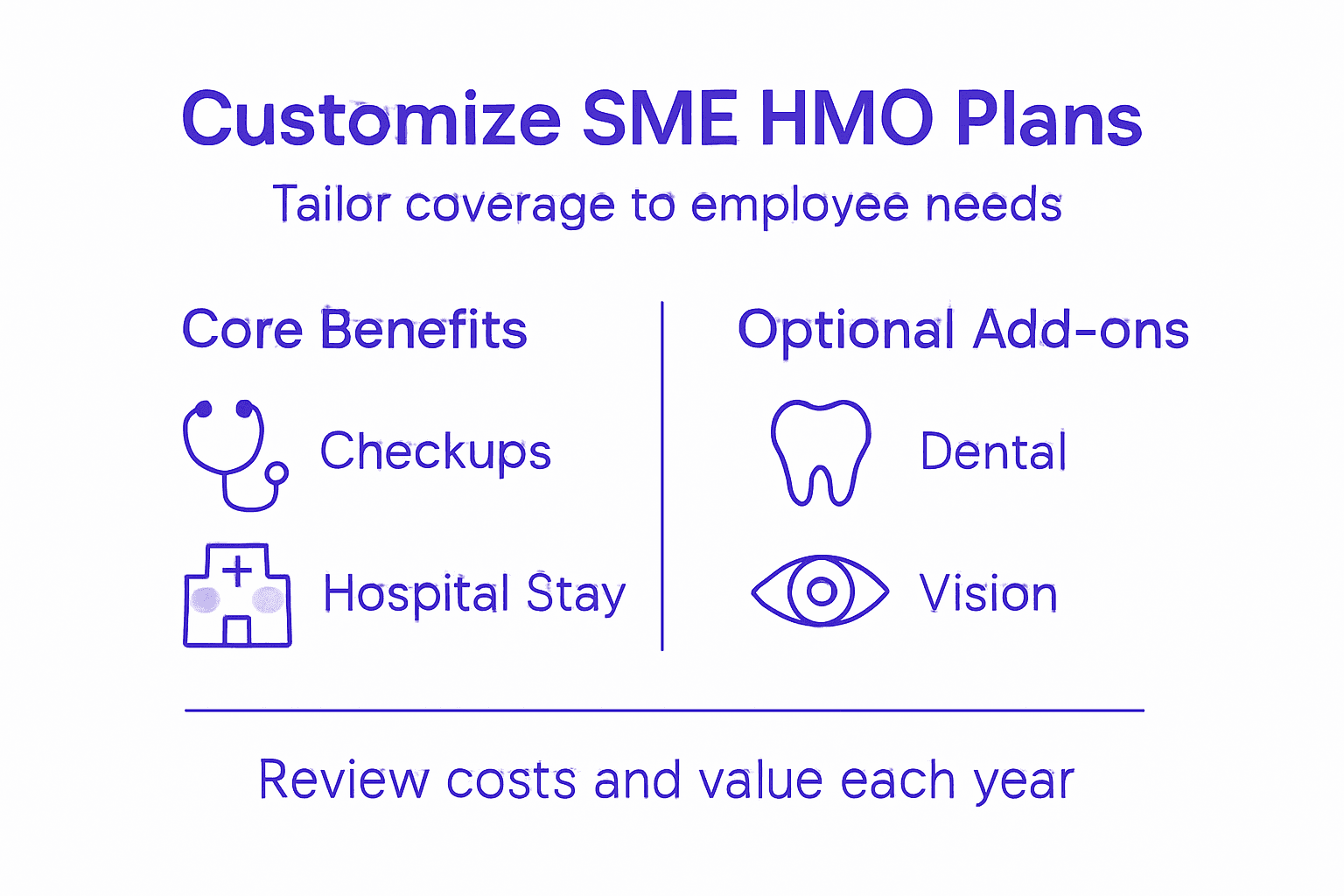
This table compares core HMO benefits versus optional add-ons for SMEs:
| Benefit Type | Coverage Scope | Typical Cost Implications |
|---|---|---|
| Core HMO benefits | Essential healthcare services | Usually included in base premium |
| Optional add-ons | Specialized supplemental care | Requires extra employee premium |
Remember that the goal is creating a balanced, attractive benefits package that provides meaningful support without unnecessarily increasing costs.
Pro tip: Negotiate group rates for optional add-ons to reduce overall employee costs and maximize the value of your benefits package.
Step 4: Set customization terms and limits
Customizing your HMO benefits requires strategic planning around health insurance plan terms that balance comprehensive coverage with financial sustainability. This step involves defining precise boundaries that protect both your employees and your organization’s budgetary constraints.
Key customization parameters to establish include:
- Maximum benefit limit per employee
- Annual deductible amounts
- Out-of-pocket expense caps
- Copayment percentage structures
- Provider network restrictions
- Prior authorization requirements
- Specialist consultation protocols
When setting these benefit customization guidelines, consider your workforce’s demographic profile and potential healthcare utilization patterns. Some industries or age groups might require more flexible terms than others.
Effective benefit customization is about creating a balanced ecosystem of protection, accessibility, and financial responsibility.
Careful consideration of network limitations and coverage boundaries will help prevent unexpected expenses. Ensure that your chosen terms provide meaningful protection while maintaining affordability for both the company and employees.
Remember that transparency is crucial. Clearly communicate these terms to employees, helping them understand exactly what their healthcare package covers and what potential out-of-pocket expenses they might encounter.
Pro tip: Conduct an annual review of your customization terms to ensure they remain aligned with your workforce’s evolving healthcare needs.
Step 5: Verify custom plan compliance and coverage
Ensuring your customized HMO benefits meet all legal and regulatory requirements is crucial for protecting your employees and your organization. By understanding health insurance compliance standards, you’ll create a robust benefits package that safeguards both employee health and corporate interests.
Key compliance verification steps include:
- Review federal and state health insurance regulations
- Check essential health benefit coverage requirements
- Validate network adequacy and patient protections
- Confirm non-discriminatory benefit design
- Audit reporting and documentation standards
- Verify consumer protection mechanisms
- Assess claims processing protocols
Carefully examine legal and regulatory alignment to prevent potential compliance issues. Each element of your custom plan must meet specific standards that protect employee rights and ensure fair, comprehensive healthcare access.
Compliance is not just a checkbox - it’s a commitment to your employees’ health and well-being.
Pay special attention to network coverage restrictions and ensure your plan provides meaningful access to healthcare services. This means verifying that employees can receive necessary treatments without undue barriers or excessive out-of-pocket expenses.
Remember that compliance verification is an ongoing process. Regulations change, and your benefits package should evolve to maintain full legal and ethical standards.
Pro tip: Consult with a healthcare compliance expert annually to ensure your HMO benefits remain fully aligned with current regulatory requirements.
Customize Your SME’s HMO Benefits with Confidence and Ease
Designing the perfect HMO benefits package can feel overwhelming when you need to balance comprehensive coverage with cost and employee needs. This article highlights critical steps like assessing health needs, reviewing core benefits, selecting add-ons, and ensuring compliance. The challenge is clear: creating a tailored healthcare plan that supports your workforce while protecting your budget.
That is where HMO Plans steps in. Our solutions are designed specifically for Small and Medium Enterprises in the Philippines, offering essential HMO benefits such as cashless access to premier hospitals, 24/7 nationwide coverage, and seamless inpatient, outpatient, and emergency care. With us, you gain flexible customization options including dental services, annual physical exams, and life and accident insurance add-ons. Plus, we provide 100% coverage for pre-existing and special conditions up to your Maximum Benefit Limit so you never have to worry about surprise exclusions or hidden costs.
Experience hassle-free customization with clear terms that align with your unique employee demographics and health needs. Explore how we address the core steps highlighted in the article by visiting our homepage today.
Ready to create a healthcare benefits plan that truly works for your SME and employees? Discover more about our comprehensive packages and start customizing your HMO benefits easily at HMO Plans. Your workforce deserves tailored protection that feels simple and reliable—take the next step now.
Frequently Asked Questions
How can I assess my employees’ healthcare needs for HMO benefits?
To assess your employees’ healthcare needs, distribute anonymous health surveys and analyze existing healthcare claims. This will help you create a comprehensive picture of overall workforce health trends.
What core HMO benefits should I review for my SME?
Review essential areas such as preventive services, hospital care, and prescription medication coverage. Carefully examine the Summary of Benefits and Coverage document for details on services included and any cost-sharing requirements.
What optional add-ons can I consider for HMO benefits?
Consider optional add-ons like dental insurance, vision care, and mental health programs. Assess each add-on’s alignment with your workforce’s needs to enhance their healthcare package effectively.
How do I set terms and limits for customized HMO benefits?
Establish clear parameters like maximum benefit limits and out-of-pocket expense caps that reflect your employees’ needs. Regularly review these terms to ensure they remain suitable for your workforce’s healthcare utilization patterns.
What steps are involved in verifying compliance for custom HMO benefits?
Verify compliance by reviewing federal and state health insurance regulations, ensuring network adequacy, and confirming non-discriminatory benefit design. Conduct a compliance check annually to maintain alignment with changing regulations.
Recommended
- Understanding HMO Basics: A Guide for New HR Managers in SMEs
- Evaluating Vendors: How SMEs Can Choose the Right HMO Partner
- Onboarding New Employees with Better Health Benefits: A Winning Hiring Strategy for SMEs
- HMO Health Insurance for Small and Medium Enterprises in the Philippines
- 5 Benefits of Employee Drug Testing
