

How to Maximize Healthcare Coverage for Employees in SMEs
Every Philippine tech SME leader knows that finding practical ways to deliver high-value healthcare while containing expenses can feel daunting. With rising costs and a diverse workforce, the pressure to create inclusive health benefits is stronger than ever. By embracing a thorough needs assessment and strategic plan selection, you can transform healthcare from a cost center into a genuine advantage for attracting and retaining talented employees.
Table of Contents
- Step 1: Assess Your Employees’ Healthcare Needs
- Step 2: Select Optimal HMO Plan Features And Add-Ons
- Step 3: Customize Coverage For Maximum Value
- Step 4: Enroll Employees And Streamline Access
- Step 5: Verify Coverage Utilization And Address Gaps
Quick Summary
| Key Takeaway | Explanation |
|---|---|
| 1. Assess employee healthcare needs | Conduct surveys and analyze data to understand workforce health needs for targeted benefits. |
| 2. Choose suitable HMO features | Select HMO plan elements that align with employee demographics and healthcare expectations. |
| 3. Customize benefits for value | Tailor healthcare coverage options to meet diverse employee needs along with budget constraints. |
| 4. Streamline employee enrollment | Implement clear communication and digital tools to simplify the healthcare enrollment process. |
| 5. Monitor coverage utilization | Analyze how benefits are used to identify gaps and optimize overall healthcare coverage effectiveness. |
Step 1: Assess your employees’ healthcare needs
Understanding your workforce’s healthcare requirements is critical for designing an effective benefits strategy. By systematically analyzing employee health needs, you can create targeted healthcare coverage that provides genuine value.
To conduct a comprehensive needs assessment, start by developing a structured approach. Most successful strategies involve a multi-step process:
- Distribute confidential health surveys to gather baseline information
- Conduct anonymous wellness interviews or focus groups
- Analyze existing health insurance claims data
- Review demographic information and workforce composition
Your assessment should examine key factors such as age distribution, existing health conditions, family medical histories, and potential risk profiles. Quantitative data matters, but so do individual perspectives. Pay attention to both statistical trends and employee feedback about their healthcare preferences.
Regardless of company size, SMEs often face unique challenges in healthcare planning. Research shows that many organizations recognize the importance of employee health but struggle with expertise and resource constraints. By taking a systematic approach, you can overcome these barriers and design a responsive healthcare strategy.
Effective healthcare needs assessment is about understanding your workforce’s unique health landscape, not just collecting data.
Pro tip: Consider partnering with an HR consultant specializing in healthcare benefits to help design a comprehensive and nuanced assessment strategy.
Step 2: Select optimal HMO plan features and add-ons
Selecting the right HMO plan features and add-ons is crucial for creating a comprehensive healthcare package that meets your employees’ diverse needs. Tailored HMO programs can help SMEs attract and retain top talent while managing healthcare costs effectively.
When evaluating HMO plans, consider these critical features:
- Base coverage limits for inpatient and outpatient services
- Pre-existing condition coverage
- Maternity and dependent coverage
- Annual health checkup benefits
- Network hospital and clinic accessibility
- Emergency medical evacuation services
Strategic add-ons can significantly enhance your healthcare offering. Look for options that provide extra value, such as:
- Dental care packages
- Mental health support services
- Preventive screening programs
- Life and accident insurance riders
- Telehealth consultation services
Prioritize plans that offer flexibility and comprehensive coverage. Some providers specialize in SME-friendly packages that allow you to customize benefits based on your workforce demographics and budget constraints.
The right HMO plan isn’t just about cost – it’s about creating a healthcare safety net that supports your employees’ wellbeing and productivity.
Pro tip: Request detailed benefit comparison sheets from multiple HMO providers and involve key employees in the selection process to ensure the chosen plan meets collective needs.
Step 3: Customize coverage for maximum value
Customizing healthcare coverage requires a strategic approach that balances employee needs with budget constraints. Small business health programs offer remarkable flexibility in designing benefits that truly resonate with your workforce.
To maximize value, consider these critical customization strategies:
- Analyze workforce demographics
- Segment benefits by employee age groups
- Create tiered coverage options
- Include flexible spending arrangements
- Prioritize preventive care services
- Offer targeted health support programs
Strategic customization goes beyond standard packages. Thoughtful design can help you create a compelling benefits ecosystem that addresses diverse employee requirements. Consider implementing health reimbursement arrangements that provide tax-efficient solutions and individualized support.
Key customization approaches include:
- Offering multiple plan tiers
- Allowing individual benefit selections
- Providing opt-in supplemental coverage
- Supporting dependent care needs
- Accommodating generational health preferences
Effective benefits customization transforms healthcare from a standard offering to a strategic employee retention tool.
Pro tip: Conduct annual employee surveys to continuously refine and adapt your healthcare coverage strategy, ensuring ongoing relevance and perceived value.

Step 4: Enroll employees and streamline access
Effective employee enrollment is critical for maximizing healthcare coverage adoption. Small business health programs provide powerful tools to simplify the complex process of getting employees enrolled and accessing their benefits.
To streamline employee enrollment, implement these strategic steps:
- Create a clear, concise benefits communication plan
- Develop a digital enrollment platform
- Schedule mandatory benefits orientation sessions
- Provide individual enrollment support
- Establish user-friendly documentation processes
- Implement a centralized benefits management system
Digital tools can significantly reduce administrative burdens and improve employee engagement. Consider developing a comprehensive onboarding workflow that guides employees through each step of the healthcare enrollment process, ensuring they understand and can easily access their benefits.
Key enrollment optimization strategies include:
- Offering real-time benefit information
- Providing mobile-friendly enrollment interfaces
- Creating personalized benefit dashboards
- Enabling instant document uploads
- Supporting multiple enrollment channels
Successful enrollment is about making healthcare access simple, transparent, and user-friendly for every employee.
Pro tip: Design a step-by-step enrollment guide with screenshots and clear instructions to help employees navigate the healthcare benefits process with minimal confusion.
This table compares digital and manual employee benefits enrollment:
| Enrollment Method | Strengths | Drawbacks |
|---|---|---|
| Digital Platform | Fast processing, fewer errors | Requires initial setup |
| Manual Paperwork | Familiar for all users | Prone to mistakes, slower |
| Hybrid Approach | Flexible, suits all tech skills | Still needs training |
Step 5: Verify coverage utilization and address gaps
Monitoring healthcare coverage effectiveness requires a systematic approach to understanding how employees actually use their benefits. Healthcare coverage analysis helps identify critical gaps and opportunities for improvement.
To effectively verify coverage utilization, implement these strategic tracking methods:
- Conduct quarterly benefits usage surveys
- Analyze insurance claim data
- Track employee out-of-pocket expenses
- Review service access rates
- Compare actual utilization against expected usage
- Identify underutilized benefit categories
Strategic monitoring involves more than just collecting data. Your goal is to transform insights into actionable improvements that enhance employee healthcare access and satisfaction. This means looking beyond surface-level metrics to understand the real barriers preventing comprehensive benefit usage.
Key diagnostic approaches include:
- Segmenting utilization by employee demographics
- Comparing benefits against workforce health needs
- Calculating cost-effectiveness of current plans
- Identifying systemic access barriers
- Benchmarking against industry standards
Effective coverage verification is about understanding not just how much is spent, but how well healthcare resources serve your employees.
Pro tip: Create an anonymous feedback mechanism that allows employees to share their genuine experiences and challenges with current healthcare benefits without fear of judgment.
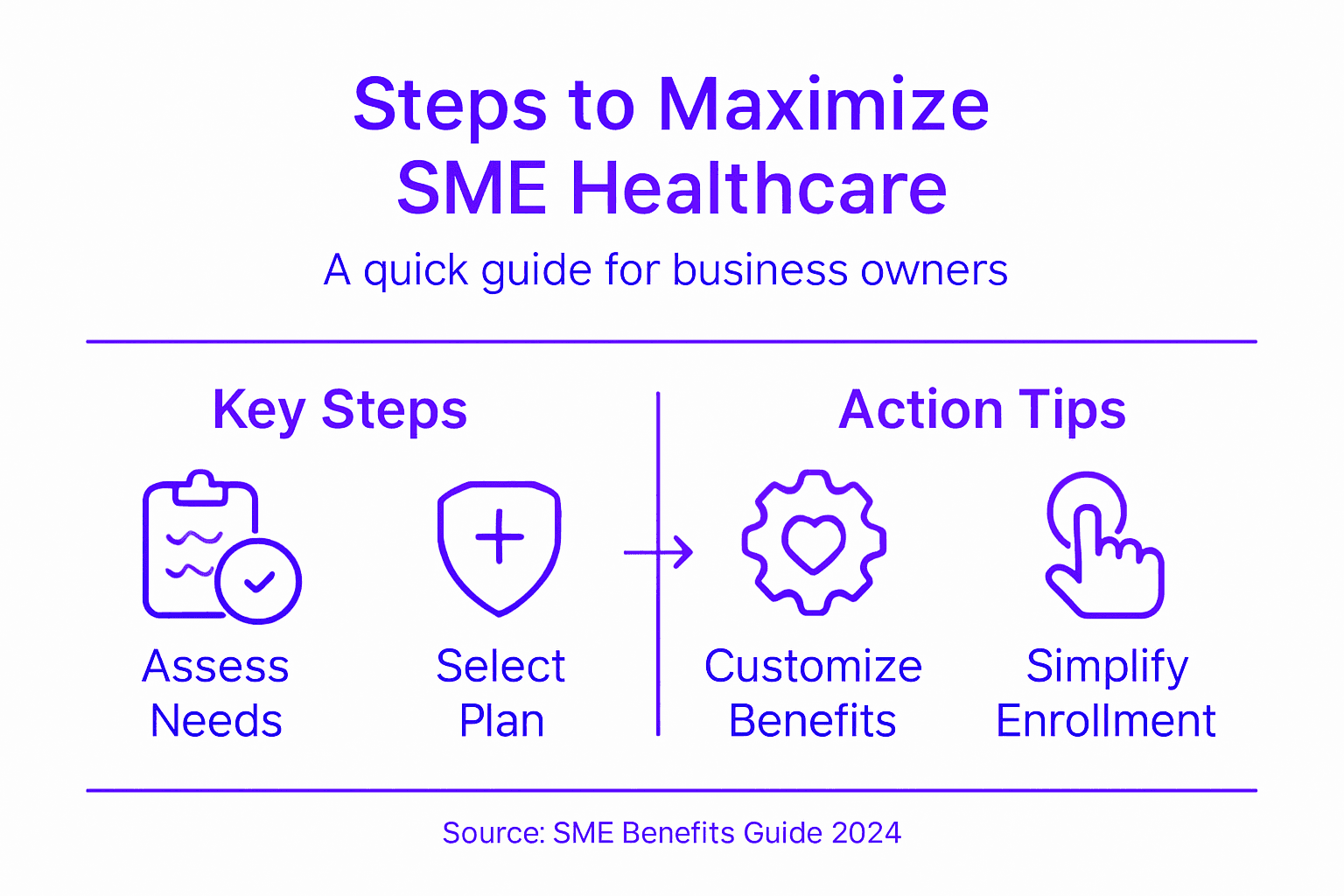
Here’s how each stage of the SME healthcare benefits process adds unique business value:
| Step | Core Objective | Business Impact |
|---|---|---|
| Needs Assessment | Understand workforce health | Informs strategic benefit design |
| Plan Selection | Choose relevant HMO features | Aligns coverage to employee needs |
| Customization | Tailor coverage options | Boosts retention and satisfaction |
| Enrollment | Simplify access and onboarding | Increases benefit adoption rate |
| Utilization Monitoring | Track usage and address gaps | Optimizes benefits effectiveness |
Maximize Your SME’s Healthcare Coverage with Tailored HMO Plans
The article highlights the challenge SMEs face in creating healthcare benefits that truly match their employees’ needs while managing budgets and administrative complexities. Key pain points include designing comprehensive HMO plans with valuable add-ons, customizing coverage for diverse workforce demographics, and streamlining enrollment and utilization monitoring to ensure maximum benefit adoption. These are critical to boosting employee satisfaction and retention.
At HMO Plans, we understand these challenges and offer solutions designed specifically for SMEs in the Philippines. Our partnership with Purple Cow and Etiqa ensures you get 100% coverage for pre-existing conditions, special procedures, and no-fault scenarios up to your Maximum Benefit Limit. With flexible add-ons like dental care, annual physical exams, and life & accident insurance, you can customize plans that truly fit your workforce’s healthcare needs. Access premier hospitals, enjoy cashless transactions, and benefit from our digital platforms that simplify enrollment and claims.
Take control of your employee healthcare strategy today by exploring how our comprehensive SME HMO plans can transform your benefits offering. Visit HMO Plans now and give your employees the coverage they deserve. Don’t wait to enhance your workforce wellbeing with tailored, cost-effective solutions built for your business success.
Frequently Asked Questions
How can I assess my employees’ healthcare needs in my SME?
To assess your employees’ healthcare needs, distribute anonymous health surveys and conduct wellness interviews. Analyze the collected data along with health insurance claims to create a comprehensive view of your workforce’s health landscape.
What features should I consider when selecting an HMO plan for my employees?
When selecting an HMO plan, focus on base coverage limits, pre-existing condition coverage, and accessibility to network hospitals. Prioritize adding features like preventive care and maternity coverage to enhance your healthcare package.
How can I customize healthcare coverage to fit diverse employee needs?
Customize healthcare coverage by analyzing workforce demographics and creating tiered options that cater to different age groups. Additionally, allow employees to choose individual benefits to ensure their unique healthcare needs are met.
What steps can I take to streamline the enrollment process for employee benefits?
To streamline enrollment, create a user-friendly digital platform, develop a clear communication plan, and schedule mandatory orientation sessions. Consider offering individual support to ensure every employee understands their available benefits.
How can I verify the utilization of healthcare coverage among employees?
Verify healthcare coverage utilization by conducting quarterly surveys and analyzing insurance claims data. Identify underutilized benefits and compare actual usage against expected to find improvement opportunities.
What can I do if I discover gaps in healthcare coverage utilization?
If you discover gaps, take action by implementing targeted health support programs and conducting follow-up surveys to gather employee feedback. Continuously monitoring and adjusting your benefits strategy will help enhance overall employee satisfaction.
Recommended
- Beyond PhilHealth: How SMEs Can Maximize Health Investments for Better ROI
- HMO Health Insurance for Small and Medium Enterprises in the Philippines
- Onboarding New Employees with Better Health Benefits: A Winning Hiring Strategy for SMEs
- PhilHealth + HMO: Maximizing Your SME’s Health Investment
- Affordability in Hearing Healthcare – Why It Matters – Audora
