

How to Maximize HMO Benefits for SMEs Effectively
Balancing quality healthcare with budget constraints is a daily challenge for many Human Resources managers in the Philippines. Supporting employees through rising costs and access issues is critical, especially for Small and Medium Enterprises looking to enhance satisfaction and control expenses. By focusing on tailored benefits and strategic HMO optimization, you can deliver real value to your workforce, stay competitive, and avoid wasted resources on unused offerings.
Table of Contents
- Step 1: Assess Employee Healthcare Needs
- Step 2: Review HMO Plan Features And Add-Ons
- Step 3: Customize Benefits For Maximum Value
- Step 4: Educate Employees On Optimal Usage
- Step 5: Track Utilization And Adjust Strategies
Quick Summary
| Key Point | Explanation |
|---|---|
| 1. Assess Employee Healthcare Needs | Conduct targeted surveys and gather qualitative insights to understand specific health requirements of your employees effectively. |
| 2. Review HMO Plan Features | Evaluate existing health insurance offerings and new trends to enhance benefits and improve employee satisfaction. |
| 3. Customize Benefits Packages | Tailor healthcare solutions based on employee preferences and demographics to promote engagement and retention. |
| 4. Educate Employees on Benefits | Provide clear, accessible information on health plans to empower employees in making informed healthcare decisions. |
| 5. Track Benefits Utilization | Systematically monitor healthcare service usage to identify trends and adjust strategies for better alignment with employee needs. |
Step 1: Assess employee healthcare needs
Assessing employee healthcare needs is a critical strategic process for Small and Medium Enterprises (SMEs) to design effective health benefits programs. This step helps organizations understand their workforce’s specific health requirements and develop targeted wellness initiatives that support employee wellbeing while managing costs.
To thoroughly assess employee healthcare needs, HR managers should implement a comprehensive approach that combines quantitative data collection and qualitative insights. Start by conducting targeted health surveys to gather detailed information about your employees’ current health status and preferences. These surveys should cover several key areas:
- Current health challenges
- Existing medical conditions
- Preventive care interests
- Family health history
- Mental health support requirements
- Preferred healthcare service types
The goal is to move beyond generic healthcare offerings and create a benefits package that genuinely meets your workforce’s unique needs. Employee health assessments provide invaluable qualitative data that helps organizations design more targeted wellness programs.
The most effective health benefits strategies are those that align directly with employees’ specific healthcare needs and expectations.
Complement survey data with additional research methods like anonymous feedback sessions, one-on-one consultations with employees, and analysis of existing healthcare utilization patterns. This multi-dimensional approach ensures a comprehensive understanding of your team’s health landscape.
Here is a comparison of research methods for assessing employee healthcare needs:
| Method | Data Type | Key Advantage | Limitation |
|---|---|---|---|
| Health Surveys | Quantitative | Measures broad trends easily | May miss deeper insights |
| Anonymous Feedback | Qualitative | Encourages honest, open responses | Lacks demographic tracking |
| One-on-One Consultations | Qualitative | Reveals personal concerns and needs | Time-intensive process |
| Claims Data Analysis | Quantitative | Shows actual healthcare usage patterns | Dependent on existing data |
Pro tip: Rotate your health assessment methods annually to capture evolving workforce health trends and maintain the relevance of your benefits strategy.
Step 2: Review HMO plan features and add-ons
Reviewing your HMO plan features and add-ons is a strategic process that helps Small and Medium Enterprises optimize their healthcare offerings and ensure maximum value for employees. This critical step allows you to align your health benefits with workforce needs and emerging healthcare trends.
To conduct a comprehensive review, start by examining your current health insurance features and coverage options. Focus on understanding the core components and potential supplemental benefits that can enhance your employees’ healthcare experience. Key areas to evaluate include:
- Base medical coverage
- Prescription drug benefits
- Mental health services
- Telehealth options
- Dental and vision add-ons
- Emergency care provisions
- Preventive health screenings
Strategic benefit design goes beyond basic coverage - it’s about creating a holistic healthcare ecosystem for your workforce.
Consider the evolving needs of your workforce by analyzing usage patterns and gathering employee feedback. HMO and voluntary benefits play a crucial role in attracting and retaining talent, so look for opportunities to introduce value-added services that differentiate your benefits package.
Pay special attention to emerging healthcare trends like mental wellness support, digital health platforms, and personalized care options. These additional features can significantly improve employee satisfaction and demonstrate your commitment to comprehensive healthcare support.
Pro tip: Schedule a mid-year benefits review to ensure your HMO plan remains responsive to changing workforce health requirements and emerging medical technologies.
Step 3: Customize benefits for maximum value
Customizing health benefits is a strategic approach that allows Small and Medium Enterprises to create tailored healthcare solutions that resonate with their unique workforce. By thoughtfully designing benefits packages, you can maximize employee satisfaction while optimizing your healthcare investment.
Begin by analyzing employee healthcare preferences and cost-efficient strategies. Look for opportunities to redirect savings from underutilized programs into high-impact benefits that truly matter to your team. Key customization strategies include:
- Segmenting benefits by employee demographics
- Incorporating flexible healthcare options
- Adding targeted wellness programs
- Supporting mental health initiatives
- Providing digital health platforms
- Offering personalized care channels
- Implementing tiered coverage levels
Effective benefits customization transforms healthcare from a standard offering to a strategic employee retention tool.
Consider your workforce’s specific needs by conducting detailed surveys and analyzing health utilization patterns. Targeted benefits can significantly improve employee engagement and perceived value. The goal is to create a comprehensive healthcare ecosystem that provides tangible support and demonstrates your commitment to employee wellbeing.

Carefully evaluate each benefit option through the lens of employee impact and organizational budget. Strategic benefits review allows you to eliminate underused programs and reinvest in solutions that deliver maximum value.
Below is a summary of key drivers for benefits customization and their potential business impacts:
| Customization Driver | Example Approach | Potential Business Impact |
|---|---|---|
| Employee Demographics | Tailored plan options | Higher satisfaction among diverse groups |
| Wellness Integration | Preventive initiatives | Lower absenteeism and improved morale |
| Digital Health Tools | Telehealth platforms | Increased engagement and plan usage |
| Tiered Coverage | Multiple coverage levels | Better cost control, more flexibility |
Pro tip: Create an annual benefits flexibility fund that allows for dynamic adjustments based on emerging workforce health trends and employee feedback.
Step 4: Educate employees on optimal usage
Educating employees about their health benefits is a critical strategy that transforms standard healthcare coverage into a powerful employee engagement tool. By providing clear, comprehensive information, you can help your team maximize their HMO benefits and make informed healthcare decisions.
Start by developing effective communication strategies that demystify complex healthcare options. Your education approach should be multifaceted and include:
- Hosting quarterly benefits workshops
- Creating easy-to-understand benefit guides
- Developing digital information resources
- Offering one-on-one consultation sessions
- Implementing interactive training modules
- Providing clear access instructions
- Using multiple communication channels
Effective benefits education is less about information and more about empowering employees to take control of their healthcare.
Focus on making healthcare information accessible and digestible. Break down complex medical terms, explain coverage details, and highlight unique aspects of your HMO plan. The goal is to remove barriers that might prevent employees from utilizing their benefits fully.
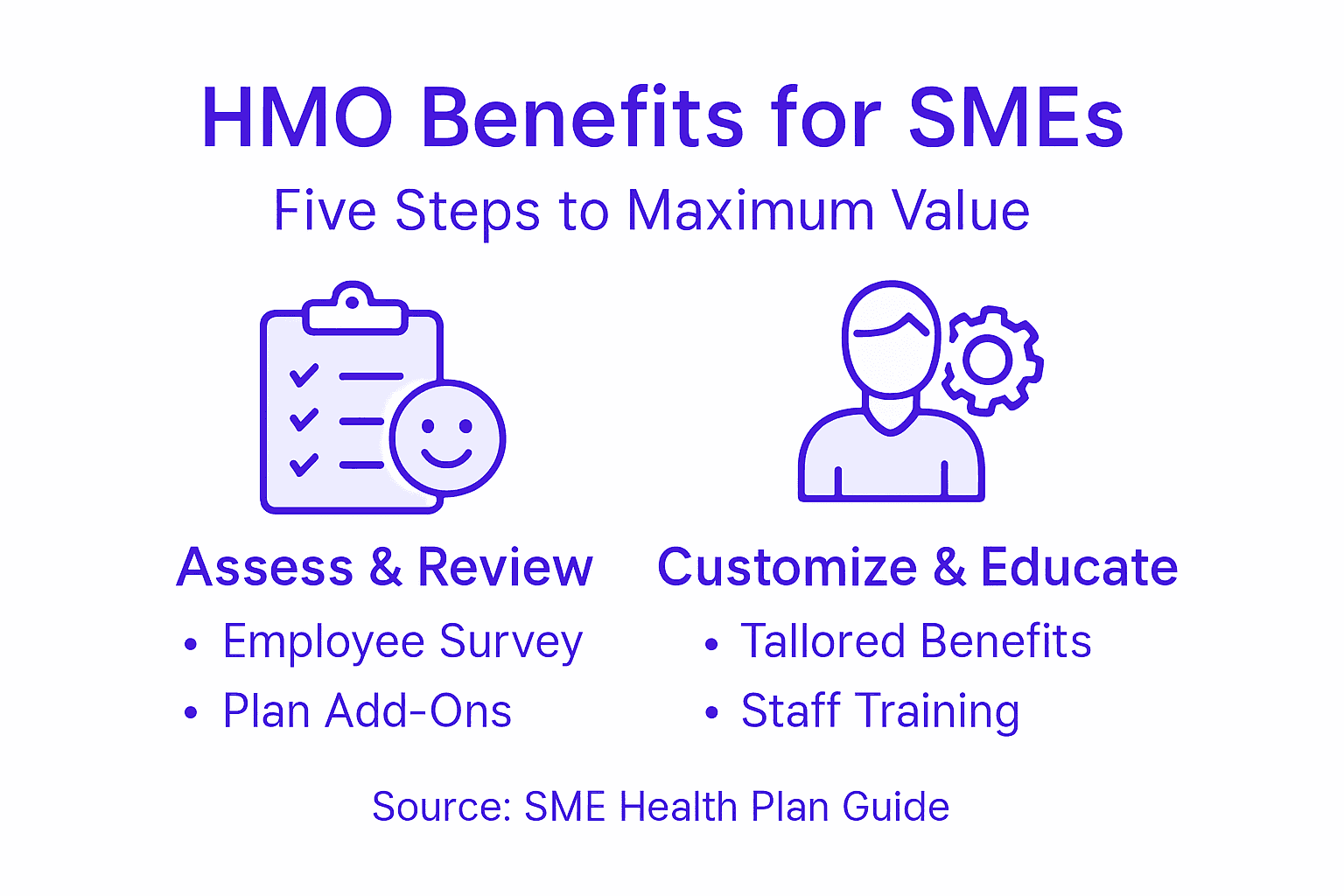
Carefully design your educational materials to address key employee health navigation challenges. Emphasize preventative care options, mental health resources, and step-by-step guides for accessing different services. Practical, real-world examples can help employees understand how to leverage their benefits effectively.
Pro tip: Create a dedicated internal communication channel or monthly newsletter specifically focused on breaking down healthcare benefits and sharing practical usage tips.
Step 5: Track utilization and adjust strategies
Tracking HMO benefits utilization is a dynamic process that enables Small and Medium Enterprises to optimize their healthcare investments and ensure alignment with employee needs. By systematically monitoring how your team uses healthcare services, you can make data-driven decisions that enhance both employee satisfaction and cost-effectiveness.
Begin by analyzing comprehensive health benefits usage data to understand your current healthcare landscape. Your tracking approach should encompass multiple dimensions:
- Claims frequency and volume
- Service category utilization
- Cost per employee segment
- Preventive care engagement rates
- Emergency service usage patterns
- Specialty care referral trends
- Digital health platform interactions
Effective utilization tracking transforms raw data into strategic healthcare insights that drive meaningful organizational decisions.
Employ sophisticated data collection and analysis techniques to gain nuanced understanding of your benefits performance. Look beyond surface-level metrics to identify underlying trends, potential gaps in coverage, and opportunities for strategic refinement.
Carefully monitor healthcare plan performance through regular quarterly reviews. Compare your utilization data against industry benchmarks, track emerging employee health needs, and be prepared to adjust your benefits strategy proactively.
Pro tip: Implement a digital dashboard that provides real-time insights into benefits utilization, enabling swift and informed strategic adjustments.
Unlock the Full Potential of Your SME’s HMO Benefits Today
Maximizing HMO benefits is essential for SMEs seeking to deliver tailored, cost-effective healthcare that truly supports their workforce. This article highlights critical challenges like assessing employee healthcare needs, customizing benefits, and tracking utilization for better outcomes. If you want seamless access to comprehensive coverage including pre-existing conditions, emergency care, and mental health support all designed specifically for SMEs, HMO Plans has the solution you need.
Our partnership with Purple Cow and Etiqa ensures straightforward, hassle-free coverage with 24/7 nationwide access to premier hospitals and clinics plus flexible add-ons to match your team’s evolving healthcare demands. Experience proactive benefits management with tools and services that empower your employees to optimize their healthcare usage.
Take control of your SME’s healthcare strategy now by partnering with HMO Plans - Purple Cow. Visit our website and discover how to customize your health benefits for maximum value. Don’t wait for rising healthcare costs to impact your business — start delivering exceptional coverage and support tailored specifically to your workforce’s needs today.
Frequently Asked Questions
How can I assess my employees’ healthcare needs effectively?
To assess employees’ healthcare needs effectively, conduct comprehensive health surveys that gather information on current health challenges, preferences, and interests in preventive care. Use a combination of quantitative data from the surveys and qualitative insights from anonymous feedback to gain a well-rounded understanding of your workforce’s unique healthcare requirements.
What should I include when reviewing HMO plan features and add-ons?
When reviewing HMO plan features, focus on the base medical coverage, prescription drug benefits, mental health services, telehealth options, and preventive health screenings. This comprehensive evaluation ensures your benefits package aligns with current employee health needs and emerging healthcare trends.
How can I customize health benefits to maximize employee satisfaction?
Maximize employee satisfaction by customizing health benefits based on employee demographics and incorporating flexible healthcare options. Target specific needs by adding wellness programs and digital health platforms to cater to various employee preferences, which can lead to a noticeable increase in engagement.
What are the best practices for educating employees on optimal usage of their HMO benefits?
Best practices for educating employees include hosting regular benefits workshops, creating easy-to-understand guides, and offering one-on-one consultation sessions. Implementing these strategies can significantly increase employees’ understanding and utilization of their healthcare benefits, empowering them to make informed choices.
How do I track utilization of HMO benefits effectively?
Track HMO benefits utilization by analyzing claims frequency, service category usage, and preventive care engagement rates. Regularly review this data to identify trends and make informed adjustments to your benefits strategy, ensuring that your offerings remain relevant to employee needs.
When should I schedule a mid-year benefits review?
Schedule a mid-year benefits review ideally six months after your initial benefits rollout. This allows you to assess if the coverage remains responsive to employee needs and any emerging health trends, ensuring that your HMO plan continues to provide maximum value.
Recommended
- Evaluating Vendors: How SMEs Can Choose the Right HMO Partner
- Understanding HMO Basics: A Guide for New HR Managers in SMEs
- HMO Health Insurance for Small and Medium Enterprises in the Philippines
- Beyond PhilHealth: How SMEs Can Maximize Health Investments for Better ROI
- Life Insurance | Unparalleled Global Benefits
