

What Is Inpatient Care Coverage for SMEs?
Facing the reality of unexpected hospital bills can be a financial nightmare for Philippine tech startups, especially when employees have pre-existing conditions. Choosing the right inpatient care coverage is vital for HR managers who want to protect both their team and their company’s budget. This introduction breaks down what inpatient care coverage really means, highlighting the essentials like mandatory hospital services and immediate protection for pre-existing conditions so you can confidently provide comprehensive benefits and avoid costly surprises.
Table of Contents
- Defining Inpatient Care Coverage Benefits
- Types Of Inpatient Coverage For Employees
- How HMO Inpatient Coverage Works
- Special Coverage For Pre-Existing Conditions
- Cost, Claims, And Common Pitfalls
Key Takeaways
| Point | Details |
|---|---|
| Inpatient Care Coverage | This coverage provides financial protection for hospital stays, including room, physician services, and medications. Understanding it helps prevent unexpected bills during health crises. |
| Differences from Outpatient Care | Inpatient care involves overnight hospital stays, while outpatient care does not. Clarity on these distinctions is critical for defining employee benefits. |
| Pre-Existing Condition Coverage | Modern HMO plans offer full coverage for pre-existing conditions from day one, eliminating significant barriers for employees with chronic health issues. |
| Cost and Claims Management | It’s essential to understand the cost limits and claims process to avoid surprises; provide employees with a checklist to streamline submissions and prevent errors. |
Defining Inpatient Care Coverage Benefits
Inpatient care coverage is the financial protection your company provides when an employee needs to be admitted to a hospital for medical treatment. Unlike outpatient visits where someone goes home the same day, inpatient care covers the costs that accumulate during a hospital stay, from the moment of admission through discharge. For tech startups in the Philippines, understanding what’s actually covered prevents surprise bills and keeps your team financially secure when facing serious health events.
What exactly does inpatient care coverage include? At its core, mandatory inpatient care benefits ensure that essential hospital services are covered during your employee’s stay. This covers hospital room and board (your employee’s bed and basic accommodations), physician services (the doctors treating the patient), laboratory and x-ray services needed for diagnosis and monitoring, medications administered during the hospital stay, surgical procedures if required, and nursing care throughout the admission. For a tech startup employee dealing with appendicitis, for example, the coverage would pay for the operating room, surgeon fees, anesthesia, post-operative medications, and three days of hospital accommodation. The coverage essentially protects your team from the massive out-of-pocket costs that can drain savings in a single medical crisis.
The scope of what’s covered can vary depending on your chosen HMO plan. Some plans cover special procedures and complex treatments that require hospitalization, while others include congenital and special condition coverage for employees with pre-existing health challenges. Modern HMO plans in the Philippines typically provide access to accredited hospitals, 24/7 nationwide coverage, and even room and board accommodation at partner facilities. This means if your developer gets hospitalized during a client visit in Cebu, they’re covered at quality hospitals without scrambling to find an in-network provider.
One critical distinction: inpatient coverage differs significantly from outpatient care (like doctor visits and clinic consultations). Comprehensive inpatient hospital care specifically addresses situations requiring admission, while outpatient benefits handle preventive checkups and minor treatments. Your SME benefits package should clearly spell out the maximum benefit limits, room rates, and any exclusions so you know exactly what protection your team has when serious illness or injury strikes.
Here’s a quick comparison of inpatient and outpatient coverage to help clarify their differences:
| Coverage Aspect | Inpatient Care | Outpatient Care |
|---|---|---|
| Requirement of Admission | Hospital stay required | No overnight admission |
| Example Scenarios | Surgery, complex treatments | Checkups, minor procedures |
| Typical Costs Covered | Room, nursing, surgery, medications | Consultation fees, basic tests |
| Claims Process | Authorization often needed | Simpler or direct payment |
| Out-of-Pocket Risk | High without coverage | Usually moderate per visit |
Pro tip: Review your plan’s room rate limits before enrollment; if your chosen hospital exceeds the covered amount, employees could pay the difference themselves, so clarify whether your plan covers semi-private or private rooms to avoid unexpected out-of-pocket expenses.
Types of Inpatient Coverage for Employees
Not all inpatient coverage is created equal, and understanding the different types available helps you choose the right protection for your tech startup team. Your HMO plan likely offers multiple tiers of inpatient coverage, each designed to address different health scenarios and employee needs. The variations matter because what covers a junior developer’s appendectomy might differ significantly from what protects a senior engineer dealing with a complex cardiac procedure requiring extended rehabilitation.
Standard inpatient coverage typically includes medical treatment requiring hospitalization, which encompasses hospital room accommodation, physician services, nursing care, and basic diagnostic testing during the stay. Beyond this foundation, most comprehensive plans add coverage for surgical procedures (from routine arthroscopy to major reconstructive surgery), specialist consultations during hospitalization, prescription medications administered in the hospital, laboratory and diagnostic imaging services, and emergency treatment for acute conditions. For a Philippines based startup, employer-sponsored health insurance typically includes both inpatient and outpatient care with annual limits that vary by policy tier. Some plans extend coverage to maternity benefits (covering pregnancy-related hospitalizations), mental health crisis admissions, and even extended rehabilitation services for employees recovering from major procedures or accidents.

Many HMO providers in the Philippines now offer customized inpatient coverage tiers based on employee roles and seniority. Your entry-level developers might have standard coverage with reasonable room rate limits, while your C-suite executives could access premium coverage with private room options, exclusive hospitals, and higher surgical benefit limits. Some plans also include specialized protections like complex procedures and extended rehabilitation for employees with chronic conditions or those recovering from major health events. The key difference between plans often comes down to daily room rate maximums, maximum benefit limits per year, surgical procedure caps, and whether the plan covers pre-existing conditions from day one or after waiting periods.
When evaluating coverage types, pay attention to what’s explicitly included versus what requires higher out-of-pocket costs. Some plans cover intensive care unit stays at full rates, while others limit ICU coverage to a specific number of days. The best plans for SMEs provide transparency about these tiers so your team knows exactly what protection they have before a health crisis forces them to learn the hard way.
Pro tip: Document your coverage tier details and share them with employees through a simple one-page summary; when people understand what’s covered before hospitalization occurs, they make better healthcare decisions and experience less financial stress during medical emergencies.
How HMO Inpatient Coverage Works
Your tech startup’s HMO plan operates differently than traditional insurance because it’s a managed care system designed to control costs while ensuring your employees get quality care. The mechanics are straightforward once you understand the key players and the authorization process. When an employee needs hospitalization, the HMO doesn’t simply pay any hospital bill that comes through. Instead, the plan coordinates care through a specific network, requires certain approvals, and manages the entire hospitalization process to keep expenses reasonable while maintaining quality standards.
The process typically starts with your employee’s primary care physician (PCP), who acts as the gatekeeper for inpatient services. When your senior developer faces a hernia requiring surgery, they don’t just walk into any hospital. Instead, they contact their PCP who evaluates the condition, determines if hospitalization is necessary, and coordinates with the HMO for authorization. HMO members must typically select a primary care physician who manages referrals to specialists and inpatient care, ensuring coordinated treatment across the entire healthcare journey. The PCP submits a referral request to the HMO, which reviews the medical necessity and approves the admission to an in-network hospital. Once approved, your employee receives treatment at an accredited facility where the HMO has negotiated rates, minimizing out-of-pocket costs. The beauty of this system is that HMO plans usually operate on a cashless basis at partner hospitals, meaning your employee presents their card, receives treatment, and the HMO settles the bill directly with the hospital, eliminating the burden of upfront payments and reimbursement paperwork.
Emergencies bypass the authorization requirement entirely because HMO managed care requires authorization for inpatient services except in life-threatening situations. If your marketing manager gets hit by a motorcycle in traffic, they go straight to the nearest hospital emergency room without waiting for PCP approval or HMO authorization. The network covers emergency care regardless of whether the hospital is in-network, though this protection has limits. After stabilization, the HMO expects transfer to an in-network facility if the emergency hospital isn’t part of their network. The key advantage for your SME is that this coordinated approach keeps administrative overhead low, reduces unnecessary hospitalizations, and prevents surprise bills because everything flows through the established network and authorization system.
Understanding this workflow matters because it affects how quickly your employees can access care and what their costs will be. The HMO’s coordination through PCPs and pre-authorization isn’t bureaucratic red tape but rather a system that has reduced healthcare costs in the Philippines while maintaining quality standards across Big 9 Hospitals and Healthway Clinics. When you brief new hires on their HMO benefits, explain that their PCP is their healthcare quarterback, directing them to specialists and inpatient care when needed, and that this coordination actually protects them from overwhelming medical bills.
Pro tip: Ensure your employees know their assigned PCP’s contact information and understand they should call their PCP before scheduling non-emergency hospitalizations; this 5-minute call prevents authorization delays that could postpone necessary care or result in unexpected out-of-pocket expenses.
Special Coverage for Pre-Existing Conditions
Here’s where many tech startup HR managers get genuinely excited about their HMO options. Pre-existing conditions typically scare employers because they mean higher costs and complicated coverage exclusions. But modern HMO plans in the Philippines, particularly those offered through reputable providers, have fundamentally changed this equation. Your startup can now offer employees complete protection for conditions they already had before joining your company, without waiting periods or coverage limitations. This shift matters enormously because it means your team member with controlled diabetes, the developer managing hypertension, or the designer living with asthma all receive full inpatient coverage from day one.
Under standard health insurance rules, insurance companies cannot refuse coverage or charge more because of pre-existing conditions. This protection extends to inpatient care, meaning your employees’ hospitalizations related to their pre-existing conditions are fully covered without exclusions or waiting periods. Your finance manager who managed Type 2 diabetes before joining your startup needs emergency hospitalization for diabetic ketoacidosis? The HMO covers it completely. Your operations lead has a history of depression and requires inpatient psychiatric treatment? Full coverage applies from the first day of enrollment. The significance of this cannot be overstated because it removes one of the largest barriers preventing talented professionals from joining startups, especially those living with chronic conditions who previously feared coverage gaps or prohibitive costs.
What makes HMO plans particularly valuable for SMEs is the guaranteed coverage for pre-existing conditions without essential health benefit denials. Most plans operated through HMO Plans and similar providers commit to 100 percent coverage for pre-existing conditions up to the Maximum Benefit Limit, treating chronic conditions with the same priority as acute illnesses. This creates a significant competitive advantage when recruiting because you can confidently tell candidates that their existing health conditions won’t impact their coverage or out-of-pocket costs. Beyond basic protection, many plans now include specialized support for congenital and special conditions that require ongoing inpatient management, comprehensive medication support, and extended rehabilitation services. Your startup becomes an employer that truly cares about employee wellbeing rather than one that views chronic conditions as financial liabilities.
When evaluating HMO options, specifically confirm that pre-existing conditions receive immediate coverage without waiting periods or exclusions. Ask providers directly about coverage for your employees’ specific conditions. Request clarification on the Maximum Benefit Limit to ensure it’s sufficient for the conditions your team manages. This transparency prevents surprises later and demonstrates to employees that their health protection is comprehensive from day one.
Pro tip: During onboarding, explicitly tell new employees with pre-existing conditions that their health history does not affect their coverage or benefits; this simple conversation removes anxiety and builds trust, making your startup stand out as a genuinely supportive employer.
Cost, Claims, and Common Pitfalls
Inpatient care costs can blindside even well-intentioned HR managers. You think you have solid coverage, your employees think they’re protected, and then a hospitalization happens. The bill arrives and suddenly there are gaps, co-payments you didn’t anticipate, or claims denied for reasons that seem arbitrary. Understanding the real costs, how claims actually work, and the pitfalls that trap most SMEs prevents these painful surprises from derailing your benefits strategy and your employees’ financial security.
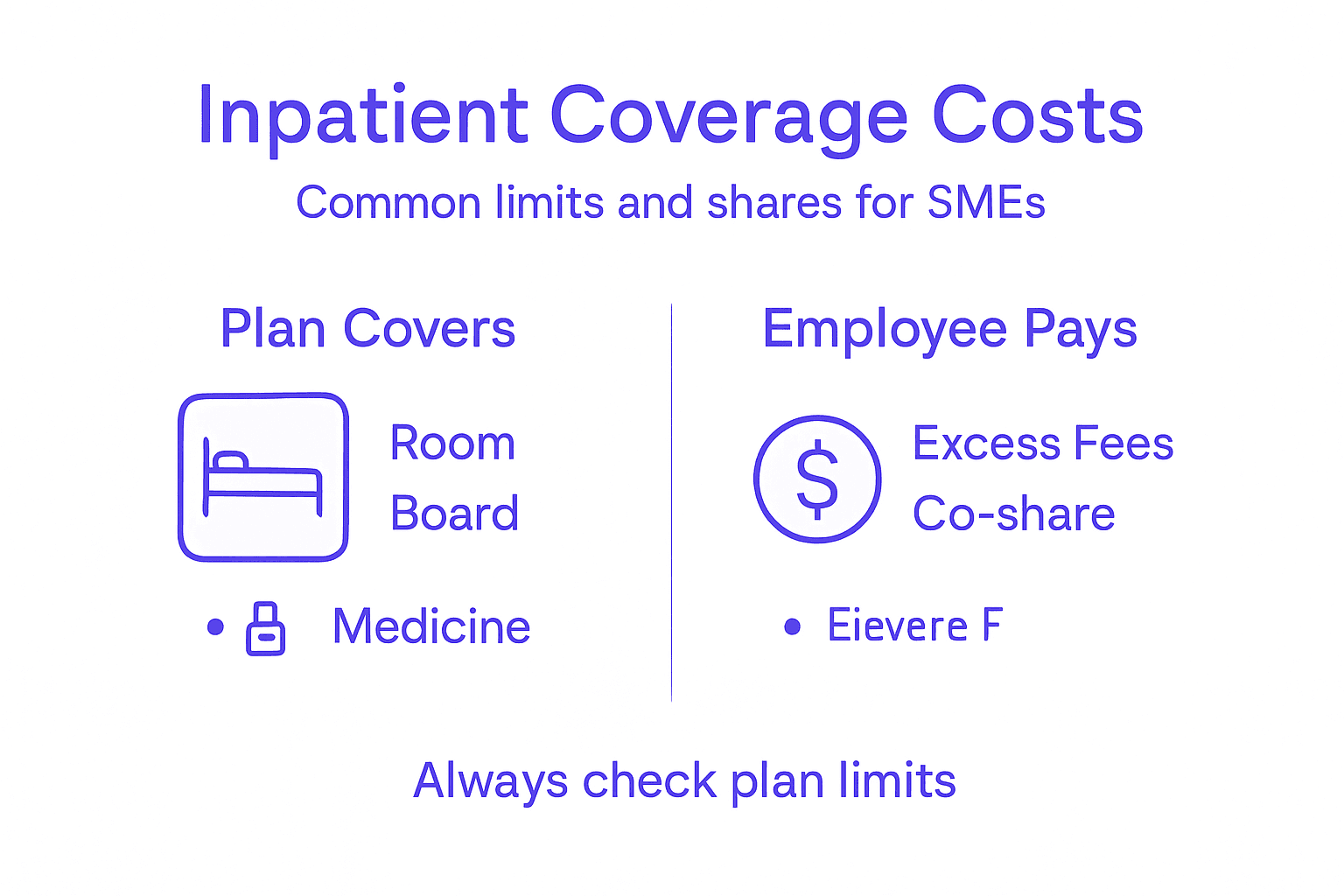
The first cost reality: HMO plans operate with specific limits and cost-sharing structures. Your plan might cover 80 percent of inpatient costs but require employees to pay 20 percent of the remaining balance, or it might impose a daily room rate maximum that leaves your employee responsible for anything above that limit. Significant variation in hospital billing practices means identical procedures cost vastly different amounts at different hospitals, creating situations where your employee’s co-payment differs based solely on which facility they’re admitted to. When your developer needs emergency hernia surgery, one hospital might charge 45,000 pesos while another charges 72,000 pesos for the identical procedure. If your plan covers 80 percent, that’s a 5,400 peso difference in your employee’s out-of-pocket cost. The second cost reality involves maximum benefit limits. Your HMO plan might cap annual inpatient benefits at 500,000 pesos. For routine hospitalizations, this provides excellent protection. But cancer treatment, extended ICU stays, or complicated surgical recovery can exhaust that limit quickly, leaving your employee responsible for additional costs. Understanding these limits before crises occur prevents shock and allows families to plan financially.
Claims processing creates the most common pitfalls. Inadequate coverage limits during inpatient care episodes combine with complex billing to create submission errors, denied claims, and delayed reimbursements. Your employee might submit a claim for out-of-network emergency room treatment only to discover the HMO classifies their condition as non-emergency, denying coverage. Timely reimbursement processes require proper documentation, correct coding, and adherence to specific submission deadlines. Many employees don’t understand that they need to submit claims within 30 days or that original receipts, not photocopies, are required. Missing deadlines or documentation means forfeiting reimbursement entirely. Other pitfalls include surprise billing from out-of-network specialists consulted during hospitalization, balance billing when hospital charges exceed the plan’s negotiated rate, and coverage exclusions buried in plan documents that employees discover only during treatment.
Common pitfalls to prevent:
To help HR managers avoid costly errors, below is a summary of the most significant inpatient claims errors and how to prevent them:
| Common Claims Error | Why It Happens | Simple Prevention Tip |
|---|---|---|
| Missed Submission Deadline | Late or missed paperwork | Remind staff about 30-day limit |
| Incomplete Documentation | Missing receipts or details | Provide a claims checklist |
| Out-of-Network Admission | Hospital not in HMO network | Confirm hospital’s accreditation |
| Exceeded Room Rate Limit | Room exceeds plan coverage | Verify room type with HMO in advance |
| Uncovered Specialist Fees | Specialist not covered by plan | Check coverage for all providers |
- Not confirming that your chosen hospital is in-network before admission
- Assuming all specialists called during hospitalization are in-network
- Exceeding daily room rate maximums without realizing the employee pays the difference
- Missing claim submission deadlines or submitting incomplete documentation
- Not understanding co-payments and cost-sharing percentages before hospitalization occurs
Pro tip: Create a simple one-page claims checklist for employees listing required documents, submission deadlines, and claim hotline numbers; distribute it during onboarding and reference it when employees discuss hospitalizations, preventing administrative errors that delay reimbursements.
Secure Your SME’s Future with Reliable Inpatient Care Coverage
Navigating inpatient care coverage can feel overwhelming especially when unexpected hospital stays threaten both your employees’ health and your startup’s financial stability. The article highlights key challenges such as understanding room rate limits, managing pre-authorization processes, and ensuring coverage for pre-existing conditions without surprise out-of-pocket costs. Your SME deserves a health plan that removes these uncertainties and guarantees cashless, comprehensive inpatient benefits across premier facilities in the Philippines.
HMO Plans is tailored to meet precisely these needs. With 24/7 nationwide support, seamless authorization through primary care physicians, and an unwavering commitment to 100% coverage for pre-existing and congenital conditions, you provide your team with peace of mind to focus on innovation not medical bills. From standard inpatient benefits to optional add-ons like dental services and annual physical exams, HMO Plans offers flexible, straightforward solutions designed specifically for SMEs.
Explore comprehensive inpatient care coverage for your employees today and transform how your startup manages health risks.
Visit HMO Plans now to learn how to protect your team with trusted inpatient coverage that aligns with your company’s growth and wellbeing goals. Take control of employee health expenses before the next medical emergency arises.
Discover how our premium hospital networks and clear claims process simplify healthcare for your small or medium enterprise.
Frequently Asked Questions
What is inpatient care coverage?
Inpatient care coverage is financial protection that provides payment for medical treatment when an employee is admitted to a hospital, covering costs from admission through discharge.
What does inpatient care coverage typically include?
Inpatient care coverage typically includes hospital room and board, physician services, nursing care, laboratory tests, imaging services, medications administered during the stay, and surgical procedures if needed.
How does inpatient care coverage differ from outpatient care?
Inpatient care coverage is specifically for situations requiring a hospital stay, such as surgeries or complex treatments, while outpatient care covers medical services that don’t require overnight hospitalization, like routine checkups or minor procedures.
Are pre-existing conditions covered under inpatient care plans?
Yes, many modern HMO plans offer full inpatient coverage for pre-existing conditions from the first day of enrollment, without waiting periods or exclusions, ensuring that employees receive the care they need without financial barriers.
Recommended
- Navigating Congenital and Special Condition Coverage in Your SME Health Plan
- Navigating Congenital and Special Condition Coverage: Inclusive Healthcare for Every Employee
- Special Procedures & Complex Coverage Explained: Protecting Every Employee’s Health Needs
- HMO Health Insurance for Small and Medium Enterprises in the Philippines
- How Real-Time Insurance Verification Saves SNFs 50-70% on Administrative Time - Smart Admissions
