

List of Premier HMO Hospitals in the Philippines 2026
TL;DR:
- Premier HMO hospitals in the Philippines are accredited by major health organizations and recognized for clinical excellence. Access to these hospitals depends on your specific plan tier, with higher tiers allowing admission without additional charges. Families should verify hospital accreditation for their plan and location to ensure proper healthcare coverage.
Premier HMO hospitals in the Philippines are facilities accredited by major health maintenance organizations and recognized by national or international authorities for clinical excellence. The list of premier HMO hospitals includes names like St. Luke’s Medical Center, Makati Medical Center, and Quezon City General Hospital, each carrying awards and accreditations that set them apart from standard network facilities. Choosing the right hospital from your HMO’s network is not just about convenience. It directly affects the quality of care you receive and how much you pay out of pocket. This guide breaks down the top facilities, explains how HMO accreditation tiers work, and gives you practical steps to pick the best fit for your family.

1. Which hospitals are on the list of premier HMO hospitals?
The Philippines has several hospitals that consistently appear on top HMO hospital networks due to their clinical standards, specialty departments, and national recognition. These are the facilities most families should know before choosing or renewing an HMO plan.
-
St. Luke’s Medical Center (Global City). St. Luke’s holds the title of Most Outstanding Level 3 Private Hospital as awarded by the Philippine Hospital Association. It also earned Gold Awards for Talent Development and Clinical Effectiveness Improvement at the Hospital Management Asia Conference 2025. These awards reflect both staff quality and measurable improvements in patient outcomes.
-
Makati Medical Center (MakatiMed). MakatiMed ranks among Asia-Pacific’s best specialized hospitals and leads in multiple medical specialties. This international recognition places it among the top examples of premier healthcare facilities in the region, not just in the Philippines.
-
Quezon City General Hospital. This public hospital is ranked in the top 33 hospitals nationally by Newsweek and is the only Level III local government unit hospital with 10 fully accredited medical specialty training programs. That combination of public access and clinical rigor makes it a standout example of a premier government healthcare facility.
-
The Medical City. A tertiary hospital with a wide range of specialty centers and strong HMO network affiliations across major providers.
-
Philippine General Hospital (PGH). As the country’s national university hospital, PGH handles complex cases and serves as a training ground for medical professionals. It is accredited by several major HMOs for specific plan tiers.
-
Cardinal Santos Medical Center. Located in San Juan, this facility is known for cardiology and oncology services and maintains accreditation with leading HMO providers.
-
Asian Hospital and Medical Center. Based in Muntinlupa, Asian Hospital holds international accreditation and is part of the network for several top HMO plans, making it a strong option for families in the southern Metro Manila area.
These hospitals represent the upper tier of the HMO hospital network list in the Philippines. Access to them depends on your specific plan tier, which the next sections explain in detail.
2. What are the main HMO providers and their hospital networks?
The HMO provider you choose determines which premier hospitals you can access without paying out of pocket. Network size and hospital affiliations vary significantly across providers.
Maxicare is the largest HMO provider in the Philippines, with a network of over 1,300 hospitals and 20,000 doctors. That scale means Maxicare members can access virtually all major tertiary hospitals, including those on any standard list of premier HMO hospitals.
Major HMO clinic networks range from 3,000 to 5,000+ accredited clinics regionally. Maxicare leads with 5,000+ clinics, PhilCare follows with 4,000+, and MediCard maintains 3,000+. These clinics are often linked to affiliated hospitals, so your outpatient access is just as important as inpatient coverage.
Here is a quick overview of the major HMO providers and their network strengths:
- Maxicare. Largest network. Covers all major tertiary hospitals. Strong for families who want maximum hospital choice.
- MediCard. 3,000+ accredited clinics. Known for accessible outpatient care and solid hospital affiliations.
- Intellicare. Strong corporate plan options. Good coverage for specialist consultations and hospital admissions.
- PhilCare. 4,000+ clinics. Competitive for families seeking broad outpatient access alongside hospital coverage.
- Cocolife. Offers affordable HMO healthcare options with decent hospital network coverage for budget-conscious families.
Pro Tip: Before signing up with any HMO provider, request the full HMO coverage comparison for your specific plan tier. The hospital list on a provider’s website often reflects their top-tier plan, not the entry-level card.
3. How do HMO accreditation tiers affect your access to premier hospitals?
HMO accreditation is not a single blanket approval. A hospital may accept one plan tier from a provider but reject another from the same provider. This is the most common source of surprise billing for Filipino families.
Here is how the tier system typically works:
-
Platinum or Executive plans. These top-tier cards grant access to the full list of a provider’s accredited hospitals, including all premier facilities. Families with serious or chronic health conditions benefit most from this tier.
-
Standard or mid-tier plans. These cover most major hospitals but may exclude some specialty centers or private rooms at premier facilities. You can still access St. Luke’s or MakatiMed, but room category and specialist access may be restricted.
-
Basic or starter cards. Entry-level plans often have the narrowest hospital list. A hospital might accept a Platinum card but deny access to a basic card holder from the same HMO provider. This gap catches many families off guard.
-
PhilHealth coordination. PhilHealth benefits are applied first to reduce hospital bills before HMO coverage kicks in. This sequential application is standard procedure and can significantly lower your remaining balance at premier hospitals.
-
Out-of-network charges. If you visit a hospital not covered by your plan tier, you pay the full bill upfront and file for reimbursement later, if your plan allows it at all.
Pro Tip: Always verify hospital accreditation by your specific plan tier before scheduling any procedure. Call the hospital’s HMO desk directly and confirm with your provider’s member services line.
4. How to choose the right premier HMO hospital for your family
Picking a hospital from your HMO’s network is not just about prestige. The right choice depends on your family’s actual health needs, location, and plan coverage.
Match the hospital to your health needs
St. Luke’s Global City excels in complex surgical cases and has award-winning clinical programs. MakatiMed leads in specialized care across multiple disciplines. If your family has a member managing a chronic condition like heart disease or cancer, prioritize hospitals with accredited specialty departments in that area.
Check location and accessibility
A premier hospital two hours away is a poor choice for routine care. Families in southern Metro Manila are better served by Asian Hospital or The Medical City in Pasig. Those in Quezon City have strong options in both private and public facilities, including Quezon City General Hospital for cost-effective tertiary care.
Review your plan’s hospital list before committing
The HMO coverage options tied to your plan determine which hospitals you can use without extra cost. Read the accredited hospital list for your specific tier, not the provider’s general network page.
Plan for HMO switches carefully
Switching HMO providers requires careful timing. New providers may apply fresh waiting periods of 60–90 days unless pre-existing conditions are documented beforehand. Start that documentation process early to avoid gaps in coverage at your preferred hospital.
| Selection factor | What to check |
|---|---|
| Hospital specialty | Does it match your family’s primary health concerns? |
| Plan tier accreditation | Is the hospital on your specific tier’s list, not just the provider’s general list? |
| Location | Can you realistically reach it for both emergencies and routine visits? |
| PhilHealth coordination | Does the hospital process PhilHealth benefits before applying HMO coverage? |
| Switching coverage | Are pre-existing conditions documented to avoid new waiting periods? |
Key takeaways
The best HMO hospital for your family is the one accredited under your specific plan tier, located within reach, and matched to your health needs.
| Point | Details |
|---|---|
| Premier hospital recognition | St. Luke’s, MakatiMed, and Quezon City General Hospital hold national and international accreditations. |
| Network size matters | Maxicare leads with 1,300+ hospitals; network breadth varies significantly by provider. |
| Tier accreditation is critical | A hospital may accept Platinum cards but deny basic plan holders from the same HMO. |
| PhilHealth goes first | PhilHealth case rates reduce your bill before HMO coverage is applied at any accredited hospital. |
| Switching needs planning | Document pre-existing conditions 60–90 days before switching to avoid new waiting periods. |
What I’ve learned about choosing premier HMO hospitals in the Philippines
Most families pick an HMO plan based on the monthly premium and assume the hospital list takes care of itself. That assumption costs them money and sometimes access to the care they need.
The tier accreditation gap is real and underreported. I have seen families arrive at St. Luke’s or MakatiMed with a basic HMO card, only to be told their plan does not cover that facility. The hospital is on the provider’s network. The family’s specific plan is not. That distinction is buried in the fine print of most HMO contracts.
The growth of international recognition for Philippine hospitals is genuinely encouraging. MakatiMed’s Asia-Pacific ranking and St. Luke’s Hospital Management Asia awards signal that Filipino families now have access to world-class care locally. But world-class care behind a plan tier you cannot access is not really accessible care.
Healthcare leaders are right to push for human-centered clinical pathways and digital navigation as the next frontier. Digital tools that show you exactly which hospitals your plan covers, in real time, would eliminate most of the confusion families face today. Until those tools are universal, the responsibility falls on you to verify before you visit.
My practical advice: treat your HMO’s accredited hospital list as a living document. Check it every renewal cycle. Hospital accreditations change, plan tiers get restructured, and the facility that was covered last year may not be covered this year.
— Eumir
Hmoplans connects you to premier hospitals with clear coverage
Families and small business teams across the Philippines need HMO plans that actually deliver access to the hospitals they want. Hmoplans, powered by Purple Cow and underwritten by Etiqa, provides exactly that.
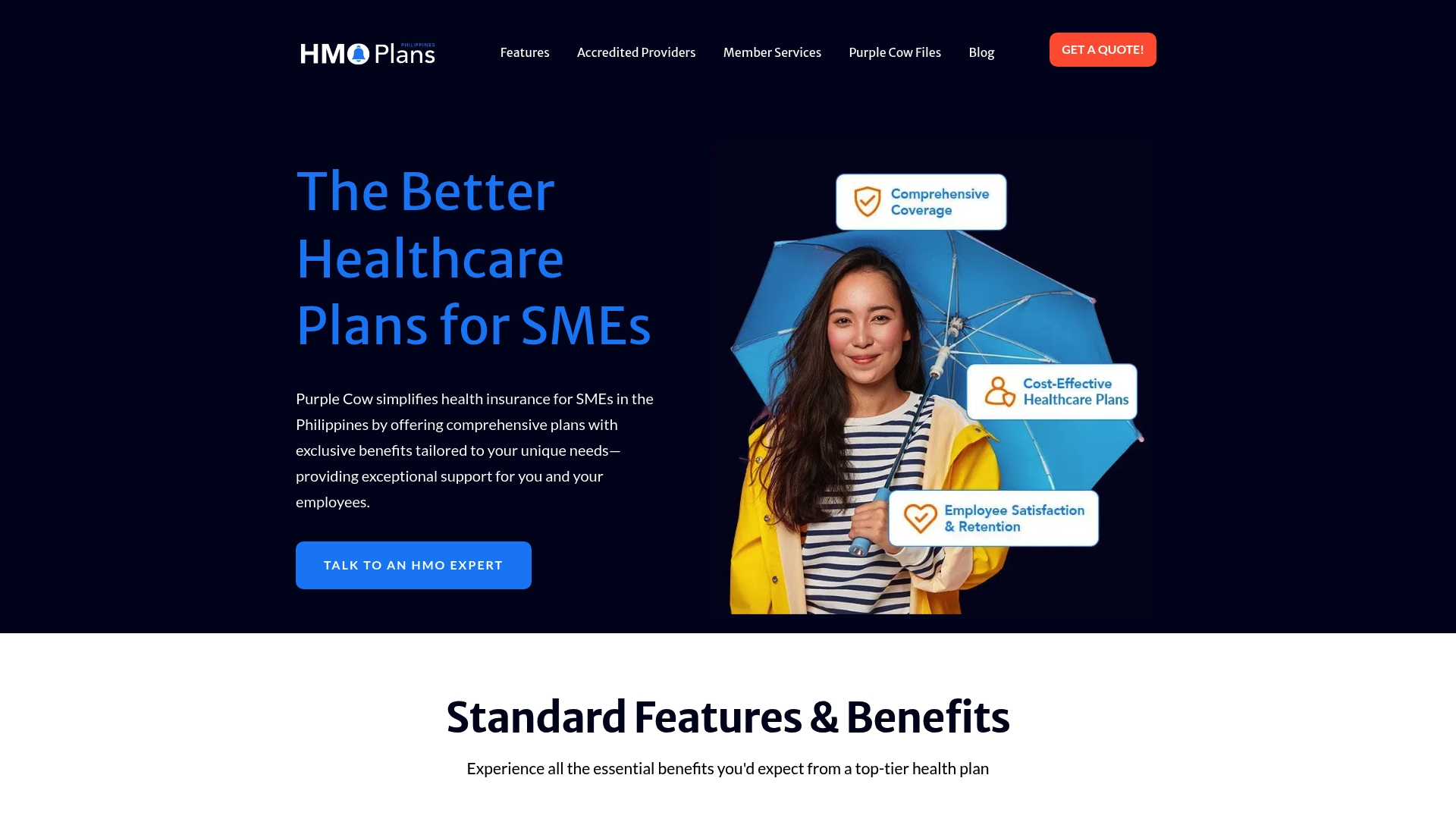
Hmoplans gives members cashless access to premier facilities including the Big 9 Hospitals and Healthway Clinics, with 100% coverage for pre-existing conditions up to the Maximum Benefit Limit. There are no complicated exclusion clauses to decode. You can review the full plan features to see which hospitals are included at each coverage level, or go straight to the Hmoplans homepage to get a quote built around your team’s actual healthcare needs. Clear coverage, real hospital access, and no surprises at the billing desk.
FAQ
What makes a hospital a premier HMO hospital?
A premier HMO hospital is one accredited by major HMO providers and recognized for clinical excellence through national or international awards. Examples include St. Luke’s Medical Center, Makati Medical Center, and Quezon City General Hospital.
Which HMO provider has the largest hospital network in the Philippines?
Maxicare is the largest HMO provider in the Philippines, with a network of over 1,300 hospitals and 20,000 doctors, covering all major tertiary facilities.
Can a hospital be on an HMO’s network but still deny my card?
Yes. HMO accreditation is tiered by plan level. A hospital may accept Platinum or Executive cards but deny access to basic starter card holders from the same provider. Always verify your specific plan tier before scheduling treatment.
How does PhilHealth work with HMO coverage at premier hospitals?
PhilHealth benefits are applied first to reduce your hospital bill. Your HMO coverage then applies to the remaining balance. This sequential process is standard at accredited hospitals and lowers your out-of-pocket costs.
What should I do before switching to a new HMO provider?
Document all pre-existing conditions at least 60–90 days before switching. New HMO providers may apply fresh waiting periods, and early documentation helps you maintain continuous coverage at your preferred premier hospital.
