

Top tips for choosing HMO plans in the Philippines 2026
Choosing the right HMO plan for your employees in 2026 is more critical than ever. Healthcare costs in the Philippines are increasing at a faster rate than most of the world, putting pressure on SME budgets while employee health needs continue to grow. Smart HMO selection means balancing comprehensive coverage with cost control, ensuring your team gets quality care without breaking your benefits budget. This guide walks you through practical evaluation criteria, plan options, comparison strategies, and decision-making tips to help you choose the best HMO plan for your business in 2026.
Table of Contents
- Establish Key Criteria For Evaluating 2026 HMO Plans
- Explore Popular HMO Plan Options For SMEs In The Philippines
- Compare HMO Plans: Features, Costs, And Provider Networks
- Make Informed Decisions: Tips For Finalizing Your 2026 HMO Plan Choice
- Find The Best HMO Plans For Your SME With Purple Cow
- Frequently Asked Questions About Choosing HMO Plans In 2026
Key takeaways
| Point | Details |
|---|---|
| Evaluate cost and coverage | Balance premium costs against comprehensive benefits to maximize value for your budget. |
| Assess provider networks | Ensure the HMO offers accessible, quality hospitals and clinics where your employees live and work. |
| Match plans to employee needs | Consider your workforce demographics and common health requirements when selecting plan features. |
| Compare plans systematically | Use structured comparisons of premiums, coverage limits, and network strength before deciding. |
| Review plans annually | Healthcare costs and employee needs change, so reassess your HMO choice each year. |
Establish key criteria for evaluating 2026 HMO plans
Before diving into specific plan options, you need a solid framework for evaluation. The right criteria help you cut through marketing noise and focus on what truly matters for your employees and budget.
Start with cost analysis, but look beyond the sticker price. Healthcare benefit costs have climbed at a faster rate than most of the world for the past three years, making premium affordability crucial. However, the cheapest plan often creates hidden costs through limited coverage, high deductibles, or narrow networks that force employees to pay out of pocket. Calculate total cost of ownership by factoring in premiums, potential out of pocket expenses, and the administrative burden of managing claims.
Provider network quality and accessibility deserve equal weight. Your employees need convenient access to reputable hospitals and clinics near their homes and workplaces. A plan with an impressive facility list means nothing if those providers are hours away or consistently overbooked. Check whether the network includes specialists your team might need based on their age ranges and health profiles.
Coverage breadth separates adequate plans from exceptional ones. Beyond basic inpatient and outpatient care, evaluate preventive services, emergency coverage, diagnostic procedures, and specialized treatments. Evaluating HMO vendors requires understanding which benefits align with your workforce’s actual health patterns.
Service quality often gets overlooked until you need it. Research claim processing speed, customer support responsiveness, and member satisfaction ratings. A plan that delays reimbursements or provides unclear guidance frustrates employees and creates extra work for your HR team.
Pro Tip: Create a weighted scorecard with your top five criteria. Assign point values based on importance to your specific business, then rate each plan option. This transforms subjective impressions into objective comparisons.
Key evaluation criteria to prioritize:
- Premium affordability relative to your benefits budget
- Network coverage in areas where employees live and work
- Breadth of covered services matching employee health needs
- Claim processing efficiency and member support quality
- Plan flexibility for adding or removing members throughout the year
Explore popular HMO plan options for SMEs in the Philippines
Understanding the landscape of available HMO plans helps you match options to your company’s specific needs and constraints.

Basic HMO plans offer essential coverage at entry level pricing. These typically include inpatient hospitalization, emergency care, and limited outpatient services. They work well for younger workforces with minimal health issues or companies just starting to offer health benefits. The trade off comes in coverage limits, smaller provider networks, and fewer specialized services.
Comprehensive plans deliver broader coverage with higher annual benefit limits, expanded networks including premier hospitals, and additional services like preventive care and wellness programs. HMO health insurance for SMEs in this tier balances robust benefits with manageable premiums, making them popular among established SMEs with diverse employee demographics.
Customizable plans let you build coverage around your workforce’s specific needs. Start with a base package, then add modules for dental care, maternity benefits, annual physical exams, or life insurance. This flexibility prevents paying for unused benefits while ensuring critical services are covered. SMEs must carefully assess their employee demographics to match plan benefits accordingly.
Wellness focused plans emphasize preventive care and early intervention. They typically include health screenings, vaccinations, lifestyle coaching, and chronic disease management programs. These plans reduce long term healthcare costs by catching issues early and promoting healthier habits among employees.
Pro Tip: Survey your employees anonymously about their top three health concerns and most valued benefits. This data reveals whether you need stronger maternity coverage, better chronic disease management, or enhanced outpatient services.
Common plan types and their ideal applications:
- Basic plans for startups and young teams with limited health risks
- Comprehensive plans for established SMEs seeking balanced coverage
- Customizable plans for companies with specific demographic needs
- Wellness plans for organizations prioritizing preventive health strategies
- Family inclusive plans when dependent coverage drives employee satisfaction
Compare HMO plans: features, costs, and provider networks
Direct comparison transforms abstract plan descriptions into actionable insights. Use structured evaluation to identify which option delivers the best value for your specific situation.
| Plan Type | Monthly Premium Range | Annual Benefit Limit | Provider Network Size | Key Advantages | Main Limitations |
|---|---|---|---|---|---|
| Basic | ₱800 - ₱1,500 | ₱150,000 - ₱300,000 | 50+ facilities | Affordable entry point | Limited specialists, lower caps |
| Comprehensive | ₱2,000 - ₱3,500 | ₱500,000 - ₱1,000,000 | 150+ facilities | Broad coverage, major hospitals | Higher premiums |
| Customizable | ₱1,500 - ₱4,000 | ₱300,000 - ₱1,500,000 | Varies by modules | Tailored benefits | Requires careful planning |
| Wellness Focused | ₱1,800 - ₱3,200 | ₱400,000 - ₱800,000 | 100+ facilities | Preventive services included | May lack specialized treatments |
Premium costs vary significantly based on employee age distribution, industry risk factors, and geographic location. A tech company with employees concentrated in Metro Manila faces different pricing than a hospitality business with staff across multiple provinces. Rising medical expenses heighten the need for solid vendor evaluation.
Coverage limits determine how much the HMO pays for treatments within the policy year. A ₱500,000 annual benefit limit sounds generous until you consider that a single serious illness requiring surgery and extended hospitalization can approach or exceed that amount. Balance premium affordability against realistic coverage needs based on your industry’s health risk profile.
Provider network strength matters more than size alone. Ten high quality hospitals strategically located near your employees beats fifty mediocre facilities scattered across regions you don’t operate in. Review HMO accredited providers to verify network quality and accessibility.
Critical comparison factors:
- Premium costs per employee across different age brackets
- Annual and per incident benefit limits for major treatments
- Geographic distribution of network providers relative to your workforce
- Coverage for pre existing conditions and waiting periods
- Claim approval rates and average processing times
- Availability of cashless transactions versus reimbursement models
Request detailed benefit summaries and sample scenarios from each provider. Ask how they would handle common situations like emergency room visits, outpatient specialist consultations, or diagnostic imaging. These concrete examples reveal coverage gaps that generic plan descriptions hide.
Make informed decisions: tips for finalizing your 2026 HMO plan choice
With evaluation criteria set and options compared, you’re ready to make a confident selection. These final steps ensure your choice aligns with both business objectives and employee needs.
-
Involve employees in the decision process. Share two or three finalist plans and gather feedback through surveys or focus groups. Employees closer to the healthcare experience spot practical issues leadership might miss. Their input also increases satisfaction with the final choice since they participated in selecting it.
-
Negotiate terms and flexibility. Don’t accept the first proposal as final. Ask about volume discounts for larger enrollments, flexible payment terms, or the ability to adjust coverage mid year as your workforce changes. Providers often have room to customize arrangements for committed clients.
-
Clarify coverage details in writing. Verbal assurances mean nothing when claims get denied. Get explicit written confirmation about coverage for pre existing conditions, congenital issues, emergency scenarios, and any special treatments relevant to your industry. Review exclusions carefully to avoid surprises.
-
Plan for annual reviews and adjustments. Planning proactively for healthcare cost increases is essential for SMEs. Schedule a benefits review each year, ideally three months before renewal. Analyze claim data, survey employee satisfaction, and reassess whether your current plan still matches workforce needs and budget realities.
-
Establish clear communication channels. Designate an internal benefits coordinator who understands plan details and can help employees navigate coverage questions. Partner with your HMO provider’s account manager to resolve issues quickly. Poor communication undermines even the best plans.
-
Track utilization and satisfaction metrics. Monitor which benefits employees use most, average claim processing times, and member satisfaction scores. This data guides future plan adjustments and helps you negotiate better terms at renewal by demonstrating your team’s responsible utilization patterns.
Pro Tip: Build a benefits transition timeline if switching providers. Allow 60 days minimum for enrollment, card distribution, and employee education. Rushed transitions create confusion and leave coverage gaps that frustrate your team.
Consider 2026 HMO strategy planning questions now to avoid last minute decisions under pressure. Early planning gives you negotiating leverage and ensures seamless coverage for your employees.
Find the best HMO plans for your SME with Purple Cow
Navigating HMO options becomes simpler with expert guidance tailored to Philippine SME needs. Purple Cow delivers comprehensive health insurance plans designed specifically for businesses like yours, combining extensive coverage with straightforward terms and cost effective pricing.
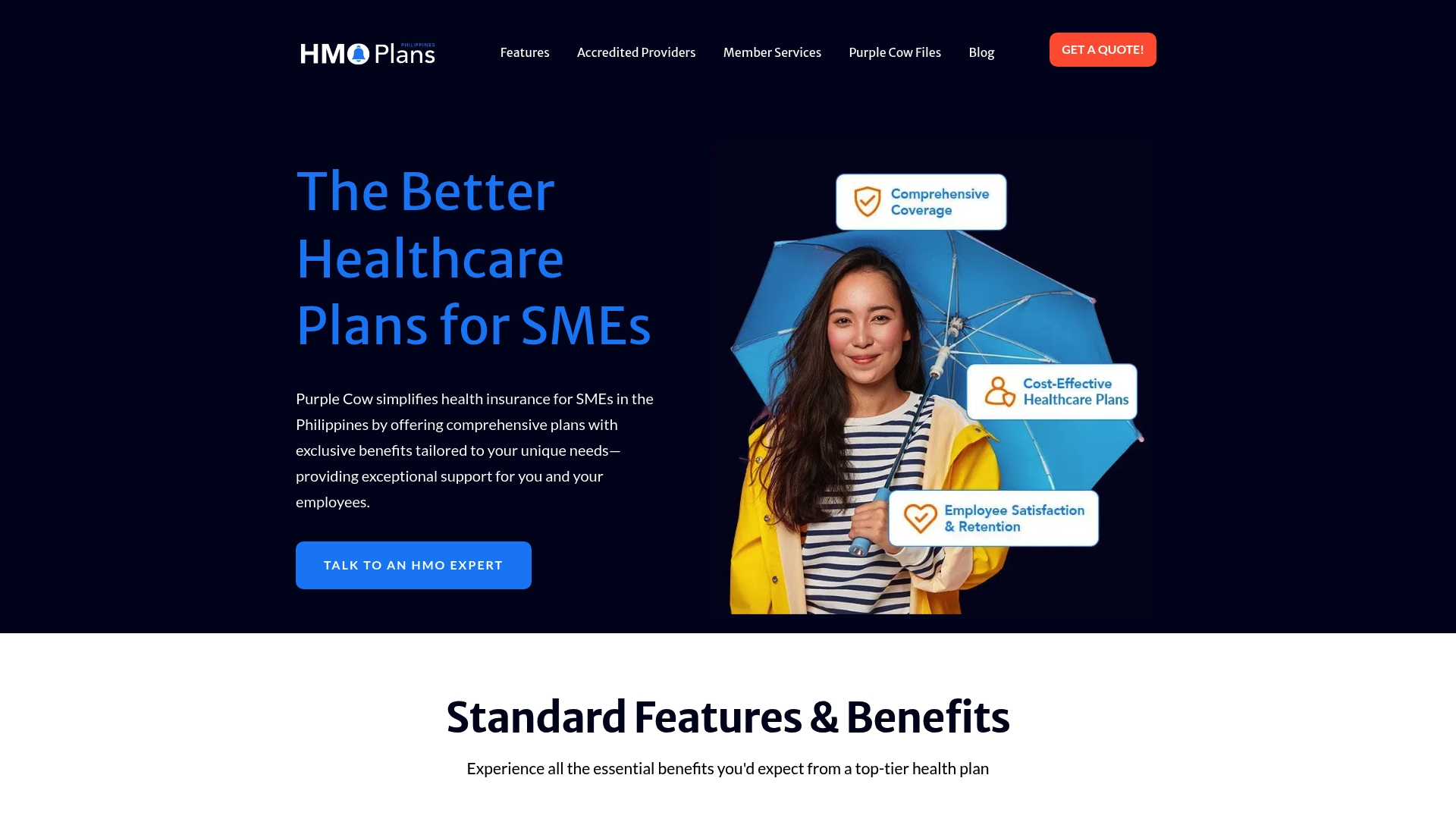
Explore Purple Cow HMO features including 100% coverage for pre existing conditions, access to premier facilities like the Big 9 Hospitals, and flexible customization through optional add-ons for dental care, annual physical exams, and life insurance. Our partnership with Etiqa as insurance underwriter ensures financial stability and reliable claim processing.
Benefit from responsive Purple Cow member services that simplify enrollment, streamline claims, and provide dedicated support when your employees need assistance. Our digital healthcare platforms make accessing care convenient while our nationwide network ensures quality treatment wherever your team works.
Discover how Purple Cow HMO plans eliminate complicated terms while delivering exceptional coverage that grows with your business. Get expert help selecting and managing the right plan for your 2026 employee health benefits.
Frequently asked questions about choosing HMO plans in 2026
What factors most affect HMO premiums in the Philippines?
Employee age distribution, industry risk classification, geographic location, and chosen coverage levels drive premium costs. Companies with older workforces or high risk industries face higher rates. Network breadth and annual benefit limits also significantly impact pricing.
How can SMEs ensure their HMO plan covers common employee health needs?
Analyze your workforce demographics and survey employees about health concerns. Match plan benefits to prevalent conditions in your industry and age groups. Verify coverage for chronic diseases, maternity care, and preventive services based on your team’s profile.
What role does PhilHealth play alongside private HMO plans?
PhilHealth provides baseline government health insurance while HMO plans offer supplemental coverage with broader networks, higher benefit limits, and additional services. Quality HMO plans coordinate with PhilHealth to maximize total coverage and minimize employee out of pocket costs.
How often should SMEs review their HMO plan for changes?
Conduct annual reviews at minimum, ideally three months before renewal. Also reassess when experiencing significant workforce changes, entering new geographic markets, or noticing patterns in claim denials or employee complaints about coverage gaps.
Are there options for adding family members or dependents?
Most HMO basics for SMEs include dependent coverage options at additional cost. Employees can typically add spouses and children with premiums based on dependent ages. Some plans offer family packages with better rates than individual additions.
Recommended
- Eumir
- The Better HMO Plans for SMEs | Purple Cow | Blog | Rai dela Cruz | Best HMO Plans Philippines - Purple Cow
- The Better HMO Plans for SMEs | Purple Cow | Privacy Policy | Rai dela Cruz | Best HMO Plans Philippines - Purple Cow
- HMO Health Insurance for Small and Medium Enterprises in the Philippines
- What is an HMO dental plan? Affordable care guide 2026
