

How to navigate the PhilHealth independence process for SMEs
Managing employee health insurance in the Philippines can feel overwhelming, especially when PhilHealth regulations shift and your team depends on continuous coverage. Many SMEs struggle to understand how the PhilHealth independence process works, leading to confusion, administrative delays, and gaps in employee benefits. This guide walks you through every step of the PhilHealth independence process, from preparation and execution to verification and optimization. You’ll learn exactly what documents you need, how to submit forms correctly, and how to combine PhilHealth with HMO plans to maximize employee satisfaction while controlling costs.
Table of Contents
- Key takeaways
- Understanding PhilHealth independence requirements
- Executing the PhilHealth independence process step by step
- Verifying completion and avoiding common pitfalls
- Maximizing employee benefits with PhilHealth and HMO integration
- Discover the better HMO plans tailored for SMEs
- Frequently asked questions
Key Takeaways
| Point | Details |
|---|---|
| Understand prerequisites | Begin gathering employee records, six months of contribution receipts, and other required documents at least 60 days before the target independence date to avoid delays. |
| Stepwise execution | Follow the steps in order from eligibility check to form submission to minimize processing delays. |
| Transition verification | Confirm eligibility and obtain a processing receipt while tracking the submission to ensure the transition is properly recorded. |
| Common pitfalls | Identify common pitfalls such as missing documents or inaccurate data and address them early to prevent delays. |
| PhilHealth and HMO plan | Consider combining PhilHealth with an HMO to enhance coverage while controlling costs. |
Understanding PhilHealth independence requirements
Before you start the PhilHealth independence process, you need to gather specific documentation and understand the legal frameworks that govern healthcare compliance in the Philippines. The independence process allows SMEs to separate from certain PhilHealth obligations while maintaining basic employee coverage, but only if you meet strict regulatory requirements.
You’ll need to prepare several key documents. Employee records must be current and accurate, including full names, birth dates, and PhilHealth numbers. Your contribution reports should show complete payment history for at least the past six months. Regulatory filings must demonstrate your company’s legal standing and compliance with Department of Labor standards. Missing even one document can delay processing by weeks.
The legal framework sets clear deadlines. You must submit separation forms at least 30 days before your desired effective date. PhilHealth processes applications within 15 to 20 business days if all documents are complete. Your company must have zero outstanding contribution balances, and all employees must receive written notice of coverage changes at least 45 days in advance.
Here’s what you need to prepare:
- Complete employee roster with PhilHealth member data numbers
- Six months of contribution payment receipts and remittance reports
- Company registration documents and business permits
- Board resolution or owner authorization for PhilHealth status changes
- Employee acknowledgment forms confirming receipt of coverage change notices
| Document type | Required details | Submission deadline |
|---|---|---|
| Employee records | Full name, birth date, PhilHealth number, employment date | 30 days before effective date |
| Contribution reports | Payment history, remittance forms, official receipts | 30 days before effective date |
| Company documents | Business permits, SEC registration, board resolution | 30 days before effective date |
| Employee notices | Signed acknowledgment forms, coverage change explanations | 45 days before effective date |
| Status verification | PhilHealth confirmation receipts, updated member records | Within 10 days after approval |
Pro Tip: Start gathering documents at least 60 days before your target independence date. This buffer gives you time to request missing records from PhilHealth offices or correct any discrepancies in employee data without missing critical deadlines.
The PhilHealth compliance requirements also mandate that you maintain detailed records for audit purposes. Keep copies of all submitted forms, receipts, and correspondence for at least three years. These records protect your company if questions arise about employee coverage history or contribution accuracy.
Executing the PhilHealth independence process step by step
Once you’ve gathered all required documents, you’re ready to execute the actual PhilHealth independence process. Following these steps in order ensures compliance and minimizes processing delays.
-
Confirm eligibility and requirements completion. Review your checklist to verify you have every required document. Double check that contribution payments are current and employee records match PhilHealth database entries. Contact your local PhilHealth office to confirm your company meets all eligibility criteria for independence status.
-
Submit PhilHealth separation forms and employee notices. Complete the official separation application form available at PhilHealth offices or through their online portal. Attach all supporting documents in the order specified by the form instructions. Submit employee notices simultaneously, ensuring each team member receives a copy explaining how their coverage will change and what actions they need to take.
-
Coordinate with PhilHealth offices for processing confirmation. After submission, request a receipt with a tracking number. Follow up within five business days to confirm your application entered the processing queue. PhilHealth staff may request additional information or clarification, so respond promptly to any inquiries to avoid delays.
-
Update employee records and health coverage documentation. Once PhilHealth approves your independence application, update your internal HR systems immediately. Revise employee handbooks to reflect the new coverage structure. Issue updated health benefit summaries to each employee showing their current PhilHealth status and any supplemental coverage your company provides.
-
Distribute confirmation documents to all affected employees. Provide each team member with official documentation proving their PhilHealth membership status remains active under the new arrangement. Include contact information for PhilHealth member services so employees can verify their own records if needed.
The features of modern HMO plans make this transition smoother because many providers offer administrative support during PhilHealth status changes. Some HMO partners can help coordinate documentation and verify employee coverage continuity.
Pro Tip: Schedule a company meeting to explain the PhilHealth independence process to your entire team. Use simple language to describe what’s changing, what’s staying the same, and how employees can access their health benefits. Clear communication prevents confusion and reduces HR inquiries during the transition period.
Timing matters significantly. Submit your application early in the month to avoid processing backlogs that occur near month end when PhilHealth offices handle high volumes of employer remittances. If possible, avoid December and January when government offices experience reduced staffing due to holidays.
You can track your application status through PhilHealth’s online portal or by calling their employer hotline. Keep detailed notes of every interaction, including dates, staff names, and any instructions received. This documentation becomes valuable if you need to escalate issues or clarify conflicting information.

The member services infrastructure offered by quality HMO providers can complement your PhilHealth independence by giving employees additional support channels for health coverage questions. This dual system ensures employees always have someone to contact regardless of whether their question involves PhilHealth or supplemental benefits.
Verifying completion and avoiding common pitfalls
Verification is the most overlooked step in the PhilHealth independence process, yet it’s crucial for confirming your employees maintain uninterrupted health coverage. Without proper verification, you risk discovering coverage gaps months later when an employee needs medical care.
Confirm successful status updates through multiple channels. Request official receipts showing your application was approved and processed. Log into the PhilHealth employer portal to verify your company’s new status appears correctly in the system. Ask employees to check their individual PhilHealth accounts online to confirm their membership remains active under the updated arrangement.
Common mistakes can derail even well planned independence processes:
- Missing submission deadlines by underestimating processing time requirements
- Submitting incomplete forms without verifying every required field contains accurate information
- Failing to communicate coverage changes clearly to employees, causing confusion and anxiety
- Neglecting to update payroll systems, resulting in incorrect deductions or contribution calculations
- Assuming approval without requesting confirmation documents, leaving status changes unverified
- Overlooking the need to coordinate with existing HMO providers about coverage integration
When problems occur, follow these troubleshooting steps. First, contact your assigned PhilHealth representative immediately to understand the specific issue. Second, gather any missing or corrected documents and resubmit within 48 hours. Third, request an expedited review if the delay affects employee coverage. Fourth, document all communications and keep copies of resubmitted materials. Fifth, inform affected employees about any temporary coverage adjustments while issues are resolved.
Verification isn’t just a formality. It’s your guarantee that employees can access healthcare services without interruption. A single unverified status change can leave team members without coverage during medical emergencies, creating legal liability and damaging employee trust.
The strategic approach to HMO health insurance emphasizes verification as a core component of benefits administration. Quality HMO providers often include verification support in their service packages, helping HR teams confirm that all coverage components work together seamlessly.
Set up a verification checklist that you complete for every employee. Include items like PhilHealth portal confirmation, employee acknowledgment receipt, updated HR system records, and coordination with your HMO provider if applicable. Don’t consider the process complete until every checklist item shows a verified status.
Schedule a follow up review 30 days after your independence approval. This timing allows any system delays to resolve while catching issues before they affect employee healthcare access. During this review, spot check several employee records to ensure their PhilHealth status matches your expectations and their health coverage remains comprehensive.
Maximizing employee benefits with PhilHealth and HMO integration
Completing the PhilHealth independence process opens opportunities to enhance your employee benefits package by strategically combining PhilHealth coverage with private HMO plans. This integration delivers superior healthcare access while often reducing overall costs compared to relying on PhilHealth alone.
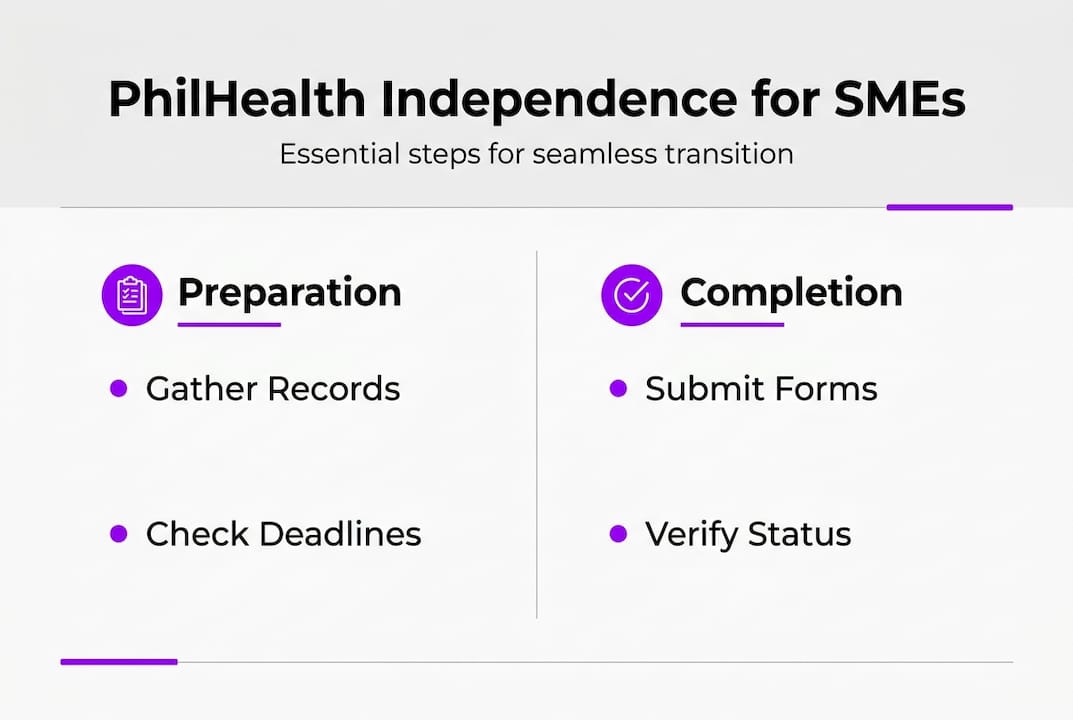
Understanding the coverage differences helps you make informed decisions:
| Coverage aspect | PhilHealth only | PhilHealth plus HMO |
|---|---|---|
| Hospital room type | Ward or semi-private, basic accommodation | Private rooms, upgraded facilities |
| Outpatient care | Limited coverage, high out-of-pocket costs | Comprehensive outpatient services, minimal copays |
| Specialist access | Referral required, long wait times | Direct specialist booking, faster appointments |
| Preventive care | Basic coverage only | Annual physical exams, health screenings included |
| Emergency services | Covered with balance billing | Cashless emergency care, no balance billing |
| Dental and vision | Not covered | Optional add-ons available |
The benefits of combining PhilHealth with HMO coverage extend beyond expanded services. Employees experience reduced financial stress because HMO plans cover gaps that PhilHealth leaves. Your company benefits from improved employee satisfaction and reduced absenteeism when team members can access healthcare quickly without worrying about costs.
Best practices for selecting complementary health plans:
- Assess your workforce demographics to understand common health needs and priorities
- Compare HMO provider networks to ensure coverage at hospitals near your office and employee homes
- Evaluate plan flexibility, including options for dependents and customizable benefit levels
- Review administrative support services that reduce HR workload during enrollment and claims
- Consider providers offering PhilHealth coordination support to simplify benefits management
- Negotiate group rates that deliver better value than individual employee purchases
The comprehensive features available in modern HMO plans make integration straightforward. Many providers design their plans specifically to complement PhilHealth, filling coverage gaps without unnecessary overlap. This coordination maximizes the value of every peso spent on employee health benefits.
Pro Tip: Survey your employees annually about their health coverage satisfaction and needs. Use this feedback to adjust your PhilHealth and HMO integration strategy, ensuring your benefits package evolves with your team’s changing priorities and life stages.
Integration also simplifies administration. When your HMO provider coordinates with PhilHealth, employees submit claims through a single system rather than navigating multiple bureaucracies. This convenience increases benefit utilization because employees actually use the coverage you provide instead of avoiding healthcare due to administrative hassles.
Cost management improves too. While adding HMO coverage increases upfront premiums, the comprehensive nature of combined coverage often reduces total healthcare spending. Employees face fewer surprise bills, and your company avoids the productivity losses that occur when team members delay necessary medical care due to cost concerns.
Discover the better HMO plans tailored for SMEs
Navigating PhilHealth independence is just the first step toward building a comprehensive employee health benefits strategy. HMO Plans offers specialized solutions designed specifically for SMEs in the Philippines, making it easy to enhance your team’s healthcare access while maintaining budget control.
Our partnership with Purple Cow and Etiqa delivers 100% coverage for pre-existing conditions, congenital conditions, and special procedures up to your Maximum Benefit Limit. No complicated exclusions or surprise denials when your employees need care most.
What sets our HMO plan features apart:
- Cashless access to the Big 9 Hospitals and Healthway Clinics nationwide
- 24/7 emergency coverage with no balance billing surprises
- Flexible customization through dental HMO, annual physical exams, and life insurance add-ons
- PhilHealth independence support built into our administrative services
- Digital healthcare platforms for convenient appointment booking and claims tracking
Our member services team handles the complexity of benefits coordination, freeing your HR staff to focus on strategic initiatives. We provide dedicated support during PhilHealth transitions, ensuring your employees experience zero coverage gaps. Discover how the right HMO partner transforms employee health benefits from an administrative burden into a competitive advantage that attracts and retains top talent.
Frequently asked questions
What is the PhilHealth independence process?
The PhilHealth independence process allows SMEs to modify their PhilHealth participation structure while maintaining employee coverage. It involves submitting separation forms, updating employee records, and coordinating with PhilHealth offices to change your company’s status. The process typically takes 15 to 20 business days if all documentation is complete. HR managers should understand that independence doesn’t eliminate PhilHealth coverage but rather changes how your company participates in the system. Proper execution ensures employees retain basic healthcare access while giving your company flexibility to enhance benefits through strategic compliance planning.
How does PhilHealth independence affect employee coverage?
Employees retain their basic PhilHealth coverage rights after your company completes the independence process. Their individual membership status remains active, ensuring continued access to PhilHealth benefits at accredited facilities. However, the administrative relationship between your company and PhilHealth changes, which may affect how contributions are processed. This transition creates an opportunity to enhance coverage through HMO integration, delivering superior healthcare access while maintaining PhilHealth’s foundational benefits. Proper communication prevents employee anxiety about coverage continuity during the transition period.
What are common mistakes to avoid during the PhilHealth independence process?
The three most critical mistakes are missing submission deadlines, submitting incomplete documentation, and failing to communicate clearly with employees. Missing deadlines can delay your independence approval by months, leaving your company in administrative limbo. Incomplete forms trigger rejection and require resubmission, wasting valuable time. Poor employee communication creates confusion and erodes trust in your benefits program. Additionally, many HR managers forget to verify status updates after approval, discovering coverage gaps only when employees need medical care. Following the comprehensive approach to HMO health insurance helps avoid these pitfalls through structured planning and execution.
Can SMEs combine PhilHealth independence with private HMO plans?
Absolutely. Combining PhilHealth with private HMO coverage is one of the smartest strategies for SMEs seeking to maximize employee health benefits. PhilHealth provides foundational coverage while HMO plans fill gaps in specialist access, outpatient care, and facility quality. This combination delivers comprehensive healthcare access at a lower total cost than either option alone. Many HMO providers design their plans specifically to complement PhilHealth, eliminating coverage overlaps while ensuring employees can access care without financial stress. The strategic integration of PhilHealth and HMO benefits creates a competitive advantage in attracting and retaining talent while controlling healthcare costs. Assess your workforce needs and budget to determine the optimal balance between PhilHealth and private coverage for your specific situation.
Recommended
- Beyond PhilHealth: How SMEs Can Maximize Health Investments for Better ROI
- PhilHealth Updates & Compliance in 2025: A Guide for SMEs in the Philippines
- PhilHealth + HMO: Maximizing Your SME’s Health Investment
- The Better HMO Plans for SMEs | Purple Cow | Features | Rai dela Cruz | Best HMO Plans Philippines - Purple Cow
- Maîtriser la santé au travail en PME : guide 2026
- Employee benefits checklist 2026: optimize costs and satisfaction
