

Philippines HMO Network Explained: A Guide for SME Owners
Many SME owners assume all HMO plans are alike, but network structure significantly impacts coverage, cost, and employee satisfaction. This guide breaks down how HMO networks work in the Philippines—what networks are, how they affect benefits, cost, and access, and what SMEs must know to make the best choice for their team. You’ll walk away able to assess HMO options confidently for your business.
Table of Contents
- What is an HMO network in the Philippines?
- How HMO coverage works: Cashless benefits, out-of-network care, and costs
- What Philippine SMEs need: Flexibility, inclusions, and provider reach
- HMOs vs indemnity insurance: Pros, cons, and cost impact for businesses
- Regulations and employer responsibilities: What Philippine SMEs must know
- How to choose the best HMO network for your SME
- Frequently asked questions
Key Takeaways
| Point | Details |
|---|---|
| In-network access advantage | Using accredited providers ensures cashless care and maximum coverage for employees. |
| SME-tailored flexibility | HMO plans for SMEs offer flexible coverage sizes, inclusions, and cost control. |
| Compliance and employee rights | Providing HMO is voluntary, but coverage must not be diminished once established. |
| Out-of-network limitations | Care outside the network is often not covered or only partially reimbursed. |
| Comparison to indemnity plans | HMOs are best suited for routine employee care and retention, not catastrophic coverage. |
What is an HMO network in the Philippines?
Let’s begin by demystifying what an HMO network truly means in the Philippine context.
An HMO network is a group of accredited hospitals, clinics, and doctors where members receive cashless access to healthcare services at negotiated rates. Think of it as a curated ecosystem of providers who’ve agreed to specific pricing with your HMO company. When your employee walks into an accredited facility, they present their HMO card, receive treatment, and walk out without paying out of pocket for covered services.
The magic happens behind the scenes. HMO companies negotiate bulk rates with providers, securing lower costs than what individuals would pay directly. This arrangement benefits everyone: providers get steady patient volume, HMOs control expenses, and your employees access quality care without financial stress.
How cashless transactions work:
- Employee presents HMO card at accredited facility
- Provider verifies coverage and eligibility
- HMO approves treatment (pre-authorization for major procedures)
- Employee receives care without upfront payment
- Provider bills HMO directly for covered services
The distinction between in-network and out-of-network care matters enormously for SMEs. In-network means full benefits, predictable costs, and zero surprises. Out-of-network typically means reduced reimbursement or no coverage at all, leaving employees with unexpected bills and your HR team fielding complaints.
“Understanding your HMO network is like knowing which roads are toll-free. Stay on the network, and the journey is smooth. Venture off, and costs pile up fast.”
For SME HMO insurance basics, network size and quality determine whether your benefit investment truly protects your team or creates frustration.
How HMO coverage works: Cashless benefits, out-of-network care, and costs
With the basics in mind, let’s get practical: how coverage actually works when an employee needs care.
HMO coverage operates on a prepaid model. You pay monthly or annual premiums, and employees access a defined set of benefits without additional fees for covered services. The cashless benefit applies only to in-network providers, while out-of-network care is typically not covered or reimbursed at lower rates.
Coverage mechanics breakdown:
| Coverage Element | How It Works | SME Impact |
|---|---|---|
| Prepaid premiums | Fixed monthly/annual cost per employee | Predictable budgeting |
| Cashless access | No upfront payment at accredited facilities | Reduces employee financial stress |
| Maximum Benefit Limit (MBL) | Annual coverage caps from ₱50,000 to ₱500,000+ | Higher limits attract better talent |
| Pre-authorization | Required for inpatient/emergency procedures | Prevents claim denials |
| PhilHealth interaction | HMO supplements PhilHealth coverage | Maximizes total employee protection |
Here’s a real scenario: Your marketing manager needs emergency appendectomy. At an in-network hospital, she presents her HMO card, receives surgery and three days of room and board, and pays nothing out of pocket (assuming services fall within her MBL). The HMO settles the ₱80,000 bill directly with the hospital.
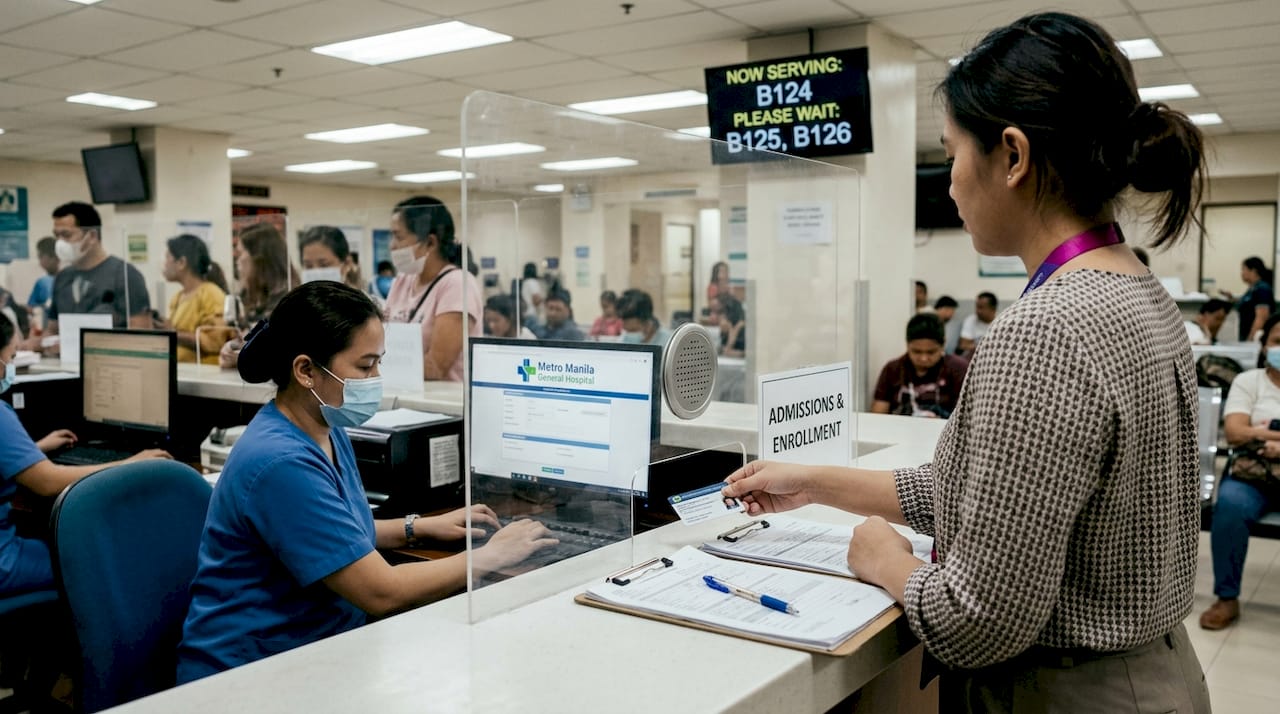
Now imagine she went to a non-accredited facility. She’d pay the full ₱80,000 upfront, submit reimbursement paperwork, and likely receive only 50-80% back, if anything. That ₱16,000-₱40,000 gap becomes her problem and your HR headache.
Critical claim process steps:
- Employee verifies provider is in-network before treatment
- Presents valid HMO card and ID at admission
- Facility contacts HMO for pre-authorization (emergencies get retroactive approval)
- Treatment proceeds with HMO guarantee
- Employee signs discharge papers, HMO settles bill
Pro Tip: Train your team to always call the HMO hotline before non-emergency procedures. A five-minute verification call prevents thousands in denied claims.
PhilHealth serves as primary coverage, while HMOs act as secondary or supplemental insurance. When using HMO and PhilHealth together, PhilHealth pays its portion first, then the HMO covers remaining eligible expenses up to the MBL. This layered approach maximizes protection and minimizes employee out-of-pocket costs.
For more guidance on navigating these systems, check out our HMO advice for SMEs.
What Philippine SMEs need: Flexibility, inclusions, and provider reach
Coverage is key, but choosing the right plan also means matching features and network to your company’s real needs.
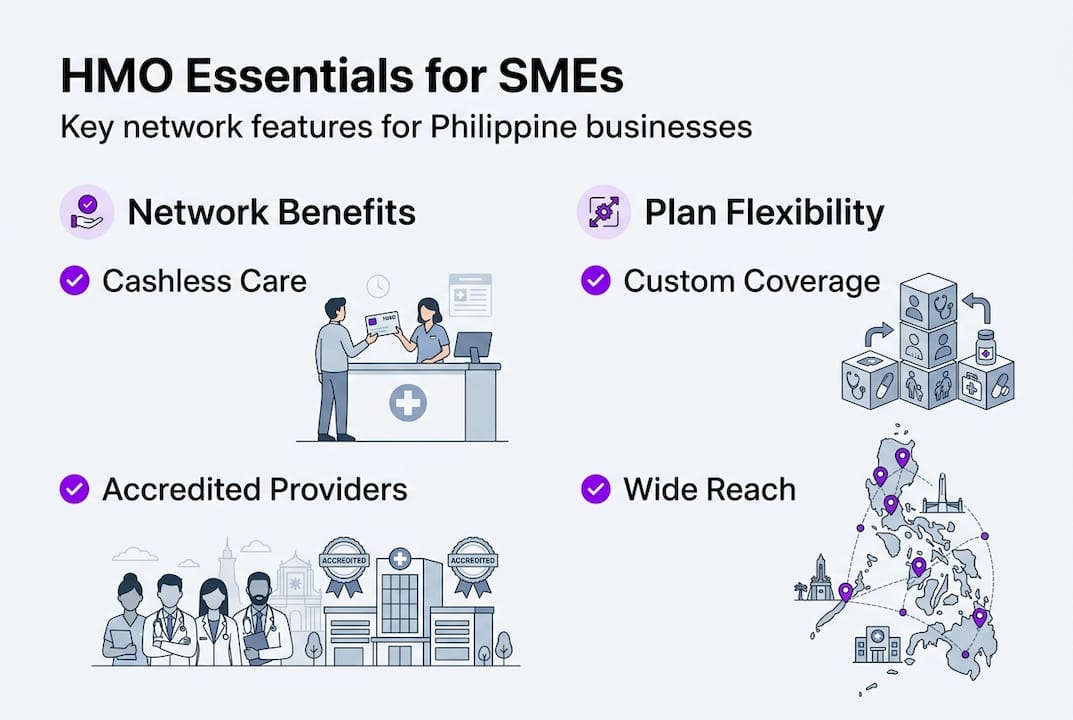
Network size and geographic reach matter enormously for businesses with multiple locations or remote workers. A plan with 500 Metro Manila providers but only 20 in Cebu won’t serve your Visayas team well. Flexible plans accommodate 1-200 employees, with some covering pre-existing conditions from day one, though network gaps still exist in rural areas.
Essential SME-friendly features:
- Group size flexibility: Plans that scale from startups to mid-size companies
- Pre-existing condition coverage: Immediate or reduced waiting periods
- Annual physical exams: Preventive care that reduces long-term costs
- Customizable inclusions: Add dental, optical, or maternity as needed
- Multi-location network: Coverage where your employees actually live and work
Plan customization separates mediocre HMOs from exceptional ones. You might need basic outpatient care for your young tech team, while a manufacturing company needs robust emergency and inpatient coverage. The best providers let you build packages that match your workforce demographics and risk profile.
| Plan Feature | Why It Matters for SMEs | What to Verify |
|---|---|---|
| Network size | More options mean happier employees | Count of facilities in your key cities |
| Pre-existing coverage | Attracts experienced talent | Waiting period length (0-12 months) |
| Annual checkups | Early detection saves money | Included or add-on cost |
| Room and board | Comfort during hospitalization | Private, semi-private, or ward |
| Emergency coverage | 24/7 protection nationwide | Ambulance, ER, ICU limits |
The fine print hides critical details. Age limits typically cap at 65-70 years, waiting periods for pre-existing conditions range from 30 days to 12 months, and exclusions like cosmetic or experimental procedures apply universally. Read the policy wording, not just the marketing brochure.
Pro Tip: Request a complete provider directory before signing. Verify that facilities near your office and employees’ homes are included. A plan is only as good as its accessible network.
Examples of SME-friendly features in the market include plans with zero waiting periods for accidents, maternity coverage after 12 months, and dental add-ons for ₱500-₱1,000 per employee annually. These extras cost little but dramatically boost perceived value.
Explore detailed SME plan features to see how customization works in practice, and understand why HMO plans matter for employee retention and productivity.
HMOs vs indemnity insurance: Pros, cons, and cost impact for businesses
To choose wisely, you’ll want to go beyond plan brochures and compare HMOs to other insurance options.
HMO network design keeps premiums affordable by limiting choice to contracted providers. Networks enable cost control through lower premiums but restrict provider selection, contrasting with indemnity insurance that offers reimbursement and wider access at higher cost. HMOs excel for routine care and employee retention.
Indemnity insurance operates differently. Employees visit any provider, pay upfront, submit receipts, and receive reimbursement (typically 80-90% of eligible expenses). This flexibility appeals to executives who want specialist access or international care, but comes with significantly higher premiums and administrative burden.
| Feature | HMO Network Plans | Indemnity Insurance |
|---|---|---|
| Provider choice | Limited to network | Any licensed provider |
| Upfront payment | None (cashless) | Employee pays, then claims |
| Premium cost | Lower (₱3,000-₱8,000/employee/year) | Higher (₱8,000-₱20,000+/employee/year) |
| Admin burden | Minimal | Heavy (claim processing) |
| Best for | Routine care, cost control | Specialist access, global care |
| Employee appeal | High (no cash outlay) | Mixed (reimbursement delays) |
When HMOs make sense:
- Your team needs predictable, routine healthcare access
- Budget constraints require cost-effective solutions
- Employees value convenience over unlimited choice
- You want minimal HR administration
When indemnity might be worth it:
- Senior executives demand specialist or international care
- Your industry requires specific provider relationships
- Budget allows for premium flexibility
- You have dedicated HR resources for claim processing
For most Philippine SMEs, HMOs deliver better value. The cashless benefit alone eliminates the financial barrier that prevents employees from seeking timely care. When people delay treatment due to cash flow concerns, minor issues become major expenses.
“HMOs remove the ‘should I see a doctor?’ question. Employees get care when needed, not when they can afford it. That’s the real ROI.”
Stay current with SME health benefit trends and learn strategies for boosting health ROI in your organization.
Regulations and employer responsibilities: What Philippine SMEs must know
With the models and costs clear, businesses should ensure regulatory and legal compliance to protect both themselves and their staff.
HMO coverage is voluntary for employers, not mandated by law. However, once you establish HMO benefits, the non-diminution rule applies: you cannot reduce or remove the benefit without employee consent. HMOs must be licensed by the Insurance Commission, and disputes go through IC channels.
This voluntary status gives SMEs flexibility but creates legal obligations once implemented. If you provide HMO coverage in 2026 and want to switch providers in 2027, the new plan must offer equal or better benefits. Downgrading coverage violates labor law and exposes you to employee complaints and potential penalties.
Key regulatory points:
- Verify HMO provider holds valid Insurance Commission license
- Document benefit terms clearly in employment contracts or handbooks
- Communicate any provider changes 30-60 days in advance
- Maintain equal or better coverage when switching plans
- Keep records of premium payments and coverage confirmations
Pro Tip: Check the Insurance Commission online portal annually to confirm your HMO provider maintains active licensing. Unlicensed operators leave you and your employees unprotected.
Best practices for employer compliance include transparent communication about coverage limits, clear processes for filing claims, and designated HR contacts for benefit questions. When employees understand how to use their HMO effectively, satisfaction increases and your investment delivers better returns.
Dispute resolution follows a clear path: employee raises issue with employer, employer contacts HMO, unresolved matters escalate to Insurance Commission. Document everything. Email trails and written policies protect you when disagreements arise.
For broader compliance context, review our PhilHealth compliance guide to ensure you’re meeting all mandatory health benefit obligations alongside voluntary HMO coverage.
How to choose the best HMO network for your SME
Now that you know how the system works and what to look for, here’s how to take the next step for your business.
SME priorities boil down to three factors: flexibility to match your team size and needs, network reach that covers where employees live and work, and employee satisfaction that drives retention and productivity. The right HMO plan balances these elements within your budget constraints.
Start by assessing your workforce demographics. A young tech startup needs different coverage than a manufacturing company with older workers. Map employee locations against provider networks. Calculate total cost including premiums, add-ons, and potential out-of-pocket exposure.
Reviewing detailed plan features for SMEs helps you compare options systematically. Look beyond premium costs to network quality, coverage limits, exclusions, and claims support. The cheapest plan often becomes the most expensive when employees face denied claims or limited access.
Getting guidance tailored to your company size and needs accelerates the decision process. Generic advice doesn’t account for your industry risks, employee expectations, or growth plans. Specialized SME providers understand these nuances and build packages that actually work.
Explore top HMO plans designed specifically for Philippine SMEs, with transparent pricing, flexible terms, and comprehensive coverage that includes pre-existing conditions from day one. The right partner simplifies benefits administration while delivering exceptional employee value.
Frequently asked questions
What does an HMO network cover for employees in the Philippines?
HMO networks cover accredited hospitals and clinics, providing cashless access to outpatient and inpatient care at negotiated rates. Coverage includes consultations, diagnostics, emergency care, and hospitalization within annual limits.
Are Philippine SMEs required by law to provide HMO coverage?
No, HMO coverage is voluntary for employers, but once established, the benefit cannot be diminished without employee consent. PhilHealth remains the only mandatory health coverage.
What are typical limits and waiting periods for SME HMO plans?
Annual coverage limits range from ₱50,000 to ₱500,000+ with waiting periods for pre-existing conditions, though some SME plans offer immediate coverage. Limits vary by plan tier and premium level.
What happens if an employee uses a non-network hospital or clinic?
Out-of-network care is typically not covered or reimbursed at lower rates, often around 80% or less. Employees may face significant out-of-pocket expenses for non-accredited providers.
How can a business verify that an HMO provider is legitimate?
Check that the HMO is licensed by the Insurance Commission through their online portal. Licensed providers meet regulatory standards and offer legal recourse for disputes.
Recommended
- HMO Health Insurance for Small and Medium Enterprises in the Philippines
- Eumir
- The Better HMO Plans for SMEs | Purple Cow | Blog | Rai dela Cruz | Best HMO Plans Philippines - Purple Cow
- PhilHealth + HMO: Maximizing Your SME’s Health Investment
- Managed IT Services Explained: Impact for SMBs | Ailerons IT Consulting
