

SME health benefits guide 2026: Philippine solutions
Philippine SMEs face a persistent challenge: offering health benefits that attract talent without breaking the budget. Only 30% currently provide health insurance due to high premiums and plan complexity. This guide delivers practical, evidence-backed solutions to help you navigate legal obligations, leverage government programs, and implement scalable health benefits that protect your workforce and business. You’ll learn how to choose cost-effective plans, avoid compliance pitfalls, and maintain competitive coverage.
Table of Contents
- Understanding Health Benefits Challenges For Philippine SMEs
- Preparing Your SME For Health Benefits Adoption
- Executing An Effective SME Health Benefits Plan
- Verifying And Maintaining Your SME Health Benefits Program
- Explore Tailored Health Insurance Solutions For Your SME
Key takeaways
| Point | Details | |-------|---------|| | Limited SME adoption | Only 30% of Philippine SMEs offer health insurance due to cost and complexity barriers | | Legal protections exist | Once granted, health benefits cannot be reduced or withdrawn without legal liability | | Government support available | PhilHealth and subsidies help lower implementation costs for small businesses | | Strategic benefits boost retention | Right health plans support workforce stability and competitive advantage | | Regular review required | Ongoing assessment ensures plans remain compliant and cost-effective |
Understanding health benefits challenges for Philippine SMEs
Cost constraints dominate the landscape. Research shows only 30% of SMEs offer health insurance because premiums consume significant portions of tight budgets. Healthcare expenses rise annually while profit margins remain slim, forcing owners to choose between coverage and operational costs.
Workforce stability concerns intensify the pressure. Employees increasingly view health benefits as essential, not optional. Without competitive coverage, you risk losing talent to larger competitors who can afford comprehensive plans. This creates a cycle where smaller companies struggle to attract and retain skilled workers.
Plan complexity adds another barrier. Insurance jargon, coverage exclusions, and benefit structures confuse even experienced HR managers. Comparing providers becomes overwhelming when each uses different terminology and pricing models. Many SME owners simply postpone decisions rather than risk choosing poorly.
Awareness gaps compound these challenges. Some businesses don’t realize why HMO for small businesses matters or that scalable options exist for companies with limited headcount. Others assume all plans require large employee minimums or long-term commitments.
Key obstacles include:
- High premium costs relative to SME budgets and revenue
- Complex plan structures with unclear coverage terms
- Limited knowledge of available government subsidies
- Fear of legal obligations once benefits are established
- Difficulty comparing providers and benefit packages
Recognizing these challenges is your first step toward implementing effective solutions that work within your constraints.
Preparing your SME for health benefits adoption
Legal compliance forms your foundation. The Labor Code mandates certain protections and contributions regardless of company size. Mandatory benefits like SSS, PhilHealth, and Pag-IBIG apply from an employee’s first day, with no minimum headcount requirement.
Government programs provide cost relief. PhilHealth operates as your baseline coverage, with contribution rates in 2025 set at 5% of monthly salary split equally between employer and employee. This creates a foundation you can build upon with supplemental private plans.
Assessing your workforce needs comes next. Calculate your current employee count and projected growth. Consider age demographics, health concerns, and whether dependents will be covered. These factors determine which plan structures fit your situation and budget.
Budget planning requires realistic projections. Calculate mandatory contribution costs first, then determine how much remains for supplemental coverage. Maximize health investments for better ROI by aligning spending with employee priorities and retention goals.
Preparation checklist:
- Register for mandatory programs (SSS, PhilHealth, Pag-IBIG)
- Calculate baseline contribution obligations
- Survey employees about health coverage priorities
- Set realistic budget for supplemental benefits
- Document company size and growth projections
| Program | Contribution Rate | Coverage Type |
|---|---|---|
| PhilHealth | 5% of salary (split) | Basic medical, hospitalization |
| SSS | 14% of salary (employer pays more) | Sickness, maternity, disability |
| Pag-IBIG | 2% of salary (matched) | Housing, calamity loans |
Pro Tip: Start with mandatory programs and add one supplemental benefit at a time rather than attempting comprehensive coverage immediately, allowing you to manage costs while building employee trust.
Executing an effective SME health benefits plan
Selecting the right plan balances coverage quality with affordability. Evaluate providers based on network size, claim processing speed, and flexibility for growing companies. BPI AIA’s Corporate Solutions provide scalable coverage starting at just 5 employees, making them accessible for smaller operations.

Understand that HMO health insurance for SMEs offers distinct advantages over traditional insurance. HMOs provide cashless hospital access, predictable costs, and preventive care emphasis. This structure helps employees access care without upfront payment barriers.
Legal protections matter once you establish benefits. Once HMO benefits are granted, they cannot be reduced or withdrawn without exposing you to legal liability. This permanence requires careful initial planning to ensure long-term sustainability.
Implementation follows a structured process:
- Solicit quotes from at least three providers with SME-focused plans
- Compare coverage limits, exclusions, and network access carefully
- Negotiate pricing based on your employee count and demographics
- Draft clear benefit policies documenting coverage terms and eligibility
- Communicate benefits thoroughly through meetings and written materials
- Enroll employees with proper documentation and deadline adherence
- Establish claims procedures and designate an internal benefits coordinator
Scalability becomes critical as you grow. Choose plans that allow you to add employees throughout the year without penalties or coverage gaps. Some providers offer tiered structures where per-employee costs decrease as headcount increases, rewarding your growth.
| Plan Feature | Startup Option | Growth Option | Established Option |
|---|---|---|---|
| Minimum employees | 5 | 10 | 20 |
| Coverage limit | ₱50,000 | ₱100,000 | ₱150,000+ |
| Dependent coverage | Optional | Included | Included |
| Preventive care | Basic | Comprehensive | Premium |
Pro Tip: Request a 30-day grace period for new hires to enroll, giving you flexibility to assess fit before committing to coverage costs.
Communication prevents misunderstandings. Explain coverage clearly during onboarding and provide simple guides showing how to access benefits. Regular updates about network additions or policy changes maintain transparency and trust.
Verifying and maintaining your SME health benefits program
Ongoing review ensures your plan remains competitive. Schedule annual assessments comparing your coverage against market alternatives and employee satisfaction data. Healthcare costs shift rapidly, and yesterday’s good deal may become tomorrow’s overpriced option.
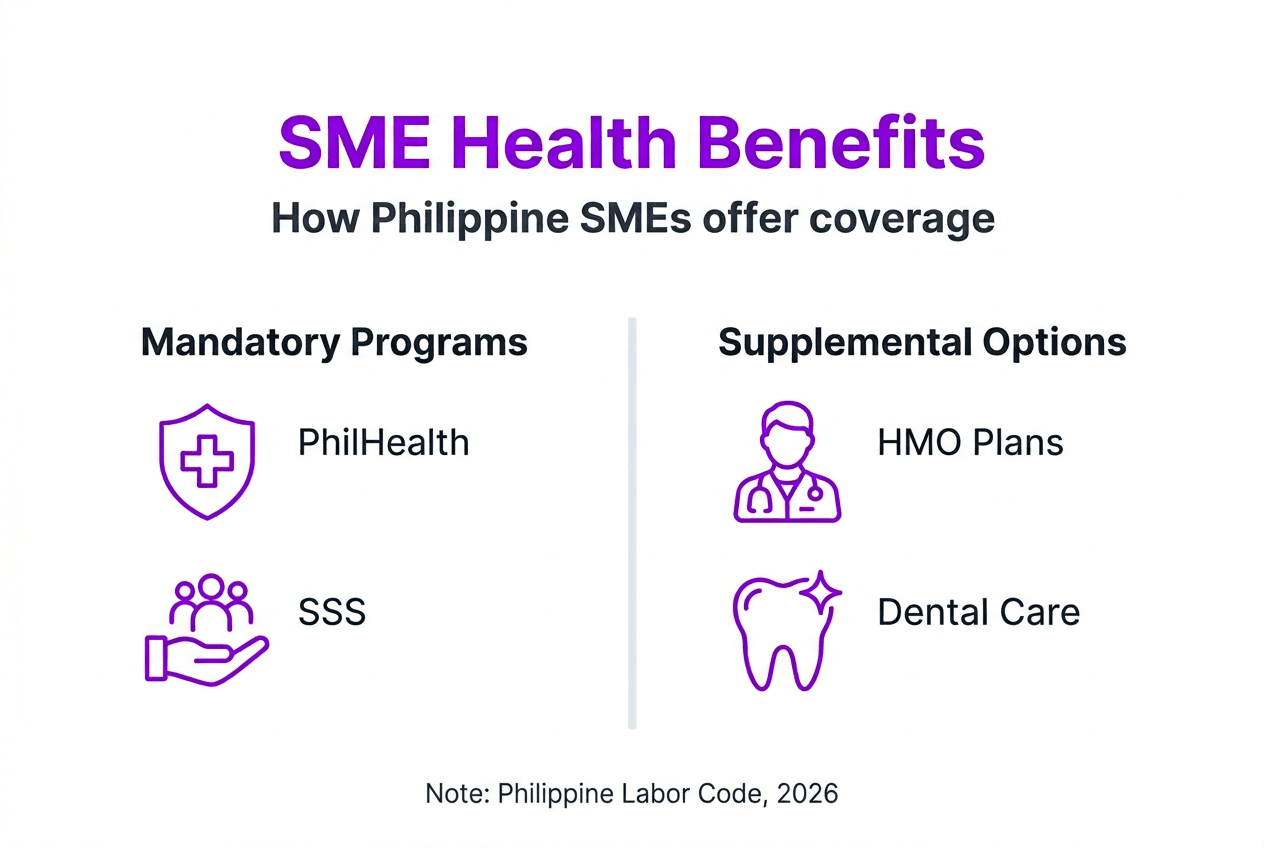
Compliance checks protect you legally. Verify that you’re meeting all mandatory contribution obligations and maintaining records required by labor law. Document any plan changes thoroughly to demonstrate good faith if questions arise later.
Employee feedback provides critical insights. Survey your team about benefit utilization, satisfaction with network providers, and unmet healthcare needs. Low utilization might indicate communication gaps rather than unnecessary coverage. High out-of-pocket expenses suggest insufficient coverage limits.
Maintenance best practices:
- Review claims data quarterly to identify usage patterns
- Monitor employee turnover rates pre and post benefit implementation
- Track healthcare cost trends in the Philippine market
- Update benefit guides when plan terms change
- Maintain organized records of all benefit communications
Adjustments keep your program relevant. HR managers should regularly review and update health plans based on employee feedback and market options. This might mean adding dental coverage, increasing limits, or switching providers for better service.
Documentation prevents disputes. Keep signed enrollment forms, policy summaries, and all employee communications about benefits. These records prove what was promised and when, protecting you if disagreements occur about coverage terms.
Year-end provides natural review timing when budgets reset and renewal decisions approach. Use this period to gather comprehensive feedback and explore alternatives before committing to another contract term.
Pro Tip: Create a benefits committee including employees from different departments to gather diverse perspectives on coverage needs and satisfaction, ensuring your program serves the entire workforce effectively.
Explore tailored health insurance solutions for your SME
Navigating health benefits doesn’t have to overwhelm you. Better HMO plans for SMEs exist that combine comprehensive coverage with budget-friendly pricing specifically designed for Philippine businesses. Purple Cow partners with trusted underwriters to deliver plans addressing the unique challenges small and medium enterprises face.
These specialized solutions scale with your business growth. Starting with as few as 5 employees, you gain access to premier hospital networks, cashless claims, and 24/7 coverage nationwide. Pre-existing conditions receive 100% coverage up to benefit limits, eliminating the exclusions that frustrate employees and HR managers alike.
Get a quote for SME health insurance tailored to your specific needs and budget. The process takes minutes, and you’ll receive options comparing coverage levels, pricing, and flexibility. Protect your workforce while building the competitive advantage that attracts and retains top talent in your industry.
FAQ
What are the mandatory health benefits SMEs must provide in the Philippines?
SSS, PhilHealth, and Pag-IBIG coverage starts from day one for all employees regardless of your company size. Employers must remit contributions on time to avoid penalties and interest charges. These programs provide baseline protection including medical coverage, disability benefits, and housing support that form the legal minimum for all Philippine businesses.
How can SMEs minimize health insurance costs while providing good coverage?
Use government subsidies and partnerships to reduce your premium burden through programs like PhilHealth’s employer support initiatives. Choose scalable HMO plans that grow with your business rather than overcommitting to coverage your current team doesn’t need. Review plans annually to eliminate unused benefits and negotiate better rates as your employee count increases.
What legal protections exist to prevent reduction of health benefits once granted?
Article 100 of the Labor Code prohibits reducing vested benefits including medical coverage once you establish them as part of employee compensation. Supreme Court rulings consistently enforce this protection, making arbitrary benefit cuts illegal. Violation exposes you to legal penalties, employee claims for damages, and potential labor disputes that damage your reputation and operations.
When should SMEs add supplemental HMO coverage beyond mandatory programs?
Add supplemental coverage when employee retention becomes challenging or when recruiting requires competitive benefits packages. If your industry competitors offer HMO plans, you’ll struggle to attract talent without matching that standard. Consider supplemental coverage once you reach financial stability and can commit to maintaining benefits long-term, since reducing coverage later creates legal liability.
How do scalable health plans work for growing SMEs?
Scalable plans adjust coverage and pricing based on your current employee count with flexibility to add members throughout the year. Providers offering SME-focused solutions typically use tiered pricing where per-employee costs decrease as headcount grows. This structure lets you start small and expand coverage as revenue increases without switching providers or renegotiating contracts completely.
Recommended
- 2025 Health Trends for SMEs in the Philippines: Key Strategies for Smarter Benefits
- PhilHealth Updates & Compliance in 2025: A Guide for SMEs in the Philippines
- Beyond PhilHealth: How SMEs Can Maximize Health Investments for Better ROI
- Eumir
- Trends in Collagen Supplements 2025: What to Expect
- Specialty Dental Care: 95% Success Rates & Real Savings
