

SME health coverage guide 2026: Philippine businesses
Securing affordable health insurance that covers pre-existing conditions while offering flexibility remains a persistent challenge for Philippine SMEs. Many decision-makers struggle to balance comprehensive coverage with budget constraints, often settling for plans that leave employees underprotected. This guide provides a clear roadmap to select, customize, and implement health insurance plans that enhance employee wellness, boost retention, and support sustainable business growth through smart coverage decisions.
Table of Contents
- Understanding SME Health Insurance In The Philippines
- Prerequisites: What You Need Before Choosing SME Health Insurance
- Step-By-Step Process To Select And Implement An SME Health Insurance Plan
- Customizing Your SME Health Insurance Plan: Options And Tradeoffs
- Common Mistakes To Avoid When Choosing SME Health Insurance
- Expected Outcomes And Realistic Benchmarks After Implementation
- Explore Better SME HMO Plans With Purple Cow
Key takeaways
| Point | Details |
|---|---|
| SME health insurance requires comprehensive pre-existing condition coverage and flexible network access | Plans must address diverse employee needs while maintaining budget efficiency |
| Preparation involves workforce assessment, budget planning, and regulatory compliance review | Understanding PhilHealth requirements and provider networks ensures informed decisions |
| Step-by-step selection process aligns employee needs with coverage features and digital tools | Systematic evaluation reduces implementation errors and administrative burden |
| Common pitfalls include ignoring pre-existing coverage and underestimating admin workload | Avoiding these mistakes protects investment and employee trust |
| Expected outcomes include 15-20% retention gains and 40% reduction in HR workload | Digital platforms and comprehensive coverage deliver measurable business impact |
Understanding SME health insurance in the Philippines
Philippine SMEs represent majority of the business economy, employing millions of workers who need reliable health coverage. These enterprises operate with tighter budgets than large corporations, yet their employees face identical health risks and deserve equal protection. Understanding how SME health insurance differs from corporate plans helps you make informed choices that balance coverage quality with financial sustainability.
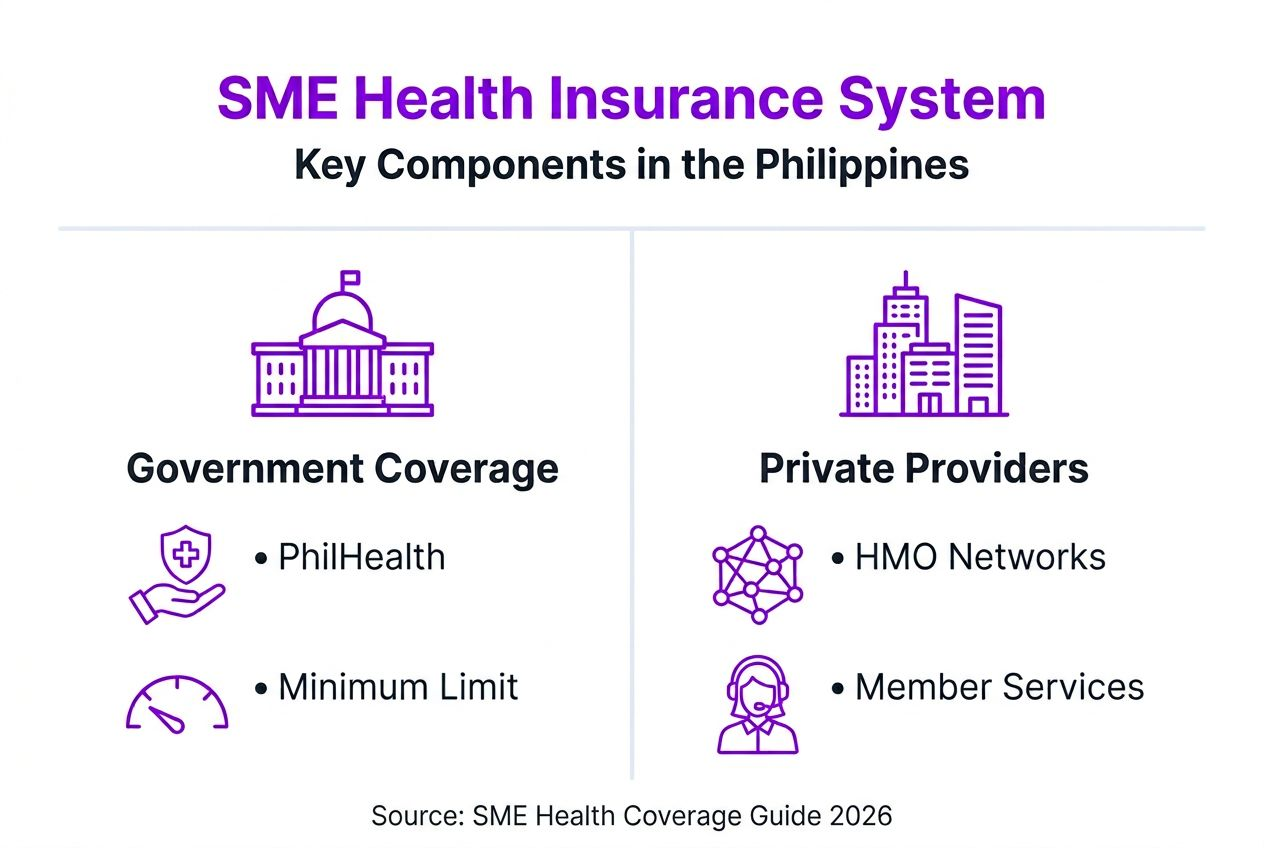
SME health insurance serves businesses with 10 to 250 employees, offering scaled solutions that address specific workforce needs without enterprise-level complexity. These plans typically combine HMO benefits with PhilHealth supplementation, creating layered protection that fills coverage gaps. The Philippine healthcare ecosystem relies on partnerships between private HMOs and government programs to deliver accessible, affordable care.
Key coverage needs for Philippine SMEs include:
- Comprehensive inpatient and outpatient care with cashless hospital access
- Pre-existing condition coverage to protect employees with chronic illnesses
- Emergency care and ambulance services available nationwide 24/7
- Optional dental, vision, and wellness services for preventive health
- Life and accident insurance add-ons for complete employee protection
HMOs manage provider networks, claims processing, and member services, while PhilHealth provides baseline government coverage. Smart SME leaders leverage both systems to maximize benefits without duplicating costs. For deeper insights into health insurance for Philippine SMEs, reviewing industry research helps benchmark your approach against best practices.
Prerequisites: what you need before choosing SME health insurance
Successful health insurance selection begins long before comparing plan options. You need clear data about your workforce, budget parameters, and operational requirements to evaluate plans effectively. Skipping this preparation phase leads to mismatched coverage that frustrates employees and wastes resources.
Start by assessing your workforce demographics, including age distribution, dependent counts, and known health conditions. This data reveals coverage priorities and helps predict utilization patterns. A younger workforce might prioritize outpatient and wellness services, while teams with older employees need stronger inpatient and chronic disease management.
Essential preparation steps include:
- Calculate your health insurance budget as a percentage of total compensation costs
- Review Philippine labor laws and PhilHealth contribution requirements for compliance
- Map employee locations to identify necessary hospital network coverage areas
- Survey employees about coverage preferences and current healthcare challenges
- Evaluate your HR team’s capacity to manage enrollment, claims support, and communication
Digital platform availability dramatically reduces administrative burden. Plans offering online enrollment, mobile claims submission, and self-service portals cut HR workload by 40% compared to paper-based systems. Check whether providers offer these tools before finalizing your shortlist. For ongoing guidance on health plan management, explore resources at the SMME health insurance blog to stay current on regulatory changes and optimization strategies.
Step-by-step process to select and implement an SME health insurance plan
Selecting the right health insurance plan requires systematic evaluation across multiple dimensions. Following a structured process ensures you compare options fairly and avoid overlooking critical features that impact employee satisfaction and business outcomes.
- Assess workforce health risks by reviewing historical medical claims, employee surveys, and demographic data to identify coverage priorities
- Research plan options from at least three providers, focusing on Maximum Benefit Limits, pre-existing condition policies, and hospital network scope
- Evaluate digital platforms for enrollment ease, claims processing speed, and employee self-service capabilities that reduce HR burden
- Compare customization options including dental coverage, annual physical exams, teleconsultation, and mental health services based on employee preferences
- Negotiate contract terms covering dependent inclusion, reimbursement flexibility, grace periods, and renewal conditions to secure favorable agreements
- Develop clear communication materials explaining benefits, enrollment procedures, and utilization guidelines to maximize employee adoption
- Schedule implementation timeline with provider, coordinating enrollment windows, card distribution, and training sessions for smooth rollout
SMEs that implement comprehensive plans with flexible terms typically see retention improvements within 12 months and productivity gains averaging 15 to 20%. These outcomes justify the investment in thorough selection processes that match coverage to workforce needs.
Pro Tip: Prioritize plans with robust digital platforms and mobile apps. These tools cut HR administrative time by nearly half while improving employee satisfaction through faster claims processing and 24/7 access to benefits information.
For detailed comparisons of plan features and strategic guidance, visit the SMME health insurance blog. Additional research on maximizing health investments reveals how to calculate return on investment for different coverage levels. External analysis of Philippine SME health insurance insights provides benchmarking data to validate your decisions.
Customizing your SME health insurance plan: options and tradeoffs
Customization transforms generic health plans into strategic tools that address your specific workforce needs. Understanding available options and their cost implications helps you design coverage that maximizes value within budget constraints. Every add-on or feature adjustment involves tradeoffs between premium costs, employee satisfaction, and administrative complexity.

Pre-existing condition coverage represents the most impactful customization choice. Plans offering 100% coverage for chronic conditions eliminate the primary cause of employee healthcare anxiety, directly improving retention and morale. While this feature increases premiums by 15 to 25%, the retention benefits typically offset costs within 18 months through reduced turnover expenses.
Popular customization options include:
- Dental HMO services covering preventive care, fillings, extractions, and basic procedures
- Annual physical examination packages with comprehensive lab work and specialist consultations
- Teleconsultation platforms providing 24/7 doctor access via mobile apps
- Mental health services including counseling sessions and psychiatric consultations
- Life and accident insurance bundled with health coverage for comprehensive protection
| Customization Feature | Premium Impact | Employee Benefit | Admin Complexity |
|---|---|---|---|
| Pre-existing Coverage | +20% | Very High | Low |
| Dental HMO | +10% | High | Low |
| Annual Physical Exam | +5% | Medium | Medium |
| Teleconsultation | +8% | High | Low |
| Mental Health Services | +12% | Medium | Medium |
| Life Insurance Bundle | +15% | High | Low |
Hospital network breadth affects both access and cost. Plans including Big 9 Hospitals and major provincial facilities ensure employees receive care wherever they live or travel. However, expansive networks increase premiums by 10 to 20% compared to limited networks. Evaluate whether your workforce distribution justifies the additional cost.
Pro Tip: Include wellness services and preventive care benefits to reduce long-term claims costs. Annual physical exams catch conditions early when treatment costs less and outcomes improve. This proactive approach benefits both employees and your bottom line.
For guidance on tailoring plans to your specific situation, review resources on customizing HMO health plans that detail configuration options and strategic considerations.
Common mistakes to avoid when choosing SME health insurance
Even experienced business leaders make preventable errors when selecting health insurance, often discovering problems only after implementation when changes become costly or impossible. Learning from common pitfalls protects your investment and maintains employee trust in your benefits program.
Ignoring pre-existing condition coverage creates immediate dissatisfaction among affected employees and damages your employer brand. Employees with chronic conditions face claim denials and out-of-pocket costs that negate the benefit’s value. This oversight particularly impacts retention, as these employees actively seek employers offering comprehensive coverage.
Frequent selection mistakes include:
- Choosing plans with Maximum Benefit Limits below actual treatment costs for serious conditions
- Selecting HMOs with narrow hospital networks that exclude facilities near employee homes or offices
- Underestimating the HR workload required for manual enrollment, claims support, and provider coordination
- Overlooking digital platform quality, leading to frustrated employees and inefficient administration
- Failing to verify actual provider response times for claim approvals and reimbursements
Coverage gaps cause claims denials in 20 to 30% of SME cases using suboptimal HMOs.
Low benefit limits create false economy. Plans with 100,000 to 150,000 peso Maximum Benefit Limits seem affordable but leave employees exposed to catastrophic costs. Serious illnesses easily exceed these caps, forcing employees to pay substantial amounts out of pocket. This defeats the insurance purpose and creates resentment toward leadership.
Administrative complexity grows exponentially with paper-based systems. Without digital tools, HR teams spend hours per week processing claims, answering benefits questions, and coordinating with providers. This workload diverts resources from strategic initiatives and delays employee reimbursements. For strategies to optimize your current plan, consult health plan review advice covering annual evaluation processes.
External research on common SME health insurance mistakes provides additional case studies illustrating costly errors and their solutions.
Expected outcomes and realistic benchmarks after implementation
Understanding typical results helps set appropriate expectations and measure your plan’s success. Well-implemented health insurance delivers measurable improvements across employee satisfaction, retention, productivity, and administrative efficiency. These outcomes justify the investment and guide future optimization efforts.
Implementation timelines generally span 2 to 4 weeks from final plan selection through complete employee enrollment. Digital platforms accelerate this process, while paper-based systems extend timelines to 6 weeks or longer. Plan for communication campaigns starting 3 weeks before enrollment opens to ensure employees understand benefits and complete registration.
SMEs implementing comprehensive plans with productivity and retention improvements within 12 months see gains averaging 15 to 20%. These improvements stem from reduced healthcare anxiety, better access to preventive care, and decreased absenteeism due to untreated conditions. Employee satisfaction scores typically increase 20 to 25% when plans include pre-existing condition coverage and flexible customization.
| Outcome Metric | Timeline | Typical Improvement | Key Drivers |
|---|---|---|---|
| Employee Retention | 12 months | 15 to 20% increase | Pre-existing coverage, network access |
| Productivity | 6 to 12 months | 15 to 20% gain | Reduced absenteeism, preventive care |
| HR Admin Time | Immediate | 40% reduction | Digital platforms, self-service tools |
| Employee Satisfaction | 3 to 6 months | 20 to 25% improvement | Comprehensive coverage, easy claims |
| Healthcare Costs | 18 to 24 months | 10 to 15% decrease | Preventive care utilization |
Digital claims processing cuts HR administrative workload by up to 40%, freeing staff for strategic initiatives. Employees appreciate faster reimbursements and 24/7 access to benefits information through mobile apps. This efficiency gain alone often justifies selecting slightly higher-premium plans offering superior digital tools.
Cost expectations vary based on coverage scope and workforce demographics. Budget 3 to 5% of total annual compensation for basic plans, increasing to 7 to 9% for comprehensive coverage including pre-existing conditions and extensive add-ons. These ranges provide realistic planning parameters for financial modeling.
For additional data on expected returns, review the SME health insurance benefits study analyzing outcomes across Philippine business sectors.
Explore better SME HMO plans with Purple Cow
Transforming your employee health benefits starts with finding a partner who understands Philippine SME challenges and delivers solutions without complicated terms or hidden exclusions. Purple Cow specializes in comprehensive health insurance designed specifically for businesses like yours, offering features that directly address the pain points covered throughout this guide.
Purple Cow provides 100% coverage for pre-existing conditions, congenital conditions, and special procedures up to the Maximum Benefit Limit, eliminating the coverage gaps that plague standard plans. Their network includes Big 9 Hospitals and Healthway Clinics nationwide, ensuring your employees access quality care wherever they live or travel. Cashless transactions and 24/7 coverage remove financial barriers to timely treatment.
Flexible customization lets you add dental HMO services, annual physical exams, and life & accident insurance based on your workforce preferences. Digital platforms simplify enrollment, speed claims processing, and provide employees self-service tools that reduce HR burden by nearly half. Explore Purple Cow plan features to see how their approach differs from traditional HMOs, or visit Purple Cow member services to understand the ongoing support available to your team.
FAQ
What are the most important features to look for in SME health insurance?
Prioritize comprehensive coverage including 100% pre-existing condition protection, access to major hospital networks, and robust digital platforms for claims processing. These features directly reduce employee turnover, simplify administration, and improve healthcare outcomes. Flexible customization options let you tailor benefits to your specific workforce needs without paying for unnecessary services.
How long does it typically take to implement an SME health insurance plan?
Implementation generally requires 2 to 4 weeks from plan selection through complete employee enrollment and card distribution. Plans offering digital enrollment platforms can shorten this timeline to under 2 weeks. Paper-based systems extend the process to 6 weeks or longer, delaying benefits access and increasing administrative work.
Can SMEs customize health insurance plans to suit diverse employee needs?
Yes, modern SME plans offer extensive customization including dental HMO services, teleconsultation platforms, mental health coverage, and life insurance add-ons. You can adjust Maximum Benefit Limits, dependent inclusion policies, and reimbursement terms to match your budget and workforce preferences. This flexibility ensures every employee finds value in the benefits package. For detailed guidance on configuration options, review resources on customizing HMO plans for SMEs.
What common mistakes should SMEs avoid when choosing health insurance?
Avoid selecting plans that exclude pre-existing conditions, impose unrealistically low benefit limits, or offer narrow hospital networks. These limitations frustrate employees and diminish the insurance value. Also prioritize digital tools for enrollment and claims to reduce HR workload and improve employee experience. Conducting an annual review helps identify gaps before they become problems. For evaluation frameworks, consult health plan review tips covering systematic assessment processes.
Recommended
- PhilHealth Updates & Compliance in 2025: A Guide for SMEs in the Philippines
- 2025 Health Trends for SMEs in the Philippines: Key Strategies for Smarter Benefits
- The Better HMO Plans for SMEs | Purple Cow | Blog | Rai dela Cruz | Best HMO Plans Philippines - Purple Cow
- Eumir
- Types of Diabetes Management in 2026: 40% Less Hypoglycemia | Diacontext
- Oral Health Trends 2026: Innovations and Natural Solutions – Stop Oral Care
