

What Is an HMO and Its Impact on SME Healthcare
Choosing the right healthcare plan for employees can feel like a balancing act, especially for HR managers overseeing small and medium enterprises in the Philippines. Health Maintenance Organizations offer a network-based approach to coverage that combines cost efficiency and wide access to care. By understanding core HMO concepts and addressing common misconceptions, managers can pinpoint options that support employee wellness and align with company budgets.
Table of Contents
- Defining HMO: Core Concepts And Misconceptions
- Types Of HMO Plans For Philippine SMEs
- How HMO Coverage And Benefits Work
- Costs, Requirements, And Regulatory Framework
- Comparing HMOs To Alternatives For Businesses
Key Takeaways
| Point | Details |
|---|---|
| Comprehensive Coverage | HMOs provide structured healthcare through a network of providers, emphasizing preventive care and coordinated medical services. |
| Cost-Effectiveness | HMOs typically offer fixed premiums and more predictable healthcare expenses, making them financially sustainable for businesses. |
| Primary Care Coordination | Members select a primary care physician to manage referrals and overall healthcare, ensuring comprehensive patient management. |
| Regulatory Oversight | HMO operations are governed by strict regulations in the Philippines, ensuring financial stability and consumer protections for employees. |
Defining HMO: Core Concepts and Misconceptions
Health Maintenance Organizations (HMOs) represent a strategic healthcare delivery model designed to provide comprehensive medical coverage while maintaining cost efficiency. These insurance plans operate through a carefully structured network of healthcare providers who agree to offer services at negotiated rates, creating a streamlined approach to medical care management. Health Maintenance Organization regulations ensure consumer protections and financial stability within this healthcare ecosystem.
At the core of HMO functionality is the primary care physician (PCP) model, where members select a central healthcare provider responsible for coordinating their overall medical care. This approach differs significantly from traditional fee-for-service insurance models by emphasizing preventative care and requiring referrals for specialist visits. The goal is to create a more integrated and cost-effective healthcare experience that prioritizes patient wellness through proactive management.
Common misconceptions about HMOs often revolve around perceived limitations in healthcare choice and flexibility. While HMOs do operate within specific provider networks, they are not restrictive by design. Instead, these plans aim to deliver total healthcare by ensuring access to quality medical services irrespective of an individual’s health status or income level. The structured approach allows SMEs to offer comprehensive healthcare coverage that balances employee needs with organizational budget constraints.
Pro tip: When evaluating HMO plans for your small or medium enterprise, focus on network breadth, referral processes, and the range of covered medical services rather than just monthly premiums.
Types of HMO Plans for Philippine SMEs
The Philippine healthcare landscape offers a diverse array of Health Maintenance Organization (HMO) plans tailored specifically for small and medium enterprises (SMEs). HMO health insurance options typically include 16 different providers, with key players like MEDICard, Intellicare, MaxiCare, and Insularcare serving the unique needs of corporate employees. These plans are strategically designed to provide comprehensive medical coverage while maintaining cost-effectiveness for businesses operating in various sectors.
Most HMO plans for Philippine SMEs are structured around core coverage components that address different healthcare requirements. These typically include outpatient services, inpatient treatments, emergency medical care, and preventive health screenings. Some specialized plans offer additional benefits such as dental coverage, annual physical examinations, and specific provisions for pre-existing conditions. HMO providers like ETIQA have expanded their networks to include over 1,400 accredited hospitals and clinics nationwide, ensuring broad accessibility for employees across different regions.

When selecting an HMO plan, SMEs must carefully evaluate several critical factors. These include monthly premium costs, network coverage breadth, out-of-pocket expenses, and the specific medical services included. Employers typically subsidize these premiums, which allows employees to access quality healthcare at significantly reduced personal expenses. The goal is to create a comprehensive healthcare solution that balances organizational budget constraints with robust medical protection for workers.
Pro tip: Conduct a detailed comparative analysis of HMO plans, focusing not just on price but on the depth of network coverage, range of medical services, and flexibility of claim processes for your specific industry.
How HMO Coverage and Benefits Work
Health Maintenance Organizations (HMOs) operate through a structured system designed to provide comprehensive medical care while maintaining cost-effectiveness for businesses. HMO coverage models fundamentally require members to receive care from within a predefined network of healthcare providers, with specific protocols for accessing medical services. This network-based approach ensures that employees have access to quality healthcare while helping companies control overall medical expenditure.
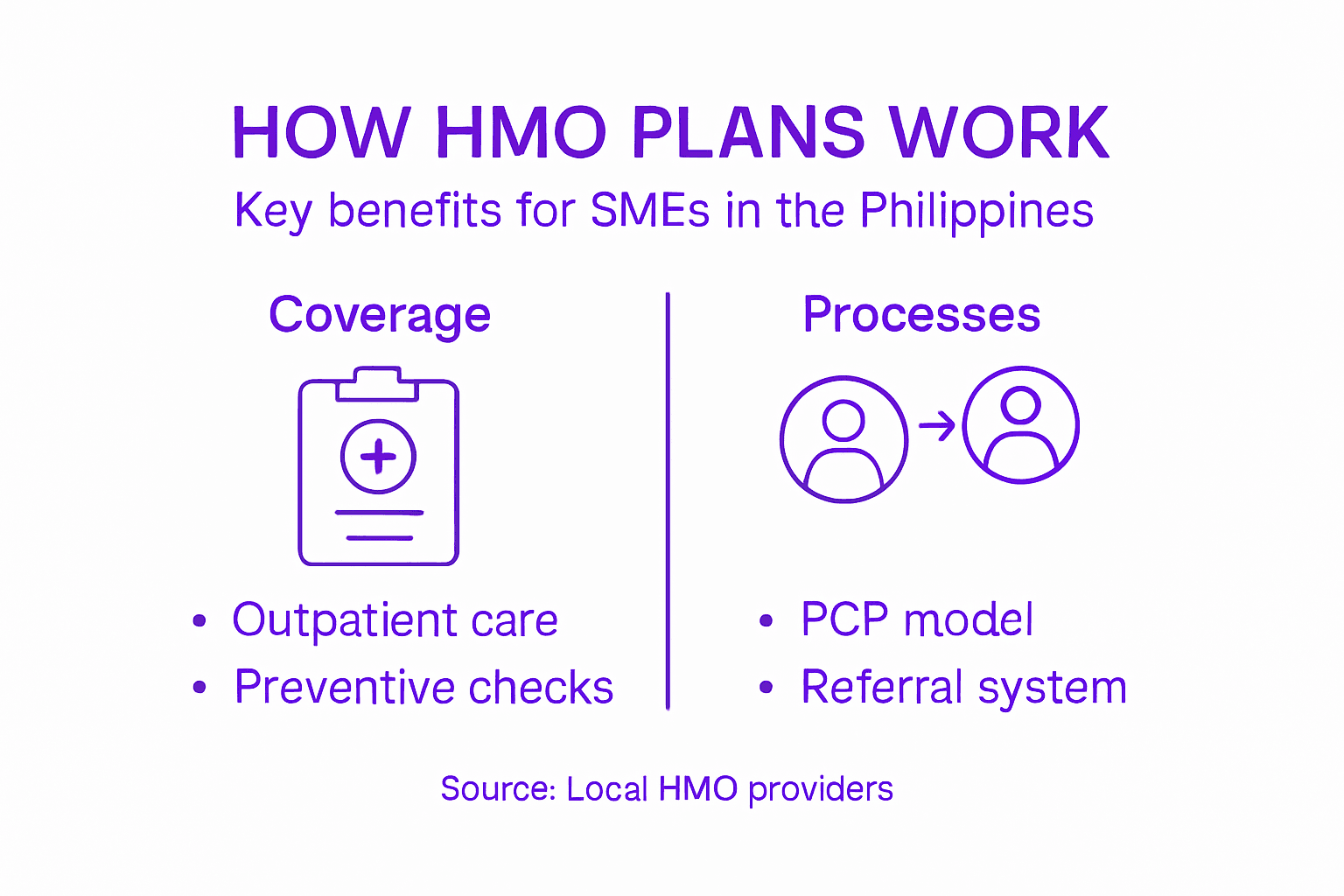
The core mechanism of HMO benefits revolves around the primary care physician (PCP) model, where each member selects a central healthcare coordinator responsible for managing their medical needs. This physician serves as the primary point of contact, coordinating specialist referrals, managing preventive care, and ensuring comprehensive health monitoring. HMO insurance networks typically cover a wide range of medical services, including preventive screenings, hospitalizations, emergency treatments, diagnostic tests, and often prescription drug benefits. Most plans include copayments or coinsurance structures that make healthcare more affordable for employees.
Unique to HMO plans is their emphasis on preventive care and integrated healthcare management. Unlike traditional insurance models, HMOs incentivize early medical intervention and comprehensive health monitoring. This approach not only helps employees maintain better health but also reduces long-term medical expenses for both the organization and its workers. Coverage typically includes annual physical examinations, vaccinations, health risk assessments, and specialized screenings tailored to different age groups and professional risk profiles.
Pro tip: Request a detailed breakdown of your HMO plan’s network coverage and understand the specific referral processes to maximize your healthcare benefits and minimize unexpected out-of-pocket expenses.
Costs, Requirements, and Regulatory Framework
Health Maintenance Organizations (HMOs) in the Philippines operate within a complex regulatory environment designed to protect consumers and ensure financial stability. HMO regulatory frameworks involve stringent licensing requirements, comprehensive financial reporting mandates, and strict oversight from state and federal insurance departments. These regulations ensure that HMOs maintain adequate financial reserves, deliver contracted services, and adhere to established health standards that protect both employers and employees.
The cost structure of HMO plans involves multiple components that SMEs must carefully consider. Monthly premiums, copayments, and potential out-of-pocket expenses form the financial backbone of these healthcare plans. HMO cost regulations mandate transparency in pricing, requiring detailed documentation of coverage limits, essential health benefits, and annual out-of-pocket maximums. This approach helps prevent excessive financial burden on participating organizations and their employees while ensuring comprehensive healthcare access.
Regulatory requirements for HMOs extend beyond financial considerations to include network adequacy, patient protections, and mandatory service provisions. Insurance regulators closely monitor marketing practices, complaint resolution mechanisms, and the overall quality of healthcare delivery. These oversight mechanisms ensure that HMO providers maintain high standards of service, offer fair and accessible healthcare options, and comply with consumer protection laws that safeguard the interests of small and medium enterprises and their workforce.
The following table summarizes important regulatory requirements for HMO providers in the Philippines:
| Regulatory Requirement | Purpose | Business Impact |
|---|---|---|
| Licensing & Accreditation | Ensure legal operation | Protects employer investments |
| Financial Reporting | Monitor solvency and stability | Safeguards employees’ coverage |
| Service Provision Mandate | Guarantee essential health services | Prevents gaps in care |
Pro tip: Request a comprehensive compliance documentation from potential HMO providers, focusing on their regulatory certifications, network coverage breadth, and transparent pricing structures to make an informed decision.
Comparing HMOs to Alternatives for Businesses
Small and medium enterprises face multiple healthcare coverage options, each with distinct advantages and limitations. Health insurance comparison studies reveal that Health Maintenance Organizations (HMOs) offer a unique approach to medical coverage that differs significantly from traditional fee-for-service insurance models. Unlike standard insurance plans, HMOs emphasize preventive care, cost control, and integrated healthcare management, providing a more structured and potentially more economical solution for businesses seeking comprehensive employee health benefits.
The primary distinctions between HMOs and alternative healthcare models become apparent when examining service delivery and cost structures. Traditional insurance plans typically allow more flexibility in provider selection but come with higher out-of-pocket expenses and less coordinated care. HMOs, by contrast, operate through a network of healthcare providers, which enables more streamlined medical services and potentially lower overall healthcare expenditures. This model includes a primary care physician who acts as a healthcare coordinator, managing referrals and ensuring more comprehensive patient care.
Here’s a comparison of HMO insurance with traditional fee-for-service plans for SMEs:
| Criteria | HMO Model | Fee-for-Service Model |
|---|---|---|
| Provider Access | Limited network, coordinated care | Any provider, less coordination |
| Cost Predictability | Fixed premiums, capped expenses | Unpredictable, higher costs |
| Preventive Care Focus | Strong emphasis | Not generally prioritized |
| Referral Requirement | PCP referral needed for specialists | Direct specialist access |
Key comparative advantages of HMOs include reduced financial barriers, enhanced preventive care access, and more predictable healthcare expenses for businesses. While alternative insurance models might offer broader provider networks, they often lack the systematic approach to health management that HMOs provide. The trade-off involves slightly more restricted provider choices in exchange for lower costs, better care coordination, and a more holistic approach to employee health. For SMEs seeking to balance healthcare quality with budget constraints, HMOs represent a strategic compromise between comprehensive coverage and financial sustainability.
Pro tip: Conduct a detailed cost-benefit analysis comparing HMO plans with alternative insurance models, considering not just monthly premiums but also potential out-of-pocket expenses, network coverage, and long-term healthcare management strategies.
Elevate Your SME Healthcare with Trusted HMO Solutions
Navigating the complex landscape of HMO plans for Small and Medium Enterprises requires a partner who understands the unique challenges discussed in the article. Cost control, network adequacy, and comprehensive preventive care are critical to protecting your workforce without overburdening your budget. At HMO Plans, we specialize in delivering tailored health insurance that addresses these exact pain points with clear benefits such as 100 percent coverage for pre-existing conditions and a broad network including premier hospitals.
Discover how our strategic partnerships with industry leaders Purple Cow and Etiqa provide your employees with cashless access to accredited hospitals nationwide, flexible add-ons like dental and life insurance, and digital platforms designed for convenience. Don’t let complicated insurance terms or limited provider access hold your business back from securing quality healthcare. Visit HMO Plans to explore our comprehensive offerings and take the vital first step towards a healthier, more protected workforce today.
Frequently Asked Questions
What is an HMO?
An HMO, or Health Maintenance Organization, is a type of health insurance plan that provides comprehensive medical coverage while focusing on cost efficiency. Members receive care from a network of healthcare providers who are contracted to offer services at negotiated rates.
How do HMOs benefit small and medium enterprises (SMEs)?
HMOs benefit SMEs by offering a structured healthcare model that prioritizes preventive care and coordinated services. They help companies manage healthcare costs while providing employees with access to quality medical services, ultimately leading to better employee wellness and productivity.
What core services are typically included in HMO plans for businesses?
HMO plans commonly include services such as outpatient care, inpatient treatments, preventive health screenings, emergency medical care, and may offer additional benefits like dental coverage and provisions for pre-existing conditions.
What should businesses consider when choosing an HMO plan?
When selecting an HMO plan, businesses should evaluate the network coverage breadth, monthly premium costs, out-of-pocket expenses, and the range of medical services included. It’s also essential to understand the referral processes and network accessibility.
