

What is HMO room and board: A guide for SMEs in 2026
Did you know room and board costs can make up over half of inpatient hospital bills? Many SME owners and HR managers misunderstand what HMO room and board coverage actually includes, leading to surprise expenses and employee dissatisfaction. This guide clarifies coverage definitions, daily limits, common misconceptions, and practical selection tips to help you optimize health benefits while controlling costs.
Table of Contents
- What Is HMO Room And Board?
- Coverage Limits And Maximum Benefit Limits For Room And Board
- Why Room And Board Coverage Matters For SMEs
- Common Misconceptions About HMO Room And Board
- Comparison Of Room And Board Coverage Across Philippine HMO Providers
- Practical Tips For Selecting And Using Room And Board Coverage
- Explore HMO Plans Tailored For SMEs
- Frequently Asked Questions About HMO Room And Board
Key takeaways
| Point | Details |
|---|---|
| Room and board definition | Covers hospital room accommodation, meals, and nursing care during inpatient stays at accredited facilities. |
| Daily and maximum limits | Typical limits range from PHP 1,500 to PHP 5,000 daily, determining employee room options and potential out-of-pocket costs. |
| Financial impact for SMEs | Room and board represents 40-60% of hospitalization expenses, making robust coverage essential for cost control. |
| Common misconceptions | Coverage excludes professional fees, diagnostics, and medications—PhilHealth doesn’t cover full room costs either. |
| Selection best practices | Assess employee needs, compare provider limits, review exclusions, and consider add-ons for optimal benefits. |
What is HMO room and board?
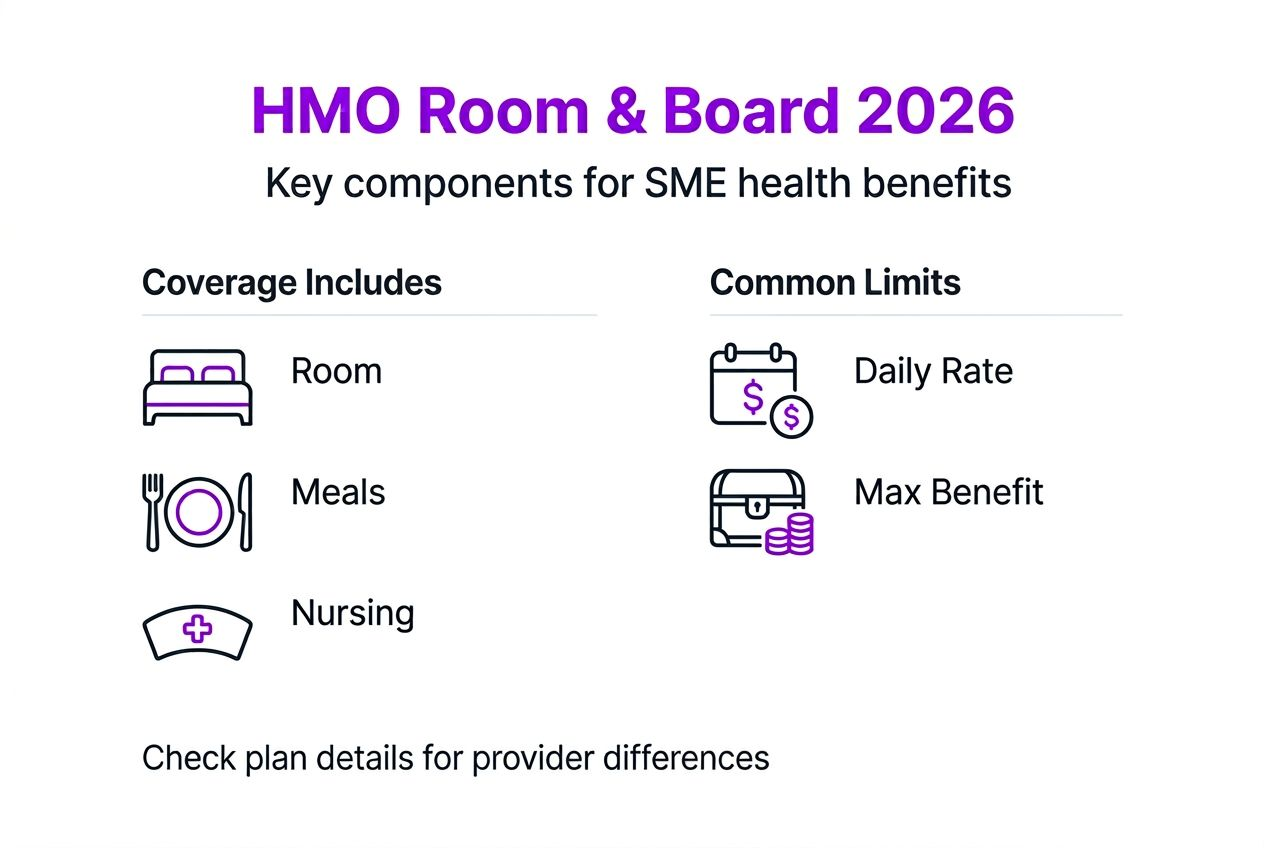
Room and board in HMO coverage refers to the accommodation, meals, and nursing services provided during an inpatient hospital stay. Room and board includes accommodation, meals, and nursing services during hospitalization, forming the foundational component of inpatient benefits. This coverage applies when employees are admitted to accredited hospitals for medical treatment requiring overnight stays.
Understanding room and board terminology helps SME HR managers navigate plan documents and set accurate employee expectations. Philippine HMO plans typically outline room and board coverage with specific daily limits and maximum benefit caps. These limits directly affect which hospital room type employees can access without additional personal expenses.
Key components of room and board coverage include:
- Hospital room accommodation (private, semi-private, or ward)
- Meals provided by the hospital during the stay
- Nursing care and monitoring services
- Basic room amenities and utilities
The HMO plans blog offers additional insights into coverage components and how they integrate with overall health benefits. Recognizing what qualifies as room and board helps you evaluate plan adequacy for your workforce’s hospitalization needs.
Coverage limits and maximum benefit limits for room and board
HMO plans establish two critical constraints: daily room and board limits and overall maximum benefit limits (MBL). The daily limit determines how much the HMO pays per day for room accommodation, while the MBL caps total benefits across all covered services during the policy period.
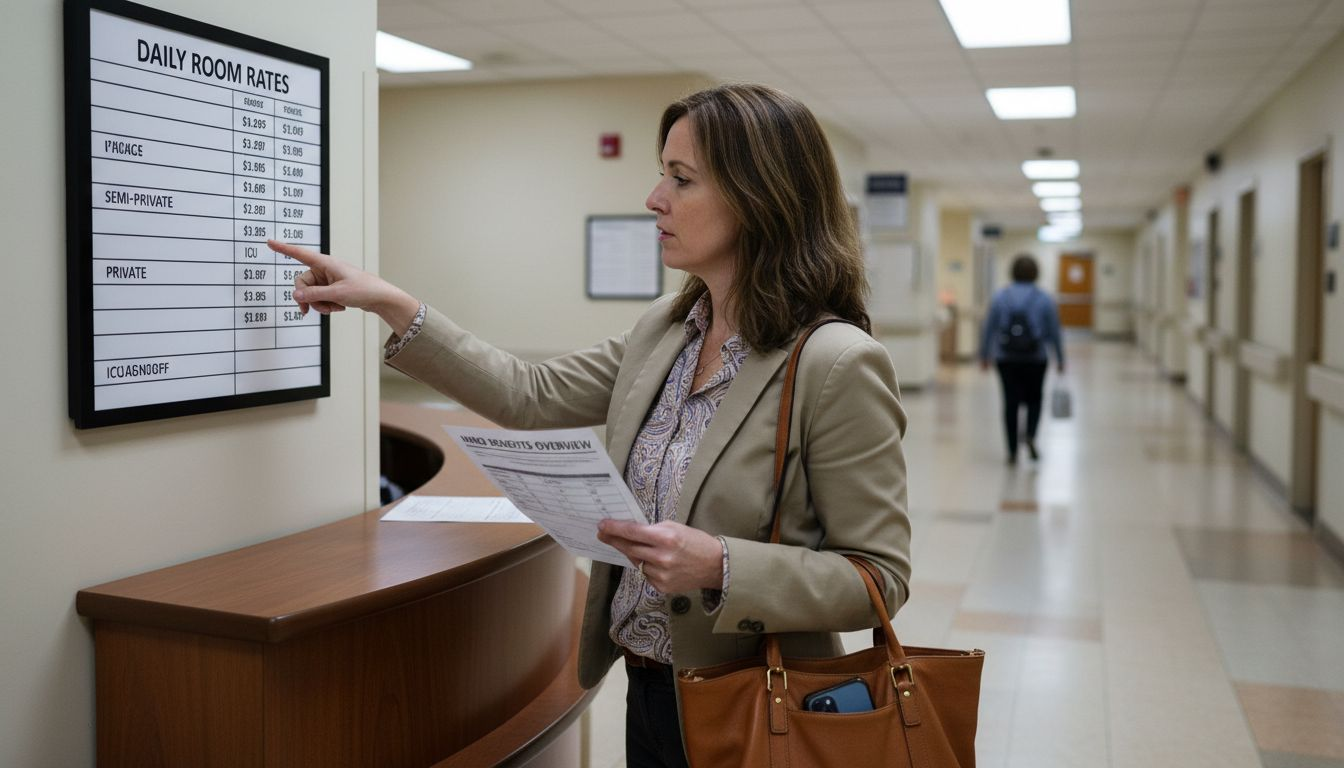
Typical daily room and board limits range from PHP 1,500 to PHP 5,000, directly impacting which hospital room types employees can select. An employee choosing a private room costing PHP 4,000 daily with a plan limit of PHP 2,500 would pay PHP 1,500 out of pocket each day. These gaps add up quickly during extended hospitalizations.
| Provider | Daily Limit (Basic) | Daily Limit (Premium) | Pre-existing Coverage |
|---|---|---|---|
| Purple Cow | PHP 3,000 | PHP 5,000 | 100% up to MBL |
| Provider A | PHP 2,000 | PHP 4,000 | Limited after waiting period |
| Provider B | PHP 2,500 | PHP 4,500 | Excluded first year |
| Provider C | PHP 1,800 | PHP 3,500 | Partial coverage only |
Purple Cow’s 100% coverage for pre-existing conditions up to the MBL stands out, eliminating common exclusions that burden employees with chronic conditions. Maximum benefit limits typically range from PHP 150,000 to PHP 1,000,000 annually, encompassing all inpatient services including room and board.
Pro Tip: Before selecting a plan, verify daily room rates at hospitals near your office and employee residences to ensure coverage limits align with actual costs, preventing unexpected employee expenses.
The HMO health insurance for SMEs guide provides comprehensive comparisons of benefit structures across providers.
Why room and board coverage matters for SMEs
Room and board costs represent a substantial portion of hospitalization expenses. Room and board costs can account for 40-60% of inpatient hospital expenses, making this coverage component financially critical for both employers and employees. When coverage falls short, employees face significant out-of-pocket costs that create financial stress and diminish the perceived value of health benefits.
Adequate room and board coverage delivers multiple SME advantages:
- Reduces employee financial burden during medical emergencies
- Enhances perceived value of total compensation package
- Improves employee retention and satisfaction rates
- Minimizes workplace disruption from financial stress
- Strengthens employer brand in competitive talent markets
“Comprehensive room and board coverage protects employees from bearing the largest single component of hospitalization costs, directly impacting their financial wellness and loyalty to the organization.”
The correlation between strong inpatient benefits and employee retention is clear. Employees experiencing smooth, fully covered hospitalizations express higher job satisfaction and organizational commitment. Conversely, surprise medical bills create resentment and prompt talented workers to seek employers with better benefits.
For SMEs competing with larger corporations for talent, superior room and board coverage levels the playing field. The importance of HMOs for small business demonstrates how strategic health benefits drive recruitment and retention outcomes.
Common misconceptions about HMO room and board
Many SME decision makers hold incorrect assumptions about room and board coverage scope. Room and board does not cover professional fees or medications, contrary to widespread belief. This confusion leads to unpleasant surprises when employees receive separate bills for doctor consultations, laboratory tests, imaging procedures, and prescription drugs.
Critical misconceptions to address:
- Room and board excludes physician professional fees for consultations, procedures, and surgeries
- Diagnostic tests and laboratory work fall under separate coverage categories
- Medications and pharmaceutical supplies require distinct coverage provisions
- PhilHealth provides minimal room and board support, not comprehensive coverage
Another common misunderstanding involves room type flexibility. Employees often assume they can choose any room type, but coverage limits determine actual options. A plan with a PHP 2,500 daily limit won’t cover a deluxe private room costing PHP 6,000 daily without substantial employee co-payment.
PhilHealth’s role in room and board coverage is frequently overestimated. While PhilHealth contributes to hospitalization costs, its room and board support represents a small fraction of actual expenses. HMO coverage fills the gap, making robust private insurance essential for meaningful financial protection.
Pro Tip: Request a detailed breakdown of what room and board covers versus what falls under separate benefit categories to avoid coverage gaps and employee disappointment.
The maximizing SME health investment resource explains how PhilHealth and HMO coverage interact for optimal employee protection.
Comparison of room and board coverage across Philippine HMO providers
Evaluating room and board provisions across providers reveals significant variation in daily limits, pre-existing condition handling, and customization options. HMO Plans - Purple Cow offers 100% room and board coverage for pre-existing conditions up to MBL with flexible add-ons, distinguishing it from competitors with restrictive exclusions.
| Feature | Purple Cow | Competitor X | Competitor Y | Competitor Z |
|---|---|---|---|---|
| Basic Daily Limit | PHP 3,000 | PHP 2,000 | PHP 2,500 | PHP 1,800 |
| Premium Daily Limit | PHP 5,000 | PHP 4,000 | PHP 4,500 | PHP 3,500 |
| Pre-existing Coverage | 100% to MBL | Waiting period applies | Excluded year 1 | Partial only |
| Congenital Coverage | 100% to MBL | Limited | Excluded | Case by case |
| Optional Add-ons | Dental, APE, Life | Limited options | Dental only | None |
| Network Access | Big 9 + Healthway | Limited network | Moderate network | Basic network |
Key differentiators for SME decision making include:
- Pre-existing condition coverage eliminates major employee exclusions
- Higher daily limits provide access to better hospital accommodations
- Broader hospital networks offer convenient access nationwide
- Optional add-ons enable customized benefits matching workforce needs
- Transparent terms reduce administrative burden and confusion
Purple Cow’s commitment to covering pre-existing and congenital conditions without lengthy waiting periods addresses a major pain point for employees with chronic health issues. This inclusive approach improves employee satisfaction and reduces administrative complexity around medical history verification.
The Philippine HMO comparison blog and HMO plan comparison for SMEs provide deeper analysis of provider differences.
Practical tips for selecting and using room and board coverage
Optimizing room and board benefits requires systematic evaluation of employee needs, plan terms, and provider capabilities. Evaluating employee hospitalization history and clearly understanding terms prevents undercoverage and unexpected expenses.
Follow these steps for effective selection:
- Analyze historical data: Review past employee hospitalization frequency, average length of stay, and room types utilized to establish baseline needs.
- Assess hospital preferences: Identify which accredited hospitals employees prefer based on location, reputation, and specialties, then verify daily room rates.
- Compare daily limits: Match plan daily limits against actual hospital room costs to ensure adequate coverage without excessive employee co-payments.
- Evaluate maximum benefits: Confirm the MBL provides sufficient total coverage for potential serious illnesses or extended hospitalizations.
- Review exclusions carefully: Understand what room and board excludes to set accurate employee expectations and avoid surprise bills.
- Consider add-ons strategically: Assess whether optional benefits like dental coverage or annual physical exams enhance overall value for your workforce.
- Verify pre-existing coverage: Prioritize plans offering comprehensive pre-existing condition coverage to protect employees with chronic health issues.
Pro Tip: Choose transparent providers like Purple Cow that clearly outline coverage terms and exclusions upfront, reducing confusion and administrative workload for your HR team.
The HMO basics for HR managers and 2026 HMO planning questions resources offer additional selection guidance. For practical room and board tips, external resources complement internal planning.
Explore HMO plans tailored for SMEs
Navigating room and board coverage doesn’t have to be complicated. Purple Cow delivers transparent, comprehensive HMO plans specifically designed for Philippine SMEs, featuring 100% coverage of room and board for pre-existing conditions up to your Maximum Benefit Limit. No confusing exclusions, no complicated waiting periods.
Customize your coverage with flexible add-ons including dental services, annual physical exams, and life insurance to match your unique workforce needs. Access premier facilities including the Big 9 Hospitals and Healthway Clinics nationwide, backed by straightforward terms that reduce HR administrative burden. Visit Purple Cow HMO features to explore plan options or check Purple Cow member services to see how we support your team throughout their healthcare journey.
Frequently asked questions about HMO room and board
What expenses are included in HMO room and board coverage?
Room and board coverage includes hospital room accommodation, meals provided during the stay, and nursing care services. It does not cover physician professional fees, diagnostic tests, laboratory work, imaging procedures, medications, or medical supplies, which fall under separate benefit categories.
How do maximum daily limits affect employee choices during hospitalization?
Daily limits determine the maximum amount the HMO pays per day for room accommodation. If an employee selects a room costing more than the daily limit, they pay the difference out of pocket. This directly impacts whether employees can access private rooms versus semi-private or ward accommodations without additional personal expense.
Can pre-existing conditions be covered for room and board in typical HMOs?
Coverage for pre-existing conditions varies significantly among providers. Many HMOs impose waiting periods, exclude pre-existing conditions entirely, or offer only partial coverage. Purple Cow stands out by providing 100% room and board coverage for pre-existing conditions up to the Maximum Benefit Limit without lengthy waiting periods.
How does PhilHealth interact with HMO room and board benefits?
PhilHealth provides minimal support for room and board costs, covering only a small portion of actual hospitalization expenses. HMO coverage supplements PhilHealth by filling the substantial gap between PhilHealth contributions and actual hospital room costs. This partnership ensures employees receive meaningful financial protection without bearing the majority of expenses personally.
What should SMEs consider when upgrading room and board limits or adding optional benefits?
Evaluate your workforce’s historical hospitalization patterns, preferred hospital room rates, and overall health risk profile. Compare the incremental premium cost against potential employee out-of-pocket savings and satisfaction improvements. Consider optional add-ons that address specific employee needs, such as dental coverage for younger workforces or comprehensive pre-existing condition coverage for older employees. The HMO insights blog provides ongoing guidance for optimizing benefits strategy.
