

Why choose group health insurance for your SME in 2026
Many SME owners in the Philippines assume individual health plans are simpler and more affordable, but this common belief often leads to missed opportunities. Group health insurance delivers significant cost advantages through economies of scale, provides comprehensive coverage including pre-existing conditions, and offers valuable tax benefits that individual plans simply cannot match. For businesses looking to attract top talent while managing healthcare costs effectively, group plans represent a strategic investment that pays dividends in employee satisfaction, retention, and overall business health.
Table of Contents
- Key takeaways
- Understanding group health insurance and its cost advantages
- Tax benefits and comprehensive coverage advantages
- How group health insurance supports employee retention and talent attraction
- Practical mechanics and considerations for implementing group health insurance
- Explore better group health insurance plans for your SME
- Frequently asked questions about group health insurance for SMEs
Key Takeaways
| Point | Details |
|---|---|
| Economies of scale | Pooling employees under one policy lowers per person premiums and reduces total costs compared to individual plans. |
| Tax advantages | Premiums are deductible as business expenses and employee benefits are often tax exempt, lowering overall tax liability. |
| Comprehensive coverage | Group plans typically cover dependents and provide broader hospital networks and services beyond what many individual plans offer. |
| Predictable costs | A single group policy creates stable monthly premiums and simplifies budgeting for cash flow. |
| Flexible plan options | Plans can be customized with riders and coverage levels to fit SME needs as the business grows. |
Understanding group health insurance and its cost advantages
Group health insurance operates on a fundamental principle that benefits SMEs directly: buying power. When you pool employees together under a single policy, insurers spread risk across a larger group, which translates to lower premiums per person. This mechanism makes affordable health coverage via group policy accessible even for smaller businesses.
Consider the numbers. An SME with 50 employees paying individual premiums of ₱3,000 monthly would spend ₱150,000 total each month. Switch to a group plan, and those premiums can drop to ₱1,500 per employee, cutting total costs to ₱75,000 monthly. That’s ₱900,000 in annual savings that can be reinvested in business growth, employee development, or expanded benefits.
The cost structure works because insurers negotiate rates based on group size and risk profile rather than individual health assessments. Employers work directly with providers to secure competitive pricing, creating predictable monthly expenses that simplify budgeting and cash flow management. Unlike individual plans where premiums fluctuate based on age and health status, group rates remain stable across your workforce.
Key cost advantages include:
- Reduced administrative burden with single policy management instead of multiple individual contracts
- Predictable monthly premiums that don’t spike when employees age or develop health conditions
- Access to better HMO plans for SMEs with premium facilities at negotiated rates
- Elimination of individual underwriting processes that can exclude or penalize employees with health histories
| Company Size | Individual Plan Cost (Monthly) | Group Plan Cost (Monthly) | Annual Savings |
|---|---|---|---|
| 20 employees | ₱60,000 | ₱35,000 | ₱300,000 |
| 50 employees | ₱150,000 | ₱75,000 | ₱900,000 |
| 100 employees | ₱300,000 | ₱140,000 | ₱1,920,000 |
Pro Tip: When evaluating group plans, request detailed breakdowns of premium calculations. Some providers offer tiered pricing based on coverage levels, allowing you to balance cost with benefit richness. Starting with a solid base plan and adding optional riders as your business grows creates a sustainable benefits strategy.
The buying power advantage extends beyond premiums. Group plans typically include features that would cost extra on individual policies: coverage for dependents, broader hospital networks, and inclusion of services like annual physical exams. These bundled benefits deliver more value per peso spent, making group insurance not just cheaper but objectively better coverage for your team.
Tax benefits and comprehensive coverage advantages
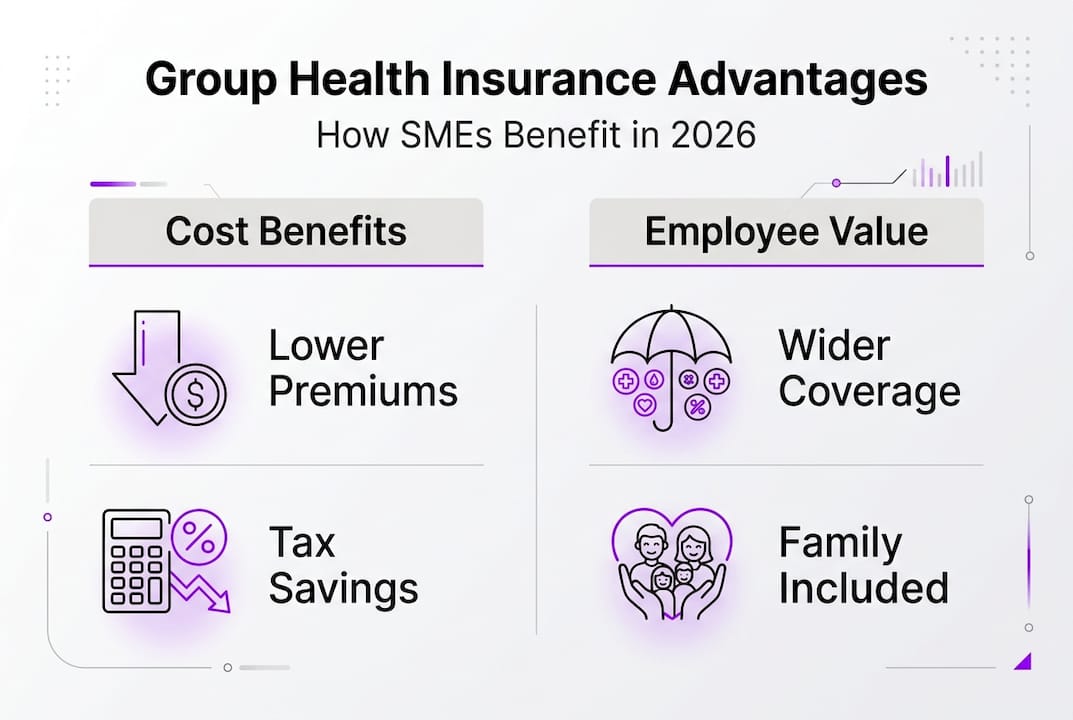
Beyond lower premiums, group health insurance delivers substantial tax advantages that further reduce your effective costs. Employers deduct premiums as business expenses, lowering taxable income dollar for dollar. If your SME pays ₱900,000 annually in group health premiums, that entire amount reduces your tax liability, translating to real savings based on your corporate tax rate.
Employee benefits under group plans are typically exempt from income tax, meaning your team receives full value without tax deductions eating into their take-home pay. This creates a win situation: you reduce business taxes while employees gain valuable coverage without tax burden. The combined effect makes group health insurance one of the most tax-efficient benefits you can provide.
The coverage itself surpasses what most individual plans offer. Group plans cover pre-existing conditions, dependents, and both inpatient and outpatient care comprehensively, eliminating the exclusions and limitations that plague individual policies. An employee with diabetes or hypertension joins your group plan with full coverage from day one, no waiting periods or condition exclusions applied.
Comprehensive coverage typically includes:
- Pre-existing conditions covered up to the Maximum Benefit Limit without exclusions
- Dependent coverage for spouses and children at reduced additional premiums
- Inpatient services including room and board, surgery, and specialist consultations
- Outpatient care covering doctor visits, diagnostic tests, and prescription medications
- Emergency services with 24/7 access to accredited facilities nationwide
- Maternity benefits providing coverage up to ₱70,000 for prenatal care and delivery
Pro Tip: Review the Maximum Benefit Limit carefully when comparing plans. A higher MBL provides better protection for serious illnesses but costs more. For most SMEs, an MBL of ₱150,000 to ₱300,000 per employee annually balances comprehensive coverage with affordable premiums. Consider your industry’s risk profile and employee demographics when selecting your MBL tier.
The inclusion of dependents represents significant value. Employees can add family members to the group plan at rates far below individual family coverage costs. This family protection reduces employee financial stress and demonstrates your commitment to their overall well-being, not just their work health. When employees know their children have quality healthcare access, they bring greater focus and engagement to their roles.
Access to group plan features like cashless transactions at accredited hospitals eliminates out-of-pocket expenses during medical emergencies. Employees simply present their HMO card, receive treatment, and the insurer handles payment directly with the facility. This convenience removes financial barriers to seeking timely care, leading to better health outcomes and reduced absenteeism.
How group health insurance supports employee retention and talent attraction
Providing group health insurance sends a clear message: you value your team’s well-being beyond their work output. This perception directly impacts your ability to attract skilled professionals in competitive labor markets. Group health insurance enhances employee retention and attracts top talent by demonstrating genuine investment in workforce health and security.
Job candidates increasingly prioritize benefits when evaluating offers. A competitive salary matters, but comprehensive health coverage often tips the decision scale. When two companies offer similar pay, the one providing robust group health insurance wins the candidate. This advantage becomes even more pronounced for mid-career professionals with families who need dependent coverage.

Insured employees demonstrate measurably better performance metrics. Access to preventive care and early treatment keeps minor health issues from becoming major problems that require extended absences. Regular checkups catch conditions early when they’re easier and cheaper to manage. The result: lower absenteeism, higher productivity, and reduced disruption to team workflows.
Retention and attraction benefits include:
- Reduced turnover as employees value comprehensive benefits and hesitate to leave
- Stronger employer brand positioning you as a caring, employee-focused organization
- Improved morale knowing the company provides financial protection against medical expenses
- Enhanced recruitment outcomes with faster acceptance rates on job offers
- Competitive differentiation in industries where health benefits aren’t standard
Employee loyalty grows when people feel genuinely cared for. Health insurance represents tangible proof that you’re invested in their long-term well-being, not just extracting maximum work output. This psychological contract strengthens commitment and reduces the likelihood employees will jump ship for marginally higher pay elsewhere.
“Offering group health insurance transformed our hiring process. We went from struggling to fill technical positions to having multiple qualified candidates for each role. The investment pays for itself through reduced recruitment costs and lower turnover.” — Operations Manager, Manila-based tech SME
The retention impact compounds over time. Experienced employees who stay longer develop deeper institutional knowledge, mentor newer team members more effectively, and require less management oversight. The cost of replacing an employee typically ranges from 50% to 200% of their annual salary when you factor in recruitment, training, and lost productivity. Group health insurance that prevents even one or two departures annually delivers measurable ROI.
Consider implementing group health insurance as part of your employee onboarding with health benefits strategy. New hires who receive immediate health coverage feel welcomed and valued from day one. This positive first impression sets the tone for their entire employment relationship and increases the likelihood they’ll become long-term contributors to your organization.
Practical mechanics and considerations for implementing group health insurance
Implementing group health insurance requires understanding several operational factors that affect plan selection and administration. The process begins with employers negotiating plan details and determining premium payment structures, whether you’ll cover the full cost or split it with employees through salary deductions.
Minimum employee requirements vary significantly by provider. Traditional HMOs often require 20 to 50 enrolled employees to qualify for group rates. However, newer providers like Howden Prime have lowered barriers, accepting groups as small as one employee. This flexibility opens group insurance to micro-enterprises and startups that previously couldn’t access these benefits.
Implementation steps:
- Assess your workforce size and determine which providers accept your employee count
- Define your budget and decide on employer versus employee premium contribution split
- Evaluate plan options comparing Maximum Benefit Limits, hospital networks, and coverage scope
- Review add-on options like dental coverage, annual physical exams, and life insurance riders
- Communicate plan details clearly to employees and complete enrollment paperwork
- Establish administrative processes for adding new hires and managing claims
Group health insurance complements rather than replaces mandatory PhilHealth contributions. PhilHealth requires 5% salary contribution but provides only basic coverage with significant limitations. PhilHealth covers primarily inpatient care at government facilities, offers limited outpatient benefits, and excludes pre-existing conditions entirely. Group HMO plans fill these gaps, providing comprehensive outpatient care, access to private hospitals, and crucially, coverage for pre-existing conditions.
The relationship between PhilHealth and group insurance works synergistically. PhilHealth provides baseline protection mandated by law, while your group HMO plan delivers the comprehensive coverage employees actually need for quality healthcare. Some group plans offer PhilHealth independence options, allowing employees to maximize their HMO benefits without coordinating claims through the government system first.
| Feature | PhilHealth | Group HMO |
|---|---|---|
| Pre-existing conditions | Excluded | Covered up to MBL |
| Outpatient care | Limited | Comprehensive |
| Hospital choice | Primarily government | Private and public networks |
| Dependent coverage | Separate enrollment | Included in plan |
| Annual physical exam | Not covered | Often included |
| Cashless transactions | Limited | Standard at accredited facilities |
Pro Tip: When comparing providers, examine their hospital networks carefully. Access to premier facilities like the Big 9 Hospitals significantly enhances plan value. Also verify the claims process: providers offering digital platforms and mobile apps simplify administration and improve employee satisfaction with faster claim approvals and reimbursements.
Before finalizing your choice, assess your team’s specific needs. A younger workforce might prioritize outpatient and preventive care, while teams with families need strong dependent coverage and maternity benefits. Industry matters too: construction or manufacturing SMEs should emphasize accident coverage and emergency services, while office-based businesses might focus on chronic disease management and wellness programs.
Explore detailed information about HMO health insurance for SMEs and review plan options and requirements to understand how different configurations serve various business models. The right plan balances comprehensive coverage with sustainable costs, creating long-term value for both your business and your employees.
Explore better group health insurance plans for your SME
Now that you understand the compelling advantages of group health insurance, it’s time to find the right plan for your business. Our carefully designed group health plans provide flexible, affordable options for SMEs of varied sizes, from small teams just starting their benefits journey to established companies seeking to upgrade their coverage.
We partner with Purple Cow and Etiqa to deliver comprehensive coverage that eliminates complicated terms while providing exceptional value. Our 100% coverage commitment for pre-existing conditions, congenital conditions, and special procedures up to your Maximum Benefit Limit sets us apart from traditional providers. Take advantage of expert support and member services to simplify plan administration, from enrollment through claims processing. Visit our group health plan features page to compare options and discover how HMO plans for SMEs can protect your team while strengthening your business. Our member services and support team stands ready to answer questions and guide you toward the best fit for your employees and budget.
Frequently asked questions about group health insurance for SMEs
What is the minimum number of employees to qualify for group health insurance?
Minimum requirements vary by provider, with traditional HMOs typically requiring 20 to 50 employees. However, newer providers have lowered barriers significantly, with some accepting groups as small as one employee, making group insurance accessible even to micro-enterprises and startups.
How does group health insurance work with PhilHealth contributions?
Group health insurance complements mandatory PhilHealth rather than replacing it. PhilHealth provides basic coverage primarily for inpatient care, while group HMO plans deliver comprehensive outpatient services, private hospital access, and coverage for pre-existing conditions that PhilHealth excludes. Both systems work together to provide complete protection.
Can pre-existing conditions be covered under group plans?
Yes, group health insurance plans typically cover pre-existing conditions up to the Maximum Benefit Limit without exclusions or waiting periods. This represents a major advantage over individual plans, which often exclude pre-existing conditions entirely or impose lengthy waiting periods before coverage begins.
Are there tax advantages for my business if I provide group health insurance?
Employers can deduct group health insurance premiums as legitimate business expenses, reducing taxable income. Additionally, employee benefits received through group plans are typically exempt from income tax, creating a tax-efficient benefit that delivers full value to your team without increasing their tax burden.
How do I select the best plan for my SME’s size and industry?
Start by assessing your workforce demographics, budget constraints, and industry-specific health risks. Compare Maximum Benefit Limits, hospital networks, and coverage scope across providers. Consider your team’s needs: younger employees may prioritize outpatient care, while those with families need strong dependent and maternity coverage. Review our group health insurance blog for detailed guidance on selecting plans that match your specific business context and employee needs.
Recommended
- The Better HMO Plans for SMEs | Purple Cow | Blog | Rai dela Cruz | Best HMO Plans Philippines - Purple Cow
- Eumir
- The Better HMO Plans for SMEs | Purple Cow | Home | Rai dela Cruz | Best HMO Plans Philippines - Purple Cow
- SME Year-End Health Benefits Check-Up: Ensuring Coverage & Readiness for 2025
- Maîtriser la santé au travail en PME : guide 2026
- Choosing the Right Health Insurance: What is Large Group Insurance?
