

Why Choose HMO for Hospitality Businesses
Controlling healthcare costs while keeping hospitality staff healthy can feel like a constant balancing act for small and medium business owners in the Philippines. With unpredictable schedules, high turnover, and the pressure to attract top talent, HR managers need solutions that offer real value without draining budgets. An HMO (Health Maintenance Organization) lets you provide affordable coverage, simple administration, and reliable care so your team can focus on delivering excellent service where it matters most.
Table of Contents
- What Is HMO for Hospitality Businesses
- Types of HMO Plans for Hospitality Needs
- Key Features of HMO Coverage
- Why HMOs Fit Hospitality Businesses Differently
- Core Benefits and Unique Features for SMEs
- Legal Obligations and PhilHealth Integration
- Financial Impact and Choosing the Best Fit
Key Takeaways
| Point | Details |
|---|---|
| Cost Predictability | HMOs provide fixed monthly premiums, allowing hospitality businesses to manage healthcare costs effectively. |
| Comprehensive Coverage | Employees gain access to a wide range of healthcare services, including preventive care, which supports overall staff health and reduces absenteeism. |
| Simplified Administration | HMO plans simplify HR management with straightforward enrollment and claims processing, saving time for busy hospitality managers. |
| Legal Compliance | Utilizing HMO plans alongside PhilHealth meets legal requirements while delivering enhanced protection for employees. |
What Is HMO for Hospitality Businesses
An HMO (Health Maintenance Organization) is a health insurance plan specifically structured to provide comprehensive medical coverage while keeping costs controlled. For hospitality businesses, this means predictable healthcare expenses and straightforward coverage for your team members.
Unlike traditional insurance plans, HMOs operate through networks of healthcare providers offering services at negotiated rates. Your employees access these providers at significantly lower costs than going outside the network, making it budget-friendly for both your business and your staff.
How HMOs Work for Your Hospitality Team
HMO coverage functions on a prepaid basis rather than a fee-for-service model. This means you pay a fixed monthly premium regardless of how many times your employees visit the doctor or use healthcare services.
Your team members choose a primary care physician (PCP) who coordinates all their medical care. This doctor handles routine visits, preventive care, and refers them to specialists when needed. The system keeps costs down by emphasizing prevention rather than treating problems after they develop.
Here’s what makes HMOs practical for hospitality operations:
- Low out-of-pocket costs for employees with minimal copays or zero deductibles
- Nationwide coverage so staff members get care wherever they work, even across multiple locations
- Cashless access at accredited hospitals and clinics within the network
- 24/7 emergency services available when your team needs urgent care
- Coordinated preventive care that catches health issues early
Why HMOs Fit Hospitality Businesses Differently
Hospitality presents unique staffing challenges: shift work, varying schedules, and employees who need flexibility. HMOs accommodate this reality by offering extensive provider networks and straightforward coverage without complex referral requirements for emergencies.
Your restaurant, hotel, or catering business likely has turnover challenges too. HMOs simplify onboarding—new hires understand their coverage quickly since HMO plans are straightforward compared to other insurance options. No confusing deductible structures or out-of-network penalties that discourage employees from seeking care.
Mandatory coverage includes preventive care, emergency services, maternity benefits, mental health support, and prescription drugs. Your team stays healthy, which directly reduces absenteeism and keeps operations running smoothly.
HMOs emphasize prevention over treatment, reducing long-term healthcare costs for both your business and your employees.
Key Features of HMO Coverage
When you choose an HMO for your hospitality business, your employees gain:
- Access to a wide network of accredited hospitals and clinics
- Comprehensive inpatient and outpatient services covered with minimal waiting periods
- Room and board accommodation covered during hospital stays
- Out-of-network reimbursement options for specialist care when network providers aren’t available
- Supplemental coverage that extends beyond government healthcare (PhilHealth)
- 100% coverage for pre-existing conditions up to the maximum benefit limit
The maximum benefit limit (MBL) defines the ceiling for annual or lifetime coverage. Understanding your MBL helps you communicate clearly with your team about what’s covered.
Pro tip: When enrolling staff in an HMO plan, explain how the primary care physician system works—many hospitality employees will appreciate having one trusted doctor coordinating all their care, especially with irregular work schedules.
Types of HMO Plans for Hospitality Needs
Not all HMO plans are created equal. Different hospitality businesses have different staffing structures, budgets, and employee needs. Understanding your options helps you select the right coverage for your team.
HMO plans vary based on coverage levels, network size, and additional benefits. Some plans focus on basic essential coverage, while others include premium add-ons like dental, vision, and wellness programs. Your choice depends on your business size and employee expectations.
Standard vs. Premium HMO Plans
A standard HMO plan provides core medical coverage with basic preventive care, emergency services, and specialist referrals. This option works well for hospitality businesses watching their budget while still offering solid employee protection.
Premium HMO plans include enhanced benefits beyond the standard package. These might feature lower copays, broader provider networks, or included services like annual physical exams and health screening programs.
The key difference comes down to cost versus coverage scope. Standard plans have lower premiums but potentially higher out-of-pocket costs for employees. Premium plans cost more upfront but reduce what your team pays when accessing care.
Here’s a comparison of Standard and Premium HMO plans to help you choose what fits your business:
| Criteria | Standard HMO Plan | Premium HMO Plan |
|---|---|---|
| Monthly Premium | Lower cost | Higher cost |
| Provider Network | Basic selection, limited locations | Extensive, nationwide access |
| Out-of-Pocket Costs | Higher for some services | Lower for most services |
| Included Services | Basic medical, emergency, referrals | Enhanced preventive, wellness, additional screenings |
| Employee Appeal | Budget-focused teams | Attracts and retains top talent |
Which fits your hospitality business better?
- Standard plans suit restaurants, cafes, and smaller hotels with budget constraints
- Premium plans work for larger establishments wanting to attract and retain quality staff
- Hybrid approaches blend basic coverage with selective add-ons matching your priorities
Network-Based Plan Variations
Some HMO plans emphasize primary care physician coordination and referral management, making them ideal for employees wanting a single trusted doctor managing their care. Others offer more flexibility in specialist access.
Exclusive provider networks limit where employees can receive care but offer the lowest premiums. Your team uses designated hospitals and clinics, ensuring cost predictability.
Broader networks include more hospitals, clinics, and specialists across wider geographic areas. Perfect for hospitality chains with multiple locations or staff spread across regions.
Consider your employee distribution. If your team works across different cities, you need a plan with nationwide provider access.
Optional Add-Ons for Hospitality Teams
Many hospitality workers face specific health concerns from their work environment. Smart HMO plans offer optional extras addressing these needs:
- Dental HMO services covering routine cleanings, fillings, and extractions
- Vision coverage for eye exams and eyeglasses or contact lenses
- Life and accident insurance providing financial protection for your employees’ families
- Annual physical exams with comprehensive health screening
- Wellness programs promoting preventive care and healthy lifestyle choices
- Mental health and counseling services for staff managing work stress
Adding these options increases premiums but dramatically improves employee satisfaction. Staff working long shifts in hospitality appreciate comprehensive coverage addressing their real health concerns.
The right HMO plan matches your business size, employee location, and budget while addressing specific hospitality industry health risks.
Customization for Your Business Model
Your hospitality business structure matters. A hotel with permanent management staff needs different coverage than a catering company with seasonal workers. Some plans offer flexible enrollment periods and customizable coverage thresholds.
Look for plans allowing you to adjust maximum benefit limits, add supplemental coverage for specific conditions, and exclude services your team doesn’t need. This flexibility lets you optimize costs while maintaining employee satisfaction.
Pro tip: When comparing HMO plans, ask vendors about their experience with hospitality businesses specifically—they understand shift work, seasonal staffing, and the unique health challenges your team faces daily.
Core Benefits and Unique Features for SMEs
Small and medium hospitality businesses face unique financial pressures. Unlike large corporations with massive HR departments, you need health insurance that actually works for your operation. HMO plans address these specific SME challenges directly.
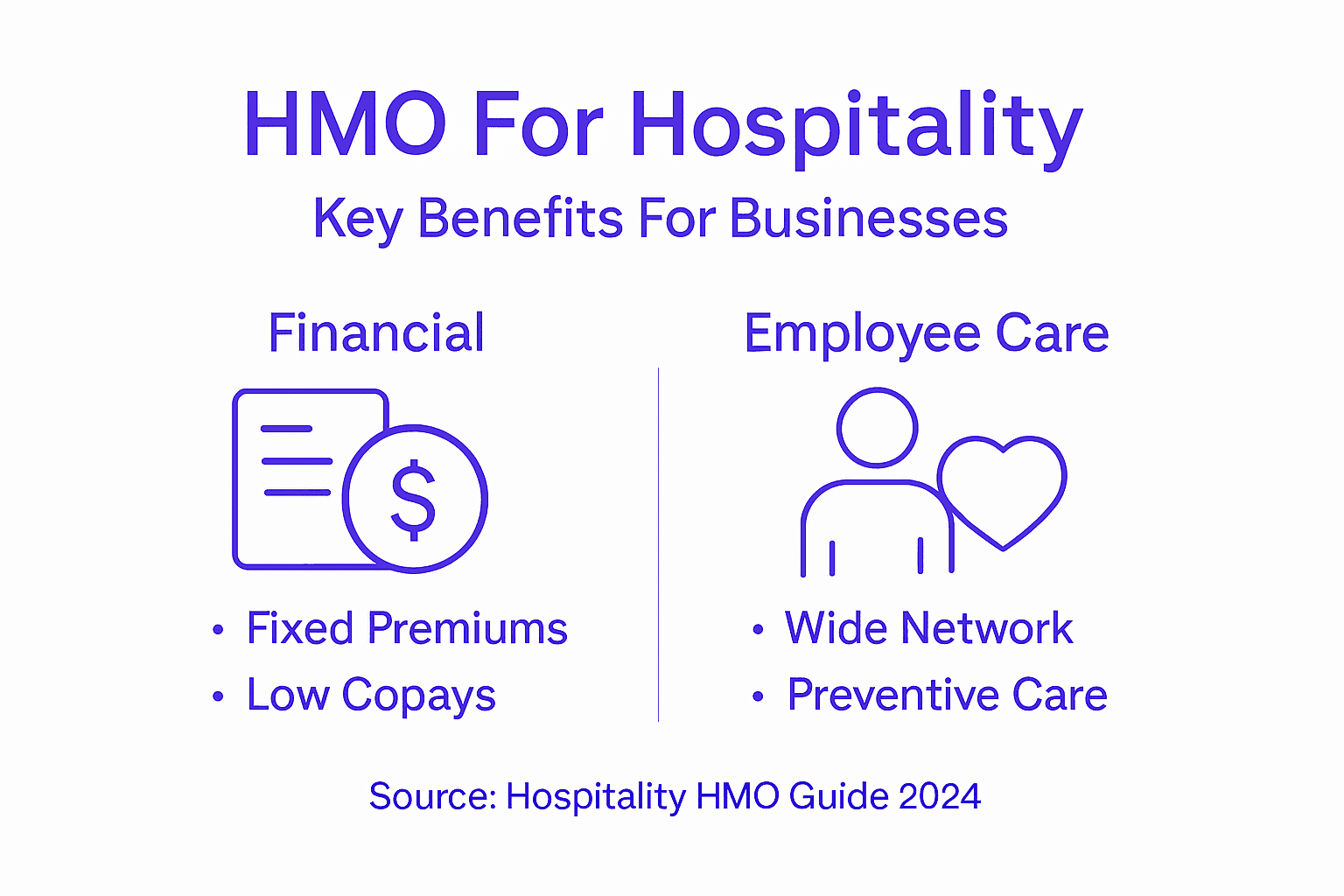
The primary advantage is predictable, manageable costs. With HMO coverage, you pay fixed monthly premiums regardless of how often employees use healthcare services. No surprise bills. No unexpected spikes that blow your budget midyear.
Cost Control That Makes Sense for Hospitality
HMOs lower premiums and reduce deductibles through negotiated provider rates and primary care physician coordination. This means your employees access care affordably while your business avoids catastrophic healthcare expenses.
Your restaurant, hotel, or catering operation runs on tight margins. HMO plans eliminate the financial uncertainty that comes with traditional insurance. You budget for health benefits with confidence, not anxiety.

Employee out-of-pocket costs stay minimal too. Low copays and zero deductibles mean your team can afford to visit doctors for preventive care rather than waiting for emergencies. Healthier employees mean fewer sick days and better service quality.
Preventive Care That Reduces Absenteeism
HMOs emphasize prevention over treating problems after they develop. This focus directly benefits hospitality businesses struggling with staff reliability.
When employees can access preventive care easily, they catch health issues early. Regular checkups prevent serious conditions from developing. Dental cleanings prevent tooth problems. Mental health counseling reduces stress-related absences.
The result? Your kitchen staff, front desk, and housekeeping teams stay healthier and more present.
Key preventive benefits include:
- Annual physical exams with comprehensive health screening
- Preventive dental care through optional HMO dental services
- Mental health support addressing work stress and burnout
- Wellness programs encouraging healthy lifestyle choices
- Early detection of chronic conditions like diabetes and hypertension
Simplified Administration for Busy HR Managers
You probably handle HR alongside dozens of other responsibilities. HMO plans simplify administration significantly compared to traditional insurance models.
Enrollment is straightforward. Claims processing is managed through the HMO network. There’s no complex paperwork or confusing deductible structures for your team to navigate.
Plus, coordinated primary care physician management improves care quality and reduces costs, which means fewer employee complaints about coverage denials or billing issues.
Network Access Across Your Business Locations
If you operate multiple hospitality locations across different cities, nationwide HMO networks solve a real problem. Your staff gets consistent coverage wherever they work or travel.
Employees can visit accredited hospitals and clinics without worrying whether a facility is “in-network.” This peace of mind matters for hospitality teams working irregular schedules across multiple sites.
HMO plans give SME owners cost certainty, happier employees, and time back from administrative headaches.
Regulatory Protections Built In
HMOs operate under strict regulatory oversight ensuring consumer protections and financial stability. Your business and employees benefit from standardized, regulated coverage—not fly-by-night insurance schemes.
This regulatory framework means mandated coverage for essential services: emergency care, preventive screenings, mental health support, and prescription drugs. You’re protected. Your team is protected.
Pro tip: When evaluating HMO plans for your hospitality business, prioritize providers offering 100% coverage for pre-existing conditions and congenital conditions—this protects vulnerable team members and shows you value inclusive benefits.
Legal Obligations and PhilHealth Integration
As a hospitality business owner in the Philippines, you have legal obligations around employee health coverage. Understanding these requirements protects your business and ensures your team gets proper protection.
The Philippine government mandates health insurance through PhilHealth, the state health insurance program. However, PhilHealth alone provides basic coverage with significant gaps. This is where HMO plans fill the void, creating comprehensive employee protection.
Understanding Your Legal Requirements
Employers in the Philippines must provide health insurance coverage as part of employee benefits. HMO contracts and services are governed by regulatory standards ensuring service quality and accessibility, protecting both employers and employees.
Your hospitality business must ensure all employees have coverage. PhilHealth is the baseline, but most hospitality businesses choose to supplement it with HMO plans. This combination meets legal requirements while providing actual usable coverage.
Key compliance areas include:
- Mandatory PhilHealth enrollment for all employees
- Health insurance coordination between PhilHealth and supplemental HMO coverage
- Proper documentation of coverage details for regulatory compliance
- Regular updates as government healthcare policies change
- Clear communication of coverage benefits to your team
How PhilHealth and HMO Work Together
PhilHealth operates as primary coverage, handling major hospital expenses and emergency care. However, it covers only a portion of actual costs—often 50-60% of hospital bills depending on the facility and service type.
HMOs complement PhilHealth by reimbursing expenses not covered by the government program, providing comprehensive healthcare coverage. When your employee uses a hospital, PhilHealth pays its portion, and the HMO covers what PhilHealth doesn’t.
This layered approach ensures your team receives complete coverage without facing significant out-of-pocket expenses. Your kitchen staff, housekeeping, and front desk teams access quality healthcare without financial hardship.
Below is a summary of how PhilHealth and HMO work together for employee healthcare coverage:
| Aspect | PhilHealth | HMO (Supplemental) |
|---|---|---|
| Role in Coverage | Primary, public insurance | Secondary, fills coverage gaps |
| Payment Method | Reimbursement, partial coverage | Cashless, covers shortfalls |
| Benefits Provided | Basic hospital and emergency care | Broader coverage, preventive and outpatient services |
| Impact on Employees | Partial bills, possible delays | Complete care, minimal out-of-pocket expenses |
The combination works like this:
- Employee visits accredited hospital or clinic
- PhilHealth processes its benefit payment
- HMO processes secondary coverage for remaining balance
- Employee pays minimal or zero copay
Why Separate HMO Coverage Matters
PhilHealth has limitations that directly impact hospitality workers. Room charges, professional fees, and specialized treatments often exceed PhilHealth’s covered amounts. PhilHealth reimbursement typically occurs weeks after treatment, creating cash flow problems for your business.
HMO coverage addresses these gaps. Accredited hospitals in the HMO network provide cashless billing, meaning employees don’t pay upfront and wait for reimbursement. Treatment happens immediately without financial barriers.
For hospitality businesses, this matters tremendously. Your staff can access preventive care, mental health services, and specialist consultations without worrying about costs. Healthier, less stressed employees deliver better customer service.
PhilHealth + HMO creates a safety net that actually protects your employees when they need medical care most.
Regulatory Compliance and Your Business
HMO providers operating in the Philippines must comply with government regulations ensuring consumer protections. When you choose an HMO partner, they handle compliance details—you simply ensure all employees are enrolled.
Your responsibilities include maintaining enrollment records, communicating coverage details to staff, and updating coverage when employees change. The HMO handles regulatory compliance with the Philippine government.
Staying current with PhilHealth updates and compliance requirements in 2025 keeps your business protected against policy changes affecting your team’s coverage.
Pro tip: Review your HMO and PhilHealth coordination annually—government policies change, and ensuring your coverage layers properly prevents gaps that leave employees vulnerable.
Financial Impact and Choosing the Best Fit
Choosing an HMO plan for your hospitality business is fundamentally a financial decision. The right choice reduces unexpected costs, improves employee retention, and strengthens your bottom line. The wrong choice drains resources without delivering real value.
Understanding the financial impact helps you evaluate options clearly. You need to see beyond the monthly premium to understand total cost of ownership, employee satisfaction, and long-term business sustainability.
The Real Cost Calculation
Strategic healthcare benefits selection impacts overall business performance by controlling health-related expenses. Most hospitality owners focus only on monthly premiums, missing the bigger financial picture.
Total cost includes the premium, but also employee turnover, productivity losses from illness, and administrative overhead. When your housekeeping staff stays healthy and present, operations run smoothly. When key team members leave because benefits are inadequate, recruitment and training costs explode.
Calculate your actual cost this way:
- Monthly HMO premium per employee
- Employee turnover costs from inadequate benefits
- Productivity losses from unmanaged health conditions
- Administrative time managing claims and enrollment
- Lost revenue from service disruption due to staff absences
Comparing Premium Levels
HMO plans typically fall into three price ranges: budget, mid-tier, and premium. Budget plans offer basic coverage with higher employee out-of-pocket costs. Premium plans include comprehensive benefits reducing what employees pay.
Here’s the financial reality: budget plans cost less monthly but often result in employees avoiding healthcare due to copays. Your team delays doctor visits, minor problems become major health crises, and suddenly you’re dealing with emergency hospitalizations and extended absences.
Mid-tier plans balance cost control with practical coverage. Employees actually use preventive services because costs stay reasonable. Your staff catches health issues early, stays healthier, and maintains better attendance.
Which fits your business better?
- Budget plans save money short-term but create hidden costs through employee turnover
- Mid-tier plans provide strong value with manageable premiums
- Premium plans attract quality talent and reduce absenteeism dramatically
Return on Investment From Better Health
Healthier employees deliver measurable business benefits. Better customer service from well-rested, healthy staff. Fewer sick days disrupting kitchen operations. Lower turnover reducing constant recruitment expenses.
Hospitality margins are tight. A 2-3% improvement in employee retention directly impacts profitability. Comprehensive HMO coverage drives that improvement by showing your team you value their wellbeing.
Consider these metrics:
- Measure current employee turnover rate
- Calculate average cost per hire (recruitment, training, lost productivity)
- Estimate turnover reduction from better benefits (typically 10-20%)
- Calculate savings from reduced turnover
- Compare savings against additional HMO cost
The cheapest HMO plan often costs more than premium plans when you factor in employee turnover and lost productivity.
Questions to Ask When Evaluating Options
Don’t just compare price. Ask the right questions about what’s actually included and how the plan serves your specific operation.
Investigate coverage depth for conditions common in hospitality: mental health services for stress management, occupational health coverage, dental care for front-facing staff, and preventive wellness programs.
Ask vendors about their experience with hospitality businesses. Do they understand your staffing challenges? Can they handle seasonal workers or multiple locations? What’s their claims processing speed?
Verify network coverage in areas where your team works. Nationwide coverage matters if you have multiple locations. Check whether the plan includes major hospitals and clinics your team actually uses.
Understand the maximum benefit limits. Some plans cap annual or lifetime benefits—critical if you have employees with chronic conditions needing ongoing care.
Pro tip: Request detailed cost comparisons showing premium, copays, out-of-pocket maximums, and covered services—then calculate total employee out-of-pocket costs for common scenarios like hospitalization, mental health counseling, and preventive care.
Discover the Right HMO Plan Tailored for Your Hospitality Business
Hospitality businesses face unique challenges such as unpredictable staffing, shift work, and the constant need to keep employees healthy and present. The article highlights how HMO plans can help you manage these issues by offering low out-of-pocket costs, nationwide coverage, and cashless access to accredited facilities through a coordinated primary care physician system. If you want to reduce healthcare surprises and support your team’s wellbeing with comprehensive coverage that complements PhilHealth benefits consider HMO Plans specifically designed for SMEs in the Philippines.
Take advantage of HMO Plans partnered with Purple Cow and Etiqa to access 24/7 emergency services, specialty care, and full coverage for pre-existing conditions up to your maximum benefit limit. With flexible add-ons like dental care and life insurance plus seamless nationwide access including premier hospitals and clinics, this solution combines simplicity with strength. Visit HMO Plans’ landing page now and secure peace of mind for your hospitality team while maintaining clear cost control. Your employees deserve a health plan that understands their needs and your business demands.
Frequently Asked Questions
What are the main benefits of choosing an HMO for a hospitality business?
HMOs provide predictable healthcare costs, low out-of-pocket expenses for employees, nationwide coverage, cashless services, and a focus on preventive care, making them ideal for the unique staffing needs of hospitality businesses.
How does HMO coverage work for employees in the hospitality sector?
Employees select a primary care physician (PCP) who manages their healthcare. This doctor coordinates routine visits, preventive services, and referrals to specialists, emphasizing an organized approach to health management.
Are there different types of HMO plans suitable for hospitality businesses?
Yes, HMO plans vary in coverage levels, network size, and additional benefits. Businesses can choose between standard plans for basic coverage and premium plans that offer more extensive services and lower out-of-pocket costs.
How do HMOs help reduce absenteeism among hospitality staff?
HMOs emphasize preventive care and provide easy access to healthcare services. This approach allows employees to catch health issues early, leading to fewer sick days and a healthier workforce.
