

Why Offer Wellness Coverage for Your Philippine SME
TL;DR:
- Offering wellness coverage reduces medical costs, absenteeism, and turnover while boosting employee productivity. Implementing structured, well-communicated programs that address physical, mental, and financial health areas results in measurable financial returns and stronger employee loyalty. Active outreach, leadership support, and ongoing tracking are essential to ensure wellness programs deliver lasting business benefits.
Wellness coverage is a direct investment in workforce productivity, cost control, and employee retention. For business owners and HR managers in the Philippines, the question of why offer wellness coverage has a clear, data-backed answer: companies that provide structured health and wellness benefits spend less on medical claims, lose fewer employees to turnover, and build teams that actually show up and perform. 89% of organizational leaders identify employee wellbeing as critical to financial success. That number alone should reframe how you think about wellness programs, not as a perk, but as a business decision.
Why offer wellness coverage: the financial case for employers

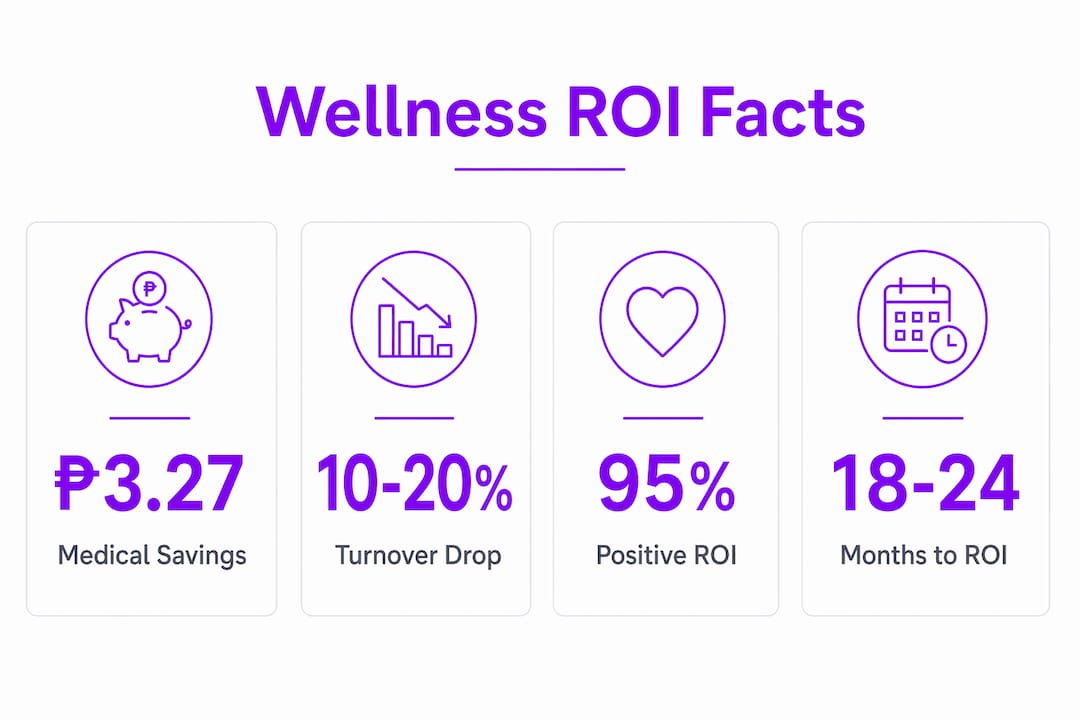
The strongest argument for wellness coverage is the return on investment. Corporate wellness programs generate approximately $6 for every $1 invested, split between $3.27 in medical cost savings and $2.73 in reduced absenteeism. That ratio means a company spending ₱500,000 annually on wellness benefits can expect to recover roughly ₱3,000,000 in avoided costs over time.
Preventive care is the engine behind those numbers. When employees have access to regular screenings, mental health counseling, and telehealth services, they catch health problems early. Preventive care benefits, including screenings and mental health support, are vital to reducing absences and health costs. Fewer emergency hospitalizations mean fewer large claims hitting your group health plan.
The absenteeism piece is equally significant. A team member out sick for three days costs you in lost output, overtime for colleagues, and disrupted project timelines. Multiply that across a 50-person company and the numbers add up fast. Wellness programs that address chronic conditions, stress, and mental health directly cut the frequency of those absences.
| ROI Component | Estimated Return per ₱1 Spent |
|---|---|
| Medical cost savings | ₱3.27 |
| Reduced absenteeism | ₱2.73 |
| Total ROI | ₱6.00 |
| Timeframe to measurable ROI | 18–24 months |
| Organizations reporting positive ROI | 95% |
Pro Tip: Track baseline absenteeism rates and average claim costs before launching any wellness program. Without a baseline, you cannot demonstrate ROI to your finance team or board after 18 months.
95% of organizations that measure ROI from wellness programs report positive returns. The ones that do not measure are simply leaving proof on the table.
How wellness benefits reduce voluntary turnover
Retention is where wellness coverage pays off in ways that do not always show up on a balance sheet. Wellness initiatives reduce voluntary turnover by 10–20% annually. Satisfied employees are 5 times more likely to stay with their employer. For a Philippine SME where replacing one mid-level employee can cost six to nine months of that person’s salary in recruiting and onboarding, a 10% reduction in turnover is a serious financial win.
The connection between wellness and loyalty is straightforward. When a company invests in an employee’s health, that employee notices. It signals that leadership sees them as a person, not just a headcount. That perception builds trust, and trust builds tenure.
Younger workers feel this most acutely. 91% of workers in 2026 choose employers based on health and wellness benefits, and 91% of Gen Z regard these programs as non-negotiable. The Philippine workforce is skewing younger every year. If your benefits package does not include meaningful wellness coverage, you are already at a disadvantage when competing for talent against larger corporations or multinationals.
Here is what wellness coverage directly delivers on the retention front:
- Lower voluntary turnover because employees feel valued and supported
- Higher morale across teams when people see their colleagues using wellness benefits without stigma
- Stronger job satisfaction tied to reduced financial stress from out-of-pocket medical expenses
- Greater loyalty from employees who have used the coverage during a health crisis and experienced real support
- Better employer brand that attracts quality candidates through referrals and reputation
For Philippine SMEs competing against BPOs and large corporations for the same talent pool, these advantages are not minor. They are the difference between a stable team and a revolving door.
What does quality wellness coverage actually include?
Quality wellness coverage addresses three dimensions of health: physical, mental, and financial. Programs that focus only on physical health, such as gym subsidies or step challenges, consistently underperform. Holistic wellness programs that support physical, mental, and financial health increase employee trust by 3.5 times compared to limited programs. That trust gap is the difference between a program employees use and one they ignore.
Physical health components
Annual physical exams, preventive screenings, and cashless access to hospitals form the foundation. For Philippine SMEs, this means partnering with an HMO provider that covers both inpatient and outpatient care, with access to accredited clinics employees can actually reach from their workplaces.
Mental health components
Mental health support is no longer optional. Counseling services, employee assistance programs, and telehealth access for psychological consultations address the stress, burnout, and anxiety that drive absenteeism and disengagement. Philippine workers face significant commute stress, family pressure, and financial anxiety. A wellness program that ignores mental health misses the largest driver of lost productivity.
Financial wellness components
Financial stress is a direct productivity killer. Benefits like life and accident insurance, PhilHealth supplementation, and clear coverage for dependents reduce the financial anxiety that pulls employee focus away from work. When a team member knows their family is covered, they work with fewer distractions.
| Program Type | Best For | Key Features |
|---|---|---|
| Basic HMO coverage | All SMEs | Inpatient, outpatient, emergency care |
| Mental health add-on | High-stress industries | Counseling, telehealth, EAP access |
| Dental HMO | Customer-facing teams | Preventive dental, extractions, fillings |
| Annual physical exam | All employees | Bloodwork, ECG, chest X-ray |
| Life and accident insurance | Operations, field staff | Death benefit, disability coverage |
Pro Tip: Survey your employees before selecting add-ons. A tech team in Makati may prioritize mental health telehealth access, while a hospitality team in Cebu may value dental coverage more. Matching add-ons to actual workforce needs drives participation.
Embedding wellness into daily work rhythms and aligning it with business culture is critical to sustained impact. A one-time health fair does not qualify as a wellness program. Structural integration does.
How Philippine SMEs can implement wellness coverage successfully
Implementation is where most wellness programs fail. Programs mainly attract already healthy employees unless there is active outreach targeting high-risk individuals with reduced participation barriers. If your wellness program only reaches the employees who were already going to the gym, it is not moving the needle on your health claims or absenteeism data.
Here is a practical implementation sequence for Philippine SMEs:
-
Audit your current health spend. Pull data on your top five claim categories and your average sick days per employee. This is your baseline. Without it, you cannot measure progress or justify budget increases.
-
Choose coverage that matches your workforce profile. A 30-person logistics company has different health risks than a 30-person software firm. Work with an HMO provider that lets you customize coverage rather than forcing you into a one-size package. You can find healthcare best practices for Philippine SMEs that align coverage to workforce realities.
-
Communicate the benefits clearly and repeatedly. Employees do not use benefits they do not understand. HR teams should schedule onboarding sessions, send regular reminders, and create simple guides explaining how to access each benefit. Health benefits communication tips for HR can significantly increase utilization rates.
-
Target high-risk employees directly. Work with your HMO provider to identify employees who have not completed their annual physical exam or who have chronic conditions flagged in claims data. Proactive outreach to these individuals delivers the highest ROI.
-
Track KPIs quarterly. Measure absenteeism rates, claim frequency, employee satisfaction scores, and voluntary turnover every quarter. Wellness program ROI typically becomes measurable after 18–24 months, but leading indicators show up much sooner.
Wellness programs often fail when they focus solely on individual participation without addressing organizational culture and structural factors. If your workplace culture punishes employees for taking sick days or discourages mental health conversations, no wellness benefit will overcome that barrier. Leadership behavior sets the tone.
Workplace environment also matters beyond the HMO plan itself. Physical factors like office air and water quality contribute to daily health outcomes and complement the coverage you provide through formal wellness programs.
Key Takeaways
Wellness coverage delivers measurable financial returns, stronger retention, and a healthier workforce when implemented with structure, leadership support, and whole-person design.
| Point | Details |
|---|---|
| ROI is real and quantifiable | Wellness programs return roughly ₱6 for every ₱1 invested across medical savings and reduced absenteeism. |
| Retention improves significantly | Wellness benefits reduce voluntary turnover by 10–20% annually and increase employee loyalty. |
| Whole-person coverage drives trust | Programs covering physical, mental, and financial health increase employee trust by 3.5 times. |
| Implementation requires active outreach | Passive sign-up programs miss high-risk employees; targeted engagement delivers the measurable results. |
| ROI takes time but shows early signals | Expect full ROI within 18–24 months; track leading indicators like absenteeism quarterly from day one. |
Wellness coverage is a business decision, not a charity expense
I have spoken with dozens of Philippine SME owners who treat wellness programs as something they will add “once the business is more stable.” That logic is backwards. The instability they are trying to fix, high turnover, frequent absences, low morale, is exactly what wellness coverage addresses.
The mistake I see most often is treating wellness as a single initiative rather than a structural commitment. A company that buys an HMO plan but never communicates the benefits, never tracks utilization, and never ties the program to business goals will see poor results. Then leadership concludes that wellness programs do not work. They do not work when they are poorly designed and ignored.
What actually works is treating wellness coverage the way you treat any other business investment. You define the goal, you allocate the budget, you measure the outcome, and you adjust. The importance of wellness plans becomes obvious the moment you run the numbers on what turnover and absenteeism are already costing you.
The Philippine workforce is also changing. Gen Z employees entering the market have grown up watching their parents burn out without support. They are not impressed by ping-pong tables. They want to know that if they get sick, their employer has their back. Wellness coverage is how you demonstrate that.
My honest recommendation: start with a solid HMO foundation, add mental health access as your first add-on, and build from there. Do not wait for the perfect program. A functional program that you actually communicate and track will outperform a comprehensive program that sits in an employee handbook nobody reads.
— Eumir
How Hmoplans supports your wellness coverage goals
Hmoplans, powered by Purple Cow and underwritten by Etiqa, gives Philippine SMEs a direct path to comprehensive wellness coverage without the complexity that usually comes with group health plans. The platform covers inpatient, outpatient, and emergency care with cashless access to the Big 9 Hospitals and Healthway Clinics nationwide. Pre-existing conditions, congenital conditions, and special procedures are covered at 100% up to the Maximum Benefit Limit, which removes the fine-print surprises that erode employee trust. Optional add-ons including dental HMO, annual physical exams, and life and accident insurance let you build a program that fits your workforce. Explore the full HMO plan features or get started at Hmoplans to see what your team qualifies for.
FAQ
Why should Philippine SMEs offer wellness coverage?
Wellness coverage reduces medical claim costs, lowers voluntary turnover by 10–20% annually, and directly improves productivity. For SMEs competing for talent, it is one of the highest-return investments in the benefits budget.
How long does it take to see ROI from a wellness program?
Wellness program ROI typically becomes measurable within 18–24 months. Leading indicators like absenteeism rates and employee satisfaction scores show improvement much sooner when the program is actively managed.
What should a basic wellness program include for SMEs?
A solid foundation includes HMO coverage for inpatient and outpatient care, preventive screenings through annual physical exams, and mental health access via telehealth or counseling. These three components address the highest-cost health drivers for most Philippine workforces.
Does wellness coverage help with employee retention?
Yes. 91% of workers choose employers based on health and wellness benefits, and satisfied employees are 5 times more likely to stay. Wellness coverage is one of the most direct tools for reducing voluntary turnover.
What is the biggest mistake companies make with wellness programs?
The most common failure is passive implementation. Programs that rely on passive sign-ups miss high-risk employees entirely. Active outreach, clear communication, and leadership participation are what separate programs that deliver results from those that do not.
