

Dental Coverage Enrollment Guide for HR and Individuals
TL;DR:
- Dental coverage enrollment involves selecting a plan through an employer, marketplace, or direct purchase, with specific timing and eligibility rules. Missing enrollment windows can lead to wait times or gaps in coverage, while simultaneous health and dental enrollment is mandatory on the marketplace, and active employer facilitation is required for PhilHealth YAKAP in the Philippines. Proper planning, proactive communication, and documenting enrollment processes are essential to ensure employees gain and utilize their dental benefits effectively.
Dental coverage enrollment is the process of selecting and signing up for a dental insurance plan through an employer benefit program, a government marketplace, or a standalone policy purchased directly from a provider. Whether you are an individual seeking personal coverage or an HR professional managing benefits for a team, knowing the exact enrollment windows, eligibility rules, and compliance requirements determines whether your employees get covered or face a gap in care. This guide covers enrollment timing, plan types, marketplace procedures, and Philippine-specific PhilHealth YAKAP facilitation so you can act with confidence.
What are the key enrollment periods and rules for dental coverage?
Dental insurance enrollment timing directly affects when coverage starts and which waiting periods apply. Missing the right window can mean waiting a full year before you can sign up again, so understanding the structure of each enrollment channel is the first step.

Employer-sponsored plans follow a defined annual open enrollment period, typically held in autumn. If you miss it, you must wait until the next cycle unless a qualifying life event applies. Most employer plans also restrict eligibility to full-time employees working 30 or more hours per week, which means HR teams need to track hours carefully before extending benefit offers to part-time staff.
Special enrollment periods (SEPs) are triggered by qualifying life events such as marriage, divorce, the birth of a child, or loss of other coverage. An SEP typically gives you 30 to 60 days to enroll outside the standard window. This is the most common exception HR professionals use to add employees mid-year without waiting for open enrollment.
Marketplace plans under the Affordable Care Act (ACA) follow the federal open enrollment calendar, generally running from November 1 through January 15. Dental coverage through the marketplace is tied to health plan selection, which means the timing rules for health plans apply equally to dental.
Direct-purchase plans from providers like Delta Dental, Cigna, and Guardian are available year-round without enrollment windows. This flexibility makes them a practical fallback for individuals who missed employer or marketplace deadlines.
One more timing factor that most people overlook: preventive services like cleanings carry no waiting period under most plans, but fillings, crowns, and root canals typically require 3 to 12 months of active coverage before the plan pays. Enrolling early in the year maximizes the time before major procedures become eligible.
Pro Tip: If you are an HR professional setting up open enrollment, send reminder communications at least 30 days before the window closes. Employees who miss the deadline and lack a qualifying life event will have no coverage option until the following year.
How to enroll in dental coverage through the Health Insurance Marketplace
The federal Health Insurance Marketplace (HealthCare.gov) and its state-based equivalents operate under one firm rule: you cannot purchase a standalone dental plan through the marketplace unless you are simultaneously enrolling in a marketplace health plan. This is the single most common source of confusion for individuals trying to add dental coverage mid-process.
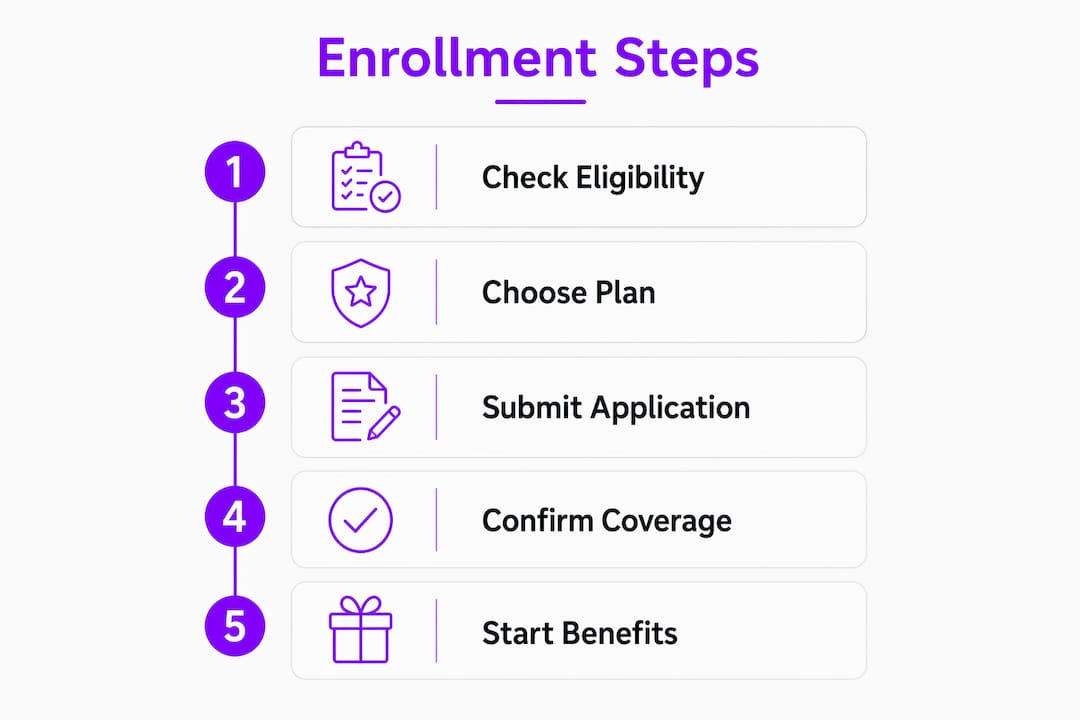
Here is the standard enrollment workflow on HealthCare.gov:
- Create or log into your account at HealthCare.gov or your state’s marketplace platform.
- Complete your household and income information to determine eligibility for premium tax credits.
- Browse and select a health plan. Dental options appear as an add-on during this step, not as a separate category.
- Review the dental plan options presented alongside your selected health plan. These are typically labeled as “pediatric dental” (included in some health plans) or “standalone adult dental.”
- Confirm your dental plan selection before finalizing your health plan enrollment. You cannot return to add dental coverage after submitting your health plan application in the same session.
- Submit your application and note your coverage effective date. Coverage typically begins on the first of the month following enrollment.
Dental coverage access through the ACA Marketplace is intricately tied to simultaneously selecting a health insurance plan. Plan your enrollment holistically: decide on both your health and dental selections before you begin the application process, not after.
Missing the open enrollment deadline on the marketplace means waiting until November 1 of the following year unless you qualify for a special enrollment period. State-based marketplaces like Covered California or NY State of Health may have slightly different deadlines, so confirm the exact dates for your state.
Pro Tip: Screenshot or download your dental plan confirmation page immediately after enrollment. Marketplace systems occasionally fail to carry dental selections through to the final confirmation email, and having a record protects you if a billing dispute arises.
Understanding PhilHealth YAKAP dental coverage enrollment for employees in the Philippines
PhilHealth’s YAKAP (Your Access to Konsultasyon at Pangangalaga) program gives active PhilHealth members access to preventive oral health benefits valued at up to ₱1,000 annually. Coverage includes oral exams, professional cleanings, fluoride varnish, sealants, and emergency tooth extraction. For HR professionals managing a Philippine workforce, facilitating YAKAP enrollment is now a compliance obligation, not just a best practice.
The enrollment process follows these steps:
| Step | Action Required | Who Is Responsible |
|---|---|---|
| Confirm PhilHealth membership | Verify active status via the PhilHealth member portal | Employee or HR team |
| Register with a YAKAP clinic | Visit or contact an accredited YAKAP clinic for registration | Employee with HR assistance |
| Request referral if needed | If the YAKAP clinic has no onsite dentist, request a referral to a partner dental provider | YAKAP clinic staff |
| Schedule appointment | Confirm appointment date and bring PhilHealth ID and member data record | Employee |
| Claim benefit | Present credentials at the dental provider and receive covered services | Employee |
The referral step catches many employees off guard. When a registered YAKAP clinic lacks onsite dental services, the member must go through the clinic’s referral system before visiting the actual dental provider. This means calling ahead to confirm whether your YAKAP clinic has a dentist on staff before scheduling anything.
DOLE’s 2026 Labor Advisory takes employer responsibility further than most HR teams expected. Private-sector employers must actively facilitate YAKAP registration by providing online or onsite assistance and granting reasonable paid time off for employees to complete registration and attend appointments. Simply emailing a memo about YAKAP does not satisfy this requirement.
HR teams that want to stay compliant should document each employee’s YAKAP registration status, track which clinic each employee is registered with, and maintain records of any excused absences granted for registration purposes. This documentation protects the company during a DOLE audit.
Pro Tip: Organize a group YAKAP registration session at your office by inviting a representative from an accredited clinic. This satisfies the DOLE facilitation requirement, reduces scheduling disruptions, and gets your entire workforce enrolled in a single afternoon.
What are the main types of dental plans and how to choose the right one?
Choosing the right dental plan structure determines your cost exposure, provider access, and enrollment method. The four primary plan types each serve different workforce profiles.
| Plan Type | How It Works | Best For |
|---|---|---|
| Dental HMO | Fixed copays, network-only providers, no deductible | Cost-conscious employers with a stable workforce |
| Dental PPO | Flexible provider choice, higher premiums, deductibles apply | Employees who want specialist access |
| Indemnity plan | Reimburses a percentage of any licensed dentist’s fee | Employees in areas with limited networks |
| Government program (PhilHealth YAKAP) | Preventive benefits up to ₱1,000 annually via accredited clinics | Philippine-based employees as a baseline benefit |
For Philippine SMEs, the most practical approach is layering. PhilHealth YAKAP covers preventive care at no additional premium cost to the employer. An HMO dental add-on from a provider like Hmoplans extends coverage to restorative and major procedures that YAKAP does not cover, giving employees a complete oral health benefit without duplicating costs.
When selecting a plan for your team, three factors matter most:
- Network adequacy: Does the plan include dentists near your employees’ homes or offices? A plan with a thin network in your city creates access problems regardless of the benefit design.
- Waiting period structure: If your workforce has employees who need immediate restorative work, a plan with long waiting periods for fillings and crowns will generate complaints within the first quarter.
- Cost-sharing ratio: Dental HMO plans keep employer costs predictable. PPO plans give employees more freedom but shift more cost to both parties. Match the structure to your budget and your employees’ demonstrated preferences.
Understanding dental coverage options before you commit to a plan type prevents mid-year surprises for both HR and employees.
Common mistakes in dental coverage enrollment and how to avoid them
Most enrollment errors are preventable. The following patterns appear repeatedly across both individual and employer-managed enrollments.
- Missing the enrollment window without a qualifying life event. Once the window closes, there is no administrative workaround. HR teams must build enrollment deadlines into their annual HR calendar with multiple reminders.
- Assuming coverage starts immediately for all procedures. Enrollment does not guarantee immediate access to major dental procedures due to waiting periods. Employees who schedule a crown the week after enrollment will face a full out-of-pocket bill.
- Treating DOLE’s YAKAP facilitation requirement as optional. The 2026 Labor Advisory is a compliance directive, not a suggestion. HR teams that only notify employees without actively assisting them risk non-compliance findings during inspections.
- Failing to verify provider network before enrollment. Selecting a dental HMO plan and then discovering your preferred dentist is out-of-network is a frustrating and avoidable outcome. Always cross-reference the plan’s provider directory before finalizing.
- Not communicating waiting periods to new hires. New employees often assume their dental coverage is fully active from day one. A one-page benefits summary that clearly states waiting periods by procedure type eliminates most of these misunderstandings.
For a broader view of how dental benefits support workplace wellness, the connection between oral health and overall employee productivity is well documented and worth communicating to your workforce during enrollment.
Key takeaways
Successful dental coverage enrollment requires knowing your enrollment window, matching your plan type to your workforce’s needs, and meeting compliance obligations before the deadline passes.
| Point | Details |
|---|---|
| Enrollment windows are fixed | Missing employer or marketplace deadlines means waiting a full year without a qualifying life event. |
| Marketplace dental requires a health plan | You cannot add standalone dental on HealthCare.gov without simultaneously enrolling in a health plan. |
| YAKAP is a compliance obligation | DOLE’s 2026 advisory requires active employer facilitation, not just employee notification. |
| Waiting periods affect major procedures | Fillings, crowns, and root canals typically require 3 to 12 months of active coverage before benefits apply. |
| Layering plans maximizes coverage | Combining PhilHealth YAKAP with an HMO dental add-on gives Philippine employees complete oral health protection. |
What I’ve learned from watching enrollment go wrong every year
I have reviewed enough enrollment cycles to say this clearly: the biggest problem is not that people don’t know dental coverage exists. The problem is that they assume the process will be simple and then do nothing until it’s too late.
HR professionals consistently underestimate how much hand-holding enrollment requires. Sending one email in October and calling it open enrollment is not a strategy. The employees who need coverage most, those with existing dental issues or young families, are often the least likely to act without a direct prompt. The ones who do act quickly are usually the ones who already have a dentist and know exactly what they need.
The PhilHealth YAKAP situation in the Philippines is a perfect example of good policy meeting poor execution. The benefit is real and valuable. But the referral workflow, the clinic registration step, and the need to confirm onsite dentist availability before scheduling create enough friction that many employees simply give up. HR teams that treat YAKAP as a checkbox item will have low utilization and a compliance gap. The ones who run a group registration session and follow up individually see dramatically better outcomes.
My honest recommendation: treat dental enrollment like a project, not an announcement. Assign an owner, set milestones, and track completion by employee. For Philippine SMEs specifically, enrolling your team in health insurance should include a dedicated YAKAP facilitation step with a documented completion rate. That is the standard DOLE expects, and it is also the standard your employees deserve.
— Eumir
How Hmoplans makes dental enrollment simpler for Philippine SMEs
Hmoplans, powered by Purple Cow and underwritten by Etiqa, gives Philippine SMEs a direct path to dental coverage that goes beyond what PhilHealth YAKAP provides on its own. The dental HMO add-on covers restorative and major procedures, integrates with the broader HMO plan, and comes with 100% coverage for pre-existing conditions up to the Maximum Benefit Limit. There are no complicated exclusion lists to decode and no separate enrollment portals to manage. HR teams get a single point of contact for enrollment, compliance support, and member services. If you are ready to give your workforce complete oral health coverage without the administrative complexity, explore the full HMO plan features or visit Hmoplans to get started.
FAQ
What is dental coverage enrollment?
Dental coverage enrollment is the formal process of signing up for a dental insurance plan through an employer benefit program, a government marketplace, or a direct-purchase policy. The method and timing depend on the enrollment channel you use.
When can I enroll in dental insurance?
Employer-sponsored plans open enrollment annually, typically in autumn, while marketplace plans follow the ACA calendar from November 1 through January 15. Direct-purchase plans from providers like Delta Dental and Cigna are available year-round with no enrollment window.
Can I add dental coverage on the marketplace without a health plan?
No. The ACA Marketplace requires you to enroll in a health plan before you can add a standalone dental plan. Dental options appear during the health plan selection step on HealthCare.gov and cannot be added separately after the health plan application is submitted.
What does PhilHealth YAKAP cover for dental?
PhilHealth YAKAP covers preventive oral health services valued at up to ₱1,000 annually, including oral exams, professional cleanings, fluoride varnish, sealants, and emergency tooth extraction. Access requires registering with an accredited YAKAP clinic and may involve a referral if the clinic has no onsite dentist.
Are employers in the Philippines required to help employees enroll in YAKAP?
Yes. DOLE’s 2026 Labor Advisory requires private-sector employers to actively facilitate PhilHealth YAKAP registration by providing online or onsite assistance and granting reasonable paid time off. Passive notification alone does not satisfy the compliance requirement.
