

LOA First: Secure Cashless HMO Lab Coverage for Philippine SMEs
Yes, most HMO plans in the Philippines cover medically necessary laboratory tests, but only when you follow the process correctly. Get a Letter of Authorization (LOA) before your test and have it performed at an accredited partner laboratory, and your HMO typically pays the facility directly. Skip either step, and you’ll likely pay out of pocket first and file for reimbursement later, so always confirm your plan’s limits and possible copays before you sit down for that blood draw.
TL;DR:
- Confirm the Letter of Authorization and accreditation status with your HMO before scheduling any lab tests to ensure full coverage and avoid out-of-pocket costs.
- Most HMO plans cover routine tests like CBC, fasting blood sugar, lipid panels, liver and kidney function tests, and urinalysis, often bundled with annual physical exams.
- Specialized or investigational tests such as genetic panels or molecular diagnostics are generally excluded or need prior approval, which can limit coverage.
- For smooth processing, always present the doctor’s written request, LOA, and your HMO ID at the lab, and photograph all documents during the process.
- High-cost or elective tests are more likely to be denied without proper authorization, so verify coverage rules and use preferred partner labs whenever possible.
Table of Contents
- What Lab Services Does HMO Laboratory Coverage Usually Include?
- How HMO Laboratory Coverage Actually Works: LOA, Accreditation, and Payment
- Preventive Tests vs. Diagnostic Tests: Where the Line Gets Drawn
- How to Get Your Lab Test Covered: A Step-by-Step Walkthrough
- What Lab Tests Actually Cost You Under an HMO Plan
- Practical Ways to Avoid Denials and Speed Up Approval
- How HMO Plans Structures Lab Coverage for SME Teams
- The One Habit That Fixes Most Lab Coverage Problems
- Get Group Lab Coverage Built for Your SME Team
- Where to Verify Coverage Rules and Accredited Labs
- Sources
What Lab Services Does HMO Laboratory Coverage Usually Include?
HMO laboratory coverage in the Philippines centers on tests your doctor orders because they’re medically necessary, plus a baseline package tied to your annual physical exam (APE). The categories that show up across nearly every SME group plan look similar, though limits vary by provider and by the specific plan tier your employer purchased.
Here’s what you can generally expect to see covered:
- Complete Blood Count (CBC), one of the most frequently ordered tests in any outpatient visit
- Fasting blood sugar and related glucose screening
- Lipid panel (cholesterol, triglycerides)
- Liver function tests (LFT) and renal function tests (RFT)
- Urinalysis and, for female members, pregnancy testing when clinically indicated
Preventive coverage under an APE package often bundles a fixed set of these tests once a year, sometimes alongside a chest X-ray, at no separate cost to the member. What usually falls outside standard coverage: specialized genetic panels, elective screening tests with no diagnosis behind them, and investigational procedures your HMO hasn’t pre-approved. Those categories almost always need special approval, if they’re covered at all.
How HMO Laboratory Coverage Actually Works: LOA, Accreditation, and Payment
Two mechanics decide whether your lab test gets paid for smoothly or turns into a reimbursement headache: the Letter of Authorization and the accreditation status of the facility you choose. Understanding both is the difference between walking out of a lab with a zero balance and walking out with a receipt you’ll be chasing for weeks.
- The LOA comes first. For most non-emergency diagnostic tests, your HMO requires an LOA before the test happens. This document authorizes the lab to bill the HMO directly instead of billing you.
- Accreditation has to match. The lab performing your test must appear on your HMO’s current accredited facility list. These lists change often, so verify status in your HMO’s app or portal before you book, not after.
- Cashless happens when both align. When your LOA is issued and the lab is accredited, the facility bills the HMO directly and you pay nothing at the counter.
- Reimbursement is the fallback. Use a non-accredited lab, or skip the LOA step, and you’ll pay upfront, then submit documents for a refund, a process that’s slower and paperwork heavy under any network-based health plan.
- Consultation approval isn’t automatic lab approval. A doctor’s visit getting cleared by your HMO doesn’t mean the lab tests ordered during that visit are automatically covered. Separate LOAs are frequently required for the tests themselves.
That last point trips up more members than any other part of the process. Assume nothing is automatic, and confirm each authorization on its own.
Preventive Tests vs. Diagnostic Tests: Where the Line Gets Drawn
Your APE package and a doctor’s diagnostic order aren’t treated the same way, and knowing the difference saves you from an unpleasant billing surprise. Preventive testing tends to be pre-approved as a package; diagnostic testing gets evaluated case by case.
Routine APE inclusions typically cover:
- CBC and urinalysis as standard baseline tests
- Fasting blood sugar and a lipid profile
- A chest X-ray as part of the annual physical
Diagnostic tests are a different category entirely. When your doctor orders a test during a regular consultation because something specific needs checking, that test usually requires an LOA and documented medical necessity behind it. The insurer wants to see that the test connects to a real clinical question, not a general “just to be safe” request.
Where coverage tightens further is advanced testing: molecular diagnostics, genetic panels, and anything considered investigational or experimental. These are commonly limited or excluded outright across HMO plans, largely because they sit outside standard treatment protocols that most Philippine insurers underwrite around. If your doctor recommends one of these, ask upfront whether your plan covers it at all before scheduling.
How to Get Your Lab Test Covered: A Step-by-Step Walkthrough
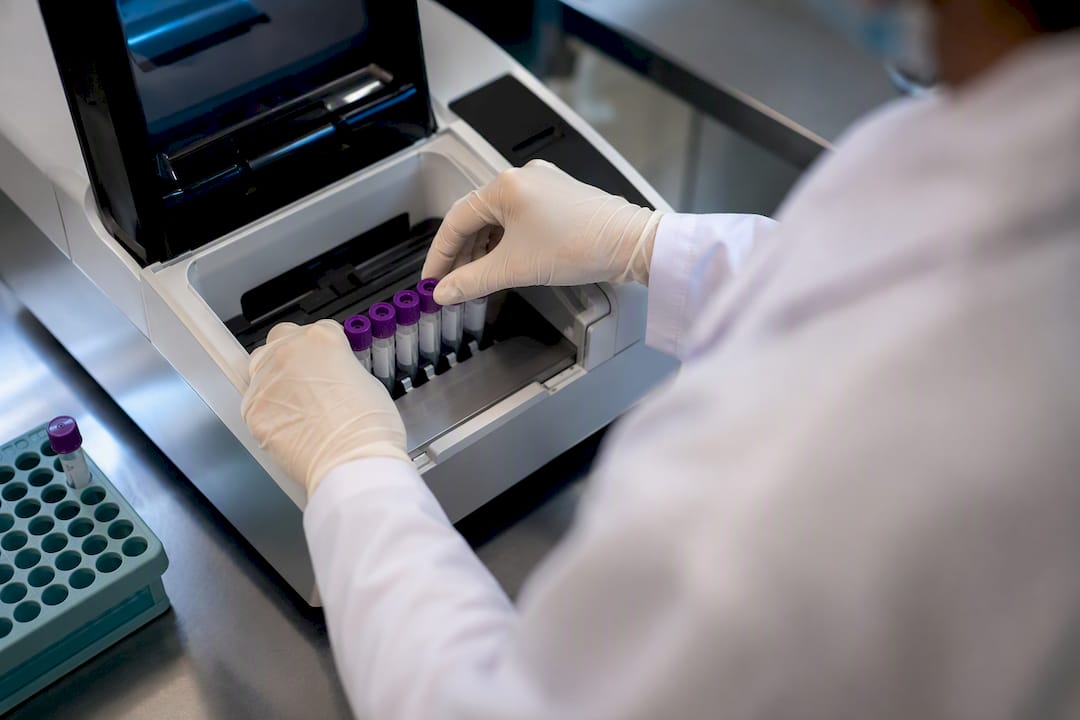
Getting a lab test paid for without drama comes down to sequence. Do these in order and you avoid nearly every common denial reason.
- Get a written request from your doctor. The prescription needs to state the specific test and why it’s medically necessary, not just “lab work.”
- Request your LOA before the test. Contact your HMO through its official app, portal, or hotline. Do this ahead of the appointment whenever the test isn’t an emergency.
- Confirm the lab’s accreditation. Check your HMO’s portal or app for current status, and favor preferred partner labs when your plan lists them.
- Present your documents at reception. Bring the LOA, your HMO ID, and the doctor’s request. Keep the originals and any receipts in case you need to file for reimbursement later.
- Follow up on status. If your claim shifts into reimbursement territory, check in with your HMO on both LOA status and expected claim timeline rather than waiting passively.
Pro Tip: Photograph every document the moment you receive it, the LOA, the doctor’s request, the official receipt, before you hand over originals at the lab counter. A phone photo has saved more delayed reimbursement claims than any filing system.
What Lab Tests Actually Cost You Under an HMO Plan
Cost sharing on lab tests in the Philippines usually takes one of two forms: a percentage discount applied to the outpatient bill, or a copay you pay alongside HMO coverage. Which one applies depends entirely on your specific plan design, so check your plan document rather than assuming a blanket rate.
Your plan’s Maximum Benefit Limit (MBL) matters more here than most members realize. The MBL caps total covered expenses for the policy year, and a run of high-cost diagnostic tests, especially imaging-adjacent lab work, can eat into that ceiling faster than a routine CBC ever would.
For reimbursement claims, expect to submit:
- The LOA, if one was issued
- The physician’s written request
- Official receipts from the lab
- The actual test results
Processing timeframes vary by insurer, so ask your HR team or HMO representative for the specific window your plan follows. Discounts on outpatient lab services are a common feature across provider benefit structures, though the exact percentage differs by plan tier.
Where claims most often get denied: no LOA on file, a test classified as investigational, or a procedure flagged as elective rather than medically necessary.
Practical Ways to Avoid Denials and Speed Up Approval
A few habits separate members who get cashless coverage every time from those stuck filing reimbursement paperwork every other month.
- Verify accreditation and LOA status immediately before booking, not the week before your plan renews
- Ask the lab directly whether they process HMO cashless transactions and what billing codes they’ll use
- Choose designated “preferred” partner labs when your plan offers them, since processing tends to move faster there
- Keep originals safe and photograph every document before submitting a reimbursement claim
Pro Tip: If a lab hesitates when you ask about cashless billing codes, that’s often a sign they’re not fully set up for direct billing with your specific HMO, even if they’re technically on the accredited list. Call your HMO hotline to confirm before you commit to that location.
How HMO Plans Structures Lab Coverage for SME Teams
Some SME group plans build cashless access to accredited facilities, so employees aren’t guessing whether a lab visit qualifies for direct billing. APE inclusions come standard, and optional add-ons let employers layer on dental or expanded physical exam coverage where their teams need it most.
Because Hmoplans works through partnerships with Purple Cow and Etiqa as underwriters, digital LOA processing and a defined partner network reduce the back-and-forth that usually slows down claims. For HR teams managing this across dozens or hundreds of employees, that administrative simplicity is often the deciding factor. If your team is evaluating options, request plan details directly.
The One Habit That Fixes Most Lab Coverage Problems
Make LOA verification a standard step before any lab visit, not an afterthought. Confirming authorization and accreditation upfront, every time, cuts out-of-pocket spending and administrative back and forth for both employees and HR teams managing SME plans.
— Eumir
Get Group Lab Coverage Built for Your SME Team
Certain providers give SME teams cashless access to accredited labs and hospitals without the fine print that usually turns simple checkups into paperwork chases. Where many group plans leave employees guessing about LOA rules, some providers pair network access with digital authorization support and optional add-ons like dental and annual physical exams, backed by underwriting partnerships.
For HR teams and business owners comparing options, the details worth checking are plan tiers, included add-ons, and how coverage handles pre-existing conditions up to your Maximum Benefit Limit. Review the full plan features or head to the Hmoplans homepage to request a proposal tailored to your team’s size and industry.
Where to Verify Coverage Rules and Accredited Labs
For complaints or regulatory questions about your HMO, contact the Insurance Commission of the Philippines directly. For process specifics, review this guide on LOAs and pre-authorization and this reimbursement checklist for SMEs. Always confirm the current accredited lab list through your HMO’s own portal before booking any test.
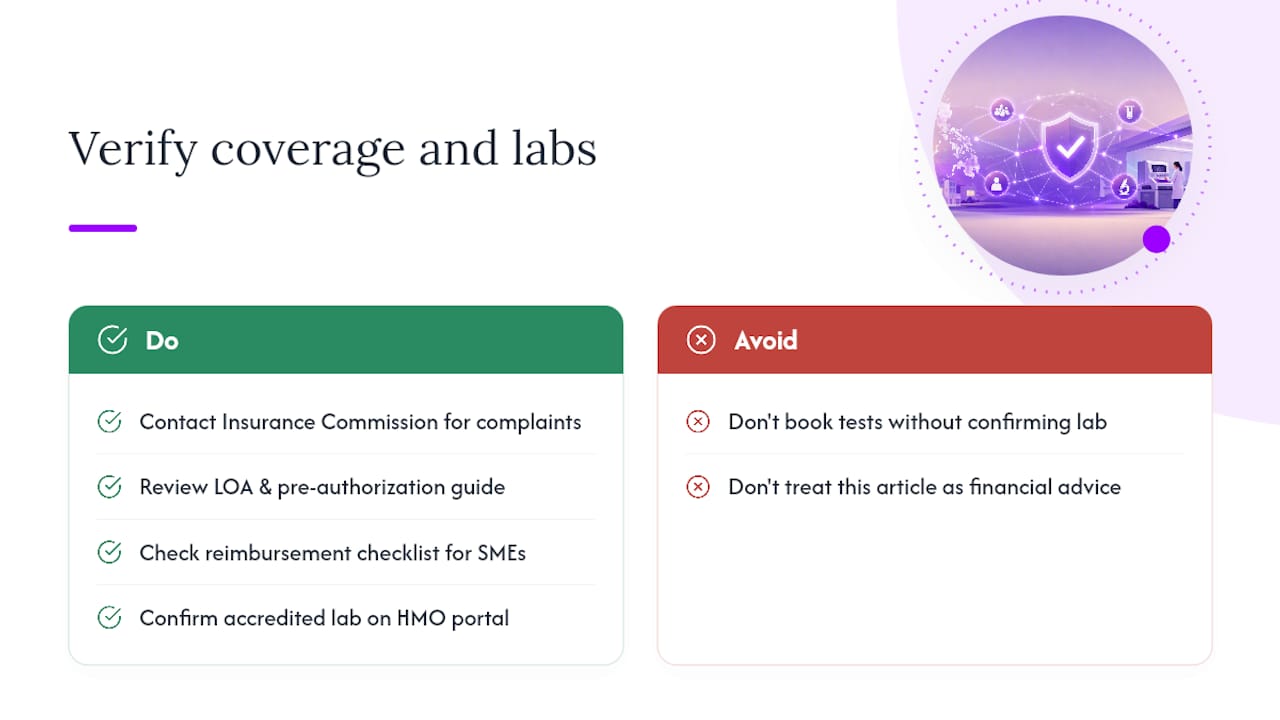
This article is general information, not a substitute for advice from a qualified financial advisor. Consult a qualified financial professional about your own circumstances before acting on anything here.
Sources
- Insurance Commission of the Philippines — contact page
- HMO vs PPO vs EPO: Choose the best plan | Cigna Healthcare
