

Guide to HMO reimbursement for Philippine SMEs
TL;DR:
- Getting HMO reimbursement wrong in the Philippines costs SMEs more than money, damaging employee trust and causing disputes. Since each HMO plan has unique rules and policies, employees and HR must understand specific procedures, documentation, and coverage limits to avoid delays and denials. Implementing clear internal guidelines, maintaining thorough records, and choosing plans with transparent coverage help SMEs manage claims effectively and build trustworthy health benefits programs.
Getting HMO reimbursement wrong is more expensive than most SME owners realize — not just in peso terms, but in employee trust. This guide to HMO reimbursement exists because the process in the Philippines is genuinely complicated: each HMO plan has its own rules, each employer sets its own internal policies, and the gap between what employees expect and what they actually receive is where most disputes are born. Whether you are an HR manager trying to standardize claims handling or a business owner building your first health benefits program, what follows will give you the clarity you need to get it right.
Table of Contents
- Understanding HMO reimbursement basics in Philippine SMEs
- Cashless versus reimbursement workflows: What SME HR managers should know
- Authorization and documentation essentials for smooth HMO reimbursements
- Navigating reimbursement limits, coverage caps, and financial implications for SMEs
- Best practices for handling reimbursement delays and disputes
- Why most SMEs misunderstand HMO reimbursement risks — and how to fix it
- Explore Purple Cow’s better HMO plans for SMEs in the Philippines
- Frequently asked questions
Understanding HMO reimbursement basics in Philippine SMEs
The first thing to accept is that there is no single, universal HMO reimbursement process in the Philippines. The HMO reimbursement process is governed by the specific HMO policy and the employer’s HR policy or contract, which means what works in one company may be entirely wrong in another. This is not a flaw in the system. It is a feature of a market where plans are negotiated at the employer level.
For HR managers, this means your first job is to read the actual policy document, not a summary of it. The Philippine HMO network operates on a tiered model where accredited providers handle cashless billing and out-of-network providers trigger the reimbursement workflow. Knowing which hospitals and clinics fall under which category is foundational to everything else.
Here are the core concepts every HR manager should know before building an internal claims policy:
- Cashless billing: The healthcare provider bills the HMO directly. The employee typically pays only a co-pay or any upgrade fees.
- Reimbursement workflow: The employee pays the full bill out of pocket, then files a claim with supporting documents to recover the cost.
- Maximum Benefit Limit (MBL): The total amount an HMO will cover per member per plan year. Reimbursements count against this limit.
- Letter of Authorization (LOA): A document issued by the HMO that pre-approves a specific service at a specific facility.
- Sub-limits: Separate caps within the MBL that apply to specific services like professional fees, emergency care, or room and board.
Understanding HMO eligibility rules is equally important because reimbursement claims filed by ineligible members, or for services not covered under the plan, will be denied regardless of documentation quality.
Cashless versus reimbursement workflows: What SME HR managers should know
The practical difference between cashless and reimbursement arrangements is more than just who pays first. It determines who is responsible for filing the claim, what documents are needed, and where errors are most likely to occur.
In a cashless arrangement, the provider bills the HMO directly after the LOA is issued and authorization steps are followed. The employee’s role is minimal: present the HMO card, confirm coverage, and pay any co-pay or room upgrade at discharge. The burden of billing accuracy sits with the hospital and the HMO.
In a reimbursement arrangement, the entire burden shifts to the employee and, by extension, to HR. The employee pays out of pocket and must then submit complete documentation with itemized receipts to recover costs. If the cashless process breaks down — say, the hospital is not in the network or the LOA was not secured in time — the reimbursement workflow kicks in automatically. That transition is where most claims go wrong.
Key pitfalls HR managers should watch for:
- Assuming the hospital will handle it: In reimbursement scenarios, the member is responsible, not the provider.
- Missing the LOA window: Failing to request an LOA before a scheduled procedure can force a reimbursement claim on a procedure that should have been cashless.
- Incomplete itemization: A receipt that lists “hospital charges” as one line item will not satisfy most HMO reimbursement requirements.
- Wrong submission channel: Some HMOs accept claims only through their portal; others require physical submission.
Pro Tip: Create a one-page internal reference card for employees that explains exactly when to call HR before going to a hospital, not after. That single step prevents the majority of avoidable reimbursement claims.
You can also review specific coverage examples to help employees understand what triggers each billing method before they need medical care.
Authorization and documentation essentials for smooth HMO reimbursements
The LOA is the single most misunderstood document in the HMO reimbursement process. Many employees assume it is optional or that the hospital will handle it. It is neither. For non-emergency services, an LOA is generally required before receiving care on a cashless basis. Emergency care may be covered without one, but any scheduled procedure — surgery, diagnostics, specialist consultations — almost always requires prior authorization.
Here is a step-by-step documentation checklist HR teams should distribute to every employee at enrollment:
- Secure the LOA first. Contact your HMO’s member services or use their app to request an LOA before any scheduled service.
- Keep every receipt. Insist on an original, fully itemized statement of account that lists each charge separately — medications, room fees, professional fees, lab tests.
- Request a discharge summary. Most HMOs require a clinical summary or doctor’s certificate alongside financial documents.
- File within the deadline. PhilHealth enforces a 60-calendar-day filing window from the date of discharge, with possible extensions for reasonable causes. HMO deadlines vary but are typically 30 to 90 days.
- Submit copies, keep originals. If a claim is lost or disputed, original documents become your only recourse.
“Itemization is not a formality. It is the evidence that each charge occurred, was necessary, and falls within covered services. One vague line item can hold up an entire claim.”
Emergency care HMO coverage operates under different rules because authorization is not always possible in advance. Knowing those exceptions in advance means employees will not delay care out of fear that costs will not be covered.
Pro Tip: HR should maintain a shared folder, physical or digital, where employees can drop their claim documents before submission. This creates a natural checkpoint where completeness can be reviewed before anything is sent to the HMO.
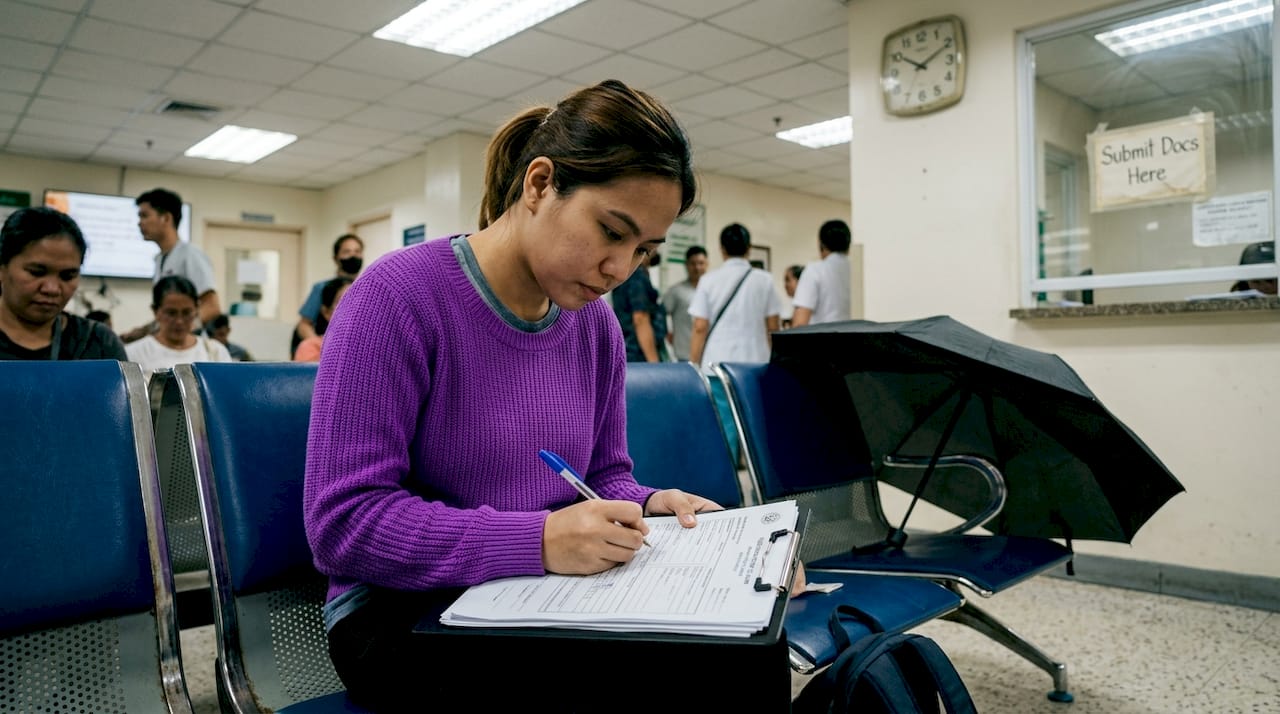
Understanding HMO benefit limits at the documentation stage also prevents over-claiming or under-claiming, both of which cause processing delays.
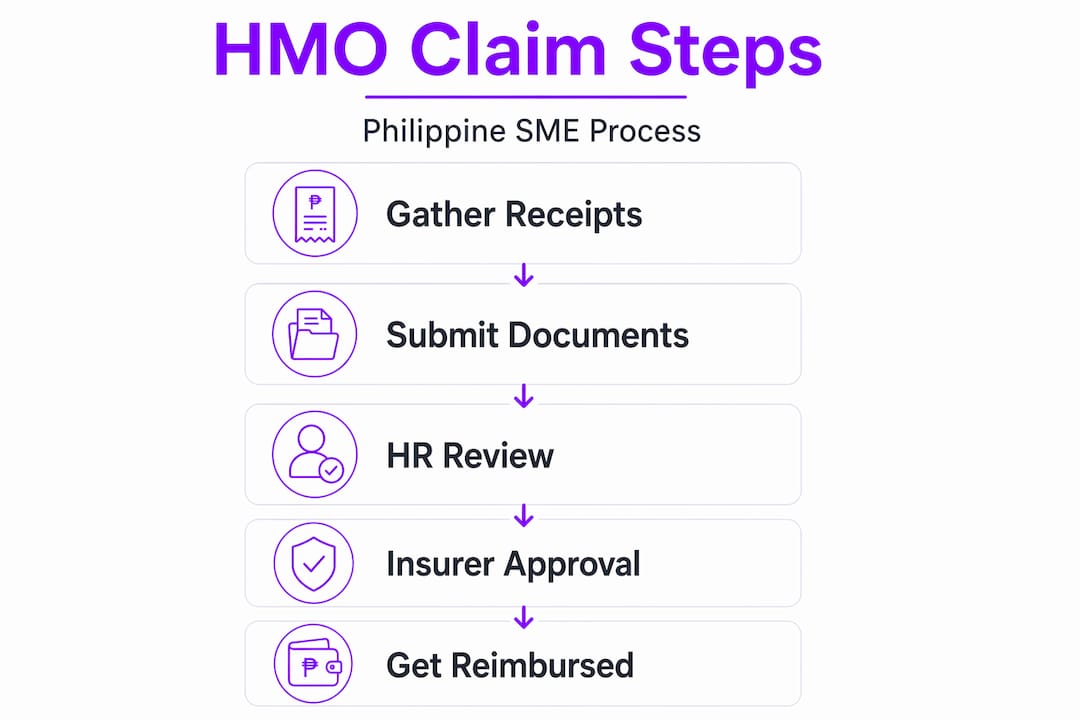
Navigating reimbursement limits, coverage caps, and financial implications for SMEs
Reimbursement does not mean full recovery. Every HMO plan sets caps, and those caps directly affect how much an employee actually gets back. Some plans, for example, define explicit sub-limits such as ₱100,000 per illness per year and emergency reimbursements capped at ₱30,000 for care in non-accredited hospitals. If employees do not know these numbers, they will always feel shortchanged.
| Coverage type | Cashless (accredited) | Reimbursement (non-accredited) |
|---|---|---|
| Inpatient room and board | Up to MBL, cashless | Capped at HMO rate, reimbursed |
| Professional fees | Sub-limit applies | Sub-limit applies, reimbursed |
| Emergency care | Typically cashless if LOA filed post-admission | Capped at plan’s emergency reimbursement limit |
| Diagnostic tests | Cashless with LOA | Reimbursed at plan rate |
| Medicines | Covered within MBL | Reimbursed if itemized and approved |
What this table tells SME owners: the financial exposure for employees using non-accredited facilities is real. If your workforce is distributed across provinces where accredited hospitals are scarce, the gap between actual cost and reimbursed amount can be significant. Budgeting for that gap, whether through supplemental benefits or employee communication, is part of responsible benefits management.
Key financial planning points for SMEs:
- Always compare your HMO’s accredited hospital list against the locations where your employees actually live and work.
- Review professional fee sub-limits carefully. These are the most common source of “partial reimbursement” complaints.
- Check whether your plan reimburses at actual cost or at a predetermined HMO schedule of rates, which are often lower than private hospital billing rates.
Best practices for handling reimbursement delays and disputes
Even with perfect documentation, reimbursement delays happen. The difference between an HR team that resolves them quickly and one that watches them drag on for months is almost entirely a matter of process discipline.
Follow these steps when a reimbursement is delayed or disputed:
- Log the original submission date. Record when documents were submitted, by what method, and to whom.
- Follow up in writing. A written record of all communications is your strongest tool if escalation becomes necessary. An email trail with timestamps is far more effective than a phone call log.
- Reference the plan’s timeline in every reminder. Cite the specific clause that defines the reimbursement turnaround time. This signals to the HMO that you know the policy.
- Coordinate between the employee, HR, and HMO. Disputes often persist because the employee tells HR one thing and the HMO has a different record. A three-way clarification call often resolves discrepancies in one session.
- Escalate formally if needed. If internal resolution fails, the Insurance Commission of the Philippines accepts complaints against HMO providers. Document everything before reaching this stage.
Pro Tip: Build a simple claims tracker in a shared spreadsheet. Columns for employee name, date of service, date submitted, amount claimed, HMO reference number, and status. Reviewing it weekly takes five minutes and catches stalled claims before they become disputes.
Optimizing your healthcare workflow internally also reduces the volume of claims that reach dispute status in the first place.
Why most SMEs misunderstand HMO reimbursement risks — and how to fix it
Here is the uncomfortable truth: most SME HR teams do not have a reimbursement problem. They have a communication problem that shows up as a reimbursement problem.
The confusion over claim filing responsibility is the most preventable source of denied claims. In a cashless arrangement, the facility handles submission. In a reimbursement arrangement, the member does. When employees do not know which situation they are in, they wait for the hospital to file a claim that will never be filed. By the time HR discovers the error, the filing window has often closed.
The second risk is LOA neglect. Many SMEs have no internal policy on when to require LOA acquisition before an employee undergoes a procedure. The employee books a specialist, skips the LOA step because no one told them it was required, and then faces a reimbursement claim instead of a cashless one. That is an entirely avoidable cost shift from the HMO to the employee.
The fix is simpler than most HR teams expect. Write a one-page internal HMO guide that answers three questions: When does the employee need to call HR before seeing a doctor? How do they request an LOA? What documents do they collect at discharge? That document, distributed at onboarding and re-shared during open enrollment, eliminates the majority of preventable claim denials.
There is also a deeper issue around benefit limit planning. SMEs that choose plans based on premium alone, without examining sub-limits and reimbursement caps, end up with angry employees who feel betrayed by benefits that sounded better than they are. Transparency about what the plan covers and what it caps is not just an HR nicety. It is a retention strategy.
Explore Purple Cow’s better HMO plans for SMEs in the Philippines
Managing HMO reimbursements gets significantly easier when your plan is built with clarity from the start. Purple Cow’s HMO plans for Philippine SMEs are designed to reduce the confusion that causes most claim denials, with transparent coverage terms, clear sub-limits, and member services that help employees manage LOAs and documentation before a claim becomes a problem.
From cashless access to the Big 9 Hospitals and Healthway Clinics, to 100% coverage for pre-existing conditions up to the MBL, the plan structure is built to minimize out-of-pocket surprises. HR managers get straightforward policies they can actually explain to employees. Review the full HMO plan features or connect with the member services team to get a plan configured to your workforce size, location, and benefits budget. The right plan is the one your employees will never have to argue about.
Frequently asked questions
What documents are essential to submit for HMO reimbursement in the Philippines?
Employees should submit original itemized receipts, a Statement of Account, an LOA if required, and proof of payment to ensure smooth reimbursement processing.
Who typically files the claim in a cashless versus reimbursement HMO arrangement?
In cashless arrangements, the healthcare provider files directly with the HMO; in reimbursement arrangements, the member is responsible for filing with complete supporting documents.
Are Letters of Authorization always required for HMO claims?
LOAs are required before scheduled services for cashless benefits, but emergency care in accredited hospitals often does not require one beforehand. Always verify with your HMO provider.
How long do employees have to file PhilHealth claims, and what about HMO claims?
PhilHealth enforces a 60-calendar-day filing window from discharge with possible extensions; HMO claim deadlines vary by plan and employer HR policy, typically ranging from 30 to 90 days.
What can HR do when HMO reimbursements are delayed or stalled?
HR should maintain a submission paper trail, send written reminders referencing policy timelines, and formally escalate to the Insurance Commission if internal resolution fails.
