How to Customize Accident Insurance for Better Coverage
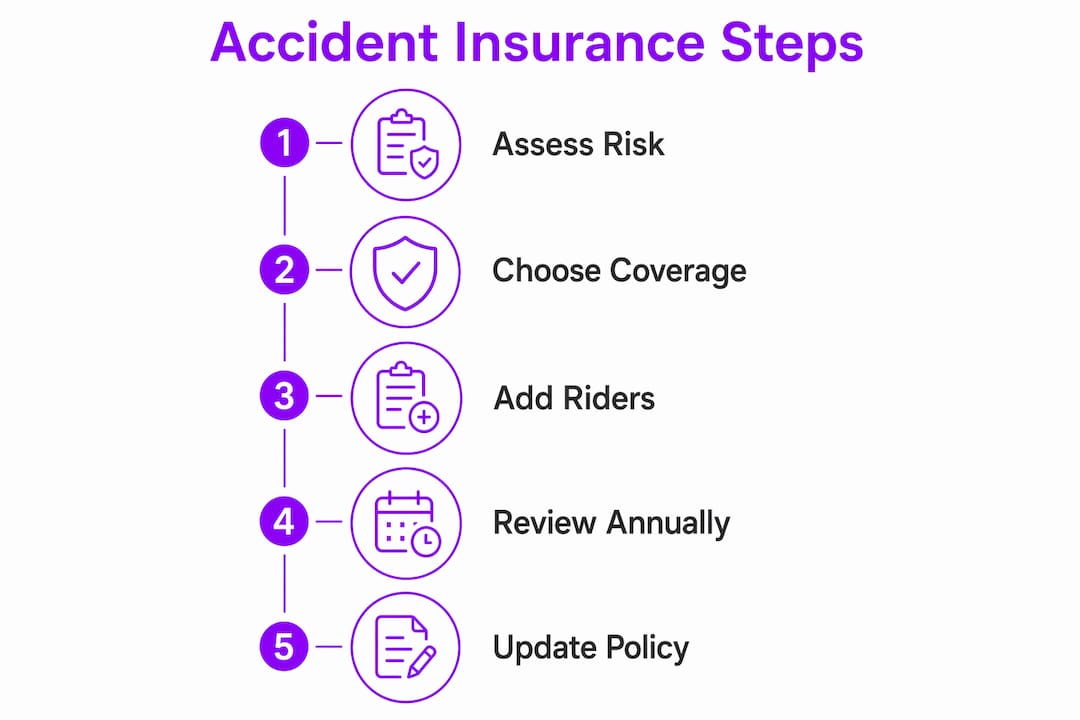
Customizing accident insurance means selecting the right coverage amounts, adding riders that match your lifestyle, and adjusting benefits so you pay for protection you actually need. The best approach starts with a basic plan built around your risk profile, then expands incrementally as your circumstances change. Whether you’re an individual securing your own finances or an employer building a benefits package for your team, the process follows the same core logic: assess your exposure, choose your foundation, then layer in what matters.
How to customize accident insurance coverage for your needs

Getting this right starts before you ever look at a policy document. Your commute, your hobbies, your dependents, and your income stability all shape what “adequate coverage” actually means for you. A freelance graphic designer and a construction site supervisor face completely different accident risks, so their policies should look nothing alike.
Key customization components to consider:
- Coverage amount (sum assured): The maximum payout for accidental death or permanent disability. Set it high enough to replace lost income and cover outstanding debts, but not so high that premiums become unmanageable.
- Medical expense reimbursement: Covers hospitalization and outpatient treatment costs after an accident.
- Hospital cash allowance: A daily cash benefit during inpatient stays, useful for freelancers or anyone without paid sick leave.
- Riders and add-ons: Optional coverages like sports injury protection, travel accident coverage, or family riders that extend benefits to a spouse and children.
- Occupational classification: Insurers tier premiums by job risk level, so declaring your occupation accurately affects both eligibility and cost.
- Review triggers: Life events such as a new job, a new dependent, or a new hobby should prompt a coverage reassessment.
Employers adding accident coverage to a group benefits package should coordinate with HR or a benefits administrator to align coverage tiers with employee roles and risk levels. For SMEs, platforms like Hmoplans offer life and accident insurance as optional add-ons to core HMO plans, making it straightforward to build layered protection for your team.
Steps to edit or manage your accident insurance policy
Adjusting an existing policy is more practical than most people expect. The key is knowing which channel to use and what documentation to have ready.
- Log into your insurer’s self-service portal: Most insurers now offer digital portals where you can view policy status, update coverage tiers, submit claims, and request changes without calling an agent. Digital portals reduce administrative burden significantly compared to paper-based processes.
- Review your current coverage first: Before making any changes, pull your existing policy summary and compare it against your current risk profile. Identify gaps and redundancies.
- Contact HR for employer-provided plans: If your accident coverage comes through work, employer group plans require HR or a benefits administrator to process changes. Request a meeting during open enrollment or after a qualifying life event.
- Adjust your sum assured: If your income, debts, or dependents have changed, recalculate the coverage amount you need. Raising or lowering the sum assured directly affects your premium.
- Add or remove riders: Request specific rider additions in writing. Common additions include hospital cash, travel accident protection, and sports injury coverage.
- Update beneficiary and payment details: Set up direct deposit for faster benefit payments and confirm your beneficiary information is current.
- Document every change: Keep confirmation emails or policy endorsement letters for every modification you make.
Pro Tip: Audit your accident insurance policy at least once a year, and always after a major life event. A periodic policy review prevents coverage gaps that only become visible at claim time.
Types of accident insurance and common optional coverages
Accident insurance is not a single product. It comes in several forms, and the optional riders available vary by insurer and plan tier.
Individual vs. group policies
Individual policies are purchased directly and stay with you regardless of employment. Group policies, typically offered through employers, often cost less per person but end when you leave the organization. Carrying a personal policy alongside an employer plan provides continuity, especially if you change jobs or go self-employed.
Common optional riders and add-ons:
- Sports and active lifestyle rider: Covers injuries from cycling, hiking, contact sports, or extreme activities that standard plans often exclude.
- Travel accident protection: Extends coverage to accidents abroad, including emergency evacuation. Particularly relevant for frequent travelers who face elevated overseas risk.
- Family coverage rider: Extends the policy to a spouse and children, often at discounted rates. Family riders typically include child-specific benefits and income-loss protection for the household.
- Infectious disease coverage: Some plans cover conditions like dengue fever, though availability varies by insurer and region.
- Occupational accident rider: Adds protection for injuries that occur specifically in a work context, useful for employees in higher-risk industries.
- Accidental hospital daily allowance: A fixed daily cash benefit for each day of hospitalization, capped at a set number of days depending on the policy.
- Permanent disability income benefit: Provides ongoing income replacement if an accident results in long-term or permanent disability.
Modular accident policies let you start with a basic plan and add riders incrementally as your life evolves. This structure prevents overinsurance early on while keeping the door open for expanded protection later.
For employers building team benefits, Hmoplans offers life and accident insurance as a flexible add-on to core HMO coverage, letting you tailor protection to your workforce’s actual risk profile.
Is accident insurance worth it? Benefits and key considerations
The short answer is yes, for most people. The longer answer depends on your financial cushion, your occupation, and whether your existing coverage already addresses accident-related costs.
Core benefits of accident insurance:
- Provides a lump-sum or scheduled payout for accidental death, disability, or injury, separate from health insurance.
- Covers income loss during recovery, particularly valuable for self-employed individuals or hourly workers without paid leave.
- Pays out regardless of other insurance, so it supplements rather than duplicates your existing health plan.
- Premiums are generally lower than life or health insurance, making it an accessible layer of protection.
Factors to weigh before adjusting coverage:
- Does your employer already provide accident coverage? If so, calculate whether the combined sum assured is sufficient before adding a personal policy.
- Are your dependents financially exposed if you cannot work for several months?
- Do your hobbies or job involve elevated physical risk?
- Would a gap in income during recovery affect your ability to meet mortgage payments, school fees, or daily expenses?
The best accident insurance policy matches your specific risk profile rather than simply offering the highest payout. Customization helps you avoid paying for benefits that don’t apply to your situation while securing the ones that do. Choosing the right sum assured and riders directly influences your premium, so every addition should serve a clear purpose.
Coverage insight: Digital self-service portals have made policy management significantly more accessible, allowing policyholders to submit claims, update coverage, and review benefits without agent involvement, reducing delays and administrative friction across both individual and group plans.
For SMEs looking to build accident protection into a broader benefits package, Hmoplans provides flexible coverage options that integrate accident and life insurance with core HMO benefits, giving your team layered protection without unnecessary complexity.
Key Takeaways
Personalizing accident insurance around your actual risk profile, rather than defaulting to a standard plan, produces better protection at a lower cost.
| Point | Details |
|---|---|
| Start with a risk assessment | Evaluate your occupation, lifestyle, dependents, and income before selecting any coverage level. |
| Use modular policies | Begin with basic coverage and add riders incrementally as your life circumstances change. |
| Leverage digital portals | Self-service platforms let you update coverage, file claims, and manage your policy without agent delays. |
| Review after life events | Job changes, new dependents, or new hobbies should trigger a policy audit to prevent coverage gaps. |
| Match sum assured to real needs | Set your coverage amount to address actual financial exposure, not the highest available payout. |
Ready to add accident insurance to your team’s benefits package? Hmoplans offers flexible life and accident coverage as an optional add-on to core HMO plans, built specifically for SMEs that want real protection without complicated terms.