

HMO Role in Business Continuity for SMEs
TL;DR:
- An HMO ensures coordinated, cashless healthcare that reduces employee absenteeism and supports business continuity. It provides immediate emergency access, fast recovery, and predictable costs, protecting SMEs from operational disruptions. Regular plan reviews and comprehensive coverage are essential for effective workforce health management during crises.
An HMO is defined as a managed care plan that delivers coordinated, cost-effective healthcare to enrolled employees through a network of providers. The role of HMO in business continuity is to protect the workforce’s health so that operations keep running when disruptions hit. When employees get sick and cannot access care quickly, absenteeism rises, critical tasks go unfinished, and revenue stalls. For SME leaders in the Philippines, an HMO is not just a benefits package. It is a direct line of defense against operational downtime caused by employee health events.
How does an HMO minimize operational disruptions?
Continuity of care is the single biggest factor separating a workforce that bounces back fast from one that stays out for weeks. HMO plans use a coordinated provider network to keep employees connected to the same doctors and care teams over time. That consistency matters more than most business leaders realize.
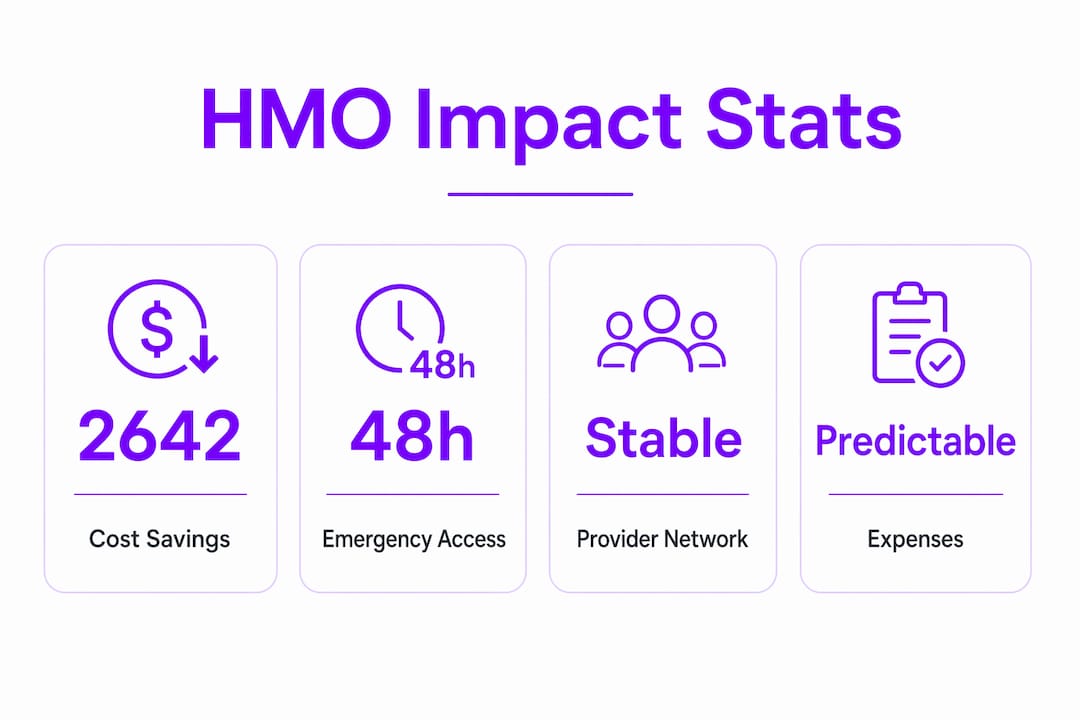
Fragmented care raises costs by $2,642 per patient over a median 35-month period among chronically ill employees. That figure does not include lost productivity or the cost of temporary replacements. For an SME with a lean team, even one prolonged absence can stall an entire department.
The HMO gatekeeper model is often criticized as restrictive, but it prevents fragmented diagnostic journeys that leave employees bouncing between uncoordinated specialists. A primary care physician who knows the employee’s history catches problems earlier and coordinates treatment faster. The result is shorter recovery times and fewer repeat absences.
Research confirms the operational cost of fragmentation. A 10 percentage point rise in patients reporting low continuity of care correlates with 1.34 additional new complaints per 10,000 patients. In a business context, that translates directly to more HR escalations, more service disruptions, and more management time spent on health-related issues rather than operations.
- Coordinated care reduces the number of specialist referrals that go unresolved
- Employees with a consistent primary care physician miss fewer workdays
- HMO networks reduce the administrative burden on HR teams managing health claims
- Provider turnover negatively impacts patient satisfaction and preventive care compliance, raising long-term operational costs
Pro Tip: When evaluating an HMO plan, ask specifically about provider network stability. High provider turnover in a plan’s network is a warning sign for care fragmentation and future absenteeism.
What is the HMO’s role in crisis management for SMEs?
Crisis management depends on speed. When an employee has a medical emergency, every hour of delayed care increases the risk of a prolonged absence or permanent incapacity. HMOs are built to remove the bottlenecks that slow down emergency care.

Most HMO structures allow direct emergency access without prior authorization, with notification typically required within 48 hours after care is received. That protocol preserves life first and handles paperwork second. For SME leaders, this means an employee can get to the emergency room immediately without waiting for approval calls that could take hours.
HMOs also deploy case managers for complex or expensive cases. Case management within HMOs controls costs during chronic or high-cost episodes without reducing care quality. A case manager coordinates the treatment plan, communicates with the employer’s HR team, and sets realistic return-to-work timelines. That clarity protects the business from planning around an unknown absence.
Here is how HMO crisis protocols protect SME operations in practice:
- Immediate emergency access removes authorization delays so employees receive care within the critical window.
- 48-hour post-care notification keeps the HMO informed without blocking treatment at the point of need.
- Case manager assignment for serious cases gives HR a direct contact to track recovery progress.
- Nationwide network coverage means employees traveling for business can access care without out-of-pocket surprises.
- Digital healthcare platforms let employees consult doctors remotely, reducing the need to leave work for minor issues.
Pro Tip: Before a crisis happens, confirm with your HMO provider which hospitals are in-network in every city where your employees regularly work or travel. Gaps in coverage become expensive problems during emergencies.
How does HMO integration fit a business continuity framework?
Business continuity planning has traditionally focused on IT recovery and infrastructure. That framing misses the most critical asset in any SME: the people who run the business. Boards must prioritize protecting “heartbeat services” — the key value-generating activities that keep the organization alive — and workforce health sits at the center of that list.
The Minimum Viable Business (MVB) concept formalizes this thinking. An MVB is the smallest version of your business that can still deliver its core value during a disruption. Protecting the MVB means identifying the top 5% of critical assets and ensuring they remain functional. For most SMEs, those assets are people, not servers.
“Business continuity plans fail when they focus only on technology. Protecting employees’ health through HMOs is critical to sustaining the heartbeat services that keep a business operational during any crisis.”
Mapping your critical business services to the healthcare assets managed by your HMO gives leadership a clear picture of where health disruptions create the most operational risk. A sales team that cannot function because three members are out with untreated chronic conditions is a continuity failure, not just an HR issue.
| Business continuity priority | Without HMO integration | With HMO integration |
|---|---|---|
| Employee recovery speed | Delayed by fragmented care and out-of-pocket costs | Faster through coordinated, cashless access |
| Operational cost predictability | Unpredictable due to variable health expenses | Stable through fixed-premium, risk-sharing contracts |
| Crisis response time | Slowed by authorization requirements | Immediate emergency access with post-care notification |
| Workforce retention | Lower due to inadequate health benefits | Higher through improved employee satisfaction |
HMOs operate through fixed-premium, risk-sharing contracts with providers, which gives SMEs predictable healthcare expenses. Predictability is the foundation of any continuity plan. You cannot plan around costs you cannot forecast.
What should SME leaders consider when choosing an HMO plan?
Selecting an HMO aligned with business continuity goals requires more than comparing premium prices. The cheapest plan often carries the highest operational risk when it excludes pre-existing conditions, limits emergency access, or has a thin provider network.
Well-structured HMOs significantly improve operational resilience by providing stable, coordinated healthcare that reduces absenteeism and increases employee trust. Trust matters because employees who believe their employer will care for them during illness are more likely to stay and perform. Retention directly reduces the disruption cost of replacing skilled workers.
- Coverage depth: Confirm that pre-existing conditions, emergency care, and specialist referrals are covered up to a meaningful Maximum Benefit Limit (MBL).
- Network breadth: Verify that accredited hospitals and clinics cover the locations where your employees live and work.
- Cost structure: Align plan costs with continuity objectives by choosing fixed-premium plans that allow accurate budget forecasting.
- Digital access: Plans with telemedicine and digital platforms reduce minor-illness absences by letting employees consult doctors without leaving work.
- Add-on flexibility: Dental coverage, annual physical exams, and life insurance add-ons address the full spectrum of health risks that affect workforce availability.
The most common pitfall SME leaders make is treating HMO selection as a one-time HR task. Plans need annual review against your workforce’s actual health utilization data. A plan that worked for a 20-person team may leave critical gaps as your business grows to 50 or 100 employees.
Pro Tip: Request utilization reports from your HMO provider every six months. Patterns in claims data reveal which health risks are most likely to disrupt your specific workforce, so you can adjust coverage before absences spike.
Key Takeaways
An HMO embedded in your business continuity plan is the most direct way to protect the workforce that keeps your SME running during any disruption.
| Point | Details |
|---|---|
| Continuity of care reduces absenteeism | Fragmented care costs $2,642 more per patient and extends employee absences that stall operations. |
| Emergency access removes critical delays | HMOs allow immediate emergency care without prior authorization, protecting employees and minimizing downtime. |
| MVB planning requires workforce health | The Minimum Viable Business framework identifies people as top-tier assets that HMOs directly protect. |
| Fixed premiums enable cost forecasting | Risk-sharing HMO contracts give SMEs predictable health expenses, which is the foundation of continuity planning. |
| Plan selection drives long-term resilience | Coverage depth, network breadth, and annual plan reviews determine whether an HMO actually supports continuity goals. |
Why most SME continuity plans are missing their most important piece
I have reviewed a lot of SME business continuity plans over the years, and the pattern is almost always the same. There is a detailed IT recovery section, a data backup protocol, and a communication tree for leadership. Then there is a single line about “HR will manage employee issues.” That line is where most plans fall apart.
The workforce is not a support function in a continuity plan. The workforce is the plan. When your three best salespeople are out sick for two weeks with conditions that a coordinated HMO would have caught and treated in three days, no amount of cloud backup saves your quarter.
What I find most underestimated is the compounding effect of poor healthcare access on employee trust. Employees who feel unsupported during illness disengage long before they resign. That quiet disengagement is invisible in your continuity plan but very visible in your output. An HMO that covers pre-existing conditions, provides cashless access to quality hospitals, and assigns a case manager for serious illness sends a clear signal: this company will not abandon you when you need help most. That signal is worth more than any retention bonus.
SMEs that treat HMO selection as a cost-cutting exercise rather than a continuity investment will keep learning this lesson the hard way. The businesses that build resilience into their workforce health strategy are the ones that come out of disruptions intact.
— Eumir
Hmoplans gives SMEs a continuity-ready HMO plan
Hmoplans, powered by Purple Cow and underwritten by Etiqa, builds HMO plans specifically for Philippine SMEs that need real coverage without complicated terms. Every plan includes cashless access to the Big 9 Hospitals and Healthway Clinics, 24/7 nationwide emergency care, and 100% coverage for pre-existing conditions up to the Maximum Benefit Limit.
For SME leaders who want an HMO that actually supports business continuity, Hmoplans offers tailored SME health plans with flexible add-ons including dental, annual physical exams, and life and accident insurance. The plan’s full feature set is designed to keep your workforce healthy, your costs predictable, and your operations running when it matters most.
FAQ
What is the role of an HMO in business continuity?
An HMO protects business continuity by providing coordinated, cashless healthcare access that reduces employee absenteeism and speeds recovery. Faster recovery means shorter operational disruptions and lower replacement costs for SMEs.
How does an HMO support crisis management for SMEs?
Most HMO structures allow immediate emergency care without prior authorization, with notification required within 48 hours after treatment. This removes bureaucratic delays so employees receive care during the critical window of a health crisis.
What is the Minimum Viable Business concept and how does HMO fit in?
The Minimum Viable Business is the smallest version of a company that can still deliver its core value during a disruption. Workforce health is a top-tier asset in this framework, and an HMO directly protects it by keeping employees healthy and operational.
How does fragmented healthcare affect SME operations?
Fragmented care increases costs by $2,642 per patient over a median 35-month period and correlates with more complaints and longer absences. For SMEs, that translates to higher HR costs, lower output, and greater operational instability.
What should SME leaders look for in an HMO plan for business continuity?
Leaders should prioritize coverage depth for pre-existing conditions, a broad hospital network, fixed-premium cost structures, and digital access options. Annual plan reviews against actual utilization data keep coverage aligned with the workforce’s real health risks.
