

Pre-Existing Disease HMO Examples: A 2026 Philippines Guide
What pre-existing disease HMO examples look like in practice
Common pre-existing diseases covered by HMOs in the Philippines often include hypertension, diabetes, asthma, thyroid disorders, and dyslipidemia. These are conditions diagnosed or treated before your enrollment date, and how your HMO handles them depends almost entirely on whether you’re on an individual plan or a corporate group plan.
Here’s what typically falls under the pre-existing condition category in Philippine HMOs:
- Hypertension (high blood pressure, with or without medication)
- Type 2 diabetes (including insulin-dependent cases)
- Asthma (allergic or non-allergic, with prior diagnosis)
- Thyroid conditions (hypothyroidism, hyperthyroidism, goiter)
- Dyslipidemia (elevated cholesterol or triglycerides)
- Polycystic ovary syndrome (PCOS)
- Gastroesophageal reflux disease (GERD)
- Chronic kidney disease (early-stage, previously diagnosed)
Coverage for these conditions is not automatic on day one for most individual plans. Group or corporate HMO plans, on the other hand, often cover them immediately through risk pooling across employees.
How HMOs determine whether a condition is pre-existing
HMOs evaluate your medical history at the time of enrollment, not at the time of a claim. The standard criteria focus on whether a condition was diagnosed, treated, or showed symptoms before your coverage start date.
The evaluation process typically includes:
- Medical questionnaire completed during enrollment, asking about past diagnoses and treatments
- Review of prior medical records, prescriptions, or laboratory results if submitted
- Underwriting assessment that classifies conditions as covered, excluded, or subject to a waiting period
- Declaration of existing medications, since maintenance drugs signal an active pre-existing condition
The underwriting process directly shapes your waiting period and coverage limits. Conditions you declare honestly get classified upfront. Undeclared conditions create a much bigger problem later.
How HMO coverage policies handle pre-existing conditions
Individual HMO plans in the Philippines usually impose waiting periods of 6 to 24 months for pre-existing conditions, with most plans commonly requiring about 12 months before coverage starts. During that window, claims related to your declared condition are usually denied or limited.
Corporate and group HMO plans work differently. Because risk is spread across an entire employee pool, most group plans offer day-one or near-day-one coverage for pre-existing diseases. This is the single biggest practical advantage of employer-sponsored HMO coverage.
Coverage tiers also matter:
- Standard plans usually carry the full waiting period for pre-existing conditions
- VIP or premium-tier plans may waive or shorten waiting periods, though at higher premiums
- Accidents, emergencies, and basic consultations typically carry no waiting period regardless of pre-existing condition status
Pro Tip: If you’re an HR professional negotiating a group plan, ask your HMO provider in writing whether pre-existing conditions are covered from day one and what the Maximum Benefit Limit (MBL) applies to those conditions. Verbal assurances are not enough.
What happens when you don’t declare a pre-existing condition
Failing to disclose a pre-existing condition is one of the most costly mistakes a plan member can make. The consequences go beyond a single denied claim.
- Claim denial for any treatment linked to the undeclared condition
- Policy rescission, meaning the HMO can cancel your coverage retroactively
- Financial liability for all medical expenses the insurer would have covered
- Permanent exclusion from future coverage with that provider
- Damaged credibility when applying for new plans, since insurers share underwriting data
The risk is not worth it. Declaring a condition upfront may result in a waiting period, but it protects your coverage long-term. Concealment puts everything at risk.
Practical tips for choosing an HMO plan with pre-existing condition coverage
Selecting the right plan when you or your employees have existing health conditions takes more than comparing premiums. Here’s what actually moves the needle:
- Prioritize group or corporate plans. They offer the most reliable path to immediate PEC coverage through risk pooling.
- Get day-one coverage terms in writing. Some providers market this feature, but the fine print may limit it to specific conditions or benefit amounts.
- Consider premium-tier plans if waiting periods are a concern and budget allows.
- Use PhilHealth as a base layer. PhilHealth covers hospitalizations for active members without pre-existing condition waiting periods, making it a useful complement while your HMO waiting period runs.
- Negotiate as an employer. HR professionals who understand group underwriting can push for better PEC terms as part of the employee benefits package. Healthcare financial advisors, including specialists at Medpro CFO, note that negotiating PEC coverage strengthens HR’s role in workforce wellness and retention.
Pro Tip: Sign up for HMO coverage as early as possible. Continuous enrollment reduces the practical impact of waiting periods since coverage for pre-existing conditions activates after a set membership duration. The earlier you start, the sooner that clock runs.
Common pre-existing diseases in Philippine HMOs and how they’re typically covered
Not all pre-existing conditions are treated the same way. Here’s how the most common ones tend to be handled:
| Condition | Typical Coverage Status |
|---|---|
| Hypertension | Covered after waiting period; maintenance meds often excluded |
| Type 2 diabetes | Covered after waiting period; insulin may require separate approval |
| Asthma | Covered after waiting period; nebulization usually included |
| Thyroid disorders | Covered after waiting period; lab monitoring often included |
| Dyslipidemia | Covered after waiting period; lipid panel tests usually covered |
| PCOS | Covered with limitations; hormonal treatments vary by plan |
| GERD | Covered after waiting period; endoscopy may need pre-authorization |
| Chronic kidney disease | Often covered with restrictions; dialysis may be excluded or capped |

Conditions like cancer, autoimmune diseases, and congenital heart defects tend to carry stricter terms or higher-tier plan requirements. Always confirm specific conditions with your HMO provider before enrollment.
What industry research says about pre-existing condition coverage in Philippine HMOs
The market reality for individual plan buyers is clear: true day-one PEC coverage in retail individual plans is rare. Group and SME HMO plans remain the most reliable option for workers who need coverage for existing health conditions without a long wait.
Key takeaways from current market analysis:
- Group underwriting enables day-one coverage by pooling risks across many members, something individual applicants cannot replicate on their own
- HR professionals who understand this dynamic are better positioned to negotiate favorable terms for their workforce
- Waiting periods of 6 to 24 months in individual HMO plans are a structural feature of the Philippine market, with most plans commonly requiring around 12 months before coverage starts.
- Employers offering comprehensive group HMO plans gain a measurable advantage in attracting and retaining employees with chronic conditions
For SMEs specifically, the group plan route is not just more affordable per head. It’s the only realistic way to give employees with pre-existing diseases meaningful coverage from the start.
How the law defines pre-existing conditions
Under U.S. federal law, specifically 42 USC 300gg-3), a pre-existing condition exclusion is defined as any limitation or exclusion of benefits for a condition that was present before the enrollment date, regardless of whether medical advice or treatment was received. The Affordable Care Act prohibits this practice for ACA-compliant plans, meaning insurers cannot deny coverage, charge higher premiums, or refuse essential health benefits based on a prior condition.
In the Philippines, the regulatory framework differs. HMOs operate under Insurance Commission oversight, and waiting periods for pre-existing conditions remain legally permissible. The ACA protections described above apply specifically to the U.S. market. Philippine plan members should review their specific policy documents and the Insurance Commission’s guidelines for applicable protections.
How laws and regulations shape HMO coverage of pre-existing diseases
In the United States, ACA-compliant Marketplace plans must cover pre-existing conditions without exclusions, higher premiums, or benefit denials. Grandfathered plans purchased before March 23, 2010 are the only exception, and they do not have to cover pre-existing conditions. Medicaid and CHIP also cannot refuse coverage based on pre-existing conditions.
Short-term medical plans, Farm Bureau plans, and other non-ACA-compliant plans can still deny coverage or charge more for pre-existing conditions. In the Philippines, no equivalent blanket prohibition exists, which is why plan type and employer sponsorship matter so much.
How HMO coverage compares to other health plans for pre-existing conditions
ACA-compliant HMOs in the U.S. and group HMOs in the Philippines both offer strong pre-existing condition protections, but the mechanisms differ from other plan types.
- HMO plans (group/corporate): Day-one or near-day-one PEC coverage through risk pooling; network restrictions apply
- Individual HMO plans: Waiting periods of 6–24 months are common in the Philippines; U.S. ACA-compliant individual HMOs cannot impose these
- PPO plans: Similar ACA protections in the U.S.; in the Philippines, often more flexible networks but similar waiting period structures
- PhilHealth: No waiting period for hospitalizations; limited outpatient coverage; best used as a supplement
- Short-term or non-ACA plans (U.S.): Can exclude pre-existing conditions entirely; not recommended for anyone with chronic conditions
For Philippine HR professionals, the HMO coverage comparison between group and individual plans is the most relevant distinction when building an employee benefits package.
How to get a pre-existing condition claim approved under your HMO plan
Getting a claim approved for a pre-existing condition requires preparation before you ever need care. The process works best when you’ve laid the groundwork at enrollment.
- Declare the condition fully at enrollment. Any condition you disclose is on record, which protects you when you file a claim.
- Wait out the applicable waiting period. Claims filed before the waiting period ends will be denied, even for legitimate medical needs.
- Get a referral from your primary care physician (PCP). Most HMOs require a PCP referral for specialist visits and procedures tied to chronic conditions.
- Submit complete documentation. Include the diagnosis, treatment history, and any prior lab results the HMO requests.
- Pre-authorize procedures when required. Hospitalizations, surgeries, and high-cost diagnostics linked to pre-existing conditions almost always need prior authorization.
- Appeal denied claims in writing. If a claim is denied, request the specific reason in writing and submit a formal appeal with supporting medical records.
The most common reason for denied PEC claims is incomplete documentation, not the condition itself. Keep organized records of every diagnosis, prescription, and treatment related to your condition from the moment you enroll.
Hmoplans covers pre-existing conditions from day one for SME teams
For SMEs in the Philippines, Hmoplans through Purple Cow offers comprehensive coverage for pre-existing conditions up to the Maximum Benefit Limit, aiming to minimize exclusion complexities. Your employees with hypertension, diabetes, asthma, or thyroid conditions get real coverage from the start, not after a year of waiting.
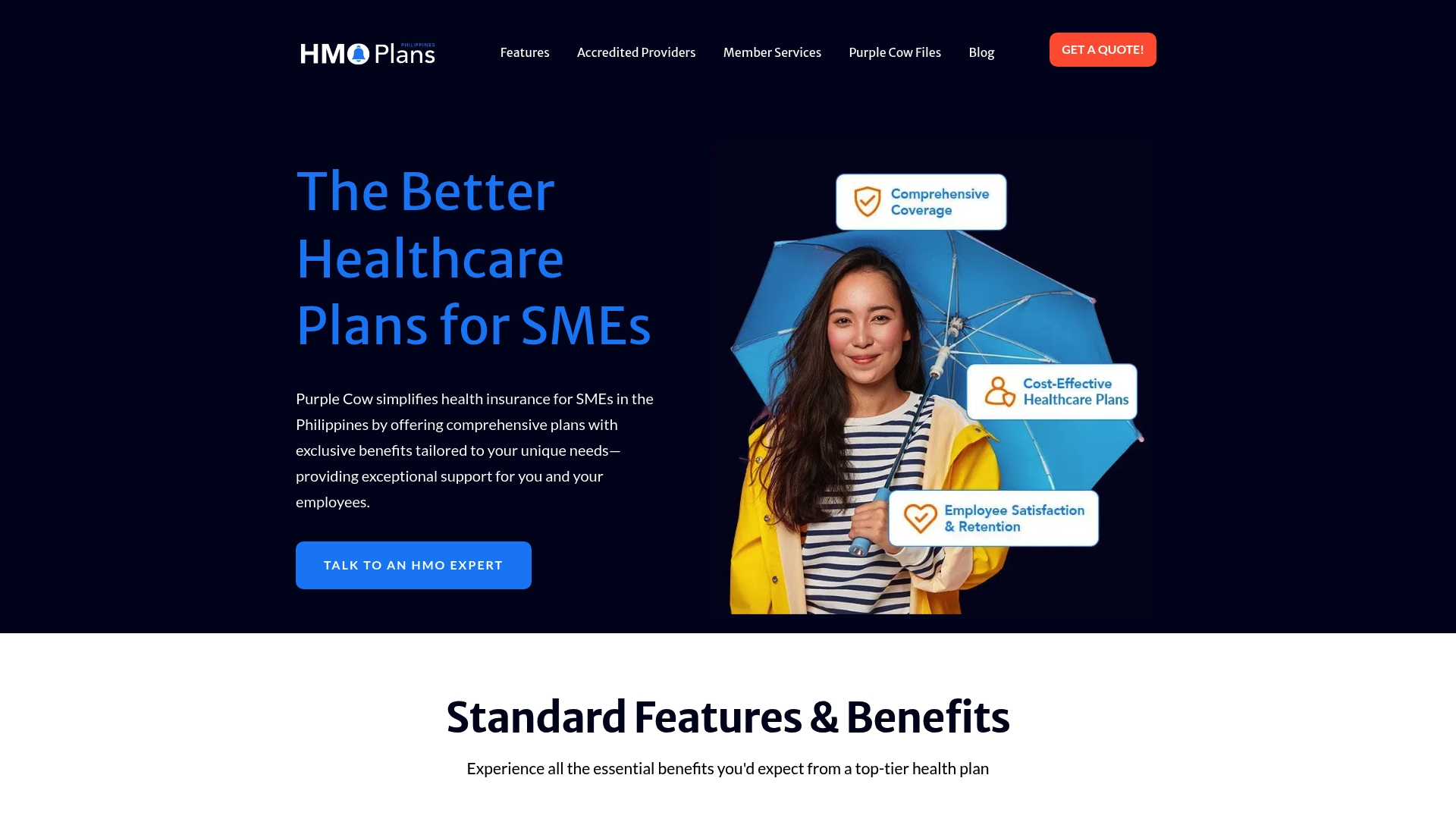
Hmoplans gives your team cashless access to the Big 9 Hospitals and Healthway Clinics, 24/7 nationwide coverage, and full inpatient, outpatient, and emergency care. Optional add-ons include dental, annual physical exams, and life and accident insurance. PhilHealth independence options are also available for employers who want full flexibility.
If you’re an HR professional or business owner ready to give your team a plan that actually covers their existing health conditions, see the full SME plan features at Hmoplans and get a quote today.
Key Takeaways
HMO group plans are the most reliable path to immediate pre-existing condition coverage in the Philippines, while individual plans usually impose waiting periods of 6 to 24 months, most commonly about 12 months.
| Point | Details |
|---|---|
| Common PEC examples | Hypertension, diabetes, asthma, thyroid disorders, and dyslipidemia are the most frequently listed pre-existing conditions in Philippine HMOs. |
| Group plans cover sooner | Corporate and group HMO plans typically offer day-one PEC coverage through risk pooling, unlike individual plans. |
| Waiting periods vary | Individual HMO plans in the Philippines usually impose waiting periods of 6 to 24 months (most commonly around 12 months) before pre-existing conditions are covered. |
| Disclosure protects you | Declaring pre-existing conditions at enrollment prevents claim denials, policy rescission, and financial liability later. |
| Hmoplans for SMEs | Hmoplans through Purple Cow offers 100% pre-existing condition coverage up to the Maximum Benefit Limit for SME group plans, with no complex exclusion terms. |
