

HMO Partner Network Advantages for Philippine SMEs
TL;DR:
- HMO partner networks provide lower premiums, coordinated care, and reduced administrative burdens for small and medium-sized enterprises. The structured model focuses on cost efficiency, preventive care, and caregiver oversight, improving employee health outcomes. Selecting a network aligned with employee locations and verifying provider availability ensures maximum value for SMEs.
HMO partner networks are defined provider groups that deliver healthcare to members at pre-negotiated rates, and their primary advantage for SMEs is lower premiums combined with coordinated care. The advantages of HMO partner networks go beyond cost. They reduce HR workload, stabilize claims spending, and give employees a structured path to quality care. For HR managers at Philippine SMEs weighing HMO plan options, understanding how these networks work is the fastest way to build a benefits package that retains talent without breaking the budget.
1. How do HMO partner networks reduce healthcare costs for SMEs?
The most direct HMO network benefit is lower monthly premiums. HMO Silver-tier plans average roughly $115 less per month than comparable PPO Silver-tier plans. That gap compounds quickly across a workforce of 30, 50, or 100 employees.

The structural reason for that savings is capitation. Under capitation, physicians receive fixed monthly fees per enrolled member rather than billing per service. That payment model shifts provider incentives from volume to efficiency. Doctors focus on keeping employees healthy rather than ordering extra tests to generate revenue.
The Primary Care Physician (PCP) gatekeeper system reinforces those savings further. PCPs filter which specialist visits are medically necessary. That filter reduces utilization volatility and limits exposure to expensive out-of-network care. Fewer surprise claims mean more predictable monthly costs for your finance team.
Administrative savings stack on top of premium savings. Because care flows through in-network providers with pre-agreed billing rates, HR teams handle fewer out-of-network claim disputes. That frees HR staff to focus on recruitment, compliance, and employee development instead of chasing reimbursement paperwork.
Pro Tip: Run a simple cost-per-employee calculation comparing your current plan’s total premium spend against an HMO equivalent. Include the time your HR team spends resolving claims disputes. The true savings are almost always larger than the premium difference alone.
2. How coordinated care through HMO networks improves employee health outcomes
The PCP functions as a medical home for each employee. That means one physician holds the employee’s full medical history, coordinates specialist referrals, and tracks follow-up care. Employees do not need to repeat their history at every appointment or manage their own care pathway.
In-network preventive services are covered with no cost-sharing under standard HMO structures. That removes the financial barrier that causes employees to skip annual checkups, screenings, and vaccinations. Early detection of chronic conditions like hypertension or diabetes reduces long-term claims costs for the employer.
Coordinated care also cuts duplicate testing. When a PCP manages the referral chain, specialists receive the existing lab results and imaging before ordering new ones. That efficiency protects employees from unnecessary procedures and protects the plan from unnecessary claims.
Employees who see their PCP as a dedicated health advocate rather than a gatekeeper engage more consistently with preventive care. That shift in perception drives measurable improvements in workforce wellness over time.
The chronic disease management benefit is particularly relevant for Philippine SMEs. Conditions like hypertension and diabetes are prevalent in the Filipino workforce. A structured HMO network with regular PCP contact catches these conditions earlier and manages them more consistently than a plan where employees seek care only when symptoms become severe.
3. What factors should SMEs consider when choosing an HMO partner network?
Network fit matters more than network size. Surveys help determine whether your employees prefer a narrower, high-quality local network or a broader, more expensive one. Asking employees where they live, where they work, and which hospitals they trust takes less than 10 minutes and produces data that directly improves plan satisfaction.
Geographic alignment is the second critical factor. Philippine SMEs concentrated in Metro Manila, Cebu, or Davao need dense provider networks near those business hubs. A plan with 500 accredited providers spread thinly across the archipelago delivers less practical value than one with 150 providers concentrated in your employees’ actual neighborhoods.
Specialist access deserves its own evaluation. Subspecialty coverage in cardiology, oncology, and orthopedics is critical for employees with complex health needs. Confirm that the network includes these specialties within a reasonable distance from your main office locations.
- Map where your employees live and work before evaluating any network.
- Check provider density in those specific areas, not the national total.
- Confirm subspecialist availability in cardiology, oncology, and at least two other high-demand specialties.
- Ask the carrier how often the provider directory is updated.
- Call two or three listed providers directly to verify they are accepting new patients.
That last step is not optional. Provider directories can be outdated, listing physicians who have closed their panels or left the network. Calling provider offices directly is the only reliable way to confirm actual availability.
Pro Tip: Repeat the provider verification check every renewal cycle. Networks change, and a directory that was accurate in january may list providers who left the network by july.
4. What operational benefits do HMO networks offer HR teams?
HMO partner networks reduce the administrative complexity that consumes HR bandwidth. Because providers bill at pre-negotiated rates, there are no balance billing disputes or out-of-network surprise charges to resolve. HR teams spend less time mediating between employees and insurers.
The carrier manages network updates, contract negotiations, and provider credentialing. HR does not need to track which hospitals have changed their billing codes or which specialists have moved to a different facility. That responsibility sits with the HMO, not your team.
Employee satisfaction with benefits directly affects retention. When employees can access care without complicated paperwork or unexpected bills, they associate that positive experience with their employer. That association strengthens loyalty and reduces voluntary turnover.
| HR Task | Without HMO Network | With HMO Network |
|---|---|---|
| Claims dispute resolution | Frequent, time-consuming | Rare, handled by carrier |
| Provider billing management | HR tracks multiple billing rates | Pre-negotiated rates, carrier-managed |
| Employee care navigation | Employee manages own referrals | PCP coordinates all referrals |
| Network updates | HR must monitor changes | Carrier updates and notifies |
| Out-of-network exposure | High, unpredictable | Minimal, controlled |
The table above reflects the operational shift that comes with a well-structured HMO network. The HR team moves from reactive problem-solving to proactive benefits management.
5. Comparing HMO partner networks with other plan types for Philippine SMEs
The key differences between HMO, PPO, and EPO plans come down to cost, network size, and flexibility. HMOs offer the lowest premiums and the most structured care coordination. PPOs offer broader provider choice but at significantly higher cost. EPOs sit in between, with no PCP requirement but limited out-of-network coverage.
For most Philippine SMEs, the HMO structure is the better fit. Employees in the Philippines typically access care near their home or workplace, not across a wide geographic range. A dense local network serves that behavior well. The cost savings from lower premiums also matter more to SMEs operating on tighter margins than to large corporations absorbing benefits costs across thousands of employees.
| Plan Feature | HMO | PPO | EPO |
|---|---|---|---|
| Monthly premium | Lowest | Highest | Mid-range |
| Network size | Smaller, defined | Broad | Mid-range |
| PCP requirement | Yes | No | No |
| Referral needed | Yes | No | No |
| Out-of-network coverage | No (emergencies only) | Yes | No |
| Care coordination | Structured | Self-directed | Partial |
| Cost predictability | High | Low | Moderate |
The trade-off SMEs accept with an HMO is reduced flexibility. Employees cannot self-refer to specialists or seek out-of-network care without paying full cost. That trade-off is acceptable when the network is well-matched to employee needs. It becomes a problem when the network is thin or geographically misaligned. Choosing the right network, not just the right plan type, is what determines whether the HMO structure delivers its full value.
Key takeaways
HMO partner networks deliver their greatest value to Philippine SMEs when the network is geographically aligned with the workforce, the PCP model is communicated as care coordination rather than restriction, and HR uses the administrative savings to focus on retention.
| Point | Details |
|---|---|
| Lower premiums | HMO plans cost significantly less per month than PPO equivalents, reducing total benefits spend. |
| Capitation drives efficiency | Fixed monthly fees per member push providers to prioritize quality care over volume. |
| Network fit beats network size | Match provider density to where employees actually live and work, not to the largest directory. |
| HR workload drops | Pre-negotiated billing and carrier-managed networks reduce claim disputes and administrative time. |
| Preventive care is built in | In-network preventive services at no cost-sharing improve long-term employee health outcomes. |
What I’ve learned about HMO networks that most guides skip
Most articles on HMO partner network advantages focus on the premium savings and stop there. The real advantage is behavioral. When employees understand that their PCP is coordinating their care rather than blocking access to specialists, their engagement with the plan changes completely.
I’ve seen HR teams at Philippine SMEs lose employee trust in an HMO plan not because the plan was bad, but because it was explained badly. The framing matters. Positioning the PCP role as a dedicated health advocate rather than a bureaucratic gatekeeper changes how employees use the plan and how they feel about their employer for providing it.
The second thing most guides miss is the geographic reality of the Philippines. Network density near your employees’ actual locations is worth more than a large national provider count. A plan with access to the Big 9 Hospitals and Healthway Clinics in Metro Manila delivers more practical value to a Manila-based SME than a plan with 1,000 accredited providers spread across provinces your employees never visit.
My honest recommendation: run an employee location survey before you sign any HMO contract. Then verify the top 10 listed providers in those areas by phone. That 30-minute exercise will tell you more about real network quality than any sales presentation.
— Eumir
HMO plans for Philippine SMEs, built without the fine print
Hmoplans works specifically with SMEs in the Philippines, partnered with Purple Cow and Etiqa as insurance underwriters. Their plans include cashless access to the Big 9 Hospitals and Healthway Clinics, 24/7 nationwide coverage, and 100% coverage for pre-existing conditions up to the Maximum Benefit Limit.
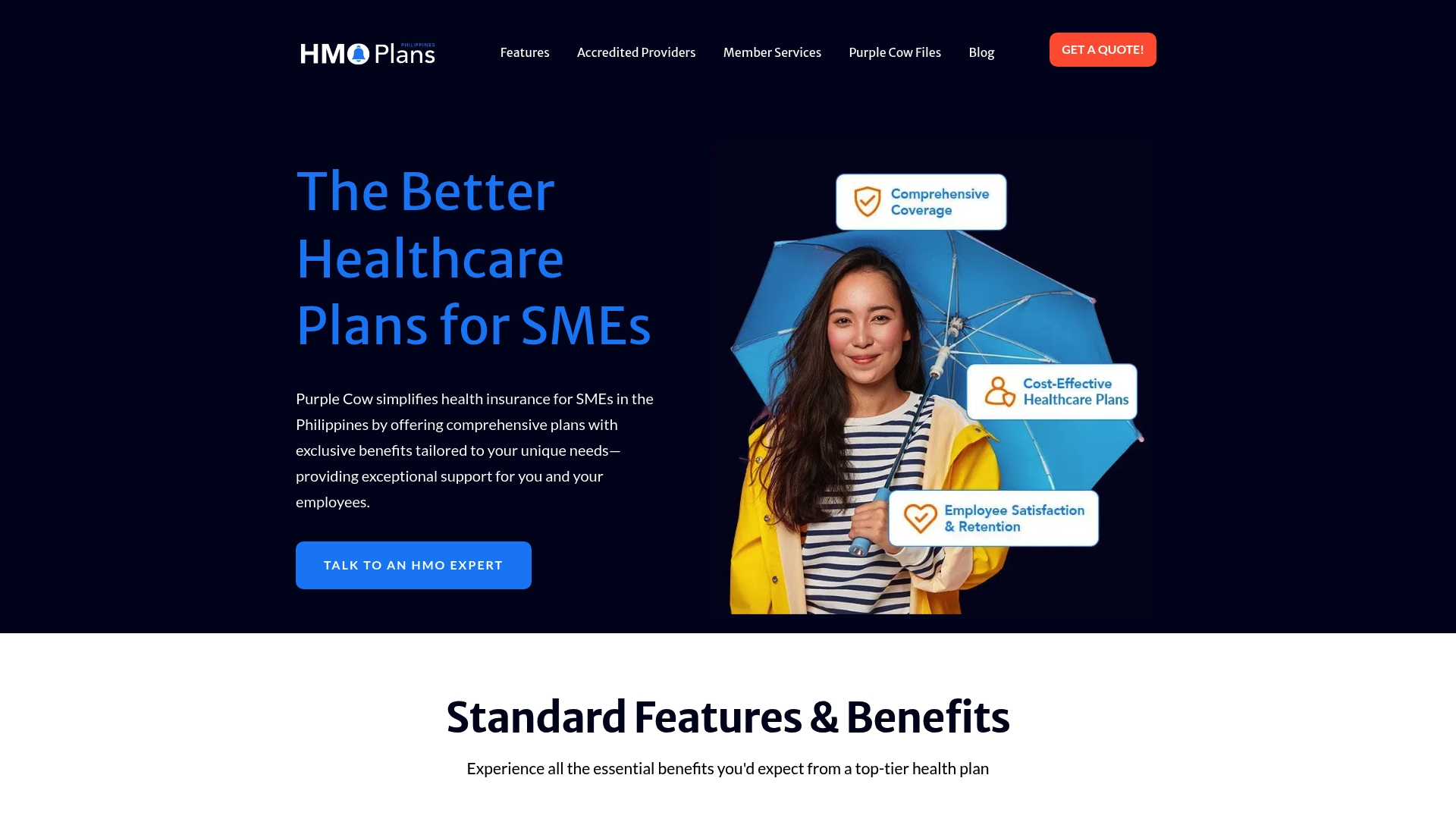
Optional add-ons include dental HMO services, annual physical exams, and life and accident insurance. If you want a plan that covers what your employees actually need without complicated exclusions, Hmoplans is worth a direct conversation. Explore SME HMO options or review how to choose the right plan for your team’s specific needs.
FAQ
What are the main advantages of HMO partner networks for SMEs?
HMO partner networks offer lower monthly premiums, structured care coordination through a Primary Care Physician, and reduced HR administrative burden from pre-negotiated provider billing. These benefits combine to lower total healthcare costs while improving employee health outcomes.
How does the PCP gatekeeper model benefit employees?
The PCP acts as a medical home, managing the employee’s full health history and coordinating specialist referrals. This reduces duplicate testing, prevents unnecessary procedures, and gives employees a single point of contact for all their healthcare needs.
Are HMO networks a good fit for all Philippine SMEs?
HMO networks work best for SMEs whose employees are concentrated near areas with dense provider coverage, such as Metro Manila, Cebu, or Davao. SMEs with employees spread across remote areas should verify local network density before committing to an HMO plan.
How often should HR teams review their HMO partner network?
HR teams should review network quality at every annual renewal cycle. Provider directories can become outdated within months, so calling listed providers directly to confirm availability is a necessary step at each renewal.
How does an HMO network compare to a PPO for a Philippine SME?
HMO plans cost significantly less per month than PPO plans and offer better care coordination, but require employees to use in-network providers and obtain referrals for specialist visits. For most Philippine SMEs, the cost savings and structured care model outweigh the reduced flexibility.
