

SME health insurance guide: Secure the best plans for your team
TL;DR:
- Healthcare costs in the Philippines are rising rapidly, forcing SMEs to strengthen employee benefits through mandatory PhilHealth registration and supplemental private plans. Ensuring timely registration, choosing appropriate HMO coverage, and conducting regular plan reviews are vital for compliance and comprehensive employee healthcare. Building intentional, scalable health insurance strategies enhances retention, reduces sick days, and signals genuine care for team wellbeing.
Healthcare costs in the Philippines are climbing faster than most SME budgets can absorb, and the employers who ignore this reality are quietly losing their best people to competitors who offer better benefits. Mandatory PhilHealth registration requires submitting an ER1 form with business documents like your DTI/SEC certificate, BIR 2303, and business permit, but that’s just the starting line. This guide walks you through every stage, from meeting legal obligations to choosing, implementing, and optimizing a group health plan that actually protects your team and strengthens your business.
Table of Contents
- Understanding mandatory health insurance requirements for SMEs
- Comparing PhilHealth, HMO, and group health plans
- Step-by-step process: How to implement an SME group health plan
- Common challenges and best practices in Philippine SME health insurance
- The real-world SME view: What experts and seasoned owners wish they knew
- Connect with the right SME health insurance solutions
- Frequently asked questions
Key Takeaways
| Point | Details |
|---|---|
| PhilHealth is mandatory | All Philippine SMEs must register employees, including part-timers, for PhilHealth and meet contribution rules. |
| Private plans fill gaps | HMOs and group insurance provide extra protection and are vital for attracting and retaining staff. |
| Implementation takes planning | Compare, negotiate, and document every step when rolling out group plans to avoid mistakes and ensure compliance. |
| Cost-sharing helps SMEs | Employers can share group insurance costs with staff as long as policies are clear and fair. |
| Regular review is key | Annual health plan reviews and digital processes help SMEs adapt and keep coverage optimal. |
Understanding mandatory health insurance requirements for SMEs
Every employer in the Philippines is legally required to register with PhilHealth, regardless of company size. This isn’t optional. Failure to comply exposes your business to penalties, potential lawsuits from employees, and audit risks that can derail operations at the worst possible time.
The PhilHealth registration process step by step:
The PhilHealth registration process for SME employers follows a specific sequence. You start by submitting the ER1 form along with your DTI or SEC certificate of registration, BIR Form 2303, and a valid business permit. Once processed, PhilHealth issues your Employer PhilHealth Number (PEN). You then submit the ER2 form to register each of your employees under your account.
| Step | Action required | Estimated timeline |
|---|---|---|
| 1 | Submit ER1 form with business documents | 1 to 3 business days |
| 2 | Receive Employer PhilHealth Number (PEN) | 3 to 5 business days |
| 3 | Submit ER2 for each employee | Within 30 days of hiring |
| 4 | Begin remitting monthly contributions | Following payroll cycle |
Contribution rates all SMEs must know:
PhilHealth contributions are set at 5% of an employee’s monthly basic salary, split equally at 2.5% from the employer and 2.5% from the employee. The minimum monthly contribution is PHP 500 total (PHP 250 each) for salaries up to PHP 10,000, and the ceiling caps at PHP 5,000 total (PHP 2,500 each) for salaries exceeding PHP 100,000.
Key compliance points to review:
- Part-time employees are not exempt. They must be enrolled within 30 days of hiring.
- Contributions must be remitted on time each month to avoid surcharges.
- PhilHealth’s Group Enrollment Program for MSMEs allows batch registration, which reduces administrative workload for growing teams.
Common compliance error: Many SMEs delay registering new hires because the paperwork feels overwhelming during onboarding. This is a mistake. Late registration creates gaps in employee coverage and can result in surcharges up to 3% per month on unpaid contributions.
Understanding PhilHealth vs HMO for SMEs is crucial at this stage because while PhilHealth covers the legal baseline, it was never designed to replace comprehensive employee healthcare.
Comparing PhilHealth, HMO, and group health plans
Once you have your PhilHealth obligations sorted, the next question is: what else should you offer? The honest answer is that PhilHealth alone leaves significant gaps. Most hospitalization cases in the Philippines still generate out-of-pocket expenses even with PhilHealth, because benefit packages are capped, outpatient consultations are barely covered, and private hospital rates far exceed reimbursement ceilings.
SMEs can supplement PhilHealth with private group health insurance or HMO plans to close those gaps and offer employees a genuinely useful benefit.

| Feature | PhilHealth | HMO plan | Private group insurance |
|---|---|---|---|
| Coverage type | Inpatient, limited outpatient | Inpatient, outpatient, ER | Customizable, inpatient focus |
| Provider network | Government and accredited hospitals | Accredited HMO clinics and hospitals | Varies by insurer |
| Premiums | Government-mandated rate | Based on headcount and MBL | Based on risk profile |
| Cashless access | Limited | Yes, at accredited facilities | Varies |
| Pre-existing conditions | Covered (basic) | Varies by provider | Often excluded or limited |
| Best for | Legal compliance baseline | Everyday and emergency care | Catastrophic or supplemental needs |
Why PhilHealth alone isn’t enough for competitive SMEs:
- Outpatient consultations and diagnostics are largely not covered by PhilHealth.
- Room and board benefits cap out at ward level, far below private room rates.
- PhilHealth’s Group Enrollment Program helps MSMEs manage registration but does not expand the benefit limits themselves.
- Specialist referrals and dental coverage are not included in PhilHealth packages.
- Employees with families often have dependents who are not covered under employer PhilHealth.
Market insight: The Philippine health insurance market is experiencing significant growth driven by SME demand for employer-sponsored plans, with term health insurance products dominating because of their affordability for smaller businesses with tighter benefit budgets.
Understanding why offering group health insurance matters beyond compliance gives HR managers a stronger case when presenting budget proposals to ownership. Retention rates, sick day reduction, and recruitment advantage are all measurable business impacts. For a deeper look at your options, reviewing HMO health insurance options specifically designed for Philippine SMEs is a practical starting point.
Step-by-step process: How to implement an SME group health plan
Now that you understand what solutions exist, execution is where most SMEs struggle. The implementation process doesn’t have to be complicated if you approach it in the right sequence.
Step-by-step implementation process:
- Gather your employee data. You need a complete list of employees including names, birthdates, salary brackets, and existing health conditions (where legally shareable). This data drives your premium calculation.
- Define your budget. Decide what you’re willing to spend per head annually. Most SME group HMO plans in the Philippines range from PHP 8,000 to PHP 25,000 per employee per year depending on coverage level and Maximum Benefit Limit (MBL).
- Shortlist providers. Request quotations from at least three providers. Compare not just premiums, but MBL amounts, accredited hospital networks, outpatient benefits, and pre-existing condition policies.
- Negotiate terms. For groups of 10 or more, you often have leverage to negotiate better MBL tiers, add-on inclusions, or reduced premiums for longer contract terms.
- Finalize and sign. Review the policy document carefully before signing. Confirm that coverage start dates align with your onboarding schedule.
- Register employees. Submit individual member enrollment forms with supporting documents. Many providers now accept digital submissions, which speeds this up significantly.
- Orient your team. A short 30-minute briefing where employees learn how to use their HMO card, access clinics, and file claims dramatically increases benefit utilization and satisfaction.
| Requirement | Details needed |
|---|---|
| Employee data | Full name, date of birth, salary bracket |
| Company documents | DTI/SEC cert, BIR registration, business permit |
| Budget parameters | Annual per-head limit, cost-sharing split |
| Preferred providers | Hospital preferences, geographic coverage needs |
Implementation steps for private group plans work best when you bake in cost-sharing from the start and ensure no discrimination in how coverage tiers are assigned across employee levels.
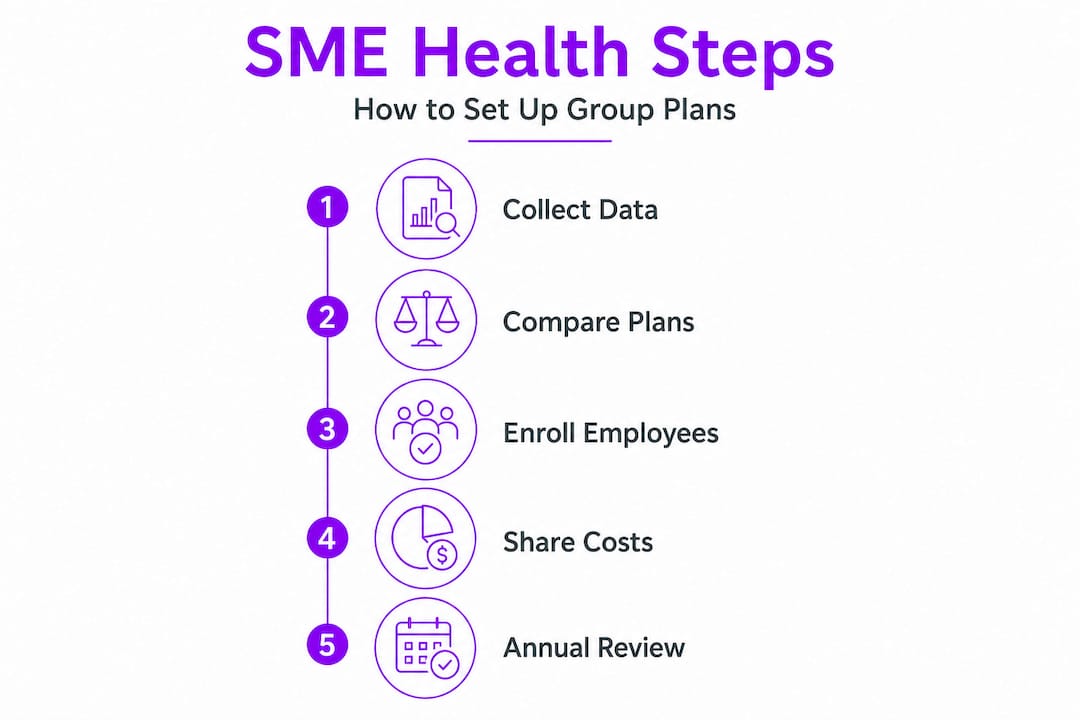
Pro Tip: Consider offering a voluntary top-up tier where employees can pay a small portion to upgrade their coverage level. This reduces employer cost per head while still giving staff a meaningful benefit. Just make sure the cost-sharing structure is documented in writing and applied consistently across comparable employee groups to avoid HR disputes.
Using digital enrollment systems like ePRS where available streamlines the PhilHealth side and ensures you have clean records for audit purposes. For practical guidance on how HMOs support SME health benefits and a detailed walkthrough of HMO eligibility for SMEs, both resources are worth reviewing before you finalize your plan structure.
Common challenges and best practices in Philippine SME health insurance
Even well-intentioned SMEs run into problems after implementation. Knowing what typically goes wrong helps you build systems that catch issues before they become costly.
Most common mistakes Philippine SMEs make:
- Missing the 30-day enrollment deadline for new hires, especially part-timers
- Submitting incomplete employee data (wrong birthdates, missing middle names) that cause processing delays
- Choosing the lowest-cost plan without checking the accredited hospital list, leaving employees without access to preferred facilities
- Failing to keep documentation of contribution remittances, which creates problems during BIR or DOLE audits
- Treating health insurance orientation as optional, resulting in low utilization and employee dissatisfaction with a benefit they paid for
Note for SMEs with part-time staff: Part-time employees must be registered within 30 days of hiring. This deadline applies equally to casual, seasonal, and project-based workers. The ePRS (Electronic Premium Remittance System) can help reduce delays by enabling batch digital submissions rather than manual over-the-counter processing.
Best practices that separate well-run SMEs from the rest:
- Submit contributions digitally through ePRS to generate automatic timestamps and reduce manual errors.
- Schedule an annual plan review every December or January. Coverage needs change as your team grows or as healthcare costs shift.
- Pre-screen HMO providers on claims settlement speed. A low-premium plan that takes 60 days to reimburse emergency claims is worse than a slightly more expensive plan that settles in 7 days.
- Run a brief HR orientation for every new hire that covers their HMO card usage, clinic access procedures, and what’s covered vs. not covered.
- Keep physical and digital copies of all PhilHealth submissions, contribution records, and HMO enrollment confirmations.
Pro Tip: Ask prospective HMO providers for their average claims turnaround time before signing. Providers that can’t answer this question clearly are telling you something important about their operations.
One point worth flagging for BMBE-registered businesses: BMBE incentives do not waive your PhilHealth or HMO obligations. The tax breaks are real, but the health insurance requirements remain fully in force. Don’t let anyone convince you otherwise.
For a more detailed breakdown of strategies that keep SME healthcare investments working efficiently year after year, the resource on SME healthcare best practices covers both compliance and optimization angles worth bookmarking.
The real-world SME view: What experts and seasoned owners wish they knew
Here’s an uncomfortable truth that most insurance guides skip over. Minimum compliance is not a health insurance strategy. It’s a liability shield. The SMEs that get the most from their healthcare investments treat coverage as a deliberate people decision, not a regulatory checkbox.
PhilHealth is a basic but mandatory foundation; the real competitive advantage comes from building on top of it with private or HMO coverage that meaningfully reduces out-of-pocket costs and signals to employees that the company cares about their wellbeing.
What separates effective SME health insurance programs from mediocre ones isn’t budget size. It’s intentionality. A company that spends 20% less on premiums but chooses a plan with strong outpatient benefits and a wide hospital network often delivers far more value to employees than a company spending more on a flashy plan with poor claims support.
“The moment we upgraded our group plan and included outpatient coverage, we noticed a measurable drop in sick days. Employees weren’t waiting until they were seriously ill to see a doctor. That early intervention keeps people productive and reduces the serious cases that drive up your renewal premiums.” This mirrors the sentiment shared across growing SMEs in the tech and healthcare sectors who treat insurance as operational infrastructure, not overhead.
The Philippine health insurance market growth reflects a shift where SME owners increasingly recognize that term health plans and group HMOs aren’t just for large corporations. Entry-level group plans are now accessible for teams as small as five people, which removes the old excuse that small businesses can’t afford meaningful coverage.
Reviewing your plan annually is non-negotiable. A plan that fit your company at 15 employees may have serious gaps at 40. Provider networks shift, benefit structures evolve, and your team’s demographics change. The SMEs that stay ahead of this treat the annual review as seriously as their financial audit.
Looking at top SME health benefits compared gives you a framework for making these annual reviews faster and more structured. The goal is always the same: maximum coverage value for your budget, zero compliance gaps, and a benefit package that employees actually use and appreciate.
Connect with the right SME health insurance solutions
You now have the knowledge. The next step is putting it into action with a plan that actually fits your team’s needs and your company’s budget.
HMO Plans, powered by Purple Cow and underwritten by Etiqa, is built specifically for Philippine SMEs who want more than a checkbox compliance solution. Their plans cover pre-existing conditions, congenital conditions, and special procedures up to the Maximum Benefit Limit, with cashless access to the Big 9 Hospitals, Healthway Clinics, and nationwide accredited facilities. Whether you need straightforward group HMO coverage or want to customize with dental, annual physical exams, or life and accident add-ons, their team can build a plan that scales with your business. Get a quote, explore your options, and give your employees the healthcare security they deserve.
Frequently asked questions
Are SMEs required to register all employees for PhilHealth?
Yes, all SME employees including part-timers must be registered for PhilHealth within 30 days of hiring. Delays in registration are common but can be avoided by using the ePRS digital system for batch submissions.
How much do SMEs contribute to employee PhilHealth?
Employers and employees each pay 2.5% of the monthly basic salary to PhilHealth. Contributions are capped at PHP 5,000 total monthly (PHP 2,500 each) for salaries above PHP 100,000, with a minimum of PHP 500 total for salaries up to PHP 10,000.
What’s the difference between PhilHealth and HMO for SMEs?
PhilHealth is mandatory public insurance that provides a basic inpatient benefit foundation, while HMO plans are private and offer broader coverage including outpatient consultations, diagnostics, and higher hospitalization limits. Supplementing PhilHealth with an HMO plan closes the gaps that leave employees with large out-of-pocket expenses.
Can SMEs require employees to co-pay for group health insurance?
Yes, cost-sharing between employers and employees is legally permissible. Ensure no discrimination in how the cost-sharing structure is applied, and document the arrangement clearly in your employment or benefit agreement.
Do BMBE incentives waive PhilHealth or HMO requirements for SMEs?
No, BMBE status does not exempt SMEs from PhilHealth obligations or any health insurance requirements. Compliance remains fully required regardless of BMBE registration status.
