
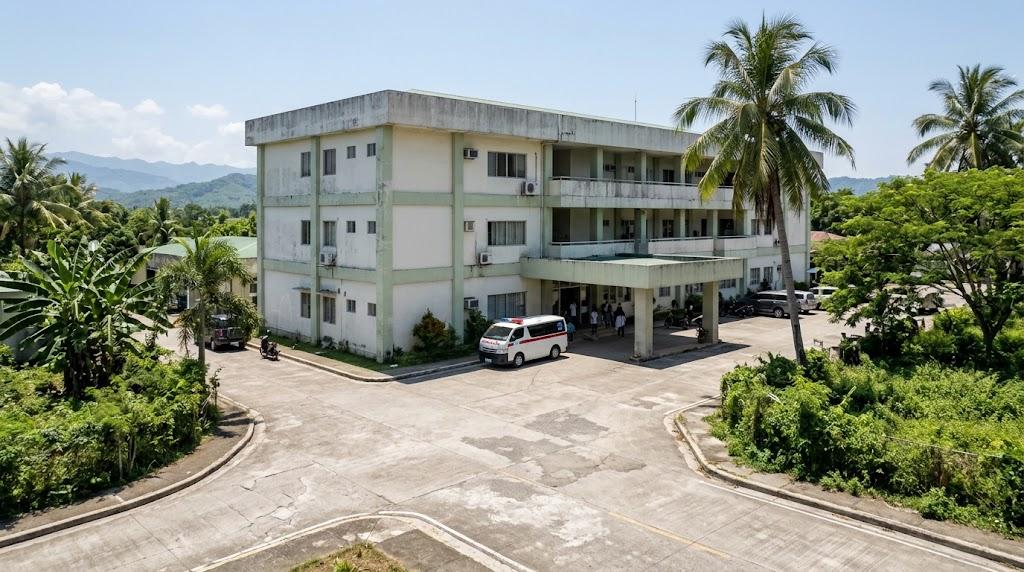
Province Hospital Access With HMO: A Guide for Philippine SMEs
Yes, your employees can use an HMO in a provincial hospital, but only as far as the plan’s network, the hospital’s accreditation and the paperwork allow. Many HMO networks are densest in Metro Manila and other big cities. So the question for an SME owner or HR lead is not “Does our HMO cover the province?” It is “Which hospital near each employee is accredited, what happens when it is not, and who pays the difference?”
This guide shows you how to answer that before you sign, and how to prepare your team for the day someone is admitted far from the capital.
TL;DR
- An HMO works cashless only in hospitals and clinics accredited by that HMO. A hospital near your employee’s home may not be on the list.
- Ask for the accredited list by province and city, not just the national total, and check the hospitals your people would actually use.
- Confirm in writing how out-of-network care is handled: emergency rules, reimbursement rates and filing deadlines.
- Private HMO coverage is meant to sit on top of PhilHealth, so keep both active. Our Purple Cow plan adds out-of-network reimbursement and 24/7 nationwide coverage.
- Collect a map of where your employees live before you request quotes.
Table of Contents
- Why province access is a different question from Metro Manila access
- Step 1: Map where your people actually live
- Step 2: Ask for the accredited list, then verify it
- Step 3: Know the rules for non-accredited hospitals
- Step 4: Keep PhilHealth in the picture
- Step 5: Check that the HMO itself is licensed
- What good province access looks like in a plan
- Our perspective: access is the real product
- How Purple Cow supports teams outside the metro
- A short checklist before you sign
- FAQ
- Sources
Why province access is a different question from Metro Manila access
A national HMO can advertise hundreds of partner facilities and still leave a gap in your employee’s hometown. Hospitals are not spread evenly. PhilHealth’s accreditation status table shows 125 Level 3 hospitals, 427 Level 2 hospitals and 783 Level 1 hospitals accredited under the national program, in both government and private categories. Whether a given one also contracts with your HMO is a separate decision, made by the HMO and the hospital.
Two accreditations are in play, and people confuse them:
- PhilHealth accreditation decides whether the hospital can honor the national insurance benefit.
- HMO accreditation decides whether the hospital accepts your employee’s HMO card or letter of authorization (LOA) and bills the HMO directly.
A hospital can have the first without the second. In that case, your employee may pay first and claim later.
Who is most affected
- Remote and hybrid staff. BPO, software and e-commerce teams often hire from Cebu, Davao, Iloilo, Bicol, Pampanga and beyond, with people working from home.
- Retail and hospitality branches. Stores and resorts outside the metro have staff who live next to the branch, not near a premier hospital.
- Dependents. Parents, spouses and children may live in a different province from the employee.
- Field and travelling staff. Sales and operations people can need care wherever the job takes them.
Step 1: Map where your people actually live
Before asking any HMO for a quote, build a simple sheet with each employee’s city or municipality and the hospital they would go to in an emergency. Add dependents if they live elsewhere.
A short table is enough:
| Province / city | Headcount | Dependents | Nearest hospital they would use |
|---|---|---|---|
| Metro Manila | 40 | 22 | Name it |
| Cebu | 8 | 5 | Name it |
| Bicol | 3 | 2 | Name it |
This turns a vague worry into a checklist. If 80% of your team lives in Metro Manila and 5% in a province with a single private hospital, you know exactly which question to ask first.
Step 2: Ask for the accredited list, then verify it
A brochure number such as “over 1,000 hospitals” tells you little. Ask for the accredited facility list sorted by province and city, and check your sheet against it.
Then check the details that cause trouble at admission:
- Exact hospital name and branch. Similar names exist, and a sister hospital may not be on the list.
- Accreditation of the doctor, not just the hospital. Some HMOs accredit doctors separately. Our guide on verifying HMO accredited doctors has quick checks and scripts you can use.
- Outpatient clinics, labs and diagnostic centers. A hospital may be accredited for inpatient care while the nearest consultation clinic is not.
- Date of the list. Networks change. Ask when the list was last updated.
For a look at how premier facilities are organized, see our list of premier HMO hospitals in the Philippines. If you want the wider picture of how networks are built, read our explainer on the Philippines HMO network.
Step 3: Know the rules for non-accredited hospitals
This is the part most buyers skip. Sooner or later, an employee will be admitted somewhere off the list. Perhaps it is the only hospital within an hour of home. Perhaps it is an emergency.
Ask the HMO these questions, and get the answers in writing:
- Is emergency care at a non-accredited hospital covered? If yes, up to what amount, and is it paid directly or by reimbursement?
- What is the reimbursement process? Which documents are required (official receipts, medical abstract, laboratory results), and how long does the HMO take to pay?
- What is the filing deadline? Missing it is a common reason claims fail.
- Who pays “excess” charges? Provincial facilities outside the major networks can bill items the plan will not recognize. UCMed’s published discount program is an example of how a provincial hospital can run special arrangements with specific groups. That is exactly why you should confirm whether a plan covers the full bill or leaves non-accredited excess to the employee.
- Does the Maximum Benefit Limit (MBL) apply the same way? Reimbursed claims usually draw down the same limit as cashless ones. Ask.
Paperwork that decides who pays
Cashless care depends on timing. Many hospitals expect an LOA or pre-authorization from the HMO shortly after admission. A common window is around 24 hours, though each hospital’s rule differs, so verify it with the hospital’s HMO desk. If the paperwork is late, the hospital can ask the employee to settle the bill and claim later.
Our step-by-step pieces explain the process: how to use your HMO, including LOA, pre-authorization and waiting periods and hospital admission with an HMO.
Step 4: Keep PhilHealth in the picture
An HMO does not replace national insurance. PhilHealth’s Universal Health Care page says direct contributors must keep paying to keep their coverage active and use benefits in accredited hospitals nationwide. It also encourages members to register with a primary care provider, who can handle referrals to higher-level hospitals.
For provincial employees this matters in practice. Where the HMO network is thin, PhilHealth-accredited public and private hospitals may still be the nearest option, and your employee can combine the national benefit with whatever your plan reimburses.
Two practical habits help:
- Remind employees to keep their PhilHealth contributions current and to register with a primary care provider.
- Tell them to bring valid IDs and, for dependents, proof of relationship to the hospital.
A note for senior-citizen dependents
If an employee’s parent is a senior citizen or a person with a disability, the hospital bill has a set order of deductions. According to PhilHealth, accredited facilities must apply the 12% VAT exemption first, then the 20% senior citizen or PWD discount, and then PhilHealth benefits, before discharge. In a provincial hospital, have the family read the billing statement and confirm those deductions before paying. If a facility fails to apply them, the family can raise it with the local Office for Senior Citizens Affairs or the National Council for Disability Affairs.

Step 5: Check that the HMO itself is licensed
Before you compare networks, confirm the provider is legitimate. The Insurance Commission regulates HMOs and requires a Certificate of Authority. The Insurance Commission’s HMO page publishes the list of HMOs holding one, updated periodically. Its March 2025 list showed 28 licensed HMOs. Check the current list on that page before you contract.
There is no single official ranking of the “top 10” HMOs. Network strength varies by region, so the best HMO for a Makati office is not automatically the best for a team in Iloilo. Test each option against your own map from Step 1.
What good province access looks like in a plan
When you review quotes, score each plan on the same criteria:
| Criterion | What to look for |
|---|---|
| Accredited facilities near your employees | Named hospitals and clinics in each province on your sheet |
| Out-of-network handling | Written reimbursement terms, rates and filing deadlines |
| Emergency coverage | 24/7, nationwide, not limited to Metro Manila |
| Pre-existing and congenital conditions | Covered or excluded, and up to what limit |
| Digital access | Online LOA requests, claims filing and teleconsultation for people far from a clinic |
| Dependent pricing | Same rate or different rate for dependents |
| Exclusions | A short, plain list |
Teleconsultation deserves a second look. For an employee in a municipality without an accredited clinic, a digital consult can handle many first-line concerns without a long trip. It does not replace admission to a hospital, but it reduces how often people need one.
Our perspective: access is the real product
We talk to SME owners every week, and the same pattern repeats. They compare premiums, then discover after the first claim that the card did not work where their employee lives. We think that order is backwards.
Here is how we approach it at HMO Plans, with Purple Cow as the plan and Etiqa as the underwriter:
- Network first. Our plan gives cashless access to accredited hospitals, clinics and doctors, including the Big 9 Hospitals and Healthway Clinics, with 24/7 nationwide coverage.
- A safety net outside the network. Out-of-network reimbursement is part of the offering, so a provincial admission off the list is not simply a denied claim.
- Straight terms. We keep exclusions minimal and state them plainly, so HR can explain the plan to a team in Cebu the same way as a team in Taguig.
- No one left out. Eligibility covers all employees regardless of medical history, and pricing is equal for employees and dependents. That matters when a parent lives in the province.
- Coverage that holds up. We cover pre-existing conditions, congenital conditions, special procedures and no-fault scenarios at 100%, up to the MBL.
Our advice is simple: do not buy on a headline number. Give us your employee map and we will tell you plainly where cashless access is strong and where reimbursement will do the work. You can then decide with real information.
— Eumir
How Purple Cow supports teams outside the metro
If you manage employees across provinces, our Purple Cow Premium plan is built for that mix. It pairs cashless access in accredited facilities with 24/7 nationwide coverage, out-of-network reimbursement and a digital platform for claims and consultations. You can add dental HMO services, annual physical exams or life and accident insurance, and choose reimbursement for additional exclusions or PhilHealth independence options.
See the details on the Purple Cow Premium page, or send us your employee locations on hmoplans.ph and talk to an HMO expert about coverage in your provinces. Pricing is quoted for your team, so we do not list a figure here.
A short checklist before you sign
- Build the employee and dependent location sheet.
- Request the accredited list by province and check each named hospital.
- Get out-of-network, emergency and excess-charge terms in writing.
- Verify the HMO’s Certificate of Authority on the Insurance Commission page.
- Confirm the MBL and how reimbursements count against it.
- Ask how LOAs are requested after hours and how fast.
- Brief employees: where to go, what to bring and whom to call.
For the reimbursement side of things, our guides on HMO coverage examples, no-fault HMO claims and network advantages for SMEs give more detail.
FAQ
Can I use my HMO in any hospital in the Philippines?
Not automatically. Cashless use applies only to hospitals and clinics accredited by your HMO. In other hospitals, you may have to pay first and file for reimbursement, depending on your plan’s terms.
Is an HMO enough for an employee who lives in the province?
It can be, if accredited facilities are within reach and the plan covers out-of-network care. It should still work alongside PhilHealth, which is meant to stay active for contributing members. Check both the hospital list and the reimbursement terms.
What should HR ask an HMO about provincial coverage?
Ask for the accredited list by province, written rules on emergency and non-accredited admissions, reimbursement deadlines and documents, and how the MBL applies. Also ask who pays excess charges that the plan does not recognize.
How do I know an HMO is legitimate?
Check that it holds a Certificate of Authority from the Insurance Commission, using the commission’s published HMO list. Do this before you sign, since the list is updated over time.
Sources
- PhilHealth: Status of Accreditation
- PhilHealth: Universal Health Care
- PhilHealth: Senior citizen, PWD discounts must be applied prior to hospital discharge
- Insurance Commission: Health Maintenance Organizations
- UCMed: PNP Discount Program
